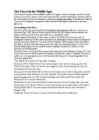
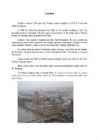
It specialises in the selling of clothing and luxury food products. M&S was founded in 1884 by Michael Marks and Thomas Spencer. Click to edit Master text styles Second level Third level Fourth level Fifth level Regent's street Regent Street is one of the major shopping streets in London's West End, well known to tourists and Londoners alike, and famous for its Christmas illuminations. It runs from the Regent's residence at Carlton House in St James's at the southern end, through Piccadilly Circus and Oxford Circus, to All Souls Church. Every building in Regent Street is protected as a Listed Building, at least Grade II status, and together they form the Regent Street Conservation Area. Click to edit Master text styles Second level Third level
the west side Canada House. At the corners of the square are four plinths; the two northern ones were intended for equestrian statues, and thus are wider than the two southern. Three of them hold statues: George IV (northeast, 1840s), Henry Havelock (southeast, 1861, by William Behnes), and Sir Charles James Napier (southwest, 1855). Former Mayor of London Ken Livingstone controversially expressed a desire to see the two generals replaced with statues "ordinary Londoners would know".[3] On the lawn in front of the National Gallery are two statues, James II to the west of the entrance portico and George Washington to the east. The latter statue, a gift from the state of Virginia, stands on soil imported from the United States. This was done in order to honour Washington's declaration he would never again set foot on British soil.[4] In 1888 the statue of General Charles George Gordon was erected. In 1943 the statue was
newspapers Seven times larger Fifth of the total population TWO AREAS Walled City (the square mile) Small Did not contain Parliament or the royal court Traders and merchants Westminster Outside London´s walls National institutions meeting place WEST END AND EAST END West End Theatres, cinemas, expensive shops East End Poorer residental area Home to successive waves of immigrant groups LONDON “Londoners“ live in its suburbs Travel to work each day Cultural and racial variety greatest 300 languages spoken Nearly third of the people were born outside The most popular City in the world (2007) Signs of its richness and drama SOURCES https://et.wikipedia.org/wiki/London https://en.wikipedia.org/wiki/Westminster THANK YOU FOR LISTENING!
THE MILLENIUM FOOTBRIDGE What, where & when? • For pedestrians • located between Southward Bridge (downstream) and Black friars Railway Bridge (upstream) • Connects St.Paul’s Catherdal and Tate Modern • owned and maintained by the Bridge House Estates • Construction of the bridge began in 1998 • opening on 10 June 2000. Closing, unexpected & not safety? • Londoners nicknamed Wobbly Bridge • crossed by 90,000 people, with up to 2,000 on the bridge at any one time. • a charity walk on behalf of Save the Children • Swaying motion • Closed after two days of limited access. • Reopened after two years when the bridge was entirely safe. In 2002. Particulars : • Design : Suspension bridge • Total length: 370 meters • Width: 4 meters • Longest span:144 meters • 5,000 people on the bridge at one time
The town became a popular resort in the 17th century and many grand houses were built there. The maritime connections of Greenwich were celebrated in the 20th century. Greenwich area is the most famous thing about London. Greenwich is the Old Royal Observatory from where time all over the world is measured. The Greenwich Time Ball is the bright red Time Ball on top of Flamsteed House. That is one of the world's earliest public time signals, distributing time to ships on the Thames and many Londoners. It was first used in 1833 and still operates today. Each day, at 12.55, the time ball rises half way up its mast. At 12.58 it rises all the way to the top. At 13.00 exactly, the ball falls.
King Alfred the Great repopulated and fortified the city. Edward the Confessor started to build a new royal palace at Westminster and raised London to the level of capital. William the Conqueror started the construction of the Tower of London and his successor William II enlarged it and constructed Westminster Hall. The two centres which were to characterise the English capital for many years emerged: The City of L and Westminster. In 1193 Londoners elected Henry Fitzalwin their first Mayor and in 1209 a stone bridge was built to replace the earlier wooden one, which was the first real London Bridge. In 1349 the Black Death killed thousands of citizens. During the reign of Elizabeth I, the first map of L was published and the Globe Theatre built. Many people perished In the Plague (1603) and in the following Great Plague (1664-1665). It was ended by the Great Fire on Sept 2, 1666. It destroyed many houses and churches
On the east there is Canada House. Opposite the Canada House is the South Africa House.which is popular attraction in the square which African animals featured on the stone arches.. At the north-east corner is the St. Martin-in-the-Fields church.which had survived the Great Fire of London. Trafalgar Square is popular not onley for human. U can see there hundrets of doves. The square used to be famous for its pigeons, and feeding them was a popular activity with Londoners and tourists. Nowdays some peole says that we should stop the feeding the animals, but others think that if we eould stop it a large number of birds would die. To Celebrate the beginning of Christmas and take part in a London tradition, there is with world's most famous Christmas tree at Trafalgar Square. Itsusually about 20 metres hight.
London has 6 airports (Heathrow, Gatwick, Stansted, Luton, London City and Biggin Hill) Airport system serves about 150 million people every year Water transport There are many boats and water taxis on the River Thames London has many beautiful canals, also navigatable with water taxis Cycling Cycling has become a popular way to travel in London It's cheap, often quicker and good for health Over one million Londoners own bicycles There are currently an estimated 480,000 cycle journeys each day in London
The British Museum holds in trust for the nation and the world a collection of art and antiquities from ancient and living cultures. Housed in one of Britain's architectural landmarks, the collection is one of the finest in existence, spanning two million years of human history. Access to the collections is completely free. The London Museum is also a nice museum and is worth visiting. It represents half a million years of history and over seven million modern Londoners. There are about 1.1 million objects in the museum. The main museum galleries are free admission. The central part of London is the City. There are many famous historical buildings in the City. The Houses of Parliament are one of them. It was constructed from 1840 until 1888. From 1875 the parliament meetings take place there. There are 1100 rooms, and 3.2 km of corridors. The Houses of Parliament consists of two parts the house of the lords and the house of the commons
London Tube Tube The London Underground, or 'the Tube' as it is universally known to Londoners, is normally the quickest and easiest way of getting round London. London's Tube Network Greater London is served by 12 Tube lines, along with the Docklands Light Railway(DLR) and an interconnected local train network. Trains generally run between 5am and midnight, Monday to Saturday. Operating hours are reduced on Sunday. Exact details depend on the station and the line, so it's worth
arts contributes to its status as a major global city. London · Little bit about people who live in london. London currently has a wilde range of peoples, cultures and religions and over 300. languages are spoken in the city. · On July 2007, it had an offical population of 7 556 900 within the boundaries of greater london. History of London · The Blitz and other bombing by the German Luftwaffe during world war 2, killed over 30 000 Londoners and destroyed large areas of housing and other buildings across London. · In 1965 London's political confines were expanded to take into account the growth of the urban summer olympics. Geography of London · London is the largest area and the capital of the United Kingdom. · London is a port on the Thames, a navigable river. Architecture in London · London is mainly brick built, most commonly the yellow, like the London stock brick.
The founding of the Tower The Tower of London was founded by King William the Conqueror. After his coronation on Christmas Day, 1066, William hastily ordered the erection of a wooden fortress between the Thames and the ancient Roman wall which then surrounded London. William began the building of what is now termed as the White Tower ten years later. A rectangular stone keep of Caen stone, designed as an impregnable fortress and as an impressive and awesome demonstration of his power to the Londoners. With ramparts which were fifteen feet thick at the base and walls soaring ninety feet high, the dominating shadow of the Tower loomed forebodingly over the huddled wooden buildings of medieval London, a visible expression of Norman power. The White Tower consisted of three storeys and contains the austere Norman Chapel of St. John, which remains one of the best preserved examples of a Norman chapel in England. The present
former grandeur. Before the recommended repairs could be undertaken, the cathedral was destroyed in the Great Fire of London in 1666. The ruins were demolished and a new design by Wren, the one we see today, was built. The only surviving artifact from the old Cathedral was a statue of John Donne which can now be seen in the South Aisle. Building was completed 1710. During the Second World War's Blitz, St Paul's Cathedral became a great symbol of how Londoners could 'take it'. After each night's bombing, there was St Paul's, still intact. That is not to say it survived unscathed. A bomb hit the north transept and another destroyed the High Altar which was replaced by one commemorating the dead of the First and Second World Wars. The chapel behind the High Altar, also damaged, was restored. It is called the American Chapel and dedicated to the Americans who died in Britain during the Second World War.
every race, culture and religion in the world is represented in London. Many people move to London to work or study. It is very popular among young people because of the nightlife, universities with good reputation and big shopping streets. For older people the main attraction is in theatres, great museums and parks. In the past few years, the number of immigrants has grown rapidly because of the widening of the European Union. It is now easier for people to travel inside the EU. Londoners are well known for their politeness but not all of them deserve this kind of fame. There are many people living in London who do not accept other races and religions. They do not like foreigners visiting London as tourists nor living there. Racism is most common among young people or in areas where many coloured people live. The most common act of racism is calling names. There are very many coloured people in London and it is offensive to call them "nigga", "negro" or "Japs".
years ago. The City covers about 2,6 square km (1 square mile) and is often called the Square Mile. Today, the City of London is one of the world's most important business and financial centres, with over 500 banks. Over 400 000 people work within the Square Mile during weekdays and it is a crowded and noisy place. The Barbican Centre is a very big complex of buildings, towers, garages and walkways. It was built in the 70s and most Londoners don't like the way it looks. It is the largest performing arts centre in Europe and home to two symphony orchestras, and art gallery and the amazing Museum of London. Fleet Street once was a road between the City and Westminster. Then it became the centre of publishing and newspaper business for centuries. The Daily Courant was the first newspaper published there. The terrible World War II destroyed many of the beautiful buildings in the City.
A huge amount of property which had previously been owned by Roman Catholic Church was sold or given away and the houses stood empty. The Elizabethan period is often considered to be the golden age. Elizabeth was succeeded by her closest relative James VI of Scotland. The unhappy Stuart Dynasty witnessed the Civil war and the execution of Charles I. In 1660 the throne was taken by Charles II. Unfortunately in 1665 the great Plague was responsible for the deaths of 100,000 Londoners and in 1666 The Great Fire destroyed amost 400 acres. The fire raged for three days and burned down many churches, St. Paul's Cathedral and so on. The tower of London had a lucky escape. The architect Sir christopher Wern lost no time in drawing up plans and giving the entire city a monumental baroque aspect. Many of his plans were never realized, becaus people started rebuilding themselves, but the 50 churches and St, Paul's Cathedral were quite remarkable.
in its original setting of London's Bank side. William Shakespeare (1564- 1616) was born at Stratford- on- Avon. Buckingham Palace is the Queen's official London residence. When Queen Elizabeth is at home the Royal Standard flies, at other times just the Union Jack. It is originally known as Buckingham House. The Buckingham Palace Garden is the largest private garden in London. Piccadilly Circus is a popular meeting place for both Londoners and visitors. Five busy streets intersect here. In the centre of the junction there is a statue called Eros. In fact it is a memorial to Lord Shaftesbury, a 19th-century businessman. In 1844 he founded a society to help physically disabled and poor children. Trafalgar Square is the main square in London. It was created in 1830-41 and was named in honour of Lord Nelson´s Column is in the centre of the square. It is surrounded by interesting
Each of the 32 passenger capsules would have to be designed to be just within the maximum width allowed on the French roads over which they would make their way to the English Channel and up the Thames. And it would all happen in just 16 months... Today, the British Airways London Eye has become, quite literally, the way the world sees London. It is one of the most spectacular and popular attractions in the world.. Its success is unquestionable, as is its popularity with tourists and Londoners alike. Yet it was conceived, designed and built against considerable odds. Of all the remarkable facts about the London Eye, perhaps the most astonishing is that it was ever built at all. The world's largest observation wheel is 135 metres high. It provides a 30- minute, slow-moving 'flight' over London. Designed to reflect the elements of air, water, earth and time - the central theme is a circle of white light from within the rim which sweeps the skyline at 135 metres
Many still emigrate there. The city's Irish population in over 250,000, and there are also many people who were born in London but have Irish parents. Pakistanis and Bangladeshis Thousands of Pakistanis and Bangladeshis live in London, mostly in the east. The inner London borough of Tower Hamlets is home to about half the city's Bangladeshis. The heart of the community is a street called Brick Lane, lined with inexpensive restaurants that attract Londoners and tourist alike. Indian communities Indians are London's largest ethnic minority, with a population of about 411,000. Many came to the city after India became independent from Britain in 1947. Thousands more arrived from Uganda and Kenya in the 1960s, when these countries forced them to leave. Most settled in Outer London boroughs. Many Punjabi Sikhs, for example, live in Hounslow. Caribbeans and Africans
One of such attempts was made by Haenni (1999: 14 38), who examined selected accent features of EE to see if they can fix a rigid boundary between Cockney, EE and RP. His survey reveals that clear-cut markers of Estuary English do not exist (1999: 38). · Cockney speakers' accommodation in the new territories? Fox 1999/2000: Basildon Project Basildon is a predominantly white, working class town developed in the 1950's in response to the need of East End Londoners forced to leave the city and find new houses in the post-war period. The location of the town, approximately 25 miles east of London, would imply that the dialect spoken there is Estuary English as Rosewarne (1984) believed that the variety was based by the banks of the Thames, but also used in the south-east of England. Research methodology: Fox recorded thirty adolescents, aged 1219, from working class backgrounds.
Its highest is said to be the exact distance from the place where the fire started. At the top of the Monument there is a viewing platform from where one can have a great view of the City. There are 311 stairs inside the Monument which the visitors can climb to the top. Above the viewing platform, at the very top of the Monument, there is a brass ball covered with brass flames. At the pedestal of the Monument there is a stone relief depicting Charles II dressed in Roman costume helping Londoners to rebuild their city. Barbican Centre The Barbican takes its name from the ancient fortifications that used to surround the City. (A barbican is a watchtower that hangs upon a gate.) It remained an upper-class part of town for much of the 17th-century, but by Victorian times the working class had taken over. Due to its proximity to the docks, it suffered plenty of punishing raids in the Blitz German bombs demolished a third of the buildings
In all, 15% of the population perished during that terrible summer. (Historic UK's homepage: http://www.historic- uk.com/HistoryUK/England-History/GreatPlague.htm) People showing symptoms of the plague were locked in their home together with their family for 40 days after the plague victim had either died or recovered. Guards were set to stop people breaking out of the locked houses. (All Info About London's homepage: http://london.allinfo-about.com/features/plague.html) Thousands of Londoners lived on boats on the River Thames during the height of the plague and many of these survived. (All Info About London's homepage: http://london.allinfo- about.com/features/plague.html) 3.2 Bring out your dead A picture of removing corpses from the city can be seen on page 15 (Appendix 3) The city was full of dead bodies. To solve the problem men who wore black robes were sent to the town. They used horse carts to carry the corpses out of the city to the pits. One man
· The vowel // in unstressed syllables (in RP) often corresponds to // (in near-RP accents). · The consonant /t/ may be realized as a glottal stop [?]. · Most EngEng accents have lost the original contrast. · Some English accents are ,,rhotic" or ,,r-ful" and others are ,,non-rhotic" or ,,r-less". 3. Estuary English - a dialect of English widely spoken in South East England. IT is commong among young Londoners. Something between RP and Cockney. Some features: · Non-rhotic · They use intrusive / r / · They use the broad / a: / sound · They use glottal stop more often (instead of k/p/t) · Use of / w /, recieved pronouncation will have / l / sound · /l/ may disappear [vunnerable] · /I/ -> /i:/ · Use of question tag [Ain't I? (einnai)] · Yod coalescence when two things come together. Like: /d/ instead of /dj/ /t/ instead of /tj/ [tu:zdeI] · Prolongs diphtongs
opporunity, ambition anf living standard rose. Landowners were facing difficulties. It seemed advisable to abandodn high farming and start leasing plots to The Peasant War 1381 Poll taxes were imposed during 1377-80 to finance war. Rate higher than usual. Prolonged dislocation of the unsuccessful war, recurrent pleagues, anticlerical temper were turned into widespread rebellion. Eastern and southern englishmen, led by Wat Tyler, townsmen and Londoners ransacked the Tower and tried to fightened Richard II into broken the bonds of serfdom. Rebellion was poorly organized and lasted less than a month Richard II and Henry Bolingbroke He was only 14 when he crushed down the Peasant ´sRevolt. 1387.9 the five lords appeallant appeared- they sought to dictate kings chioces. King refused and his cloest friends were routed. He submitted to the demands. 8 years he worked with his uncle, waiting for revenge.
 annaabi.ee