experts in matters related to finding and organizing information, called librarians. 2. History The first libraries were only partly libraries, being composed for the most part of unpublished records which are usually viewed as archives, not libraries. Findings from the citystates of Sumer have revealsed temple rooms full of clay tablets. Those archives were made up almost completely of the records of commercial transactions or inventories with only a few documents touching historical records or legends. Things were pretty same in temple records on papyrus in Ancient Egypt. The earliest discovered private archives were kept at Ugarit (which is located in today's Syria). Besides inventories, texts of myths may have been standardized for teaching new scribes. Private or personal libraries made up of nonfiction and fiction books first appeared in Greece
buying things. The income approach works on the principle that the incomes of the productive factors ("producers") must be equal to the value of their product, and determines GDP by finding the sum of all producers' incomes "Gross" means that GDP measures production regardless of the various uses to which that production can be put. Production can be used for immediate consumption, for investment in new fixed assets or inventories, or for replacing depreciated fixed assets. "Domestic" means that GDP measures production that takes place within the country's borders. · In the expenditure-method equation, the exports-minus-imports term is necessary in order to null out expenditures on things not produced in the country (imports) and add in things produced but not sold in the country (exports). Economists (since Keynes) have preferred to split the general consumption term into two parts;
varude kajastamiseks Eesti hea raamatupidamistava kohaselt koostatavates raamatupidamise aastaaruannetes. Eesti hea raamatupidamistava on rahvusvaheliselt tunnustatud arvestuse ja aruandluse põhimõtetele tuginev raamatupidamistava, mille põhinõuded kehtestatakse raamatupidamise seadusega ning mida täiendavad Raamatupidamise Toimkonna juhendid. Juhend RTJ 4 lähtub SME IFRSi peatükkidest 13 ,,Varud" (,,Inventories"), 25 ,,Laenukasutuse kulutused" (,,Borrowing Costs") ja 27 ,,Varade väärtuse langus" (,,Impairment of Assets") ning peatükis 2 ,,Põhimõtted ja alusprintsiibid" (,,Concepts and Pervasive Principles") sätestatud mõistetest. Juhend sisaldab viiteid konkreetsetele SME IFRSi paragrahvidele, millele juhendi nõuded tuginevad. RTJ 4 võrdlus SME IFRSiga on toodud paragrahvis 27. Valdkondades, kus RTJ 4 ei täpsusta
advanced supply chain management. Additionally, in recent years it has become clear that many companies have reduced their manufacturing costs as much as it is practically possible. Therefore, in many cases, the only possible way to further reduce costs and lead times is with effective supply chain management. In addition to cost reduction, the supply chain management approach also facilitates customer service improvements. It enables the management of: inventories, transportation systems and whole distribution networks so that organizations are able to meet or even exceed their customers' expectations. The major objective of supply chain management is to reduce or eliminate the buffers of inventory that exists between originations in chain through the sharing of information on demand and current stock levels. Broadly, an organization needs an efficient and proper supply chain
Explicit costs are those costs where there is an actual expenditure in a market. The costs of labour or interest payments are examples. Costs Implicit Costs: measured in units of money, but are not paid for directly in money. The costs of nonpurchased inputs, to which a cash value must be imputed because the inputs are not purchased in a market transaction. - A firm incurs implicit costs when it uses capital, inventories or owner's resources. Implicit Costs = opportunity costs associated with a firm's use of resources that it owns (wages foregone by owner, interest rates loss through purchases) Some implicit costs are estimated and used in the decision process. Depreciation is an example. Opportunity costs or MC should include all costs associated with an activity. Many of the costs are implicit and difficult to measure. A production activity may adversely affect a person's health
[20] Elusloodus ei tunne riigipiire, iga võõrliigi juhtumit tuleb vaadelda ja hinnata individuaalselt ning samamoodi otsustada edasised meetmed ja nende elluviimine (sealhulgas meetmete rakendamise kulud ja nende allikad). Sõltuvalt vaadeldava liigi bioloogiast on 10 km mõne liigi puhul isendi kohta märkimisväärne migratsioon (näiteks Hispaania teetigu, Arion vulgaris, esmaleid Eestis 2008 Pärnumaal; DAISIE (Delivering Alien Invasive Species Inventories for Europe) hinnangul 100 kõige invasiivsema liigi hulgas), mõne teise liigi puhul aga on see tavaline liikumisulatus ning alles ränne või introtutseerimine sadade või tuhandete kilomeetrite kaugusele (šaakal, kährikkoer) loob võõrliigi kui probleemi. Kokkuvõte Kokkuvõtvalt võib öelda, et võõrliikide levimine nii maismaal kui vees, iseäranis mere- ja vooluvees on paratamatu, kuid siiski mõnevõrra kontrollitav protsess. Eestis elab juba praegu palju erinevaid võõrliike
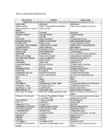
Plaanitavad kulutused Planned spending Tarbimisfunktsioon Consumption function Tarbimise piirkalduvus Marginal propensity to consume, MPC Keskmine Average propensity to consume, tarbimiskalduvus APC Autonoomne tarbimine Autonomous consumption Säästmine Saving Säästmisfunktsioon Saving function Säästmise piirkalduvus Marginal propensity to save, MPS Varud Inventories Multiplikaator, võimendi Multiplier Indutseeritud Induced investment investeeringud Keinsi rist Keynesian –cross diagram Inflatsiooniline(langus) Inflationary (recessionary) gap lõhe Säästmise paradoks Paradox of thrift Raha ja pangandus, rahapoliitika. Money, monetary policy and Banking. Kaup-raha Commodity money laenuraha Credit money veksel bill
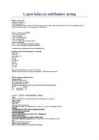
2. Functional decompositions (e.g. IDEF0, SADT), capabilities and organizational models 3. Business processes 4. Organization cycles, periods and timing 5. Suppliers of hardware, software, and services 2. Information: 1. Metadata - data that describes your enterprise data elements 2. Data models: conceptual, logical, and physical 3. Applications: 1. Application software inventories and diagrams 2. Interfaces between applications - that is: events, messages and data flows 3. Intranet, Extranet, Internet, eCommerce, EDI links with parties within and outside of the organization 4. Technology: 1. Hardware, platforms, and hosting: servers, and where they are kept 2. Local and wide area networks, Internet connectivity diagrams 3. Operating System 4
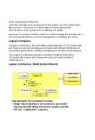
Lapsevanematele Vaatlusmeetod: *Päevikud *Spontaanse kõne analüüsimine MacWhinney, B. (1991). The CHILDES project: Tools for analyzing talk. Hillsdale, NJ: LEA. TESTID *EKSPRESSIIVNE KÕNE *ARUSAAMISÜLESANDED *IMITEERIMISÜLESANDED INTERJUEERIMINE *ANALÜÜSITAKSE LAPSE KEELT NAGU VÕÕRKEELT SPONTAANNE KÕNE Lapse kõne arengu uurimine vanemate raportite alusel MacArthuri Suhtlemise Arengu Test (CDI Communicative Development Inventories) 1993 Adapteeritud rohkem kui 20 keelde Sõnad ja zestid (9-16kuulistele) Sõnade nimekirjas 383 sõna 19 semantilisest kategooriast Sõnad ja laused (16-30kuulistele) 629 sõna 22 kategooriast Kõne omandamise teooriad 1.ÕPPIMISTEOORIA 2.KÕNEORGANI TEOORIA 3.KOGNITIIVNE TEOORIA 4.SOTSIAALNE LÄHENEMINE 1.ÕPPIMISTEOORIA F. Skinner 2.KÕNEORGANI TEOORIA Chomsky, Lenneberg, Fodor jt. Sotsiaalne ja keeleline isolatsioon Aveyron'i metsik poiss Victor Genie juhtum Isabell'i juhtum
the amount of excise tax paid to suppliers for excise goods. Crediting mechanism introduced by the Law on excises. For example, if the purchase of alcohol excise tax paid, and the alcohol used in the production of non-excise products (medicines), the amount of excise duty shall be compensated from the budget. Property tax - In accordance with the instructions of the tax inspectorate of the Russian Federation are subject to taxation, plant and equipment, intangible assets, inventories and expenses on the balance of the paying company. Fixed assets, intangible assets, low value items for tax purposes are recorded at net book value. For tax purposes is determined by the average annual value of the property business. This cost for the reporting period is determined by dividing by 4 the amount obtained from the addition of half the value of the property on January 1 of the year and the first day of the
 annaabi.ee