between reservoirs at different elevations. At times of low electrical demand, excess generation capacity is used to pump water into the reservoir. And when there is a big demand, like in the evenings, then the water is released and flows through the turbines. there are many Advantages for hydropower. *The mayor advantage of hydroelectricity is eliminating the cost of fuel. You don't have to fear about the increasing cost of fossil fuels like oil and natural gas. *The second advantage is that hydroelectric plants last longer than fuel-fired plants. Some hydro plants have been operational about 100 years. *Operating labor costs are low as well because the plants are automated. *And Because the hydroelectric dams do not burn fossil fuels, they do not directly produce carbon dioxide. *The reservoirs can also provide facilities for water sports, and become tourist attractions themselves. In many countries farming fish in the reservoir is common. Also large dams can control floods. The reservoirs can
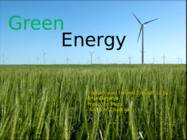
Renewable energy Meriliin Lend Estonian University of Life Sciences Tartu 2013 Topics Renewable energy Solar energy Wind energy Hydroelectric power Geothermal energy Biomass energy Renewable energy Renewable energy comes from sources that naturally renew, or will not run out in our lifetimes. Includes sunlight, wind, water, geothermal heat and various forms of biomass. Renewable energy cannot be exhausted and is constantly renewed. Does not harm the environment. Saves money. Solar energy Solar energy is the technology used to harness the sun's energy and make it useable. Every hour the sun beams onto Earth
Hydroelectricity is the term referring to electricity generated by hydropower; the production of electrical power through the use of the gravitational force of falling or flowing water. It is the most widely used form of renewable energy. History Hydropower has been used since ancient times to grind flour and perform other tasks. In the mid1770s, French engineer Bernard Forest de Bélidor published Architecture Hydraulique which described vertical and horizontalaxis hydraulic machines. Hydroelectric Dam Generating methods Conventional (dams) Pumpedstorage Runoftheriver Underground Advantages Economics CO2 emissions Other uses of the reservoir Disadvantages Ecosystem damage and loss of land Siltation Relocation Failure hazard Estonia hydroelectricity´s Kamari hüdroelektrijaam Tudulinna hüdroelektrijaam Linnamäe hüdroelektrijaam Largest The Three Gorges Dam is the largest operating hydroelectric power station, at 22,500 MW. Three Gorges Dam Video http://www.youtube.com/watch
What consequence might there be if we use non-renewable energy too much? Which energy technology is the world's fastest growing? With what name is renewable energy also known as? Light Heat Electricity Generated from natural resources. Doesn't harm the environment. Can't be replenished Most of our energy. May cause global warming. Wind energy is the fastest growing. Most renewable energy comes from the sun. Hydroelectric energy is the oldest and largest source. Renewable energy a.k.a "green" energy. Thank you for listening! We use energy every day. It surrounds us in different forms, such as light, heat, and electricity. Our bodies use the energy stored in molecules of substances like carbohydrates and protein to move, breathe, grow, and think. We also use energy to do work and to play. Humans have invented thousands of machines and
Water creates energy Eduard Kamenski 11a form The world uses energy from many different sources, such as: hydroelectric power, nuclear power plants, solar energy, and wind generated power. There are positive and negative aspects of each source, but which source of energy is best? My opinion is that the best source of energy is water and I'll bring up some facts why do I think so. Hydroelectric power is currently the world's largest renewable source of electricity. It accounts for six percent of the worldwide energy supply or about fifteen percent of the world's electricity. Water has been found to be a major source of energy. Water power is utilized at present mainly as hydro-electricity. It is produced from moving water and from falls with the help of turbines and dynamos. Hydro-electricity has acquired great significance as a source of energy in the country in the
Shuttle roll-on/roll-off vehicle transport--the largest in the world--and international rail freight trains. The tunnel connects end-to-end with the LGV Nord and High Speed 1 high-speed railway lines. In 1996 the American Society of Civil Engineers identified the tunnel as one of the Seven Wonders of the Modern World. Itaipu Dam Date started:January 1970 Date finished:May 5, 1984 Location:Paraná River, between Brazil and Paraguay The Itaipu Dam is a hydroelectric dam on the Paraná River located on the border between Brazil and Paraguay. The name "Itaipu" was taken from an isle that existed near the construction site. In the Guarani language, Itaipu means "the sound of a stone". The American composer Philip Glass has also written a symphonic cantata named Itaipu, in honour of the structure. The dam is the largest operating hydroelectric facility in terms of annual generating capacity, generating 94.7 TWh in 2008 and 91.6 TWh in 2009,
*Olemus Plussid Miinused Odav Tammide ehitamine kallis Usaldusväärne Raske head kohta leida Pidev energiatootmine Paisjärved Ei saasta Rikke korral oht suur Suurvee ajal saab ülejäägi Muudab jõe veereziimi reservi jätta Kalade ränne segatud Taastuv ning saastevaba Sobilike jõgede arv piiratud Ten of the largest hydroelectric producers as at 2009.[30][32] Annual hydroelect Installed Capacity % of total Country ric capacity ( factor capacity production GW) (TWh) China 652.05 196.79 0.37 22.25 Canada 369.5 88.974 0.59 61.12 Brazil 363.8 69.080 0.56 85.56
largely due to decreases across the board in fossil fuel energy consumption. The combination of these trends resulted in moving renewable energy's share of total US energy to nearly 7 percent, up from over 6 percent in 2005 During 2006 renewable energy consumption reached its highest level since 1997, which was a record year for hydropower due to water availability . Hydropower is the second largest source of renewable energy consumption. Biomass and conventional hydroelectric power had the largest volumetric increases at 220 and 166 trillion Btu respectively, while wind energy consumption had the fastest annual rate of growth at almost 50 percent. The electric power sector continued to be the largest consumer of renewable energy in 2006 (55 percent of total), primarily due to the very large contribution of conventional hydroelectric power . The industrial sector was second (29 percent of the total), due to that sector's major consumption of wood and derived fuels
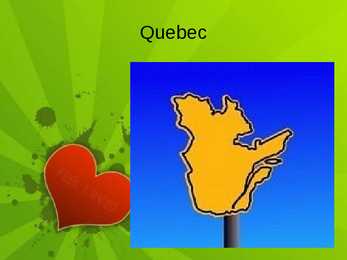
Indeed, it is only 3.7 meters long. The Château Frontenac in Quebec City is the most photographed hotel in the world. Quebec contains more than 3% of the world's fresh water reserves. Quebec's forest covers more than 750,000 km2, which is the size of Sweden and Norway together. It represents 20% of the Canadian forests and 2% of the world's forests. Facts about Quebec In the Baie-James region you can find LG2, the largest underground hydroelectric power plant in the world. Road 132 is the longest road in Quebec. It is more than 1,400 km long and goes from the Montérégie region to the Gaspésie region on the south shore of the St. Lawrence River.
beaches and many lakes and waterfalls. No place is more than 130 kilometres from the coast. Lakes, rivers, and waterfalls are found throughout New Zealand. Most of the lakes lie in the volcanic plateu of the North Island and in glacial valleys near the Southern Alps of the South Isaland. On both islands the rivers rise in the mountains and flow down to the sea. The rapid flow of New Zealand's rivers makes them important sources of hydroelectric power. New Zealand has hundreds of waterfalls. Sutherland falls on the South Island is the fifth highest waterfall in he world. New Zealand enjoys a temperate and moist climate, without extremes of heat or cold. Seasons are the reverse of the Northern Hemisphere History A brown-skinned people called Maori were the first people to live in New Zealand. Europeans first visited the country in 1642, but they didn't start to settle on the island until the late 1700''
agricultural system. With warm temperatures and a lot of rain, New Zealand is a great place for farms of all kinds. For every person living in New Zealand there are twenty sheep and three cows. That is why New Zealand sells more meat from these animals, and more butter, than any other country, and also a lot of wool. Other traditional exports include wood, paper, fruit and vegetables, and fish. In the last few decades wine has also become important. New Zealand has substantial hydroelectric power and fairly large reserves of natural gas. The leading manufacturing sectors are food processing, metal fabrication, and wood and paper products. Its main trading partners are Australia, the US, Japan, and China. New Zealand is one of the top holiday destinations in the world with its clean green natural image, scenery, Lord of the Rings film setting, adventure and culture. ....................................................................................................................
Summary)." Informinc.org. INFORM, n.d. Web. 29 Nov. 2012. · "Green Econometrics." Green Econometrics RSS. N.p., 15 Aug. 2007. Web. 30 Nov. 2012. · Hansen, Holger. "Germany Eyes Cap for Support for Wind Power, Biomass." Reuters. Thomson Reuters, 11 Oct. 2012. Web. 25 Nov. 2012. · Hickman, Leo. "A Small Town in Germany Where Recycling Pays." The Guardian. Guardian News and Media, 17 Mar. 2011. Web. 3 Dec. 2012. · "Hydroelectric Power." Renewable Energy,. Alternative Energy, n.d. Web. 1 Dec. 2012. · Look, Marie. "Trash Planet: Germany." Earth911com RSS. Infinity Resources, 13 July 2009. Web. 3 Dec. 2012. · "News & Research Communications." OSU Study Questions Cost-effectiveness of Biofuels and Their Ability to Cut Fossil Fuel Use. Oregon State University, 30 Nov. 2011. Web. 15 Dec. 2012. · "Picture Gallery." Facts about Germany: Environment, Climate, Energy. N.p., n.d. Web. 26 Nov. 2012.
The Canadian Shield is a vast horseshoe-shaped region. It curves round Hudson Bay from the Arctic coast of the Northwest Territories to the coast of Labrador, the mainland part of Newfoundland. The Canadian Shield covers about half of Canada and is made up of extremely ancient rock. The Canadian Shield mostly consists of eroded hilly terrain and contains thousands of lakes. These lakes are the sources of rivers that break into great rapids and waterfalls used for hydroelectric production, providing power for pulp and paper mills, and a variety of other industries. Relatively few people live in the Canadian Shield because of its poor soil and cold climate. The Canadian Shield has much of Canada's mineral wealth, producing most of the country's iron ore. Central Canada, which includes Ontario and Quebec, is not really the geographic centre of Canada. The region gets its name because, historically, it has been the centre of political and
legislation into law after passage by Parliament. The Governor-General chairs the Executive Council, which is a formal committee consisting of all ministers of the Crown. Members of the Executive Council are required to be Members of Parliament, and most are also in Cabinet. Energy In 2008, oil, gas and coal generated approximately sixty-nine percent of New Zealand's gross energy supply and thirty-one per cent was generated from renewable energy, primarily hydroelectric power and geothermal power. Agriculture Agriculture has been and continues to be the main export industry in New Zealand. In the year to June 2009, dairy products accounted for 21% ($9.1 billion) of total merchandise exports,and the largest company of the country,Fonterra, a dairy cooperative, controls almost one-third of the international dairy trade. Other agricultural items were meat 13.2%, wool 6.3%, fruit 3.5% and fishing 3.3%. New Zealand also has a thriving wine industry, which had
splitting more atoms, and so on. Thereby, continuous fission can take place, forming a chain reaction releasing heat. The heat is used to turn water into steam, that, in turn, spins a turbine that generates electricity. Nuclear power was used to generate 19.4% of all the country's electricity in 2007. Hydropower, the source for 5.8% of U.S. electricity generation in 2007, is a process in which flowing water is used to spin a turbine connected to a generator. There are two basic types of hydroelectric systems that produce electricity. In the first system, flowing water accumulates in reservoirs created by the use of dams. The water falls through a pipe called a penstock and applies pressure against the turbine blades to drive the generator to produce electricity. In the second system, called run-of-river, the force of the river current (rather than falling water) applies pressure to the turbine blades to produce electricity.
Electronic, Vitaly Melentyev, Vladislav Krapivin, Vitaly Gubarev. Mystery was another popular genre. Detectives by brothers Arkady and Georgy Vayner and spy novels by Yulian Semyonov were best-selling, and many of them were adapted into film or TV in the 1970s and 1980s. Village prose is a genre that conveys nostalgic descriptions of rural life. Valentin Rasputin's 1976 novel, Proshchaniye s Matyoroy (Farewell to Matyora) depicted a village faced with destruction to make room for a hydroelectric plant. Historical fiction in the early Soviet era included a large share of memoirs, fictionalized or not. Valentin Katayev and Lev Kassil wrote semi-autobiographic books about children's life in Tsarist Russia. Vladimir Gilyarovsky wrote Moscow and Muscovites, about life in pre- revolutionary Moscow. The late Soviet historical fiction was dominated by World War II novels and short stories by authors such as Boris Vasilyev, Viktor Astafyev, Boris Polevoy,
 annaabi.ee