 50 punkti
Autor soovib selle materjali allalaadimise eest saada 50 punkti.
50 punkti
Autor soovib selle materjali allalaadimise eest saada 50 punkti.
 ~ 9 lehte
Lehekülgede arv dokumendis
~ 9 lehte
Lehekülgede arv dokumendis
 2018-03-28
Kuupäev, millal dokument üles laeti
2018-03-28
Kuupäev, millal dokument üles laeti
 1 laadimist
Kokku alla laetud
1 laadimist
Kokku alla laetud
 0 arvamust
Teiste kasutajate poolt lisatud kommentaarid
0 arvamust
Teiste kasutajate poolt lisatud kommentaarid
 helenakangur1
Õppematerjali autor
helenakangur1
Õppematerjali autor
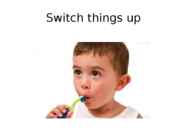
Simple and small ways affect the enviroment for the better Everyone can do something for the enviroment. All of us should do something, because enviroment is very important to people. Our planet is changing and we need to help it change for the better. One way how to help the enviroment is saving energy. You should switch off anything, that uses electricity. If you’re not using it, then turn it off, it’s simple. This goes for lights, televisions and so on. Also try unplugging if possible, because even when an appliance is turned off, it still may use power. You could switch your light bulbs to LED light bulbs, because these are using less energy and even last longer. If you use renewable energy sources, you won’t cause burning fossil fuels, that causes pollution. Another way how to help the enviroment would be saving water. Turn off the water, when you’re not using it. People often leave water running, when they’re brushing teeth- turn if off between rinses
Plants were very much used, because they were easy to get and they could treat very well. Still the origin of healing dates back to the birth of first civilisations. About 3000 B.C. the Egyptians began making some important process in medicine. The Egyptian god of healing Imhotep was actually one of the first physician of the world. At 2500 B.C. Egyptian physicians started to specialize. Some of them specialized in internal diseases, some of them treated the diseases of eyes and teeth. Also Egyptians produced first medical textbooks. Chinese developed a medical practice, which is based on balance between two life forces yin and yang. To restore the balance chinese developed acupuncture - inserting needles into ones body. Medicine and elements of medical care Medicine is the science of healing, but at the same time it is art of healing. It is a science, because it is based on knowledge, which is gained through careful study and experimentation.
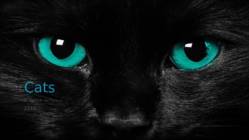
Cats C.Karus 2015 Cat independent Free Graceful the cat will always fall on his feet If the host has / owns a dog, a cat owns the master where the head goes through, there also goes the body through History It is known that people have been living with cats harmonically since 3000 BC in Ancient-Egypt. Cats, living along with humans, started to have sympathetic connection with humans. Probably thanks to cats' usefulness in protecting food, ancient Egyptian started to treats cats as saint animals. Cat was called "miw". Egyptian mourned and embalmed dead cats. They also made special wooden coffins for cats. Cat expressions Friendly Relaxed Fearful Negative Playful is most likely not open to contact is likely looking for contact and play Age
Cats C.Karus 2015 Cat independent Free Graceful the cat will always fall on his feet If the host has / owns a dog, a cat owns the master where the head goes through, there also goes the body through History It is known that people have been living with cats harmonically since 3000 BC in Ancient-Egypt. Cats, living along with humans, started to have sympathetic connection with humans. Probably thanks to cats' usefulness in protecting food, ancient Egyptian started to treats cats as saint animals. Cat was called "miw". Egyptian mourned and embalmed dead cats. They also made special wooden coffins for cats. Cat expressions Friendly Relaxed Fearful Negative Playful is most likely not open to contact is likely looking for contact and play Age
sound – blocked vs partially blocked; vibrating vs no vibration. Different sound types: Velar sounds are produced by the tongue being in contact with the lower side of the velum aka soft palate. Alveolar sounds are produced by the tongue touching the alveolar ridge. Post-alveolar sounds are produced by the tongue touching the area before the alveolar ridge. Dental sounds are produced by the tongue touching the front teeth. Bilabial sounds are produced by the contact of both lips. Labiodental sounds are produced by lip-to-teeth contact. Distribution is the act of looking sounds in different contexts and positions they can occur in. Any speech sounds must always have air flow and some kind of blockage or modification to the air flow. There are 2 kinds of sounds in English: Vowels that are produced do that the airstream is not obstructed – they
dating to the 1800s. The custom always takes place outdoors owing to the overpowering, unpleasant smell, which many compare to rotten eggs and raw sewage. Crisp bread — hard to beat In addition to bread and butter, you’ll often find a type of crisp bread called knäckebröd served alongside your main meal. This is what the Swedes tend to reach for. Once considered poor man’s food, crisp bread has been baked in Sweden for over 500 years, can last for at least a year if stored properly, and remains among the most versatile edible products. The National Board of Health and Welfare (Socialstyrelsen) ran a campaign in the 1970s suggesting Swedes should eat six to eight slices of bread a day, including crisp bread. This comes in various shapes, thicknesses and flavors, with entire store shelves devoted to it. Crisp bread can be topped with anything from sliced boiled eggs and caviar squeezed from a tube for breakfast; to ham, cheese and cucumber
(hinga sisse ja välja tormakal läbi nina. Suu on kinni ja lõdvestunud) Try for three in-and-out breath cycles per second. This produces a quick movement of the diaphragm. Do not do for more than 15 seconds on your first try. Each time you practice the Stimulating Breath, you can increase your time by five seconds or so, until you reach a full minute. Breathe normally after each cycle. If done properly, you may feel invigorated, comparable to the heightened awareness you feel after a good workout. You should feel the effort (pingutus) at the back of the neck, the diaphragm, the chest and the abdomen (kõht). Try this breathing exercise the next time you need an energy boost and feel yourself reaching for a cup of coffee. Exercise 2: The 4-7-8 (or Relaxing Breath) Exercise This exercise is utterly simple, takes almost no time, requires no equipment and can be done anywhere
I am out of breath, because I have been running. 2. An activity that started in the past and is still happening. It has been raining for two hours. 3. Actions repeated over a period of time. She has been playing tennis since she was eight. 4. We are interested in the activity. It does not matter whether something has been finished or not I have been painting the ceiling. Negative form: I haven't (have not) been learning Spanish very long. He hasn't (has not) been eating properly. Question form: Has it been snowing recently? How long have you been working on the computer? Signal words: for 2 hours, since..., all day, etc. PAST SIMPLE (lihtminevik) Form: 2nd form (-ed) Use: 1. A finished time in the past. We can ask when? I visited John yesterday. 2. Finished actions taking place one after another. I woke up, ate breakfast and went to work. Negative form: I didn't (did not) enjoy the film much. He didn't (did not) go to school yesterday.
 annaabi.ee








Kõik kommentaarid