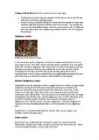
★ Religion in politics Taboos in public ★ Do not spit. ★ Do not discuss race, religion or politics. ★ Do not swear. ★ Do not discuss the wrong/rights about abortion. ★ Do not assume you can smoke anywhere, even outside. Traditional American dishes Reuben Sandwich Bagel and Lox American Hamburger Apple Pie Drop Biscuits and Sausage Gravy Clam Chowder Hominy Grits Barbecue Ribs Tacos American fashion ★ Mostly informal ★ Blue jeans ★ Cowboy hat ★ Cowboy boots ★ Motorcycle jacket Sports ★ American football ★ Baseball ★ Basketball ★ Ice-hockey ➢ Super Bowl ➢ Olympic Games: ➔ 1127 gold medals ➔ 907 silver medals ➔ 794 bronze medals ➔ 2828 total Cinema of the US
England? 7. Who was Mary engaged to? 8. What was the man’s job? 9. How is 26th of December called in England? Why? 10.What is Census? 11.Why did Mary and Joseph stay in a stable not in an inn? 12.Who visited baby Jesus after he was born? There are two options. (shepherds; wise men with presents) 13.When do British children open their Christmas presents? 14.What is British Christmas dinner? (roast turkey, carrots, potatoes, peas, Brussels sprouts, gravy; after that Christmas Pudding) 15.What takes place on Christmas Day at 3 o’clock? (The Queens Christmas Speech) 16.What is „Nativity Play“ retold by children? (The story of Jesus’ birth) 17.By giving and receiving of …. and … reminds Christian of the gift of Jesus, the son of God, beginning his earthly life. 18.What will you get when you tear apart a Christmas Cracker? 19.Who visited Mary before Jesus was born? 20
form. There are many novelists whose novels are enjoyed all over the world: J.R.R. Tolkien, J.K. Rowling, Arthur Conan Doyle, D.H. Lawrence etc. Food The British cuisine is mainly shaped by England's climate The Sunday roast is probably the most traditional feature of English cooking. The Sunday dinner commonly includes roast potatoes with a roasted joint of meat such as beef, lamb, or chicken and generally roasted or boiled vegetables served with gravy. England is also famous for its fish and chips and has a huge number of restaurants and take-away shops that serve it. The British are most known for their teatime. It is believed that the English drop everything for a teatime meal in the mid-afternoon. That is no longer like it is believed. Nowadays it is mostly an accompaniment to tourism. The British tea is usually served with milk. The British are very colourful people. =)
exchanged based on relationship. At the very least, a Christmas card, usually with a robin or cardinal on it, and maybe a little folding paper inside, is given to extended family. St. Stephen's Day: Christmas leftovers are enjoyed all day. A soup is made from the remnants of the bird, with a mix of vegetables from the Christmas dinner. Sometimes a luscious pie is made of ham and turkey with layers of mashed potatoes and gravy. The plum pudding is reheated in a little butter in a heavy frying pan. Traditionally, pantomime plays are performed on St. Stephen's day, in which women play the men's roles and vice- versa. In Dublin there are usually several plays going on with subjects including Cinderella, Sleeping Beauty, Puss in Boots, and Babes in the Wood. On St. Stephen's Day, which is also known as Boxing Day, it's customary to give small gifts, usually of cash, to the
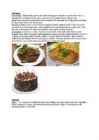
fruit filling, especially raisins, and is glazed with a fruit-flavored icing, sometimes with rum added. Modern babka may be chocolate or have a cheese filling. Pierogi: are Schnare dumplings of unleavened dough - first boiled, then they are baked or fried usually in butter with onions - traditionally stuffed with potato filling, sauerkraut, ground meat, cheese, or fruit. England Yorkshire pudding: It is made from batter and usually served with roast meat and gravy. It is cooked by pouring a thin batter made from milk (or water), flour and eggs into oiled then preheated baking pans or muffin tins. A popular batter is one-third cup milk, one-third cup flour per egg. This dish is not usually eaten as a dessert like other puddings but instead as part of the main course or at a starter. Roast beef: is a dish of beef which is roasted in an oven. Essentially prepared as a main meal,
Smoked or marinated eel, crayfish dishes and imported crabs and shrimps are considered delicacies. One of Estonia's national dishes is räim (Baltic dwarf herring), along with sprats. Flounder, perch and pike-perch are also popular. Soups Soups are traditionally eaten before the main course and most often are made of meat or chicken stock mixed with a variety of vegetables. Soups are also blended with sour cream, milk and yogurt. The Main Course Pork and potatoes accompanied by a rich gravy and often served with sauerkraut or other vegetables has been the traditional Estonian main course. Pork has been the most important meat and is eaten roasted, cured as bacon, in the form of ham, or in pies and sausages.There are many other main dishes too. Black Bread Black rye bread accompanies almost every savory food in Estonia. Instead of wishing "bon appetit", Estonians are prone to say jätku leiba ("may your bread last"). Estonians continue to
can't stay in this dark tower much longer." Susanna smiled and bowed her curly red-haired head. She was very happy to join the rest of the castle again. After eating the candy, Misery felt very tired. But instead of heading to the bedroom, she opened her wide white wings and flew out to the royal park. The day was warm and sunny; in the gardens many flowers had started their colourful blooming, decorating tasteless gravy castle walls. Misery landed on the juicy green grass and looked up in the light blue sky and soundless tears fell down her pale cheeks: this was the sky the previous queen and her mother had liked. She thought of them and warm memories just ran into her head, making her cry sound even more heart-breaking. Fortunately, she thought, no one was there to see her. But she miscalculated. The same moment a fine-looking young blonde man came out from the bushes. His eyes
available. This meant they had to adapt their eating habits to their new homes. The Cape Malays were considered the masters of seasoning. When the Malays arrived in the region, they spiced, curried and often sweetened variations of many European traditional dishes. Fish and shellfish might be grilled, fried, baked or curried. Some of the more exotic Cape dishes consist of venison and fowl. Venison meat is traditionally cooked in wine and served either with rich gravy or stewed preserves. Putu-Pap or Crumbly Pap (Serves 6) Ingredients 750 ml water 2 tsp. salt 1 kg fine white corn meal, in place of maize meal Preparation Bring water to boil. Pour meal into centre of water to form a pile, add salt, but do not stir. Reduce heat by removing from stove. Put lid on and let sit for 5 minutes. Stir with fork or wooden spoon until pap is fine-grained and crumbly. Replace lid and let simmer for 45 minutes until done. South African restaurant guides
Day 18th January leader of the Civil Rights Movement, preached nonviolence, got a Nobel Peace Price Washington's birthday 1st president of the US Columbus day Abraham Lincoln's birthday 16th President of the US 12. Origin of Thanksgiving Day In 1620, Pilgrims - Puritan separatists - landed in Plymouth, MA. The Pilgrims celebrated the "First Thanksgiving" in1621, after their first harvest Traditional foods eaten that day large roast turkey, side dishes - cranberry sauce, stuffing or gravy, sweet or mashed potatoes, pumpkin or peach pie. Black Friday - the day after Thanksgiving Thursday The beginning of Christmas season shopping 13. Who were the first European explorers in the area of present-day New York? Giovanni de Verrazzano - first European to reach the area of New York Bay Henry Hudson - in 1609, he explored the New York City area, while in the service of the Dutch East India Company India 1. Which is the most widely spoken Indian language
Cream teas are also popular. Many visitors, who come to Britain, find English instant coffee disgusting. Dinner time is generally between six and eight p.m. The evening meal is the biggest and the main meal of the day. Very often the whole family eats together. They begin with soup, followed by fish, roast chicken, potatoes and vegetables, fruit and coffee. On Sundays many families have a traditional lunch consisting of roast chicken, lamb or beef with salads, vegetables and gravy. The British enjoy tasting delicious food from other countries, for example, French, Italian, Indian and Chinese food. Modern people are so busy that they do not have a lot of time for cooking themselves. So, the British buy the food at the restaurant and bring it home already prepared to eat. So we can conclude that take-away meals are rather popular among the population. Eating has become rather international in Britain lately. Vocabulary: proverb -- Every cook praises his own broth --
Mignery. It is distinctly non-Slow-Carb. Once you've cried a tear of dietary misery, I'll tell you what I do: Miscellaneous breakfast--Breakfast can include wheat-based (lysine-deficient) products such as toast, muffins, or bagels, provided that wheat is the only substantial source of protein, and its calories are heavily diluted with calories from non-protein sources (butter, sugar, juice, fruit, etc.). Toast with mushrooms, onions, and gravy--You can thicken the fat or drippings from meat with starch to make a gravy and drizzle it over the toast, mushrooms, and onions. Spinach with vinegar--Microwaved frozen spinach (<2 cups) can be flavored with any kind of vinegar for a near-protein-free dish with the warmth and chew of meat. Meat substitutes--A microwaved slice of eggplant can fill a sandwich and give something of the shape and texture of a lunch meat. Black olives can also provide something of the
similar sentence, since I doubt that anyone has ever produced a sentence even remotely similar to (1). You may say that you understood (1) because you speak English and (1) is an English sentence. That is true so far as it goes, but it only pushes the mystery to arm's length. How is it that you are able to "speak English," given that speaking English involves being able to produce and understand, not only elementary expressions like "I'm thirsty," "Shut up," and "More gravy," but novel sentences as complex as (1)? That ability is truly amazing, and much harder to explain than how you breathe or how you eat or how you walk, each of which abilities is already well understood by physiologists. One clue is fairly obvious upon reflection: (1) is a string of words, English words, that you understand individually. So it seems that you understand (1) because you understand the words that occur in (1) and you understand something about how they are strung together
A . W o u l dy o ul r k e1 ) s o m em o r eb r e a d ? 18 exampl e. B: Yes,please.ls there2) anypastaleft? A: Sorry,there's3) no pastaleft but thereis a 4) little s ala di f y o uw o u l dl i k eth a t. B : No,th a t' sO K .T h a n k s . o potatoes/beef/gravy. cake/tea/orangelulce o rrvlrice water/cu . chios/fish/sauce tr tr 16 a . Rea dth e d i a l o g u ea n d u n d e rl i n eth e correct it em . A: t k eto o l o n gto d o th e s hoppi ng
A . W o u l dy o ul r k e1 ) s o m em o r eb r e a d ? 18 exampl e. B: Yes,please.ls there2) anypastaleft? A: Sorry,there's3) no pastaleft but thereis a 4) little s ala di f y o uw o u l dl i k eth a t. B : No,th a t' sO K .T h a n k s . o potatoes/beef/gravy. cake/tea/orangelulce o rrvlrice water/cu . chios/fish/sauce tr tr 16 a . Rea dth e d i a l o g u ea n d u n d e rl i n eth e correct it em . A: t k eto o l o n gto d o th e s hoppi ng
A . W o u l dy o ul r k e1 ) s o m em o r eb r e a d ? 18 exampl e. B: Yes,please.ls there2) anypastaleft? A: Sorry,there's3) no pastaleft but thereis a 4) little s ala di f y o uw o u l dl i k eth a t. B : No,th a t' sO K .T h a n k s . o potatoes/beef/gravy. cake/tea/orangelulce o rrvlrice water/cu . chios/fish/sauce tr tr 16 a . Rea dth e d i a l o g u ea n d u n d e rl i n eth e correct it em . A: t k eto o l o n gto d o th e s hoppi ng
A . W o u l dy o ul r k e1 ) s o m em o r eb r e a d ? 18 exampl e. B: Yes,please.ls there2) anypastaleft? A: Sorry,there's3) no pastaleft but thereis a 4) little s ala di f y o uw o u l dl i k eth a t. B : No,th a t' sO K .T h a n k s . o potatoes/beef/gravy. cake/tea/orangelulce o rrvlrice water/cu . chios/fish/sauce tr tr 16 a . Rea dth e d i a l o g u ea n d u n d e rl i n eth e correct it em . A: t k eto o l o n gto d o th e s hoppi ng
, N. Rothman, C. P. Salmon, M. G. Knize, E. Oliver, C. N., B. W. Ahn, E. J. Moerman, S. Goldstein, D. Brown, C. A. Swanson, D. Rhodes, S. Rossi, J. S. and E. R. Stadtman. 1987. Age-related changes in Felton, and O. A. Levander. 1998. Heterocyclic oxidized proteins. Journal of Biological Chemistry amine content in beef cooked by different methods 262:5488–5491. to varying degrees of doneness and gravy made Ooizumi, T., and Y. L. Xiong. 2004. Biochemical from beef drippings. Food Chemical Toxicology susceptibility of myosin in chicken myofibrils sub- 36:279–287. jected to hydroxyl radical oxidizing systems. Journal Slump, P., and H. A. W. Schreuder. 1973. Oxidation of of Agricultural and Food Chemistry 52:4303– methionine and cystine in foods treated with hydrogen 4307. peroxide
 annaabi.ee