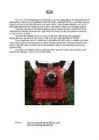
Kilt The kilt is a knee-length garment with pleats at the rear, originating in the traditional dress of men and boys in the Scottish Highlands of the 16th century. Although the kilt is most often worn on formal occasions and at Highland games and sports events, it has also been adapted as an item of fashionable informal male clothing in recent years, returning to its roots as an everyday garment. Typically, a portion of the belted plaid hangs down to about the knees with the rest of the material being wrapped up around one's upper body in a variety of ways and pinned or otherwise secured to keep it in place. The first clear reference to the kilt occurs in the year 1594.In that year, a group of Highlanders from the Western Isles went to Ireland to fight under Red Hugh O`Donnell.
School uniform's pros and cons School uniforms are verry popular nowadays, mostly in private schools. But would school uniforms make our lives better? There is no doubt that school uniforms have many advantages. Firstly, they encourage discipline. It would also free children from the pressure to buy trendy clothes. All the childrens would be dressed in the same way and as a result it would cut out a school bullying, which is often used, because some children do not have money to buy expensive and fashionable clothes and they are bullied because of that. Children would not have to think about what to wear in the morning and parents save time taking children shopping and spending extra money. Children will be that much less focused on appearance and more on learning. However school uniforms are good there is some disadvantages too. For example children can not show their character, which is often based on c...
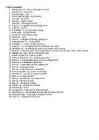
10. to scramble (v) to cook while stirring 11. tender (adj) soft and delicate 12. utensil (n) tool used for eating 13. cooker (n) - stove 14. oven (n) a chamber for baking, roasting etc 15. chopping board (n) cutting board 16. to forage (v) to look for food in a forest 17. recipe (n) a list of ingredients and instructions for a meal 18. ingredients (n) something that enters as an element into a mixture 19. apron (n) a garment (piece of clothing) that one can wear to cover their clothes while cooking 20. highlight (n) peak, the most memorable part 21. a clove of garlic (n) a piece of garlic 22. to have a sweet tooth (v) to like eating sweets 23. ladle (n) a long-handled utensil with a cup-shaped bowl 24. carton (n) a cardboard or plastic box 25. bowl (n) a deep plate used for holding food 26. loaf (n) a portion of bread 27. slice (n) a thin, flat piece of something
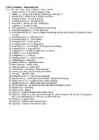
30. military service (n.) compulsory basic military training 31. parental consent (n.) official permission from a parent 32. driving licence (n.) an official document that allows one legally to drive 33. disruptive (n.) - distracting 34. studious (adj.) - diligent 35. cotton (n.) - a natural material used to make clothes 36. collar (n.) - the part of a shirt, coat, dress, blouse, etc., that encompasses the neckline of the garment and is sewn permanently to it, often so as to fold or roll over 37. buckle (n.) a part of a belt 38. denim (n.) material used to produce jeans 39. tight (adj.) - firmly or closely fixed in place
Anglo-Saxon clothing usually utilized only three types of fabric. Wool was a coarse material which was used for most garments. Lower class people, such as slaves and poorer peasants could only use wool for their garments, even garments worn against the skin. Linen, harvested from the flax plant, was a finer material which was used for garments. Silk was an extremely expensive material, and it was used only by the very rich, and then only for trim and decoration. Men`s fashion The primary garment consisted of a knee-length woolen tunic. For the poorer, this would be the only clothing worn, although some may have been given woolen trousers and shoes to wear. A linen undertunic and linen braies would be worn by richer peasants and nobility, along with woolen hose. Over the tunic, a cloak would be worn, which was held together by a brooch or, later on, a ring. The Phrygian cap was the main style of headcovering worn by men, although hoods would also be worn. Women´s fashion
TAKE OVER = take control of Mike took over the family business when his father retired. TAKE OUT = A. date, court B. kill C. remove A. I am taking Jill out to a movie tonight. B. The mob ordered a hit on three fingers Tony. They are going to take him out. TAKE TO = A. like B. adjust naturally A. She has really taken to John since she's been here visiting. B. The baby ducks took to the water like, well, ducks to water. TAKE UP = A. begin a hobby B. discuss at later time C. shorten a garment D. occupy space A. "Who took up archery? I see the bow and arrows over there." B. This should be taken up at the next meeting. C. "She's nuts! She wants her mini skirt taken up." D. "He takes up too much space. Do we have to share a room?"
Local differences were noticed by the first ethnographers describing Estonians. The main regions fall into South, North, and West Estonia, and the islands as a separate group, reflecting ancient tribal peculiarities. South Estonia This region is the most conservative in dress. Maidens in Southern Estonia bound their hair with a ribbon plaited from colourful pieces of cloth or woollen yarns. Instead of a skirt, the Setu women wore a garment resembling the Russian sarafan. Setu women were extremely fond of silver ornaments: on their chest they wore a conical brooch, in addition to various silver chains. Traditionally, the large setu brooch was only worn by women of child-bearing age; nowadays older women, too, use it as a decoration. The men of the southeast wore their shirts loosely on their pants with a belt, similar to the Russian tradition. North Estonia
39.Tedious long and tiresome; to cause weariness or boredom 40.Repugnant distasteful, offensive 41.Extinguish to put our; to put an end to or bring to an end 42.Fecund producing or capable of producing 43.Vapor a gas at a temperature below its critical temperature 44.Tutelage the act of guarding, protecting or guiding 45.Conjunction the act of conjoining; union 46.Utilize to put to use 47.Strive try hard; to exert oneself vigorously 48.Apron a garment covering part of the front of the body and tied at waist, for protecting the wearer's clothing 49.Incessant continuing without interruption 50.Indispensable absolutely necessary, essential 51.Trench a deep furrow, ditch, or cut; a long, narrow excavation in the ground 52.Palpable readily or plainly seen, heard, preceived 53.Femur a bone in the human leg extending from the pelvis to the knee 54.Scintillate to twinkle, to sparkle; flash 55
Fiji, endowed with forest, mineral, and fish resources, is one of the more developed of the Pacific island economies, though still with a large subsistence sector. Natural resources include timber, fish, gold, copper, offshore oil potential, hydropower. Fiji experienced a period of rapid growth in the 1960s and 1970s but stagnated in the 1980s. The coup of 1987 caused further contraction. Economic liberalization in the years following the coup created a boom in the garment industry and a steady growth rate despite growing uncertainty of land tenure in the sugar industry. The expiration of leases for sugar cane farmers (along with reduced farm and factory efficiency) has led to a decline in sugar production despite a subsidized price. Subsidies for sugar have been provided by the EU and Fiji has been the second largest beneficiary after Mauritius. Urbanization and expansion in the service sector have contributed to recent GDP growth. Sugar
; 2. So keen and perceptive as to seem preternatural. to slug (250) To hit very hard Grandma got mad at Grandpa and so she hopped up quickly and slugged Grandpa between the shoulderblades to make him swallow. to tamper with something (255) - The love medicine was stronger than Grandma and Lipsha had thought it would be. Lipsha was afraid and said that they shouldn't have tampered with it. to quill (260) to arrange (fabric) in flutes or cylindrical ridges, as along the edge of a garment, hem, etc. One night Marie found a skin bag, which had one end quilled with rawhide strips of pale, washed- to-sand colors, dyed with butternut, wild grapes, ocher, fading sere. to sprawl (261) to spread the limbs in a relaxed, awkward, or unnatural position. When Marie saw Gordie again, the circle of Gordie's motion grew rounder and wider until in one movement he uprooted himself and sprawled headlong. a quilt (261) a type of bed cover.
see the marrow of the town. to be privy to something (46) - If you're privy to something, you've been let in on a secret or know about something that most people don't. ... The adjective privy comes from the Latin privatus, meaning "private," and describes someone who has knowledge of secret or confidential information. S- Marie is privy to both worlds of Evil knowledge. a habit (49) - a long, loose garment worn by a member of a religious order. S Marie asks if she gets a habit when Leopolda tells her that Marie will be sleeping behind the stove. a stigma (59) - (in Christian tradition) marks corresponding to those left on Christ's body by the Crucifixion, said to have been impressed by divine favour on the bodies of St Francis of Assisi and others. S Leopolda is explaining how stigmata appears on Marie palm. mealy (60) - Lacking healthy coloring; pale
take in understood; fool; deceive; make smaller (in sewing) take over take; assume command of tear down destroy tear up tear into small pieces tell off scold; reprimand think over consider think through consider from beginning to end think up create; invent throw away discard throw over reject tie up tie securely or tight tire out cause to be exhausted touch up repair try on put on a garment to verify the fit try out test turn down refuse; lower the volume turn out produce; force into exile, extinguish (a light) wash off wash the surface of wash out wash the inside of wear out use until no longer usable; tire greatly wind up finish, tighten the spring of a watch or machine wipe off wipe the surface of wipe out wipe the inside of; decimate work out solve write down record
Significance of the Jewish element in Russian immigration to the US. Immigration from Russia to the US in 18811914: Nearly 3.2 million immigrants from the Russian Empire. The most prominent Russian groups that immigrated in this period were the groups seeking freedom from religious prosecution. Nearly half of the immigrants were Jews. Religion of the Russian immigrants: Russian Orthodox, Jews, Nominal Jews (non-religious people of Jewish descent). Eastern European Jews dominated New York's garment industry!!! Immigration in 19201939: A large wave of Russians immigrated in the short time period of 19171922, in the wake of October Revolution and Russian Civil War as refugees from the Bolshevik regime due to the hatred for the new Bolshevik regime in their homeland. Great emphasis was put on education. Most notable immigrants from the cultural sphere were Vladimir Nabokov, Igor Stravinsky, and Isaac Asimov.
tradition of high significance at this time and followed the ceremonial forms set by pre-Christian Rome. These banners were generally called `pallia' and like the previously mentioned cloak of Mohammed, they were originally garments. It is interesting to note that pallia were dedicated to St. Augustine (354-430), Charlemagne (742- 814), and William the Conqueror (1028-1087). The cloak of St. Martin was another garment that was turned into a flag, which later became a cult object of Frankish kings and even influenced the choice of blue as part of the modern French tricolour. Meanwhile the power that finally led to the creation of the Mongol Empire arose in Asia. Many of the Mongol standards displayed a device, a `flaming trident', reproducing the blades of a trident with flames surrounding them. The flag of the Khan himself consisted of nine yak-tails hanging from a rack of crossbars. After
closed class words: they, them, their Danelaw; take, call, cast, hit, thrive, want, raise, widow, husband, fellow, sky, skirt, ski, skin, skill, law, ill, odd, ugly, bread 8. French borrowings administration, crown, court, power, authority, parliament, government, peace, battle, arms, enemy, armour, law, culture, service, saint, miracle, clergy, sacrifice, chase, scent, falcon, quarry, forest, retrieve, colour, image, fashion, design, beauty, music, romance, costume, garment, apparel, dress, train, arch, tower, vault, religion column, transept. grades of baron, count, countess, duke, duchess, page, marquise, prinke aristocracy Normans ‘adopted’ king, queen, lord, lady leisure and cards, chess, the chase, conversation, dice, dance, leisure, recreation, tournament, sport pastimes culinary words veal, beef, mutton, venison,pork, ham, methods of roast, boil, fry preparing food
Swedish: o glogg, ombudsman, smorgasbord, tungsten. 8. French borrowings Administration, law, culture, fashion, religion o crown, court, power, authority, parliament, government, peace, battle, arms, siege, enemy, armour, service, saint, miracle, clergy, sacrifice, chase, scent, falcon, quarry, forest, retrieve, colour, image, design, beauty, music, romance, costume, garment, apparel, dress, train, petticoat, arch, tower, vault, column, transept, cloister, Grades of Hierarchy o baron, count, countess, duke, duchess, page, marquise, prince Leisure and pastimes o cards, chess, the chase, conversation, dice, dance, leisure, recreation, tournament, sport Culinary o veal, beef, mutton, venison, brawn, pork, ham, gammon, roast, boil, broil, fry From modern French:
concomitant meaning change. Proper count: There are three Evas in the class. Count noncount (mass): After the accident, there was cat all over the road. Mass count: The waitress brought three waters to the table. - dual class membership: some nouns can be seen from the point of view of count or noncount nouns. I want an evening paper. Wrap the parcel up in brown paper - a different lexical item a garment clothing, a laugh laughter, a `permit permission, a job, a task work, a poem - poetry - conversion: nouns may also be shifted from one class to another by means of conversion A: What cheeses have you got today? B: Well, we have Cheddar, Gorgonzola, and Danish blue. Grammatica categories: Each of the main word classes has a typical set of grammatical categories. Number: Number is the only inherent category for which nouns are inflected in all of the
4 all 10 such 3 piercing. The others are firework display. 5 off 11 for accessories. 5 He ought to / should apologise 6 over 12 just 4 bandana. It's a garment; the to the teacher. others are parts of garments. 4 1 The arrival of monster rock 6 I should have put on more sun 5 shabby. The others describe concerts that attracted thousands cream. design. 2 It started off as a jazz festival but now has many kinds of music; it 8F Stimulus-based
the whole Black race decides that it would only use products made by Blacks or services provided by Blacks; it is a day that we experience the greatest pain of suffering for our past, present and future transgressions – without suffering this heavy pain, we cannot truly confess for our sins; it is a day we wake up in the morning without turning on the electricity, because we perfectly well know that we didn’t have anything to do with its production; it is a day we wake up only putting on a garment produced by Blacks – if you cannot find one, then stay naked all day, it is a way for you to confess to your transgressions against the Black race and to understand the need to change directions, it is a day we wake up not turning on our television sets because we perfectly well understand that it was not made by Blacks and moreover, the Japanese who make the products have said several times that Blacks
(A) adverse (B) advantageous (C) fundamental (D) practical 6. A major shift in propulsion technology during the postwar period caused the world to adopt jet propulsion as the power source for military and passenger aircraft. (A) expansion (B) advance (C) switch (D) discovery 7. Throughout the nineteenth century, a succession of improvements in textile machinery steadily increased the volume of cloth and garment production. (A) attractiveness (B) refinement (C) quantity (D) caliber 8. The human environment, in the biological sense, is chiefly a hostile one. (A) mostly (B) actually (C) normally (D) partially 9. All of the outer surfaces of the human body are covered with microorganisms that are potentially harmful. (A) intolerable (B) annoying (C) intrusive (D) unhealthy 10
"I don't think you know how your desire makes me feel." My arms wrapped around me, covering my breasts. I suddenly felt naked in the worst way. "It makes me feel beautiful. It makes me feel strong and alive. I-I can't bear to be with you if you don't feel that way about me anymore." "Eva, I..." His voice faded into silence. He was hard-faced and distant, his fists clenched at his sides. I loosened the sash of my robe and shrugged the whole garment off me. "Look at me, Gideon. Look at my body. It's the same one you couldn't get enough of last night. The same one you were so desperate to get into that you took me to that damn hotel room. If you don't want this anymore... if you don't get hard looking at it-" "Is this hard enough for you?" He broke the drawstring of his pants pushing them down to expose the heavy, thickly-veined length of his erection. We both lunged at the same time, colliding
Contrary to the actual findings, only two predicted that they would have given the medication as ordered. _ _ Chapter 6 AUTHORITY READER'S REPORT 6.2 From a Florida-Based Physician The title MD carries significantly more authority when placed in the visual I context of a white coat. At first, I hated to wear white coats but later in my career came to understand that the garment carries power. On multiple occa- sions when I started work in a new hospital rotation, I made it a point to wear the white coat. Without fail my transition went smoothly. Interestingly, physi- cians are highly aware of this and have even created a pecking order assigning medical students the shortest white coats, while residents in training get medium length coats, and attending physicians have the longest white coats.
 annaabi.ee