Lindgren had considerable public influence, however, she used it scarcely. Her constant concern with animal welfare was active in passing a new law in 1988 controlling factory farming, which put Sweden among the most developed countries on this issue. Lindgren’s humor and love for humanity was legendary. She represented the Swedish spirit for the rest of the world. She speaks out on behalf of living life against violence. Her books have put across loving relationships, liberation and fondness for nature. She passed away at the age of 94, after a very productive and artistic life. For example I took 2 books written by Astrid Lindgren Happy Times in „Noisy Village“ Pippi Longstocking Thank You for attention
terrible pain that makes people act the way that hurts themselves. When Savannah married with the other guy, I felt dissapointment in love and in it's capability. Me, as a young girl, who has whole life to live, shouldn't let such feelings and emotions, that makes me doubt in love and happiness, inside of me, yet the film made me do it. I can't say, that now I'm stoutnesser and braver about the future, because what we truly expect from life is fondness, care and love what is the jackpot of life and true happiness, but if (from what I saw from the film) I have to suffer because of love, lose some years and feel the pain, then right now, what I really want, is to stay in this moment for ever and protect myself from the future.
Evidently, one of the traits that is omitted to the generation of 1840s the fathers - is the sentimentality and overly romantic feelings that contrast strongly with that of the new men of the 1960s. Nikolai is depicted as sentimental and dreamy as he awaits his son. He ponders long in his thoughts, and sighs overly emotionally "... ... ...", while also thinking of his long-lost wife. Throughout the novel he does not hesitate to kiss his son, initiate physical contact and openly express his fondness qualities which are not overly `manly' or adult, but rather emotional and child-like. In nature, he thinks " , !" .. ". Nikolais fondness of poetry is also deemed silly as he starts to quote verses by Pushkin in Chapter 2 " , -- , : , , , !" which is abruptly ended by Bazarovs request for matches. The aesthetic sense of the gentry is shown as Nikolai plays Schubert's "Erwartung" on his cello - albeit being not that skilful.
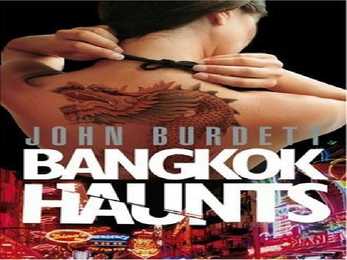
I think the character I like the best is Sonchai. He has that something that makes you wonder what is he going to do next or does he belive in things that might exist in this world and might not. He is constantly stuggeling with Damrongs' death. Shortly after he first heard of Damrongs' death he buried hes' problems into a vodka bottle. Although Damrong was a prostitute he was having some indescribable feeling for her. It wasn't exactly love more like fondness. He never got Damrongs' way of living. He never unterstood why she didn't have a singel photograph of herself although she looked magnificent. What is the message of the book? The book is a criminal story. It doesn't have a clear message, but if I have to think of something I'd think of something like this: The way you lived in the past mustn't change the way you are right now. Past is past and you have to keep it there.
Against this bleak backdrop, Henry's reaction to Catherine Barkley is rather astonishing. The reader understands why Henry responds to the game that Catherine proposes--why he pledges his love to a woman he barely knows: like Rinaldi, he hopes for a night's simple pleasures. But an active sex drive does not explain why Henry returns to Catherine--why he continues to swear his love even after Catherine insists that he stop playing. In his fondness for Catherine, Henry reveals a vulnerability usually hidden by his stoicism and masculinity. The quality of the language that Henry uses to describe Catherine's hair and her presence in bed testifies to the genuine depth of his feelings for her. Furthermore, because he allows Henry to narrate the book, Hemingway is able to suffuse the entire novel with the power and pathos of an elegy: A Farewell to Arms, which Henry narrates after Catherine's death, confirms his love and his loss.
The story begins when Captain Hastings, recovering(taastama) from wounds he suffered during the World War I, runs into an old friend, John Cavendish. Hastings is invited down to Styles, where Cavendish lives, to recuperate. At Styles, the center of attention is Emily Inglethorp, John Cavendish's stepmother. Emily inherited Styles from John's father when he died and runs the household with a firm hand. Hastings describes her as "an energetic, autocratic personality" with a fondness for "playing the Lady Bountiful." She is devoted to charitable causes and is always getting involved(haaratud) in bazaars and other functions. Emily hasn't changed since Hastings last saw her, and there is no question of who is running the show at Styles. Emily Inglethorp's presence and conversation dominate everyone's life at Styles. This domination must upset someone very deeply because soon Emily is found dead from strychnine poisoning. Emily was a forceful person but even so,
I got so attached to the book that I couldn't even spare ten minutes to take a break in order to have something to eat or rest my eyes, when my vision got all blurry (it was an eBook). Eventually my best friend managed to lure me to her place (it took her much effort) and even then, I secretly downloaded the book to her computer and carried on reading, my only response to her chatter being an occasional glance, nod or ''mmh''. To someone, who obviously has a certain fondness for Twilight, not much explanation is needed to why I so suddenly fell unexplainably, deeply in love with it. However, even then, I wasn't entirely blinded, or at least blinded enough not to notice the poor writing skills of the author, the blandness and lack of development of the characters and several cringeworthy scenes that I was able to forgive, at first. So I decided to reread it, with a more critical view, eventually coming to a conclusion, that
too far. Capello you see has a habit of spouting forth with opinions on public life. And those figures he admires most play their politics wide on the right. Described variously as "uncompromising", "disciplinarian" and "impatient", Capello has recently expressed his support for those such as Pope Benedict XVI and Silvio Berlusconi. He has praised the organisational "skills" of General Franco. In a sport derided for its navel-gazing insularity and fondness for talking in cliches, the would-be successor to Steve McClaren deliberately seeks his friends outside football, has an impressive modern art collection, travels to obscure locations and prefers to spend his evenings listening to classical music. When asked recently about his testy attitude towards the media circus that surrounds the game, he said: "People say I'm impatient when it comes to football and they're right
The story begins when Captain Hastings, recovering(taastama) from wounds he suffered during the World War I, runs into an old friend, John Cavendish. Hastings is invited down to Styles, where Cavendish lives, to recuperate. At Styles, the center of attention is Emily Inglethorp, John Cavendish's stepmother. Emily inherited Styles from John's father when he died and runs the household with a firm hand. Hastings describes her as "an energetic, autocratic personality" with a fondness for "playing the Lady Bountiful." She is devoted to charitable causes and is always getting involved(haaratud) in bazaars and other functions. Emily hasn't changed since Hastings last saw her, and there is no question of who is running the show at Styles. Emily Inglethorp's presence and conversation dominate everyone's life at Styles. This domination must upset someone very deeply because soon Emily is found dead from strychnine poisoning
Stan is modeled after his voice actor, co-creator Trey Parker, also sharing his birthday of October 19. In many episodes, Stan often reflects on the moral lessons he's attained in a speech that often begins with, "You know, I learned something today...". He suffers from asthma and is often subject to the harsh bullying of his older sister, Shelley. His father Randy is a geologist, and his mother Sharon, works as a secretary at Tom's Rhinoplasty. Stan has indicated a fondness for animals Stan is usually seen in a brown jacket, blue denim jeans, red gloves/mittens, and a red- brimmed blue knit cap adorned with a decorative red pom-pon. Kyle is Stan's best friend, and their relationship is a common topic throughout the series Stan is usually seen solely with Kenny when Kyle is not around. Stan and Butters are generally on friendly terms, although at times Stan tends to be generally annoyed by Butters.
accent. Characterizers are emotions expressed while speaking, such as laughing, crying, and yawning. A voice qualifier is the style of delivering a message - for example, yelling , as opposed to whispering Vocal segregates such as "uh-huh" notify the speaker that the listener is listening. Posture can be used to determine a participant's degree of attention or involvement, the difference in status between communicators, and the level of fondness a person has for the other communicator. Posture is understood through such indicators as direction of lean, body orientation, arm position, and body openness. A gesture is a non-vocal bodily movement intended to express meaning. They may be articulated with the hands, arms or body, and also include movements of the head, face and eyes, such as winking, nodding, or rolling one's eyes. Emblems are gestures with direct verbal translations, such as a goodbye wave;
The Cataclysmic Death of Stars Republished from the pages of National Geographic magazine Written by Ron Cowen March 2007 Ever since he was a teenager, Stan Woosley has had a love for chemical elements and a fondness for blowing things up. Growing up in the late 1950s in Texas, "I did everything you could do with potassium nitrate, perchlorate, and permanganate, mixed with a lot of other things," he says. "If you mixed potassium nitrate with sulfur and charcoal, you got gunpowder. If you mixed it with sugar, you got a lot of smoke and a nice pink fire." He tested his explosive concoctions on a Fort Worth golf course: "I screwed the jar down tight and ran like hell."
some-handsome, hood-childhood) and productive that are used at present (nt, de, re pre, non, un). Affixes are native and borrowed. Native ones are those that existed in OE period (ish, dom, ful, teen). They used to be indipendent words. Foreign affixixes are viewed according to the lg they come from (nt, Latin- able; deca-dent, expect-ancy) Hybrids are for example read plus able. Some words have elements that belong to different languages, they are hybrids. Diminutive suffixes express fondness or a small size (nt, daddy, booklet, pussykin). Derigatory express neg attitude (nt, gangster) . Negative prefixes are un, non, mis dis . 9. composition ehk compound. The pattern of composition is a combination of 2 or more stems. Compounds are spelt either as one word or with an hyphen. Compounds are completely motivated (nt, dining-room), partly motivated (nt, flower-bed), absent (nt, fiddle, viiul). Stress on the first part (nt, doorway); primary stress on the first
comfortable as an editor, preferring to contribute to the magazine as a columnist, producing his Roundabout Papers for it. His health worsened during the 1850s and he was plagued by the recurring stricture of the urethra that laid him up for days at a time. On 23 December 1863, after returning from dining out and before dressing for bed, Thackeray suffered a stroke and was found dead on his bed in the morning Thackeray began as a satirist and parodist, with a sneaking fondness for roguish upstarts like Becky Sharp in Vanity Fair, Barry Lyndon in The Luck of Barry Lyndon and Catherine in Catherine. Charlotte Brontë Charlotte Brontë was a British novelist, the eldest of the three famous Brontë sisters whose novels have become standards of English literature. Charlotte Brontë is best known for Jane Eyre, one of the most famous of British novels. Charlotte Brontë was born in Thornton, Yorkshire, England, the third of six children.
· For the sake of humour, esp. when these words clash with colloquial ones. Archaic words are not used any more. They are also called out-dated, cave words (timepiece, wot--know) We should distinguish between natural versus deliberate use of such words. Contemporary writers use Shakespeare's words often intentionally. Function: · To recreate truthful atmosphere of the certain period (used in historic novels) · To stress the character's fondness of the past · To parody the historical novels, these words are used in exaggeration. · To bring humour and irony when used in everyday speech · To suggest the speech of a foreigner · To bring more elevated colouring to the poem Poetic vocabulary (diction) is a set of words that are traditionally used in poetry, they partly overlap with archaic words (hapless, naught--nothing, aught--anything.) The function is satire, irony, humour.
We should distinguish between natural and deliberate use of archaic words (e.g. many of the words Shakespeare used are archaic today but then they were ordinary). Contemporary writers use them deliberately; the function of such words is: a) in historical novels to recreate truthfully the atmosphere of the certain period b) to parody historical novels (the number of archaic words here is great) c) to stress the character's fondness of the past. d) in everyday conversation (dialogues) for satirical and humorous purposes e) to suggest a foreign nationality of the character (which is uncommon). f) in poetry theses words are employed just because they sound more elevated. 4. Poetic diction w-s traditionally used in poetry and they overlap with archaic w-s (e.g. steed horse, hapless unhappy). Their function is:
Chapters 7-15 Levin's brother has been very ill with tuberculosis (referred to as consumption). Levin cannot cope with the idea of death and becomes depressed whenever he thinks of his brother. Before he even begins to deal with the death, he feels he must propose to Kitty Shcherbatsky, which is why he has arrived in Moscow. Levin heads off to the skating rink to meet up with Kitty and her family. He tries to show off with his skating skills, and Kitty for a minute regains her fondness for Levin. Still, she believes she's in love with Vronsky, a man of social status. Kitty's own mother favors Vronsky as a match. Even though Princess Shcherbatsky invites Levin to her home, she does so with an air of coolness, and Levin grows uneasy, thinking his love for Kitty will be left unfulfilled. "The place where [Kitty] stood seemed to him a holy shrine, unapproachable, and there was one moment when he was almost retreating, so overwhelmed was he with terror
g. Shakespeare many of the words he used are archaic today but then they were ordinary words here we speak about natural use of archaic words). Contemporary writers use them deliberately; the function of such words is: a) in historical novels to recreate truthfully the atmosphere of the certain period b) to parody historical novels (the number of archaic words here is great) c) to stress the character's fondness of the past (e.g. Ch. Dickenson's "Old Curiosities Shop") d) in everyday conversation (dialogues), for satirical and humorous purposes e) to suggest a foreign nationality of the character (which is uncommon) (e.g. E. Hemingway's Spanish characters used archaic words). f) In poetry theses words are employed just because they sound more elevated. 4
government"--the direction of this improvement points toward anarchism: "'That government is best which governs not at all'; and when men are prepared for it, that will be the kind of government which they will have." Richard Drinnon partly blames Thoreau for the ambiguity, noting that Thoreau's "sly satire, his liking for wide margins for his writing, and his fondness for paradox provided ammunition for widely divergent interpretations of 'Civil Disobedience.' Abolitionism used as a single word, was a movement to end slavery, whether formal or informal. The term has become adopted by those seeking the abolishment of any perceived injustice to a group of people. In 1796, John Gabriel Stedman published the memoirs of his fiveyear voyage to the
Tweety Bird; Walter Lantz's W o o d y Woodpecker and Chilly W i l l y the penguin; and 78 TRICKSTER M G M ' s ubiquitous dog Droopy, who always outwits the befuddled W o l f M i c k e y Mouse started as an ideal animal Trickster, although he has matured into a sober master of ceremonies and corporate spokesman. Native Americans have a particular fondness for Tricksters such as Coyote and Raven. T h e clown Kachina gods of the Southwest are Tricksters of great power as well as comic ability. Once in a while it's fun to turn the tables and show that Tricksters themselves can be outwitted. Sometimes a Trickster like the Hare will try to take advantage of a weaker, slower animal like Mr. Tortoise. In folktales and fables such as " T h e Tortoise and the Hare," the slowest outwits the fastest by dogged persistence or by cooperating
 annaabi.ee