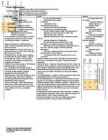
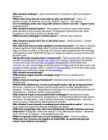
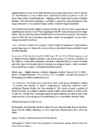
Provincial second chamber in certain policy areas, including spending. · Veto powers/gridlock (National Council of Provinces) · Second Chamber (Senate) mainly state representatives · East-west economic · Big regional economic imbalances · Big regional economic imbalances, north-south differences · Ethnicity and territory? · More powerful State Governors · Relatively homogeneous As you hint here, some groups (eg NP) wanted · Ethnicity and territory are closely correlated to poverty. society, no major territorial more provincial autonomy, but ANC wanted STATES ethnic divisions
KURESSAARE C.K 2017 Kuressaare ◦ First appeared on map - 1154 ◦ Mayor - Madis Kallas ◦ Area - 14.95 km2 ◦ Population - 13,166 Ethnicity: • Estonians 97.6% • Russians 1.2% • Finns 0.3% • other 2,4% Sights ◦Kuressaare Castle (Saaremaa Regional Museum) ◦Kuressaare St. Lawrence Church ◦Statue of mythological hero Suur Tõll and his wife Piret ◦Town theater ◦Famous for annual Saaremaa Opera Days, which are held every summer TOKYO Tokyo ◦Country - Japan ◦Governor - Yuriko Koike ◦Metropolis - 2,187.66 km2 ◦Population - 13,617,445 ◦Flower - Somei-Yoshino cherry blossom ◦Tree -Ginkgo tree
the symbol for the city later on. Tourism Tallinn receives more than 1.5 million visitors annually, and it has been growing steadily since the past decade. Tallinn’s old town is a major tourist attraction There’s the Seaplane Harbour, the Zoo and the Open Air Museum. Most of the tourists are from Europe, but the sum of of tourists from Russia and Asia-Pacific region is growing Ethnicity There are around 226000 Estonians, which is close to 55% of the nationality Then there’s about 152000 Russians, which takes 37% of the nationality Aaaand then there’s around 12000 Ukrainians, which is 3% of the nationality And then there are other nationalities, which I won’t mention
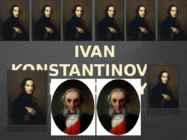
IVAN KONSTANTINOVICH AIVAZOVSKY ABOUT AN ARTIST Ivan Konstantinovich Aivazovsky was a Russian painter of Armenian ethnicity, based in his native Crimea, best known for his seascapes, which constitute more than half of his paintings. The Ninth Wave is his "most celebrated work."Aivazovsky is considered one of the most prominent Russian artists and one of the greatest marine artists of the 19th century BIOGRAPHY Aivazovsky was born in the town of Feodosiya, Crimea to a poor Armenian family. His father taught him to play the violin and speak Polish and Ukrainian
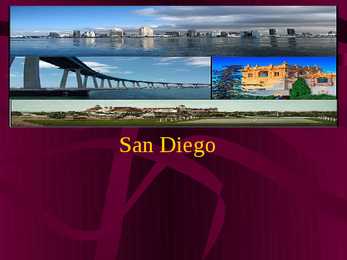
San Diego Population by race/ethnicity · typical multicultural city, inhabitants: · White Non-Hispanic (49.3%) - excludes (11% White Hispanic) · Hispanic/Latino of any race (25.4%) · Asian (13.6%) · Black/African American (7.6%) · Hawaiian and Pacific Islander alone (0.4%) · American Indian/Alaska Native alone (0.4%) · Other (4.3%) Geography · San Diego is just 20 miles north of Mexico, situated in the rolling hills and mesas that rise from the Pacific shore to join with the Laguna Mountains to the east. The city covers a large area of vastly different terrain: miles of ocean and bay shoreline, densely forested hills, fertile valleys, and mountains, canyons, and desert. · The Coronado and Point Loma peninsulas separate San Diego Bay from the ocean San Diego Museum of Art · Opened on February 28, 1926 · Designed by William Templeton Johnson · The funders turned over ownership of the building...
..........................................................................................7 Animal life................................................................................................................... 7 Natural Resources........................................................................................................ 8 Economy...................................................................................................................... 8 Population and Ethnicity..............................................................................................9 3 Introduction The official name of the country is the United Kingdom. The United Kingdom is an island country. It consists of the island of Great Britain and Northern Ireland. Great Britain can be divided into three parts England, Wales and Scotland
Mikroskoobi kõige tähtsamad osad on objektiiv ja okulaar, milles asuvad suurendavad läätsed. Kujutise teravustamiseks tuleb kasutada makromeetrilist ja mikromeetrilist kruvi. Valgust eseme vaatlemiseks juhitakse peegli abil. 6 Name: Robert Hooke Born: 18-Jul-1635 Birthplace: Freshwater, Isle of Wight, England Died: 3-Mar-1703 Location of death: London, England Cause of death: unspecified Gender: Male Race or Ethnicity: White Sexual orientation: Straight Occupation: Scientist Nationality: England Executive summary: Law of Elasticity, microscopist 7 Kokkuvõte Robert Hooke ehitas mikroskoobi, et uurida mitmesuguste füüsikaliste kehade ehitust, mida pold silmaga näha. Kõige huvitavam oli korgitamme koor. Hooke nägi korgis ainult rakukesti. Kork on puu surnud osa, mil pole elusa aine omadusi ja tema rakud ei toitu, ei hinga, ei paljune.
- Kas üldse on võimalik sotsiaalse tegelikkuse kohta midagi teada? Ka selline suund sotsiaalsete probleemide uurijate hulgas on olemas kes ütleb, et ei ole, ning et SP uurimine saabki piirduda ainult selle uurimisega, mida tegelikkuse kohta VÄIDETAKSE, aga ei ole mingit alust hinnata, kas need väited ka paika peavad võ mitte Seletage lahti kolm sotsiaaluuringute uurimistasandit. . Mesosociology deals with analyses of concepts like stratification by income, age, gender, race, ethnicity; organizations (functionally circumscribed social structures) and communities (geographically circumscribed social structures). As such, mesosociology lies between analysis of large-scale macro forces such as the economy or human societies (which is a domain of macrosociology), and everyday human social interactions on a small scale (a domain of microsociology). Mida tähendab metasotsioloogia? Millest kolmest etappist koosneb sotsioloogia areng? Klassitsism, postklassitsism, postmodernism
war, as racial labels were applied to non-white peoples, and the term "Filipino" was mistakenly used by Americans in U.S. newspapers and magazines as a racial label (instead of as a nationality) to refer to those in the islands of pre-dominantly Austronesian descent -- a sense that is the complete opposite of its original definition, and persists to this day. Caribbean In the Caribbean region, the term Creole is sometimes used to describe anyone, regardless of race or ethnicity, who was born and raised in the region. It is sometimes used to refer to persons of European, African, or mixed Afro-European descent such as mixed race people of Guadeloupe, Martinique, Dominica, Haiti, Jamaica, Barbados and Suriname, or in contradistinction to other ethnicities such as East Indians in Trinidad and Guyana, or Mestizos & Creoles (African & European Decent) in Belize. It also refers to the syncretism of the various cultures which influenced the area
the Depression. After the Japanese attack on Pearl Harbor, Dunham's father, Stanley, enlisted in the service and marched across Europe in Patton's army. Dunham's mother, Madelyn, went to work on a bomber assembly line. After the war, the couple studied on the G.I. Bill, bought a house through the Federal Housing Program and, after several moves, landed in Hawaii. Obama's father, Barack Obama, Sr. was born of Luo ethnicity in Nyanza Province, Kenya. The older Obama grew up herding goats in Africa, eventually earning a scholarship that allowed him to leave Kenya and pursue his dreams of college in Hawaii. While studying at the University of Hawaii in Manoa, Obama, Sr. met fellow student, Ann Dunham. They married on February 2, 1961. Barack was born six months later. Obama's parents separated when he was two years old, later divorcing. Obama, Sr. went on to Harvard to pursue Ph.D
In th the 13 century the population numbered between 100 000 and 200 000, but this figure changed as a result of wars, epidemics and migrations. In the mid 1800s many Estonians emigrated in the hope of finding good farmland and better living conditions. The census of 2000 showed that 47 different nationalities live in Estonia: 67,9% Estonians, 25,6% are Russian and also Ukrainians, Belarussians, Finns and Tatars. Estonian citizenship does not depend on ethnicity. It was automatically given to the people who had held it before 1940. at the beginning of 2003, the estimated population was 1 356 045, of which 54% were women.
including the role of women in society, rules about food and beverage consumption, clothing habits and holiday activities. 6. Ethics and values. These can have an impact on international business, especially when conducted from within another country. However, it is important for researchers to remember that the same ethics and values are not held by everyone in a target market. They are always dependent on status, region, ethnicity and religion. Researchers should also consider the human-rights conduct of any potential market. 7. Social organization. The composition of family groups, the prevalence of special-interest groups and attitudes toward them, racial diversity and recreational lifestyles are all important to consider when a country is being investigated as a potential export market. HOW DOES CULTURE AFFECT INTERNATIONAL BUSINESS?
solidarity. Ethnic identity in Britain is about minorities. 47. A civic nation- Civic nationalism (also known as liberal nationalism) defines the nation as an association of people who identify themselves as belonging to the nation, who have equal and shared political rights, and allegiance to similar political procedures.[40] According to the principles of civic nationalism, the nation is not based on common ethnic ancestry, but is a political entity whose core identity is not ethnicity. Its people to continue living together.[40] Civic nationalism is a kind of non-xenophobic nationalism that is claimed to be compatible with liberal values of freedom, tolerance, equality, and individual rights.[41][42][43] Ernest Renan[44] and John Stuart Mill[45] are often thought to be early liberal nationalists. Liberal nationalists often defend the value of national identity by saying that individuals need a national
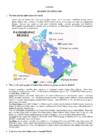
The Inuit, who live in the high Arctic, were probably the last to arrive. 4. How were the terms `Métis' and `half-breed' traditionally used? Métis French-speaking and Catholic. Half-breed English-speaking and Protestant. Half-breed is a term used almost exclusively by the federal government throughout the late nineteenth and early twentieth centuries. Race served to distinguish between populations or groups when describing an individual who was of mixed ethnicity or "blood." The term has historically been used to identify people that are now often called `Métis' in Canada. Many people back then considered the `half-breed' to be a degenerate, inferior sort of human. Some of this is related to racial theories of the 19th century that believed each `race' had a distinct origin, and that mixing would lead to serious troubles. That's why it is now considered to be a derogatory term.
“proper” is always present. Oranges are not the Only Fruit (1985) – her autobiography. The PowerBook (2000) – cyberspace vs. the meatspace (the real world) – language is a costume. The idea of the panopticon. Post-‐colonialism in feminist literature. Issues of ethnicity and culture. Zadie Smith (1975) is an English novelist, essayist and short story writer. Born in Britain to a Jamaican-‐born mother and British father. White Teeth (2000) – a portrait of the contemporary multicultural London and looks at
metaphorically implies a logic of production. As such, Uriely et al.’s (2002) reference to a backpacking biography presents an apt departure point in the backpacking literature for exploring how the episodic consumption of backpacking can be assembled into a meaningful and identifiable lifestyle. Lifestyle Consumption Although lifestyles can be used as a means of socially stratifying individuals, as one might do through social class, occupation, ethnicity or culture, it is important to locate lifestyles as products of the same post-industrial period they can be used to analyse (Binkley, 2004). Lifestyles are central to debates about consumer culture and are often ‘articulated in relation to shifts identified with post-Fordism and/or postmodernism’ (Bell & Hollows, 2006, p. 1). Historical shifts from mass to specialised production in the context of urbanisation saw
 annaabi.ee