Leidsid 33 sarnast õppematerjali, mis on seotud failiga "Estonian culture". Need materjalid aitavad sul teemat sügavamalt mõista.
song, fourth, festival, language, eduard, year, held, carmen, kass, official, finno, related, finnish, theatre, there, near, petersburg, march, 20th, 1898, paris, france, january, takes, place, five, years, month, july, nowadays, those, festivals, grounds, first, summer, posed, advertisements, calvin, klein, christian, dior, entered, times, since, debutESTONIAN MUSIC TODAY The Estonian Song Festival § The Estonian Song Festival (In Estonian: Laulupidu) is one of the largest amateur choral events in the world. § It is held every five years in July on the Tallinn Song Festival Grounds § The joint choir has usually comprised 30,000 singers performing to an audience of 80,000. § The indie folk rock band Ewert and The Two Dragons are among the best known Estonian bands, having had success in Europe and signing with Warner Bros. § http://www.youtube.com/watch?v=ddCsOTWz7gI § The girl band Vanilla Ninja were also one of the best-known Estonian bands. § Kerli Kõiv, usually referred as Kerli, is an artist from Estonia.
Paul McCartney Siim Jaanoja 11. A I wannabe musician Me and my Honey Click to edit Master text styles Second level Third level Fourth level Fifth level Girl's loves me Click to edit Master text styles Second level Third level Fourth level Fifth level Fame is good... Click to edit Master text styles Second level
Click to edit Master text styles Second level Third level Fourth level Fifth level Iron Maiden § English heavy metal band from Leyton in east London, formed in 1975 by Steve Harris & Dave Murrey § Named after a torture device. § 15 studio albums. § 11 live albums. § 4 extended plays. § 7 compilations. § Iron Maiden have sold over 85 million records worldwide § Over 2000 live peformances. § Their music has influenced dozens of famous bands, most notably
James Joyce James Augustine Aloysius Joyce Irish novelist and poet Click to edit Master text styles one of the most Second level Third level influential writers in the Fourth level modernist avant-garde Fifth level of the early 20th century Early life born on 2 February Click to edit Master text styles 1882 Second level Third level eldest of ten surviving Fourth level children
Pudding Lane and lasted for five days . London . London is an exiting city . The population of London is about seven million people and it is made up of the people of very many nationalities . There are nine piers where you can get a boat and enjoy numerous sights like .... The Tower of London Click to edit Master text styles Second level Third level Fourth level Fifth level St Paul ´s Cathedral Click to edit Master text styles Second level Third level Fourth level Fifth level The Houses of Parliament Click to edit Master text styles
Queen Elizabeth I (1533-1603) Janeli Õim 11A Brief biography Elizabeth Tudor Click to edit Master text styles 7 September 1533 Second level 24 March 1603 Third level Fourth level Queen of England Fifth level Queen of Ireland - 17 November 1558 until her death (aged 69) Protestant Never married Janeli Õim 11A Family Click King Henry VIII (1491 - to edit Master text styles 1547) Second level Anne Boleyn (Executed 19 Third level
Victoria (Australia) Facts Victoria is named after Queen Victoria from Great Britain. The capital of Victoria is Melbourn Victoria is the smallest mainland state but most densly populated Gold was found in Victoria in 1851 70% of all Victorians live in Melbourn History Victoria was founded in 1803, when British soldiers came to stop French soldiers from settling any new areas. In 1854 there was an armed rebellion but it was held back by British soldiers.(over a thousand died) On 7 February in 2009 Victoria was affected by heavy bushfires, 134 died and the event is known as the "Black Saturday." Religion 67,5% of Victorian people are Christian, 27.5% Catholic and other religions are Islam, Judaism and Buddhism. The church attendance is very low in Victoria, over 20% of all Victorian claim no religion. Figures Victorian population is 5,087,000 Victoria's area is 237,629 km² Victorian time zone is +10 UTC
"Melbourne" is the common name. Brisbane Brisbane is the capital and most populous city in the Australian state of Queensland and the third most populous city in Australia. Brisbane's metropolitan area has an approximate population of 2 million.A resident of Brisbane is commonly known as a "Brisbanite". Perth Perth is the capital and largest city of the Australian state of Western Australia and the fourth most populous city in Australia. The Perth metropolitan area has an estimated population of 1,659,000. Adelaide. Adelaide is the capital and most populous city of the Australian state of South Australia, and is the fifthlargest city in Australia. Adelaide has an estimated population of more than 1.28 million. The adjective form of Adelaide used to describe residents or other qualities of the city is "Adelaidean" Abor igines
Philadelphia 76ers The Celtics76ers rivalry is a rivalry between the Celtics and Philadelphia 76ers. The two teams have the most meetings in the NBA Playoffs, playing each other in 19 series with the Celtics winning 12 of them. Boston Celtics Legends Bill Russel Bill Russel He played center position in Celtics. He's a five time winner of the NBA Most Valuable Player Award. Russel was part of the dynasty that won 11 NBA Championships during his 13 year career. Russell holds the record for the most championships won by an athlete in a North American sports league. Russell is considered one of the best players in NBA history. Robert Joseph"Bob" Cousy Robert Joseph ,,Bob" Cousy played point guard position for the Celtics from 1950-1963. Cousy was initially drafted as the third overall pick in the first round of the 1950 NBA Draft by the Tri-Cities Blackhawks, but after he refused to report, he was picked up by Boston
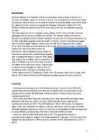
The largest of them are Saaremaa, Hiiumaa, Muhu and Vormsi. There are over 1,400 lakes in Estonia, biggest being Lake Peipsi and Lake Võrtsjärv, while the deepest is Rõuge Suurjärv. The two longest rivers are the Võhandu and the Pärnu and the widest is Emajõgi. About 50% of the country is covered by forests while wetlands cover 30%. The landscape of Estonia, through covering a small area, is varied and unique. Lake Peipsi is Estonia's largest lake and Europe's fourth largest freshwater lake. 5. Symbols The flag The Estonian blue-black and white national flag was originally the flag of the Estonian Students' Society and was consecrated in Otepää Church in 1884. Today there is a memorial plaque on the church wall commemorating the event. The Flag Museum, opened in an annex in 1996, attracts tourists who take an interest in the history of the flag. After about half a century, during which it was
III. NEW DEVELOPMENTS IN CULTURAL AND MUSICAL LIFE: THE END OF THE TSARIST PERIOD. THE INDEPENDENT REPUBLIC OF ESTONIA: THE INTRODUCTION OF INNOVATIONS FROM WESTERN ART AND THE EVOLUTION OF NATIONALLY ORIENTED MUSICAL TRENDS. IV. THE TWENTIES. ARTUR KAPP: ROMANTICIST AND DRAMATIST. V. THE INFLUENCE OF NEW WESTERN MUSICAL TRENDS. HEINO ELLER: A PROGRAMME PAINTER. VI. THE THIRTIES. THE WIDENING OF NATIONAL SYMPHONISM. THE RISE OF ATTENTION TO HISTORY AND FOLKLORE: JUHAN AAVIK, EDUARD TUBIN, EUGEN KAPP. VII. FURTHER MATURING OF SYMPHONIC MUSIC: HEINO ELLER, EVALD AAV, EDUARD TUBIN. THE FIRST ESTONIAN BALLET. SUMMARY OF THE REPUBLICAN PERIOD. HALF A CENTURY UNDER SOVIET OCCUPATION. IDEOLOGY OVER MUSIC. EXTENSIVE INFLUX OF CONTEMPORARY TRENDS. VIII. THE FORTIES. TRANSFORMATION OF ESTONIAN LIFE. THE WAR-TIME SYMPHONIC OUTPUT. IX. THE PLANTING OF NEW CREATIVE PRINCIPLES DURING THE POST-WAR YEARS. X. THE SECOND HALF OF THE FIFTIES
peer pressure. Only about 1/3 of all Estonian children have regular physical exercises outside the school. That means playing sport at least twice a week. Most schools in Estonia only have two P.E lessons a week and that's not enough compared with 2 -4 h a day that students spend on the internet or watching TV. Football ,basketball ,track and field ,judo ,swimming ,tennis and volleyball are most popular sports in whole world. SONG FETIVAL The Estonian Song Festival is one of the largest in the world. It is held every five years in July on the Tallinn Song Festival Grounds. The tradition of the song festival was born along with Estonian national awakening. The first national song festival was held in Tartu in the summer One of the organisers of the first song festival was Johann Voldemar Jannsen. In the first three festivals only men's choirs and brass orchestras participated. 822 singers and 56 brass players were in the first festival
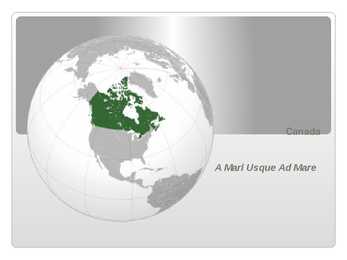
Confederation, Canada was formed as a federal dominion of four provinces this began an accretion of provinces and territories and a process of increasing autonomy from the United Kingdom widening autonomy was highlighted by the Statute of Westminster 1931 culminated in the Canada Act 1982, which severed the vestiges of legal dependence on the British parliament Click to edit Master text styles Second level Third level Fourth level Fifth level Ottawa Capital 45°24N 75°40W / 45.4°N 75.667°W / 45 Largest city Toronto Capital, Largest City Since the end of the last glacial period, Canada has consisted of eight distinct forest regions, including extensive boreal forest on the Canadian Shield Canada has more lakes than any other country, containing much of the world's fresh water Geography
TALLINN - If you're looking for entertainment in Estonia this summer, you are really spoiled for choice. Festivals and events dedicated to the consumption of beer are a lot of fun, but if you want to get the true feel of the country, you need something a little more ethnic. Like a town fair. Just as July becomes August, the seaside town of Haapsalu will host a grand spectacle of rural Estonian entertainment. The White Lady Days is a summer celebration filled with amusement for all the family. Held in and around the remains of the Teutonic-knights-era castles, the fair combines enchanting medieval legends with modern countryside charm to create a comprehensive experience of Estonia beyond the big cities. But the legend of the White Lady of Haapsalu, which is at the heart of the festival, is perhaps the most famous tall tale of the many that are so abundant in Estonia's folklore.
Europe. It is bordered to the north by the Gulf of Finland, to the west by the Baltic Sea, to the south by Latvia, and to the east by the Lake Peipsi and the Russian Federation. The territory of Estonia covers 45,227 km2. The capital, Tallinn, has around 400000 inhabitants.Tallinn's ability to blend medieval architecture with Scandinavian modernity with all the comforts you'd expect from a modern, competitive and innovative capital. Estonian language, does not belong to the Indo-European group. It belongs to the Finno-Ugric language family, which also includes Finnish and Hungarian. Estonian dialects are divided into two groups, Northern and Southern, usually associated with biggest cities of those regions Tallinn, the capital, in the north and Tartu, second largest city, in the south. In some of the southern regions, people speak Seto and Võro dialects, which are sometimes considered to be separate languages altogether. Dialects spoken
In these protected forests you can come across types of primeval forest cover, which have long ago disappeared from other parts of Europe. Examples of such primeval forests are the Järvselja forest in Tartumaa County and Poruni in Ida- Virumaa County. Meadows in Estonia are rich in different species much more so than in Western Europe. Estonia is a country of thousand of lakes. In the Estonian territory there are about 1200 natural lakes. The largest of these is Lake Peipsi, which is the fourth largest freshwater lake in Europe. Most of Estonia's lakes are small and are found in the south of the country. Larger lakes such as Lake Peipsi and Lake Võrtsjärv are rich in fish. One can find rare species of fish such as the lake whitefish and the Peipsi smelt in Lake Peipsi. Võrtsjärv is famous for its catches of pike-perch and eel, which are regarded as a delicacy. There are also many rivers in Estonia, but only ten of them are longer than 100 kilometres.
Edgar Savisaar has been married three times and is the father of four children Birgit Õigemeel Born 24 September 1988 in Kohila, Estonia she is an Estonian singer. She started her musical career as a choir singer on Estonian Television children's choir and learnt the violin at Kohila Music School. Birgit is the first winner of Estonian Idol Eesti otsib superstaari. In 2007, at the Italian culture festival "L'Olivo d'Oro" (Golden Olive) Birgit was the first non- Italian to receive the "Golden Olive Gerd Kanter Born May 6, 1979 in Tallinn, Estonia he is an Estonian discus thrower. He was the 2007 World Champion in the event and won thegold medal at the 2008 Summer Olympics, and bronze in London 2012. His personal best throw of 73.38 m is the Estonian record and the third best mark of all- time.
Estonia, officially the Republic of Estonia, is a state in the Baltic region of Northern Europe. It is bordered to the north by the Gulf of Finland, to the west by the Baltic Sea, to the south by Latvia, and to the east by Lake Peipus and Russia. Across the Baltic Sea lies Sweden in the west and Finland in the north. The territory of Estonia covers 45,227 km 2, and is influenced by a humid continental climate. The Estonians are a Finnic people, and the official language, Estonian, is a Finno-Ugric language closely related to Finnish, and distantly to Hungarian and to the Sami languages. The population of Estonia is 1.5 million. Of this number 62 per cent are Estonians. The geography of the land is surprisingly varied. Islands make up 9,2 per cent of Estonian’s total territory, the largest islands are Saaremaa, Hiiumaa and Vormsi. The highest point is Suur Munamägi, which is 317m high. Estonia has a surprisingly mild climate for an area so far north
The group came to be perceived as the embodiment of progressive ideals, seeing their influence extend into the social and cultural revolutions of the 1960s. With an early five-piece line-up of Lennon, McCartney, Harrison, Stuart Sutcliffe (bass) and Pete Best (drums), The Beatles built their reputation in Liverpool and Hamburg clubs over a three-year period from 1960. Sutcliffe left the group in 1961, and Best was replaced by Starr the following year. Moulded into a professional outfit by music store owner Brian Epstein after he offered to act as the group's manager, and with their musical potential enhanced by the hands-on creativity of producer George Martin, The Beatles achieved UK mainstream success in late 1962 with their first single, "Love Me Do". Gaining international popularity over the course of the next year, they toured extensively until 1966, then retreated to the recording studio until their breakup in 1970
1%, Finns 1% Capital of Estonia: Tallinn Number of islands: 1 521 Highest point: Suur-Munamagi (Great Egg Hill) 318 m Religion: Lutheran Currency: Estonian Kroon (EEK),1 EUR = 15,65 EEK Estonia has two Independence Days - Estonia first achieved independence from the Soviet Union on the 24th February 1918 and again on the 20th August 1991 after 51 years of occupation. The second date is known as the Restoration of Independence Day The Estonian language belongs to the Finno-Ugric group and is most similar to Finnish Estonia was the first country in the world to introduce online political voting Estonia won the Eurovision Song Contest in 2001 with the song Everybody There are over 1500 Islands, 1000 lakes and 7000 rivers in Estonia Chess Grandmaster Paul Keres was born in Estonia. When he died in 1975 over 100,000 people attended his funeral, thats around 10% of the entire population of Estonia!
According to the tradition, the Olympic Games began in 776 B.C. when Ifitos made a treaty with Lycourgos the king and famous legislator of Sparta and Cleisthenes the king of Pissa. In this treaty that was the decisive event for the development of the sanctuary as a Panhellenic centre, the "sacred truce" was agreed. That is to say ceasing of fighting in all of the Freek world for as long as the Olympic Games were on. The Olympic Games were held, after the completion of four years during the month of July or August. The time between two competitions was called the Olympiad. In the beginning the games lasted for only one day and comprised only one event, the running of one Stadion, but gradually more events were added resulting, towards the 5th century B.C., in the games lasting for 5 days. In total the Olympic Games consisted of 10 events: running, the pentathlon
Tallinn 2007 2 List of Contents page Facts and figures 3 Geography 3 Climate 3 Nature 4 History 5 Economy 6 Culture 6 Biggest towns 7 Language 8 3 Facts and figures The Republic of Estonia is a small country. Covering only 45, 228 sq km it is slightly bigger than Denmark, Belgium or Switzerland. Estonia's population is under 1.4 million. The official language is Estonian but since very many Russians live here Russian is also wide spread. The capital of Estonia is Tallinn. The currency used in Estonia is Eesti kroon. The Estonian national flag is blue-black-white. It was originally the flag of the Estonian Students' Society. The flag was first consecrated in Otepää Church in 1884. For a while, during the Soviet occupation, the flag was banned but it was again seen in public in Tartu in May 1988.
hidden tunnels (Bastion tunnels) that run underneath the old bastions of Toompea hill. Make sure to pay a visit to the top floor café for beautiful Old Town views. Kiek in de Kök was originally built in the 1470s, but quickly expanded and strengthened, now the walls are four metres thick. The investment paid off: During the Livonian war in the late 1500s, Ivan the Terrible's forces managed to blow a huge hole through the top storey, but the tower held. During post-war repairs, a row of four cannon balls was placed in the newly patched stone wall as a memorial. You can still see them on the tower's south east side. http://www.tourism.tallinn.ee/eng/fpage/explore/attractions/old_town #!p_174740 Tallinn Town Hall Nothing says power like the impressive, Gothic Town Hall that dominates Medieval Tallinn's main square
He had unhappy childhood (parents divorced when he was little), mother left them, met Victoria at age 17, they were introduced by Uncle Leopold, they fell in love. They got married and got 9 children, 40 grandchildren. At first he was unpopular, after he made many great changes he became popular. He was the president of the Royal Society of Arts for 18 years. After his death Victoria built many memorials and Royal Albert Hall in 1871, there are more than 350 performances every year. The Albert medal, the Prince Consort´s Library. Lisanna: "Yoko Ono" She was born in 1933 in Tokyo, Japan in a wealthy family. In 1953 she moved to the USA, she was an excellent student and studied music and philosophy. She has studied in 4 schools, her art is influenced by avant-garde. She has won many awards. She has been married 3 times. In 1975 she got a son Sean. She has released 26 albums, 7 of them with John. Son Sean is a singer, songwriter and an actor. Danek: "Manchester"
durin the Soviet years; tears were rolling down their cheeks. On 24 February 1989, Estonia, still part of the Soviet Union, hoisted its tricolour on the tower of Pikk Hermann in Tallinn. Since then the flag has always been hoisted with ceremony on that day, which is the national holiday the anniversary of the Republic. According to Estonian tradition the national flag is hoisted at sunrise and lowered at sunset exept on June 23 when it is left out for the shortest night of the year. NATIONAL ANTHEM The Estonian national anthem, entitled "My Native Land, My Pride and Joy", was composed in 1848 by Friedrich Pacius, a Finn of German descent. The Estonianlanguage words were written by Johann Voldemar Jannsen. In 1869 it was performed at the first allEstonian Song Festival in Tartu and gained popularity during the period of the national movement. Estonians carried the melody in their hearts and souls during Soviet occupation, when it was banned
south by Latvia and to the east by Russia. Across the Baltic Sea lies Sweden in the west and Finland in the north. The territory of Estonia covers 45,227 km2, and is influenced by a humid continental climate. Estonia is a democratic parliamentary republic divided into fifteen counties, with its capital and largest city beingTallinn. With a population of 1.3 million, it is one of the least-populous member states of the European Union. The Estonians are a Finnic people, and the official language, Estonian, is a Finno-Ugric language closely related to Finnish The history of Estonia is a part of the history of Europe. Estonia was settled near the end of the last glacial era, beginning from around 8500 BC. Before the Germans invaded in the 13th century proto-Estonians of the Ancient Estonia worshipped the spirits of nature Starting with the Northern Crusades Estonia became a battleground for centuries where Denmark, Germany, Russia, Sweden and
*Estonians conquered by the crusaders 1208 *Reformation 16th century establishments of new school, Estonians first book appeared in 1525 *Tartu University 1632 founded by King Gustavus II Adolphus, classical university, member of the Coimbra group *Abolition of serfdom 1816 *Song festival 1869 in Tartu, an organiser was J.V.Jannsen, 822 singers, men only *Declaration of independence 24th February 1918 *War of independence 1918-1920 during the Russian Civil War, resulted in a victory for Estonia *Deportation 1949 *Estonia becomes independent 20th August 1991 *Joining EU 1st May 2004 Language: Estonian language, belongs to the Balti-Finnic group of the Finno-Ugric languages,
The Most Interesting Historical Events in Estonia Liana Põldver · The nationwide Song Festival tradition began with the first Song Festival in Tartu, June 18 20, 1869. · 1860 marks the beginning of the period of the National Awakening. A singing society led by Johann Voldemar Jannsen started and carried through the nationwide idea of Song Festival. · During 1879 1910 six Song Festivals were held that played an important part in the nation's cultural and economical awakening and growth. In the independent Estonian Republic the Song Festivals were held in every five years (1923 1938). After World War II, the Song Festival tradition began again in 1947. Since 1950 General Song Festivals were held in every five years again. 1969 was an exception though when 100th anniversary of the Song Festival was celebrated.
Imperial rule. Supposedly built on the grave of a legendary Estonian hero, Kalevipoeg, on the city's mighty Toompea Hill, the Orthodox cathedral was something of a Russian propaganda exercise at the time and still remains a subject of controversy amongst hardline patriots. Most locals though are content to admire the Alexander Nevsky as the fine piece of architecture. http://www.tallinn-life.com/culture/culture_details/103-Alexander_Nevsky_Cathedral The Song Festival Grounds The tradition of the song festival was born along with Estonian national awakening. The first national song festival was held in Tartu in the summer of 1869.One of the organisers of the first song festival was Johann Voldemar Jannsen. In the first three festivals only men's choirs and brass orchestras participated. 822 singers and 56 brass players participated in the first festival. Starting with the fourth festival, mixed choirs were also participating
Japanese festivals Japanese festivals are traditional festive occasions. Some festivals have their roots in Chinese festivals but have undergone dramatic changes as they mixed with local customs. Some are so different that they do not even remotely resemble the original festival despite sharing the same name and date. There are also various local festivals (e.g. Tobata Gion) that are mostly unknown outside a given prefecture. It is commonly said that you will always find a festival somewhere in Japan. Matsuri is the Japanese word for a festival or holiday. In Japan, festivals are usually sponsored by a local shrine or temple, though they can be secular. There is no specific matsuri days for all of Japan; dates vary from area to area, and even
and Germany as well as Russia, and all left their mark on the city's architecture. It is one of the best preserved medieval towns in northern Europe, and makes a beautiful impression from the sea, with its ancient city walls, church spires, and red-tile roofed homes. Tallinn has previously been named as Kolõvan, Lindanise and Reval. Most well-known sights in Tallinn are Freedom Square, Kadriorg Palace, Rotermann Quarter, Tallinn Song Festival Grounds, Toompea Castle and Town Hall Square, the Old Town of Tallinn and many more. Tallinn's Old Town is in the list of UNESCO World Heritage Sites. At the Old Town, you pass beneath the arches of Tallinn's ancient stone walls and enter a world of cobblestones, narrow alleys, and medieval buildings. It's a fun place to explore on foot. Today, the city is growing rapidly, with modern buildings joining the old. The government of Estonia is located in Tallinn
and of NATO since 29 March 2004 Estonia has also signed the Kyoto protocol. Economy Estonian economy was one of the fastest growing in the world until 2006 with growth rates even exceeding 10% annually. Despite some concerns both in and outside of the country, the Estonian economy and its currency remained highly resilient and solvent. Until recent years the Estonian economy continued to grow with admirable rates. Estonian GDP grew by 6.4% in the year 2000 and with double speeds after accession to the EU in 2004. The GDP grew by 7.9% in 2007 alone. Increases in labor costs, rise of taxation on tobacco, alcohol, electricity, fuel, and gas, and also external pressures (growing prices of oil and food on the global market) are expected to raise inflation just above the 10% mark in the first months of 2009. In the first quarter 2008 GDP grew only 0,1%. The government made a supplementary negative budget, which was passed by Riigikogu
1 Answer the following questions 1. When did the first Estonians come to the Baltic shores? 2. Where did they come from? 3. When did the Vikings invade Estonia? 4. What was the result of this invasion? 5. Who first entered Tallinn on the map? When was it? 6. What was the union of European commercial towns Kalled in the middle ages? 7. When did Tallinn join the union? 8. What was the oldest preserved written book in Estonian? 9. What year does it date from? 10. When was Tartu University founded? 11. When did the periood of wars begin in Estonia? 12. Which countries ruled Estonia over the years? 13. Who ended the period of wars in Estonia? 14. When did the Estonian nationalists declare independence from Russia for the first time? 15. When did Soviet Army occupy Estonia? 16. What happene to thousands of Estonians? 17. When did Estonia become part of the Soviet Union? 18
 annaabi.ee