However, when they found out that Israelis weren't intending to attack Jordan any time soon, the Brits, French and Israelis decided to join their forces against Egypt and started to make plans. Israel would attack Egypt and the French and the Brits would send troops into the Suez canal under the excuse of keeping the two sides under apart and the canal open for shipping. In a later made plan the Brits were also supposed to destroy the Egyptian air force so the Egyptians couldn't bomb Israel. Soon the Egyptians were defeated and the Brits and French ordered the Egyptians and the Israelis to no fight withing 16 km of the canal. The Israelis accepted but the Egyptian didn't so the Brits and French sent in their air force and pretty easily defeated the Egyptians for good. c) The Israelis were supposed to be the ''cover'' to hide the real reason of the war which was that the French and the Brits wanted back the Suez canal
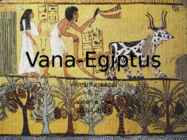
area of about 40,000 square kilometers where the only arable agricultural land is found.The last 40 years have seen a rapid increase in population due to medical advances and massive increase in agricultural productivity, made by the Green Revolution. (Religion)Egypt is a predominantly Muslim country with Islam as its state religion. Around 90% are identified as Muslim.Religion plays a central role in most Egyptians' lives.Cairo is famous for its numerous mosque minarets and is justifiably dubbed "the city of 1,000 minarets", [96] with a significant number of church towers. (Culture)Egyptian culture has six thousand years of recorded history. Ancient Egypt was among the earliest civilizations and for millennia, Egypt maintained a strikingly complex and stable culture that influenced later cultures of Europe, the Middle East and other African countries
1. I do not know Portugal, I never been there. 2. I did not go to Portugal when I was in Spain last year. 3. Go and see what John is doing, will you? 4. The pyramids were built by the ancient Egyptians. 5. Do not disturb her now! She is writing a proposal for a new project. 6. She was playing the piano when I knocked on her door last night. 7. I have been living in that flat for several years before I decided to move. 8. Imagine it! This time next week you will living in luxury in a first class hotel. 9. Jim is a good student. He always works hard. 10. When did you last see your sister? 11. This project will have been completed by the next year. 12
Moreover, families too choose to have a pet in their lives for many reasons, for instance having their baby feel a lot more confident with animals. Historians don't know for sure when humans started keeping pets. Dogs were one of the first animals domesticated by humans and have been domesticated for some 10,000 years. According to ancient Egyptian law, taking the life of a greyhound warranted the same punishment as killing a man. As early as 3500 B.C., Egyptians were domesticating wildcats from Africa. They considered cats to be godesses pets. That ranked them above humans, making them the first to be saved if a house caught fire, before the people. As I see it, having a pet at home is a good thing to do. Nevertheless, often having a pet means having a lot of tasks because you have to take care of them very well. Thus, you will wake up in the early morning to take them out for a walk, or to calm them down when they are afraid of something
Õppetöö käis istuvas asendis ning poisid hoidsid kirjutusvahendeid süles. Üleastumiste ja eksimuste korral ootas poisse karm karistus, didaktilise kirjanduse ümberkirjutamisest, peksmisest kuni lausa kinnisidumiseni. Koolis sai omandada eelkõige preestri, arsti või kirjutaja väljaõpet, mis tagas kindlustatad elujärje kui ka auväärse ühiskondliku positsiooni.. (http://historylink101.net/egypt_1/a-education.htm ja www.king-tut.org.uk/ancient- egyptians/ancient-egyptian-education.htm). Tavaliselt õppisid poisid koolis sama elukutset, mis oli nende isal, kuid kui noormehes avaldusid erianded, siis oli tal võimalik pürgida oma õpingutes kõrgemale või muuta suunda. (http://historylink101.net/egypt_1/a-education.htm) Vaarao pojad, sugulased, kõrgest seisusest järeltulijad ning ametnike lapsed õppisid printside koolis, mis oli iidses Egiptuses nn. koolide kool. Üksikud andekad poisid,
History Human beings have suffered from diseases since they first appeared on Earth. Because of that medicines history is as old as human beings, meaning about 2.5 million years. First medicine was mainly based on superstition and guesswork, because people knew very little about humans body. Plants were very much used, because they were easy to get and they could treat very well. Still the origin of healing dates back to the birth of first civilisations. About 3000 B.C. the Egyptians began making some important process in medicine. The Egyptian god of healing Imhotep was actually one of the first physician of the world. At 2500 B.C. Egyptian physicians started to specialize. Some of them specialized in internal diseases, some of them treated the diseases of eyes and teeth. Also Egyptians produced first medical textbooks. Chinese developed a medical practice, which is based on balance between two life forces yin and yang
Tutanhamonit paremini tundma õppida kui teisi Egiptuse kuningaid. • Hauast leiti puutumatult säilinud hämmastavalt rohked ja kallihinnalised hauapanused. Kasutatud kirjandus • http://et.wikipedia.org/wiki/Vana-Egiptus • http://www.miksike.ee/documents/main/referaadid /pyramiidid.htm • Maailm Avastusretk Piltides “VANA-EGIPTUS” Philippe Simon, Marie-Laure Bouet 2005 Kasutatud kirjandus Pildid: • http://www.buzzle.com/articles/ancient-egyptians/ • http://www.touregypt.net/featurestories/war.htm • http:// www.mitchellteachers.org/WorldHistory/AncientEgyptNearEastUnit/BlanchetteNileProject /NileRiverProjectMain.htm • http://deitiesdaily.tumblr.com/post/49224251916/april-28th-2013-hapi • http://maailmaimed.wikispaces.com/Asukoht,+selle+kirjeldus.p%C3%BCramiid • http://the-many-names-of-god.com/egyptian/names-of-god-egyptian/ • http://intense-zone.com/ancient-egyptian-pet-mummies/ • http:// www.mitchellteachers
sildadest, tammidest ja teistest projektidest) http://id-archserve.ucsb.edu/arthistory/152k/index.html 26.11.2007 14. Ehitustehnoloogia ajalugu. Vana-aeg Ülevaade Vana-Rooma ehitustehnoloogiast (katused, seinad, aknad, uksed, teed) http://www.museumoflondon.org.uk/archive/exhibits/hslondon/construct/building.htm 24.11.2007 15. Ehitustehnoloogia ajalugu. Vana-aeg Ülevaade arvatavast püramiidide ehitamise tehnoloogiast. http://www.bbc.co.uk/history/ancient/egyptians/great_pyramid_01.shtml 24.11.2007 16. Ehitustehnoloogia ajalugu. Ehitusmasinad. Ülevaade ühe vanima ehitusmasinate tootja Volvo ehitusmasinatest alates aastast 1832. (Ekskavaatorid, greiderid, skreeperid tõstukid) http://www.volvo.com/constructionequipment/global/en-gb/AboutUs/history/ 26.11.2007 17. Ehitustehnoloogia ajalugu. Ehitusmasinad. Ülevaade kraanade ajaloost. http://en.wikipedia.org/wiki/Crane_(machine)#History_of_cranes 25.11.2007
Pyramid complex The Great Pyramid of Giza is the main part of a complex setting of buildings that included two temples in honor of Khufu, three smaller pyramids for Khufu's wives, an even smaller "satellite" pyramid and small Mastaba tombs surrounding the pyramid for nobles. There was a town for the workers of Giza, which included a cemetery, bakeries, a beer factory and a copper melting complex Giza's Materials The Great Pyramid consists of more than 2.3 million limestone blocks. The Egyptians got the majority of the limestone blocks from a nearby quarry. The Tufa limestone, used for the casing, was quarried across the river. The largest granite stones in the pyramid, found in the "King's" chamber, weigh up to 80 tonnes and were transported more than 900 kilometers away from Aswan. King's Chamber At the end of the lengthy series of entrance ways leading into the interior is the structure's main chamber, the King's Chamber. The
I have pasted together the following "history" of the world from certifiably genuine student bloopers collected by teachers throughout the United States, from eight grade through college level. Read carefully, and you will learn a lot. The inhabitants of Egypt were called mummies. They lived in the Sarah Dessert and traveled by Camelot. The climate of the Sarah is such that the inhabitants have to live elsewhere, so certain areas of the dessert are cul- tivated by irritation. The Egyptians built the Pyramids in the shape of a huge triangular cube. The Pramids are a range of mountains between France and Spain. The Bible is full of interesting caricatures. In the first book of the Bible, Guinesses, Adam and Eve were created from an apple tree. One of their children, Cain, asked "Am I my brother's son?" God asked Abraham to sacrifice Issac on Mount Montezuma. Jacob, son of Issac, stole his brother's birthmark. Jacob was a partiarch who brought
is not on his own account, but on Irene's, and Irene's persuasion becomes a reiterated: "Don't think of me, think of yourself!" That Jon, knowing the facts, can realise his mother's feelings, will hardly with justice be held proof that she is, after all, a Forsyte. But though the impingement of Beauty and the claims of Freedom on a possessive world are the main prepossessions of the Forsyte Saga, it cannot be absolved from the charge of embalming the upper-middle class. As the old Egyptians placed around their mummies the necessaries of a future existence, so I have endeavoured to lay beside the, figures of Aunts Ann and Juley and Hester, of Timothy and Swithin, of Old Jolyon and James, and of their sons, that which shall guarantee them a little life here-after, a little balm in the hurried Gilead of a dissolving "Progress." If the upper-middle class, with other classes, is destined to "move on" into amorphism, here,
LANGUAGE: Arabic (official); French; English RELIGION: Islam, Christianity, Druze, Judaism, Baha'i Syrian Arab Republic, more commonly known as Syria. The fertile land of Syria lies at the crossroads of great trade routes between the East and West. It is also the site of many holy places in Judaism, Christianity, and Islam. Because of these advantages, it has been invaded, conquered, and occupied by many different peoples over its long history. These groups include the Egyptians, Babylonians, Persians, Greeks, Romans, Arabs, European Crusaders, Mongols from Central Asia, Turks, British, and French. In 1946, the French gave up control over Syria, and the Syrian Arab Republic was created. Syria is a country in the Middle East bordering the Mediterranean Sea. Neighboring countries include Iraq, Israel, Jordan, Lebanon, and Turkey. The geography of Syria is primarily semiarid and desert plateau with a double mountain belt in the west. The
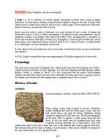
Sumerian language cuneiform script clay tablet, 24002200 BC When writing system were invented in ancient civilization, nearly everything that could be written upon--stone, clay, tree bark, metal sheets--was used for writing. Alphabetic writing emerged in Egypt about 5,000 years ago. The Ancient Egyptians would often write on papyrus, a plant grown along the Nile River. At first the words were not separated from each other (scriptura continua) and there was no punctuation. Texts were written from right to left, left to right, and even so that alternate lines read in opposite directions.
In fact, as we just entered into the 2000 millennium, there is the perception that the Asian is more intelligent than the Caucasian. The argument has always been that man emanated from Africa – from East Africa to be exact and by extension, Egypt, where the civilisation of the world started. There is no argument about that. The incredible intelligence required to build the Pyramids, to prepare the mummies, to recognize the value of gold and its use by the Black Egyptians are great marvel. But after that, nothing else has been that civilization is cyclical – it ebbs and flows. First the Egyptians, then the Greeks, the Romans, then the British, French, German, Portuguese and Spanish empires, followed by the Japanese in Asia. And at a time, it appeared that the Russians (Europeans) were going to be in the driver’s seat with the Americans, although the Russians have been left behind.
Kim Lee ? nouns too. 13 The names of countries and their people are also proper nouns. American Egyptian Indian Italian Thai Japanese Korean Malay Filipino Pakistani Country People Country People America Americans Korea Koreans Egypt Egyptians Malaysia Malaysians India Indians Pakistan Pakistanis Italy Italians France the French Japan the Japanese Thailand Thais 14 The names of towns, cities, buildings and landmarks are proper nouns. Egypt Hong Kong the Great Wall of China the Statue of Liberty
land near the earth's equator is heated more by the sun than the land near the North and South Poles. Picture 9.1. Wind energy Today, wind energy is mainly used to generate electricity. Wind is called a renewable energy source because the wind will blow as long as the sun shines. 9.1 The History of Wind Since ancient times, people have harnessed the winds energy. Over 5,000 years ago, the ancient Egyptians used wind to sail ships on the Nile River. Later, people built windmills to grind wheat and other grains. The earliest known windmills were in Persia (Iran). These early windmills looked like large paddle wheels. Centuries later, the people of Holland improved the basic design of the windmill. They gave it propeller-type blades, still made with sails. Holland is famous for its windmills. American colonists used windmills to grind wheat and corn, to pump water, and to cut wood at sawmills
(D) generate (D) story TEST QUESTIONS Choose the word or phrase that is closest in meaning to the underlined word or phrase. 1. The production of steel and the mining of coal are the predominant industries of Pennsylvania. (A) principal (B) inactive (C) archaic (D) overlooked 2. Curiosity prompted Leonardo da Vinci to become the world's greatest designer. (A) hastened (B) defied (C) induced (D) obliged 3. The first practical calendar was developed by the Egyptians. (A) functional (B) accurate (C) standard (D) intricate 4. In order to detect the position of a particle, light must be reflected from it. (A) hue (B) location (C) magnitude (D) existence 5. In a recent newspaper poll, the compact disc was mentioned as the most popular medium of recorded music. (A) survey (B) account (C) illustration (D) convention LESSON 23 analogous approximately compel formidable intrusive
calligraphic or decorative effect; rarely, to indicate a contemporary pronunciation; perhaps even for a deliberate archaism as a reaction against foreign influence. But many inscriptions are tinctured, for the first time, with the second essential for cryptology—secrecy. In a few cases, the secrecy was intended to increase the mystery and hence the arcane magical powers of certain religious texts. But the secrecy in many more cases resulted from the understandable desire of the Egyptians to have passersby read their epitaphs and so confer upon the departed the blessings written therein. In Egypt, with its concentration upon the afterlife, the number of these inscriptions soon • proliferated to such an extent that the attention and the goodwill of visitors flagged. To revive their interest, the scribes deliberately made the inscriptions a bit obscure. They introduced the cryptographic signs to catch the reader's eye, make him wonder, and
moral universe of the Puritans, represented by law-abiding W y a t t Earp, and the wilder rebel side represented by Holliday, a gambler from the old South. N O N - H U M A N ALLIES Allies need not be human. In some religions of the world, each person is assigned a spirit protector, a lifelong sidekick or Ally. T h i s may be an angel, the guardian angel who is supposed to look out for the person and keep them on the right path, or a minor deity of some kind. T h e Egyptians taught that Khnemu, the ram-headed 73 T H E W R I T E R ' S JOURNEY ~ T H I R D EDITION Christopher Vogler builder god, fashioned each person out of clay on his potter's wheel and at the same time made a " k a " or spirit protector in the exact same shape. T h e ka accompanied each person throughout life and on into the afterlife as long as the person's body was preserved
with new processing techniques or process Nonmeat components play an important role modifications; and (4) combinations of any in “emulsified” meat products, since they of the above approaches (Ruusunen and influence nutritional, sensory, and functional Puolanne 2005). properties. They were used from very ancient The sodium chloride content of meat can times in comminuted products: the Egyptians be reduced when using prerigor meat without used colors and flavorings; and the Romans detrimentally affecting the physical, chemi- used saltpeter (potassium nitrate), spices, and cal, or sensory properties of frankfurter-type colors for preservation and to improve the sausages (Puolanne and Terrell 1983). At appearance of foods. More recently, in addi- lowered salt additions, it appears important tion to meat proteins, a variety of nonmeat
 annaabi.ee