Alexander Graham Bell was an eminent scientist, inventor, engineer and innovator who intented the first telephone. His mother and his wife were both deaf and that was the main reason which caused his interest to hearing devices. Bell invented the telephone by accident when he was trying to invent a device that could send more than one telegram at the same time. His research on hearing and speech further led him to experiment with hearing devices which eventually culminated with the telephone in 1876. The first telephone didn't have a bell, so the caller had to tap the phone with a hammer to let the receiver know a call was being sent to them. It was Thomas Watson who invented the bell. Alexander Graham Bell founded The Bell Telephone Company in 1877 to build a nationwide telephone system. By 1881, there were 132 700 Bell telephones in homes. The telephone became one of the most popular methods of communication. People started writing
monarchy Canada comes from the word kanata, meaning village or settlement History The first inhabitants were the Inuits (Eskimo) First white man in the country John Cabot The French and British colonies settled the Atlantic coast in the late 15th century Later on, thousands of British colonists emigrated to Canada from the American colonies and the British Isles History In 1849 the right of Canada to selfgovern was recognized A gradual process of independence from the UK culminated in the Canada Act in 1982, severing the last vestiges of independence on the British parliament History Klõpsake juhtslaidi teksti laadide redigeerimiseks Teine tase Kolmas tase Neljas tase Viies tase John Cabot An Inuit family in Canada Canada today economy Canada is the worlds eleventh largest economy
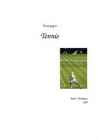
Tennis is an Olympic sport and is played at all levels of society at all ages. The sport can be played by anyone who can hold a racket, including people in wheelchairs. Tennis enjoys millions of recreational players and is also a hugely popular worldwide spectator sport, especially the four Grand Slam tournaments the Australian Open, the French Open, Wimbledon, and the US Open. The first championships at Wimbledon in London were played in 1877. The first Championships culminated a significant debate on how to standardize the rules. There are also different variations of tennis like table-tennis, soft tennis and so on. Lawn tennis in the U.S., 1887 The tennis racquet comprises a handle and neck joining a roughly circular frame that holds an array of tightly pulled strings
France ceded nearly all of its colonies in North America in 1763 after the Seven Years' War Historical Background in 1867, with the union of three British North American colonies through Confederation, Canada was formed as a federal dominion of four provinces this began an accretion of provinces and territories and a process of increasing autonomy from the United Kingdom widening autonomy was highlighted by the Statute of Westminster 1931 culminated in the Canada Act 1982, which severed the vestiges of legal dependence on the British parliament Click to edit Master text styles Second level Third level Fourth level Fifth level Ottawa Capital 45°24N 75°40W / 45.4°N 75.667°W / 45 Largest city Toronto Capital, Largest City Since the end of the last glacial period, Canada has consisted of eight distinct
Of course nothing good came out of it because at first the British made an attempt to understand the unknown culture and failed. The Aborigines also did not like the idea of bringing British criminals to their native land. Thousands were killed by diseases the British brought with them. When they fought back whole tribes were massacred. The Aborigines who survived were put into reservations and church missions (which often have been like prison camps). So-called pacification by force culminated in the late 1880s, leading to a massive depopulation and extinction for some groups. By the 1940s almost all aborigines were missionized and assimilated into rural and urban Australian society as low-paid laborers with limited rights; many aborigine children were taken from their natural parents and given to foster parents to promote assimilation. Nowadays many Aborigines live in the desert area, there are estimated of 200 000 of them in all over Australia
of England. He lead England until 1483 and was succeeded by Edward V. Edward V's reign lasted only for a few months. In 1483 Richard III got the power. He brought the Middle Ages to an end. In 1485 Henry VII succeeded Richard III. He was the first king of the Tudor dynasty. Key events The Norman invasion King Edward of England died on January 5, 1066, after a reign of 23 years. Leaving no heirs, Edward's passing away ignited a three-way rivalry for the crown that culminated in the Battle of Hastings and the destruction of the Anglo-Saxon rule of England. The leading pretender was Harold Godwinson, Harold and Edward became brothers-in-law when the king married Harold's sister. Harold's powerful position, his relationship to Edward and his esteem among his peers made him a logical successor to the throne. William, Duke of Normandy, also laid claim to the English throne. William justified
academics like John Hoag. In Baroque architecture, new emphasis was placed on bold massing, colonnades, domes, light-and-shade (chiaroscuro), 'painterly' color effects, and the bold play of volume and void. In interiors, Baroque movement around and through a void informed monumental staircases that had no parallel in previous architecture. The other Baroque innovation in worldly interiors was the state apartment, a processional sequence of increasingly rich interiors that culminated in a presence chamber or throne room or a state bedroom. The sequence of monumental stairs followed by a state apartment was copied in smaller scale everywhere in aristocratic dwellings of any pretensions. Baroque architecture was taken up with enthusiasm in central Germany (see, e.g., Ludwigsburg Palace and Zwinger Dresden), Austria and Russia (see, e.g., Peterhof).
The Renaissance In the history the Middle Ages were followed by the Renassance period. During this period a new class called bourgeoeisie came into being. This is the period when monarchies based on nationality were estabilished. The Renaessance started in Italy In the 14th century. Then it spread all over Europe, reached England in 16th century. The struggle for power culminated in a war called The War of Roses. It was a civil war between two dynasties, families. They had different emblems on one side the Yorks (white rose) other Lancasters (red). They couldn't decide who gets the throne. War ended 1485. A new dynasty came to throne, Tudor, the first king in this dynasty was Henry Vll. When he came to throne a period of stability followed because he built a nation based state. He was good at diplomacy.He could avoid quarrels and wars with neigbouring countries
people. 1455-1485 the Wars of the Roses were fought between the House of York and the House of Lancaster. Richard III was defeated by Henry Tudor of the House of York. The latter was crowned King Henry VII of England. 3 The House of Tudors (1485-1603): This period was lively characterised by new learning, trade and expansion, sea exploration and naval victories. It culminated with the sinking of the Spanish Armada. The most powerful Tudor monarchs were Henry VII (he had 6 wives and great ambitions, he broke away from the Roman Catholic Church), Elizabeth I (her reign was a long and golden one, characterised by intellectual brilliance, flourishing literature and commercial prosperity). The famous explorers were Sir Francis Drake (one of the leaders of the English navy) and Walter Raleigh (he made several
Throughout this time the geographical area of Scotland was occupied by several different tribes utilising Iron Age technology with a wide variety of relationships both to one another and to Ancient Rome. Although the Roman presence was an important time in Scottish history, not least because it was when written records first emerged, Roman influence on Scottish culture was not enduring. The Roman invasion under Quintus Petillius Cerialis began in AD 71 and culminated in the battle of Mons Graupius at an unknown location in northern Scotland in 84. Although the Caledonian confederacy suffered a defeat it was not long before the legions abandoned their territorial gains and returned to a line south of the Solway Firth, later consolidated by the construction of Hadrian's Wall. Roman commanders subsequently made various attempts to conquer territory to the north of this line, including
always played an important role in people's life. The most original part of Estonian folklore is the runic folksong. It was based on the alteration of long and short syllables. In different folksongs either men or women sang and the songs were often accompanied by a musical instrument. Today folksongs are often used by modern composers. A major change in Estonian culture occurred during the period of the National Awakening. Choirs and brassbands were founded in every corner of Estonia, it culminated with the 1 st Song Festival in 1869. Since then the Song Festivals have taken place every 4-5 years and have certainly helped Estonians maintain their national identity. Tallinn is the seat of the Estonian National Opera. The Chamber Choir of the Estonian Philharmonic Society is also greatly appreciated thanks to the charisma and hard work of its long-time ex- conductor Tõnu Kaljuste and Paul Hillier. Male voice and boys' choirs are equally popular
Richard III of the House of Lancaster in the Wars of Roses and he was crowned as the King of England. Henry VII united the two rival houses and started the Tudor dynasty. During Henry's reign the medieval period came to a close. There was a revival, or Renaissance, of learning, partly as a result of the printing press, which ended the Church's monopoly of learning. Henry's son and heir, Henry VIII created the Royal Navy, which culminated with the sinking of the Spanish Armada in 1588. One of the leaders of the English navy was Sir Francis Drake, who was the first Englishman to sail around the world. The Royal Navy also enabled England to realize her imperialistic ambitions and defy the Pope and the Catholic powers of Europe. Henry used Parliament to establish himself as the head of the Protestant Church with the Act of Supremacy (1534). His Reformation led to the creation of the religiously distinct Anglican Church
Introduction and history of the European Union History The European Union is set up with the aim of ending the frequent and bloody wars between neighbours, which culminated in the Second World War. The idea is that countries who trade with one another become economically interdependent and so more likely avoid conflict.The ancestor of the European Union is the European Coal and Steel Community (ECSC) which was created with the Treaty of Paris (1951) and was signed by France, Italy, Belgium, Netherlands, Luxembourg and West Germany (total of 6 countries). European Economic Community (EEC) was created with the Treaty of Rome (1958), establishing a customs union
customer scheme with customers rewarded by 10% off their purchases, free gifts and a birthday present, as well as other members-only benefits. The Body Shop branches into South Africa in June 2001, via New Clicks Holdings as The Body Shop direct franchisee in South Africa. New Clicks has a strong commitment to corporate social responsibility through its New Clicks Foundation. During 2002, The Body Shop ran a global campaign with Greenpeace International on promoting renewable energy, which culminated in the presentation of over six million customer signatures at the World Summit for Sustainable Development in Johannesburg. We further our commitment to environmental sustainability through investment in renewable energy, funding of energy efficiency projects in the developing world, and incorporating post-consumer recyclate into our packaging. During 2003 The Body Shop launched a global campaign to help Stop Violence In The Home
the University of Tartu and secondary school pupils. Political propaganda was distributed in illegally printed leaflets. The first Russian revolutionary uprising in January 1905 became a turning point in Estonian history. The revolt that spread over a large part of the empire was caused by the ever widening split between the needs of a modernising society and Russia's hopelessly out-of- date social order. The often spontaneous rebellions culminated in the opposition between absolutism and people, factory owners and workers, landlords and peasants, the empire's colonial regime and the discriminated minority nations. In Estonia, the revolution was directed against both the absolutist power and the Baltic German upper classes -- demands for democratic reorganisation were provoked by the lack of political freedom, remnants of feudal order and the class-related Baltic German privileges, insufficient land and national oppression
Commonwealth by the Rump Parliament. The government was properly called The Protectorate, and took the form of direct personal rule by Oliver Cromwell as Lord Protector. *General Monk He was the commander of the garrison in Scotland. He entered London and forced the ,,Rump" into dissolving itself, after having made the arrangements for a new election. Monk also began negotiations with the exiled Charles II which culminated into Declaration of Breda in which Charles promised several things in order to return. In Restoration a newly assembled Parliament invited Charles on the strenght of the Declaration of Breda to return. *Restoration 1660 began when the English, Scottish and Irish monarchy were restored under Charles II after the Interregnum that followed the English Civil War. The "Rump" was forced into dissolving itself and arrangements of a new election were made by General Monk.
2 do A 4 shortly, let C 6 remorse 2 Aristotle, Syd Field 2 1 terminate 6 wind up Challenge! Students' own answers 3 1 left 8 finally 2 ceased 7 concluded 2 coming 9 seventies 3 culminated 8 closes 10E Complex sentences 3 Being 10 better page 88 4 complete 9 finalised 4 shortage 11 successful 5 wrapped up 5 doesn't 12 following 1 1 The Wieliczka salt mines, which
telephones. It was hardly a beautiful piece of machinery, and when not running just right it spewed sparks and made loud whirring noises. Though the Americans never saw the 97-shiki O-bun In-ji-ki, their contraption bore a surprising physical resemblance to it, and of course exactly duplicated it cryptographically. S.I.S. handed in its first complete PURPLE solution in August of 1940, after 18 or 20 months of the most intensive analysis. In looking back on the effort that culminated in this, the outstanding cryptanalytic success in the whole history of secret writing up to its time, Friedman would say generously: Naturally this was a collaborative, cooperative effort on the part of all the people concerned. No one person is responsible for the solution, nor is there any single person to whom the major share of credit should go. As I say, it was a team, and it was only by very
 annaabi.ee