MY FAIR LADY AND Grete Kirpu, Carmen Sooniste COCKNEY ENGLISH MY FAIR LADY · My Fair Lady is a musical based on George Bernard Shaw's Pygmalion with book and lyrics by Alan Jay Lerner and music by Frederick Loewe. ·Running time: 170 minutes ·My Fair Lady is full of songs.For example: "The Rain in Spain", "On the Street Where You Live", "Wouldn't It Be Loverly?" etc · My Fair Lady talks about simple cockney flower girl, Eliza Doolittle ·https://www.youtube.com/watch?v=ZZQyNctfPAY MY FAIR LADY ACTORS Audrey Hepburn as Eliza Doolitlle Rex Harrison, who plays the part of Professor Henry Higgins Stanley Holloway as Alfred P. Doolittle Isobel Elsom as Mrs.Eynsford-Hill Mona Washbourne as Mrs. Pearce Etc.. COCKNEY ENGLISH ·Cockney English is the accent and form of English that workingclass people used to use in the East End of London.
(2) `Estuary English' is not a felicitous or adequate name. Nonetheless, it is now so solidly entrenched in the English language, particularly in the academic circles, that it would be unwise to struggle against it. 2. Historical background-a myth destroyed - Estuary English - a result of certain long-lasting processes People who have had a chance to read newspaper articles concerning Estuary English, might have had the impression that it is a relatively new Cockney influenced language variety making its way into various regions of the country at a rapid pace. In this respect, the opinions held by the coiner of the term and other linguists are congruent but different from the journalists' ones. Rosewarne (1984) explains that the variety that he chose to call `Estuary English' is not new: "It appears to be a continuation of the long process by which London pronunciation has made itself felt.
last day before Lent, a Christian fast which lasts for 40 days before Easter. In the past, Christians used up all their milk, butter and eggs on Shrove Tuesday because they were not allowed to eat them during Lent. Pancake races are often arranged for women in which competitors carry a pancake in a frying pan and have to toss the pancake into the air, catching it again in the pan. Very thin, flat, round pancakes are usually eaten with lemon juice and sugar. 5. What is a Cockney? (people and language) Traditionally, a true Cockney is anybody born within the sound of Bow bells (the bells of the church of St Mary-le-Bow). In fact the term is commonly used to denote people who come from a wider area of the innermost eastern suburbs of London and also an adjoining area south of the Thames. `Cockney' is also used to describe a strong London accent and it is associated with working-class origins. A feature of
· The vowel // in unstressed syllables (in RP) often corresponds to // (in near-RP accents). · The consonant /t/ may be realized as a glottal stop [?]. · Most EngEng accents have lost the original contrast. · Some English accents are ,,rhotic" or ,,r-ful" and others are ,,non-rhotic" or ,,r-less". 3. Estuary English - a dialect of English widely spoken in South East England. IT is commong among young Londoners. Something between RP and Cockney. Some features: · Non-rhotic · They use intrusive / r / · They use the broad / a: / sound · They use glottal stop more often (instead of k/p/t) · Use of / w /, recieved pronouncation will have / l / sound · /l/ may disappear [vunnerable] · /I/ -> /i:/ · Use of question tag [Ain't I? (einnai)] · Yod coalescence when two things come together. Like: /d/ instead of /dj/ /t/ instead of /tj/ [tu:zdeI] · Prolongs diphtongs · H-dropping (Tell him= [tellim])
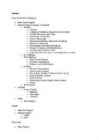
Pitmatic (Durham and Northumberland) Yorkshire (also known as Tyke) In the far north, local speech is noticeably Scots in nature. o East Midlands o West Midlands Black Country English Brummie (Birmingham) Potteries (north Staffordshire) o Southern Received Pronunciation Cockney (East London) East Anglian (Norfolk, Suffolk and North Essex) Estuary (Thames Estuary) Kentish (Kent) Multicultural London English (Inner London) Sussex o West Country · Scotland o Scottish English Highland Glaswegian Cromarty · Wales o Welsh English Ireland
a pint of ale. *family The family in Britain is changing. The once typical British family headed by two parents has undergone substantial changes during the twentieth century. In particular there has been a rise in the number of singleperson households. By the year 2020, it is estimated that there will be more single people than married people. Fifty years ago this would have been socially unacceptable in Britain. *slang of the country Cockney Rhyming slang is a coded language invented in the nineteenth century by Cockneys so they could speak in front of the police without being understood. It uses a phrase that rhymes with a word, instead of the word itself thus `stairs' becomes `apples and pears', `phone' becomes `dog and bone' and `word' becomes `dicky bird'. It can become confusing when sometimes the rhyming part of the word is dropped: thus `daisies' are `boots' (from `daisy roots').
8. East End The East End of London, generally refers to the area of London, east of the medieval walled City of London and north of the river Thames. Use of the term began in the late 19 th century and arose with the rapid growth of population in London, which lead to extreme overcrowding in the are and a concentration of poor people and immigrants. Many East Enders are ,,cockneys". A traditional definition is that to be a cockney, one had to be born within the sound of Bow Bells (a church in London's East End). 9. Conclusion London is a city of contrasts. Almost every race is represented in this old city and many languages all over the globe can be heard daily. It has long been one of the most important cities in the world. London is one of the world's leading business and financial centres and its influences in different aspects of life are comprehensible.
lyrics on sageli lugusid, mis on seotud õudusfilmid, must huumor ja hirmulugusid või romaane. Horror punk ansamblid võiks ka Sievistellä mustad riided, luukere kostüümides ja kolju nägu maalida. Misfits on prototüüp ja teedrajav bänd horror punk zanr. Oi! Oi! on töölisklassi tänava subgenre punk rock, mis pärineb Ühendkuningriigi 1970. See oli eesmärgiks ühendada punkarid skinheadide ja teiste töölisklassi noort. Tuntud varakult Oi! ansamblid sisaldama: Cockney lükkab, Angelic Upstarts, 4-Skins ja Business. Skate punk Skate punk, tuntud ka kui skatepunk, skate-punk, skate-thrash, surf punk, või skate-core on subgenre punk, et saadud hardcore punk. On määratletud nelja-teadmiseks basslines, surf-like trummid ja kiire, Ramones-stiilis kitarr, koos lüüriline teemasid, viite-või keskenduvad rula. Tema nimi tuleneb asjaolust, et paljud skate punkarid olid rulaga. Bändid hulka järglasi NOFX, Suicidal
is short. The word boose has been slang word even since it was coined at the 16 th century. Slang is formed by word building means (see lexicology) as well as figures of speech. E.g. upper-storey (head), bread (money). Metonymy is used shirtwoman. Hyperbole killing astonishing. Irony clear as mud. In slang a word is sometimes spelt backwards. Then it is calles backslang e.g. rum-mur, top o reeb pot o beer, yob-boy. There is also so called rhythmical slang. It comes from cockney e.g apples and pairs standing for stairs, trouble and strife wife. Slang is noted for the great number of synonyms. True for things discussed often. Being drunk all wet, pie eyed, screwed, polished, zig-zag. Excellent good, elegant, meaty, wicked, tops. Money beans, bacon, berries, grass, bullets. 7
Schelley luule ilmutab kõrget erudatsiooni, lugemust. Arusaam, et meie maailma on peegeldus ideaalsest maailmast, aga meie maailm ei ole ideaalne. Luule on tundlik, kõrgelennuline ja abstraktne. John Keats 1795-1821 - tuleb inglise luulesse teist kaudu. Keats oli lihtsat päritolu, isa oli tal talli pidaja. Oli intelligentne, vanemad pooldasid ka õppimist. Koolis oli tal õilistavad sõprussidemed - koolijuhataja pojaga sõbrad. Sai sealt impulsi. Puutus kokku kriitikute koolkonnaga (cockney autorid), siia kuulub ka kuulus Inglise essee areng . Th. de Quincey - romantiline kirjutaja, kelle puhul öeldakse, et ta on kirjutanud suurepärast rütmilist proosat. Romantikas lüürika mõjutas proosa kirjutamist. Keatsil oli vahepeal mõte, et läheks haiglasse ja õpiks arstiks. 1814 ta nende cockney autorite mõjul (Leigh Hunt oli nende juht ja organiseerija) kirjutas teose, mille pealkiri on "Lugedes esmakordselt Chapmani "Homerost". See leiab väga
words): nouns (e.g. "She greeted me with a pleasant-day-don't-you-think-so smile.") adjectives (e.g. "Move-away-or-I-will-kick-you attitude") In general, nonce words are very expressive, because they are fresh, strikingly new and unexpected. Words based on repetition and rhyme (e.g. helter skelter, riff raff, etc.) possess humorous and / or ironic overtones. The same applies to rhyming slang, which originates from Cockney (e.g. "joy of my life wife"). The expressiveness of the distorted words is humorous and proper understanding of these words is based on the fixed context (e.g. "I beg your pudding"). The same holds true for unusual shortenings (e.g. "bacon and e."). Phrasal verbs are more expressive than their one-word counterparts and they are colloquial. Nouns converted from such verbs are even more colloquial (e.g. "a car was in a smash-up", "a pick-up", etc.). 6
Teda kutsuti hulluks Schelliks, kuna ta tegi idasugu veidraid eksperimente (siit ehk ka saame aru, kust Schelli naine oma gooti romaani jaoks inspiratsiooni sai). Schelli oli samuti kõvasti mõjutatud gooti romaanist. John Keats on ka oluline inglise romantik. Ta on nagu Blake’gi ehk tema peale on hilisemad luuletajad toetunud. 1814.-1815. aastal hakkas kirjutama ja ka oma toid avaldama. Tema „Lugedes Chapmani Homerose tõlget“ on üks esimestest teostest. Ta kohtus Cockney koolkonnaga, kes õhutasid teda kirjutama. Jäi tuberkuloosi kätte ja suri noorena. Looming: suhteliselt kerged värsid fantastiliste kujunditega; varjundid; nüansid. Põhihoik on loid melanhoolia. Keatsi luule on põhiliselt meeltele mõjuv. Prantsuse romantism Jõuab Prantsusmaale hilja, kuna seal on sõda. Romantistlikud ringid, Cenacle, moodustatakse 1820ndatel. (Lugeda Chateaubriand’i „René“) Chateaubriand on mahukas autor
In general, nonce words are very expressive, because they are fresh, strikingly new and unexpected. This applies to words of uncommon structure and words build according to normal structure (e.g. an eyebrow, babydom (world of babies). Words based on repetition and rhyme (e.g. helter skelter, riff raff, etc.) possess humorous and / or ironic overtones. The same applies to rhyming slang, which originates from Cockney (e.g. "joy of my life wife"). The expressiveness of the distorted words is humorous and proper understanding of these words is based on the fixed context (e.g. "I beg your pudding"). The same holds true for unusual shortenings (e.g. "bacon and e.", "He kn. at the door"). Phrasal verbs are more expressive than their one-word counterparts and they are colloquial. But in serious writing you should avoid them (e.g. give in surrender)
 annaabi.ee