Tõnu Kaljuste has described his father as his first musical influence and inspiration. Tõnu Kaljuste is the conductor who founded the Estonian Philharmonic Chamber Choir and the Tallinn Chamber Orchestra. He has been a regular Grammy nominee and the winner of several prizes for recordings. Tõnu Kaljuste began his academic musical education with piano studies at the Tallinn Secondary Music School, which he completed in 1971 after specializing in choral conducting under the teacher Harri Ilja. He is finished Leningrad Conservatory. Kaljuste took his father's role as leader of the Ellerhein Chamber choir in 1974. After 10 year, in 1980 the Ellerhein Chamber Choir won 1st Prize Béla Bartók International Choral Competition in Hungary in 1980 with Tõnu Kaljuste won also best conductor prize. With the government funding that came with the success at the competition,
Song Festival The first song festival started the tradition of Estonian national song festivals, wich took place in 18-20 June 1869. The initiator of the idea and the arranger of the enterprise was a choral society ,,Vanemuine" in the June in 1869. Song festivals turned to musical big enterprise, which took place in present singing field in Kadriorg in 1928. There were 822 singers,56 instrumentalists, 47 male choirs and 4 brass bands. The number of participant, who were in song festival, still growed and since the fourth festival in 1891 joined also mixed chorus. In 1933 accrued as a participants women's chorus. There were about 1500 spectators.
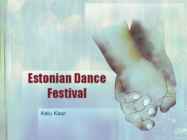
festival was 4 years old and the oldest 76! • The dancers in their bright national costumes form colourful patterns on the dance field. • The Dance Festival is usually held on the same weekend as the Song Festival. • Have you ever heard 18 000 voices singing at once? • This emotional experience can be felt during Estonia's Song Festival, which occurs once every five years in Tallinn. • The Estonian Song Festival is one of the largest amateur choral events in the world. • These two festivals commence with a united festive parade through the city from the centre of Tallinn to the Song Festival Grounds. Aft er pa ra de https://www.youtube.com/watch? v=o24F4U8AC_w vi de o The 16th Song Celebration and the 14th Dance Celebration “TOUCHED BY TIME. THE TIME TO TOUCH” will be held in Tallinn 4.-6. of July 2014. SEE YOU THERE!
Estonia has 1521 islands and the biggest of them are Saaremaa and Hiiumaa. Estonia is divided in to 15 different counties. The biggest cities in Estonia are Tallinn, Tartu , Pärnu, Narva In Tartu there is the biggest and oldest University in Estonia Suur Munamägi is the highest peak of Estonia and also in the Baltic States. It is located near the Haanja upland and its total height is 318 m above sea level . The Estonian Song Festival is one of the largest choral events in the world. It’s held every four years on the Tallinn Song Festival Grounds. Thousans of dancers wear national costumes as they dance around the pitch. Dance Festival usually takes place at the same weekend as the Song Festival. Festive procession is from the Center of Tallinn to the Song Festival Grounds http://et.wikipedia.org/wiki/Esileht www.google.ee www.neti.ee
ESTONIAN MUSIC TODAY The Estonian Song Festival § The Estonian Song Festival (In Estonian: Laulupidu) is one of the largest amateur choral events in the world. § It is held every five years in July on the Tallinn Song Festival Grounds § The joint choir has usually comprised 30,000 singers performing to an audience of 80,000. § The indie folk rock band Ewert and The Two Dragons are among the best known Estonian bands, having had success in Europe and signing with Warner Bros. § http://www.youtube.com/watch?v=ddCsOTWz7gI § The girl band Vanilla Ninja were also one of the best-known Estonian bands.
and West. Estonia is often seen as the world’s leading innovator against the backdrop of untouched nature and rich medieval heritage.One of the most popular things Estonians have invented is Skype. The story goes deeper, and it might just be that Estonia with its diverse background and Nordic temperament ends up being your next holiday destination. Estonia has its own song festival The Estonian Song Festival is one of the largest amateur choral events in the world, a Masterpiece of the Oral and Intangible Heritage of Humanity. It is held every five years in July on the Tallinn Song Festival Grounds simultaneously with the Estonian Dance Festival.The joint choir has comprised more than 30,000 singers performing to an audience of 80,000. Estonia is unique because of traditions and people in Estonia and also our current president Toomas-Hendrik Ilves who is extremely modern as in taking ’selfies’ during the Estonian Song Festival
• http:// www.youtube.com/watch?v=ysXPUg8 GLQ0 • http:// www.youtube.com/watch?v=tN9EC3G • The music was composed by Pedar y6Nk Kearney and Patrick Heeney. • The author of the tune is unknown, • The song has three verses, but only the and it may originate in plainchant. choral refrain was officially designated the national anthem References(kasutatud kirjandus) • Wikipedia.com • Youtube.com • http://www.eupedia.com/ireland/trivia.shtml • https://www.google.ee/search?hl=et&site=imghp&tbm=isch&source=hp&biw=1366&bih=5 96&q=ireland&oq=ire&gs_l=img.3.0.0l10.3496.4186.0.5668.3.3.0.0.0.0.132.368.0j3. 3.0.ckp%2Ckpns%3D1000...0...1.1.32.img.. 0.3.366.dMcJs2KI1f8 • https://www.google.ee/search
·The Estonia Theatre is an opera house and concert hall in Tallinn . It was built on 1913 ·The oldest records of written Estonian date from the 13th century. ·Te most outstanding achievements are the national epic Kalevipoeg (Son of Kalev), written by Friedrich Kreutzwald ·Estonia has many famous writers over the centuries ·Estonia is denenietly song nation. The Estonian Song Festival is one of the largest amateur choral events in the world. It is held every four years in July on the Tallinn Song Festival Gorunds. The first national song festival was held in Tartu in the summer of 1869 ·The oldest university is the University of Tartu which was established by the Swedish king Gustav II Adolf in 1632. ·The Estonian educational system consists of state, municipal, public and private educational institutions. There are currently 589 schools in Estonia ·Estonian cuisine includes many typical international foods
longest-running science fiction television show (Doctor Who) Tv shows - Sherlock Holmes, Merlin Music "The Land of Song..." National Anthem, Hen Wlad Fy Nhadau (Land of my Fathers) The harp Tom Jones and Shirley Bassey Man and Budgie one of the first heavy metal bands Bullet for my Valentine, Lost Prophets Duffy Music festivals and events National Eisteddfod of Wales - poetry, dance, theatre, choral singing and rock music Brecon Jazz - one of the biggest jazz festivals in Europe Wakestock Festival - Europe's largest wakeboard music festival. The Welsh Flag national flag - The Red Dragon (in Welsh Y Ddraig Goch) official status in 1959 dragon associated with Wales for centuries oldest national flag still in use Leek & Daffodil st David - wear leeks in their caps soldiers in the Welsh regiments eat a raw leek
city, in the south. In some of the southern regions, people speak Seto and Võro dialects, which are sometimes considered to be separate languages altogether. Dialects spoken in northern Estonia are more influenced by Swedish and Finnish, especially along the coast and on the islands. One of the oldest traditions in Estonia is The Song Festival. The Estonian Song Festival is one of the largest amateur choral events in the world. It is held every five years in July on the Tallinn Song Festival Grounds.The tradition of the song festival was born along with Estonian national awakening. The first national song festival was held in Tartu in the summer of 1869. One of the organisers of the first song festival was Johann Voldemar Jannsen.There were 822 singers and 56 brass players participated in the first festival. Starting with the fourth festival, mixed choirs were also participating
Nikkolo Miketti, but the first brick in the base of the structure the tsar himself has put. -The Kadriorg Park- is the most knowned hand made park in Estonia. There is a swan pund here, beautiful park avenues and museums. The landscape arround the park is the same it was, with its fields and meadows. -Song Festival Grounds On the song festival grounds took place many meetings, which demanded the canceling of the soviet order, which were accompanied by choral singing. Thanks to this, people returned independence to it self. The first song festival was in 1869. Besides the Song Festivals on the Tallinn Song Festival Grounds take place many different festivals and conserts. -Lasnamae I have lived in Lasnamae for all my life and i realy like it. There is a river here, forests nearby, also many places where to make a picnic, many playgrounds for children are built lately. There is
Caprice 1995. Sergei Rahmaninov: Vespers. Rootsi Raadio Koor, Tõnu Kaljuste. Virgin 1995. Kaunimad Laulud. Eesti Filharmoonia kammerkoor, Tallinna Kammerorkester, Tallinn Brass, Tõnu Kaljuste. Forte 1994 Erkki-Sven Tüür: Oratorio Ante Finem Saeculi / Symphony No.2. Oratooriumikoor, sümfooniaorkester, Tõnu Kaljuste. Finlandia 1994. Arvo Pärt: Te Deum. Eesti Filharmoonia kammerkoor, Tallinna Kammerorkester, Tõnu Kaljuste. ECM 1993. Frank Martin: Mass for Double Choir / Veljo Tormis: Choral Works. Maailma Noortekoor, Tõnu Kaljuste. Bohemia Music 1992. Veljo Tormis: Forgotten Peoples. Eesti Filharmoonia kammerkoor, Tõnu Kaljuste. ECM 1992. Pildid Kasutatud allikad http://et.wikipedia.org/wiki/T%C3%B5nu_Kaljuste http://www.tonukaljuste.com
revelry of Jaaniõhtu The Estonian Christmas, is generally in line with the Northern and Central European traditions of Christmas trees,Advent calendars, and traditional meals, involving a number of dishes that are typically only eaten on Christmas. Christmas is the most extensive, appreciated, and commercialized holiday in Estonia. Estonian Independence Day is the 24th of February and a national holiday. The Estonian Song Festival is one of the largest amateur choral events in the world. It is held every five years in July on the Tallinn Song Festival Grounds. The national symbols of Estoniaare flags, coat of arms National symbols of Estonia Estonia Blue cornflower The Estonian Coat of Arms blue: vaulted blue sky above the native land; black: attachment to the soil of the homeland as well as the fate of Estonians for centuries black with worries; white: purity, hard work, and commitmen
luck as a couple. After five minute walk you will see the ruins of Toome Cathedral. Building of the cathedral started in 13 th century and was complete in 15th century. It was a massive cathedral for Tartu and South Estonia. In course of the Reformation and Livonian war the church was badly damaged, and the fire in 1624 made complete destruction for the cathedral. After some time library moved into the cathedrals choral room, it lasted there for nearly two hundred years. After that it became to Tartu University History Museum. After the cathedral you will walk for about 10 minutes as you will notice the Angel Bridge. The name of the bridge "Inglisild" probably comes from the name "Inglisesild", which means "English bridge", due to the fact that the Toome Hill park was constructed in the English style. After some walking you should see on the left the Main Building of Tartu University. The building itself is
Italian clavierist Girolamo Frescobaldi. The young Bach probably witnessed and assisted in the maintenance of the organ music. Bach's obituary indicates that he copied music out of Johann Christoph's scores, but his brother had apparently forbidden him to do so, possibly because scores were valuable and private commodities at the time. At the age of 14, Bach, along with his older school friend George Erdmann, was awarded a choral scholarship to study at the prestigious St. Michael's School in Lüneburg, not far from the northern seaport of Hamburg, one of the largest cities in the Holy Roman Empire. This involved a long journey with his friend, probably undertaken partly on foot and partly by coach. His two years there appear to have been critical in exposing him to a wider palette of European culture than he would have experienced in Thuringia. In addition to singing in the a cappella choir, it is likely that he
area's bishopric. For that time the cathedral was truly massive, being the largest religious building in all of the Liivimaa territory. Building of the cathedral began in the 13th century and was completed in 15th century as a triple-aisled basilica.In the course of the Reformation and Livonian War the church was damaged. The fire of 1624 completed the destruction. In 1807 the university library was built into the choral room of the church, which was housed there until 1982. Now the Tartu University History Museum is located there, and observing platforms have been renovated in the tower ruins.
koraalilaulmist oreli saatel. Selline arusaamine tekkis nõukogudeaegses lapsepõlves, kui regulaarselt käis kirikus vaid vanaema, ebaregulaarselt (st suurte pühade) ajal vanemad ja laps mitte kunagi. Aga kodus kuulati soome raadiost jumalateenistuste ülekandeid, mis oli esmane kokkupuude kirikumuusikaga ja tekkis tajumine, et see on midagi muud kui ,,tavaline muusika". Vanavanemate juures võeti jõuluõhtul noodivirnast Punscheli Choral- Buch, kust algul mängis vanaema, pärast tema surma sai ise klimberdatud, otsides põnevamaid meloodiaid, koraalide liturgilisele tähendusele mõtlemata ja koraalitekstide sisusse süüvimata. Ene Üleoja defineerib oma artiklis Kirikumuusika või muusika kirikus kirikumuusikat järgmiselt (26 juuli 2007 Meie Kirik): Kirikumuusika ehk kultusmuusika on suhtlemisvahend inimese ja Jumala vahel; ta on patukahetsuse, palve ja ülistuse üks võimalik vorm. Kirikumuusika on nii verbaalse
People were fond of singingand acting. Enjoyed life. Drama became most important genre of literature in this period. Drama as a genre started already in the middle ages. At the beginning it was a religious thing, because acting in those days was part of religious ceremony. Oldest plays were called mysteries and miracles, played by clergyman, showed scenes from Christ's life and saints lives. Were performed on religious holidays in church and they both encluded many choral elements (singing). Often formed cycles, several strories about same event . 14th century guilds became responsble for performing certain parts of saints lives and they performed them on cart that were pushed around in town. People who belonged to guild were actors, craftmen. At the end of 14th morality plays appeared and they were single plays. Aim was to teach people a moral lesson. Often dramatized these plays the conflict between good and evil. Characters were different vices and virtues.
From this uneven and variegated whole I had to choose works worthy of attention. Thus I have had to treat the symphonists in the same manner. I apologise if a colleague does not find his name mentioned. The volume for this extensive work is limited. As the manifold activity of several elder composers still has deep significance today, I have, for the sake of completeness, discussed their other spheres of operation. Symphonic music is divided into two large subsections: instrumental and choral (oratorio and cantata) works. The latter has been severely cut from this work; some examples from momentous stage and oratorical works constitute an exception. The orchestral music will be discussed in some detail, bringing forth the human being and their eternal problems in the widest and deepest sense. The need to be concise and comprehensive has directed the choice of music. I have attempted to elicit the most essential without analysing all of the details
 annaabi.ee