Leidsid 15 sarnast õppematerjali, mis on seotud failiga "British humor". Need materjalid aitavad sul teemat sügavamalt mõista.
them, themes, humor, british, lack, come, class, social, someone, children, everyday, between, practical, bully, nuut, leif, former, colonies, delivery, other, cultures, subject, satire, vice, sexual, commonly, shakespeare, cock, blame, enough, know, absurd, monty, python, compared, beatles, influence, voted, among, greatest, black, grim, good, decayin 1848. Idealised classical art, especially Raphael. Initially seven members but many more associated with the group. Highly romantic, sometimes didactic (intended to teach or instruct) and moralistic (teach morals/call to morality); subjects: romantic and tragic love, medieval and literary themes, conscious of social evils, controversial themes: Victorian woman, forced immigration, prostitution, etc. Rossetti family was at the heart of the Pre-‐Raphaelite Brotherhood; Christina Rossetti. Writes about the limiting and limited choices of Victorian women; strict Anglican but
1. The Jacobean masque Elizabethan one nation culture, now cultural polarisation between the new courtly culture and the rest of the country. Court in cultural isolation. Ben Jonson. King and courtiers were close to universally recognised ideal types (conflict with the reality). Mysticism. Emergence of perspective view, stage machinery, artificial light, revolution. The stage cast the monarch in the focal point (the lines of perspective of the stage met there. Inigo Jones. Masque an educative vehicle, towards classical antiquity and architecture. Tide towards absolute monarchy
century and the humanist period during the Renaissance, the Enlightenment took scientific reasoning and applied it to human nature, society, and religion. American Enlightenment a gradual but powerful awakening that established the ideals of democracy, liberty, and religious tolerance in the people of America. If there were just one development that directly caused the American Revolution and uplifted the intellectual culture of the continent while it was only a British colony, it would be the American Enlightenment. Broadly, the Enlightenment was an intellectual movement that changed the fundamental perspective of the masses, urging them to foster skepticism and apply scientific principles in matters of religion and morality. Its chief values were: Liberty, Democracy, Republicanism, Religious Tolerance. The movement gained momentum with the publication of landmark texts like Thomas
Negative colouring is made stronger by constant epithets and emphatic constructions (e.g. "You filthy swine", "You lazy dog"). Adjectives when used as nouns become colloquial (e.g. "come on, lovely (noun)"). When abstract nouns begin to stand for people they become emotional (metonymy) (e.g. "The little eccentricity." an eccentric child). Possessive case the suffix apostrophe "`s" may be added to a phrase or sentence and the result is humor or colloquial touch. The ending of the plural may be added to the sentence with the same effect. Abstract nouns when used with the plural become very expressive. ARTICLES: the article with a proper name ads a colloquial touch (e.g. "He was engaged to a Mrs. Haggard."). Indefinite article: - with a family name creates evaluative meaning (e.g. "I do not claim to be a Caruso."). - with names of common people suggests a contemptuous attitude toward them.
In industrial output: oil shale, electrical energy, mineral fertilisers, paper, chemicals, building material, and textile production are prominent. In agriculture: milk, milk products, meat, grain, potatoes, fruits and vegetables. Estonian cultural life is manifold and intense, initiated by the National Awakening movement during the second half of the 19th century. Estonian folk arts date back to the remote past. In Estonia there are 27 higher educational establishments, among them seven universities with more than 25,000 students and post-graduates (1996); the oldest is Tartu University (founded in 1632), which enjoys a high international reputation. In Estonia there are unions of writers, artists, composers, actors, cinematographers etc; ten professional theatres, two film studios, and the state institution Estonian Concert Agency. The first Estonian book was published in 1525; in 1996 2,234 books and booklets were published in Estonian
positive attitude) (e.g. famous (positive) notorious (negative). Arnold: "For example the words: "girl", "maiden", "lass", "lassie", "chick", "baby", and "young lady" have identical denotation and may be referred to one and the same person, but the use of this or that word depends not so much on the qualities of the girl herself as on the speaker's attitude to the girl and on the social situation. "Girl" is used in any situation, it has no connotation, and it is stylistically neutral. "Maiden" is an archaic and poetic word, and has a lofty ring about it. Its usage is very limited (poetry) and if used informally it acquires a facetious or ironic connotation. "Lass / lassie" (come from Scottish dialect and have a rustic colouring) they are words of endearment and connote affection. "Chick / baby" - are part of informal
· Hereditary · Naturalists tried to apply in fiction the processes of natural sciences · Writers task is to record facts, systems of behaviour, living conditions, never revealing any natural unbiased (completely natural) · Point of view: amoral-outside the category of morality, neither good or bad · Naturalist find it absurd to blame the wicked. These criminals are doing what nature, environment, their unconscious tells them to do. Naturalists do not judge their characters, they simply report. Try to describe facts like they are. Naturalists depict the lower, coarser forms of life. · Drab, squallid set of scene. Revolting, disgusting · Characters are people with strong animal desires · Neurotic characters unable to understand the forces that control them · By the end of the 18th century the naturalism depicts in europe, but stars to become
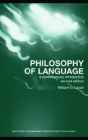
"This exceptional text fulfils two essential criteria of a good introduc- tory textbook in the philosophy of language: it covers a broad range of topics well, all of which are the basis of current active research, and does so in an accurate manner accessible to undergraduate students." Mike Harnish, University of Arizona ". . . an excellent textbook for teaching. The examples throughout are delightful and students will love them." Edwin Mares, Victoria University of Wellington William G. Lycan is William Rand Kenan Professor of Philosophy at the University of North Carolina. He is the author of over 150 articles as well as seven books. Routledge Contemporary Introductions to Philosophy Series Editor: Paul K. Moser Loyola University of Chicago This innovative, well-structured series is for students who have already done an introductory course in philosophy
you should buy this new edition of Influence: o More neuroscience evidence of how the influence process works is inte- Science and Practice, gra ted throughout. For instance, brain imaging research is presented, showing here are 5 good reasons! how the "Expensive = Good" heuristic o Updated coverage of social influence leads people to perceive more costly effects in popular culture, such as the items as better than (identical) less contagion of obesity among the young costly ones. and the contagion of violence in such tragedies as the Virginia Tech and North- o Enhanced coverage of "how to say no." New evidence is presented to
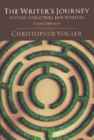
the six feature films as an epic on the theme of father-son relationships • New illustrations and diagrams that give additional depth to the mythic principles • A final chapter, "Trust the Path," an inspiring call to adventure for those who want to discover themselves through writing "This book is like having the smartest person in the story meeting come home with you and whisper what to do in your ear as you write a screenplay. Insightfor insight, step for step, Chris Vogler takes us through the process of connecting theme to story and making a script come alive. " - Lynda Obst, Producer, Sleepless in Seattle, How to Lose a Guy in 10 Days; Author, Hello, He Lied "This is a book about the stories we write, and perhaps more importantly, the stories we live. It
But of the tree of the knowledge of good and evil, thou shalt not eat of it: for in the day that thou eatest thereof thou shalt surely die. Genesis 2:17 PREFACE I'd never given much thought to how I would die -- though I'd had reason enough in the last few months -- but even if I had, I would not have imagined it like this. I stared without breathing across the long room, into the dark eyes of the hunter, and he looked pleasantly back at me. Surely it was a good way to die, in the place of someone else, someone I loved. Noble, even. That ought to count for something. I knew that if I'd never gone to Forks, I wouldn't be facing death now. But, terrified as I was, I couldn't bring myself to regret the decision. When life offers you a dream so far beyond any of your expectations, it's not reasonable to grieve when it comes to an end. The hunter smiled in a friendly way as he sauntered forward to kill me. 1. FIRST SIGHT My mother drove me to the airport with the windows rolled down
invention of secondary cipher systems, and miscellaneous uses of various systems. I had no space for new material, but I did correct the errors reported to me and updated a few items. The chapters have been slightly rearranged. Readers wanting to know more about a specific point should consult the text and notes of the original. If any reader wishes to offer any corrections or to tell me of his own experiences in this field, I would be very grateful if he would send them to me. —D.K. Windsor Gate Great Neck, New York Preface CODEBREAKING is the most important form of secret intelligence in the world today. It produces much more and much more trustworthy information than spies, and this intelligence exerts great influence upon the policies of governments. Yet it has never had a chronicler. It badly needs one
Do not read the choices as you listen to the talk. Listen care-fully and try to remember what you hear. SECTION 2: STRUCTURE AND WRITTEN EXPRESSION This section contains two types of questions, both designed to test your ability to recognize correct style and grammar in written English. The sentences are academic; ones that you typically find in college level texts, journals, and encyclopedias. The sentence topics include the social sciences, physical and life sciences, and the humanities. Structure The structure questions test your ability to recognize correct structure and word order. These questions consist of a sentence with one or more words missing. You must make the choice that best completes the sentence. Here is an example of this type of question. YOU WILL SEE: __________ a short time after the Civil War, Atlanta has become the principal center of
My pulse leaped when his grip tightened. His touch was electric, sending a shock up my arm that raised the hairs on my nape. He didn't move for a moment, a frown line marring the space between arrogantly slashed brows. "Are you all right?" His voice was cultured and smooth, with a rasp that made my stomach flutter. It brought sex to mind. Extraordinary sex. I thought for a moment that he might be able to make me orgasm just by talking long enough. My lips were dry, so I licked them before answering. "I'm fine." He stood with economical grace, pulling me up with him. We maintained eye contact because I was unable to look away. He was younger than I'd assumed at first. Younger than thirty would be my guess, but his eyes were much worldlier. Hard and sharply intelligent. I felt drawn to him, as if a rope bound my waist and he was slowly, inexorably pulling it. Blinking out of my semi-daze, I released him. He wasn't just beautiful; he was...enthralling.
application of the information contained in this book. ON THE SHOULDERS OF GIANTS I am not the expert. I'm the guide and explorer. If you nd anything amazing in this book, it's thanks to the brilliant minds who helped as resources, critics, contributors, proofreaders, and references. If you nd anything ridiculous in this book, it's because I didn't heed their advice. Though indebted to hundreds of people, I wish to thank a few of them up-front, here listed in alphabetical order (still more in the acknowledgments): Alexandra Carmichael Andrew Hyde Ann Miura-ko PhD Barry Ross Ben Goldacre MD Brian MacKenzie Casey Viator Chad Fowler Charles Poliquin Charlie Hoehn Chris Masterjohn Chris Sacca Club H Fitness Craig Buhler Daniel Reda Dave Palumbo David Blaine Dean Karnazes Dorian Yates Doug McGuff MD Dr. John Berardi Dr. Justin Mager Dr. Lee Wolfer Dr. Mary Dan Eades Dr. Michael Eades Dr. Ross Tucker Dr. Seth Roberts Dr
 annaabi.ee