decreased by 1.8% and 2.4% in 1996 and 1997, respectively. The decrease in GDP in 1996 and 1997 was largely due to significant problems in the financial sector and, in 1997, a severe island-wide drought (the worst in 70 years) that drastically reduced agricultural production. In 1997, nominal GDP was approximately J$220,556.2 million (US$6,198.9 million based on the average annual exchange rate of the period). Fishing boats and bauxite cargo ships share the waterways near Alligator Pond, Jamaica The economy in 1997 was marked by low levels of import growth, high levels of private capital inflows and relative stability in the foreign exchange market. Recent economic performance shows the Jamaican economy is recovering. Agricultural production, an important engine of growth increased 15.3% in third quarter of 1998 compared to the corresponding period in 1997, signaling the first positive growth rate in the sector since
annually between 1820 and 1824. The population in 1834 was 371 070 of whom 15 000 were white, 5 000 free black, 40 000 coloured or mixed race, and 311 070 slaves. Strong economic growth, averaging approximately 6% per annum, marked the first ten years of independence under conservative goverments which were led successively by Prime Ministers Alexander Bustamante, Donald Sangster and Hugh Shearer. The growth was fueled by strong investments in bauxite/alumina, tourism, manufacturing industry and, to a lesser extent, the agricultural sector. Economix deterioration continued into the mid-1980s; The first and third largest alumina producers, Alpart and Alcoa, Henry Morgan was a famous closed and there was a significant Caribbean pirate and privateer reduction in production by the second
interest in sports. Cricket, Football (soccer), athletics and horse-racing are several popular sports. The climate The climate in Jamaica is tropical, with hot and humid weather. Jamaica lies in the hurricane belt of the Atlantic Ocean: as a result, the island sometimes experiences significant storm damage. The biggest river in Jamaica - Black River, Rio Cobre, Milk River, Rio Grande ja Martha Brae Church Port Antonios Fishing boats and bauxite cargo ships share the waterways near Alligator Pond. Jamaica-Beach Coffeeberries Enjoy these photos from beautiful Jamaica
Escaped slaves formed their own settlements known as Maroon communities, but with the abolition of slavery in 1834 many of the former slaves began to settle in urban areas. During the Second World War, the United States arranged for its airforce to use British airports in South America, including those in British Guiana. Guyana achieved independence from the United Kingdom in 1966 and became a republic on 23 February 1970. The main economic activities in Guyana are agriculture, bauxite mining, gold mining, timber, shrimp fishing and minerals. The sugar industry, which accounts for 28% of all export earnings, is largely run by Guysuco, which employs more people than any other industry. The production of balatá (natural latex) was once big business in Guyana, but most of the trees in the area were destroyed by illicit bleeding methods that involved cutting down the trees rather than making incisions in them. Folk uses of balatá included the making of homegrown cricket
Today aborigines continue to live in Australia but there culture in under threat. In 1770, there were about 300,000 Aborigines. Now, there are 120,000. It is becoming harder and harder for them to continue their traditional way to live. Today Australia is a modern, industrial country, independent from Britain since 1931. The Commonwealth of Australia consists of 6 states and two provinces. It is the world's biggest producer of wool, bauxite and important producer of wheat, meat, sugar and fruit. What do these numbers and dates refer to? For example: 12,000 years ago: first people arrived in Australia 120,000 1970 300.000 7,700,000 - What is the capital of Australia? a. Sydney b. Melbourne c. Canberra - Which city is the oldest and largest? a. Canberra b. Sydney c. Darwin - Which is a popular Australian animal? a. bear b. kangaroo c. fox
Western Australia. The capital is Perth. The largest state of Australia, this dry region is under the deserts and semideserts mostly. Bushland, so typical of this region, gives way to subtropical forests in the south west. In wetter parts of this region plains are used for breeding merino sheep. If possible, wheat, citruses and fruits are grown. This part of the country is extremely rich in minerals: lead, manganese, iron-ore, nickel, silver, gold, copper, bauxite and coal. Western Australia provides 75% of Australia's 240 tonnes of gold. Many immigrants live there because it was the last state to accept convicts. South Australia. The capital is Adelaide. Miles and miles of flat and treeless land. The average rainfall on plains is 10 inches a year and it all drains quickly underground, so there are no surface streams. The water lies hundreds and sometimes thousands of feet underground. On the coast near Adelaide the climate is
The major agricultural activity is beef cattle farming and a major industrial activity is mining coal and other minerals. Now tourism is a major industry also. The koala lives only in Queensland. 4) Western Australia its capital is Perth and it is the largest of Australian states. It occupies 2,25 million sq km. The major agricultural industries are beef, wheat and timber and the major industry is mining ironore, bauxite, gold and diamonds. 5) Victoria its capital is Melbourne and it is the smallest mainland state. It only occupies 3 per cent of the total land mass of Australia. Its major industry is food production and processing. Victoria has a tepmerate climate. 6) Tasmania Its an island situated 150 km south of the most southern point of Victoria. It occupies 68 000 sq km and its capital city is Hobart
and swimming. Australia has participated in every summer Olympic Games of the modern era, and every Commonwealth Games. Australia hosted the 1956 and 2000 Summer Olympics. The Australian Open is one of the four major tennis tournaments played in the world each year. Economy Australia is leading producer of coal, copper, gold, silver, iron ore, managanese, nicker, tin. Mineral resources are: lead, zinc, bauxite, natural gas, petroleum, uranium, diamonds. Agriculture: 10% of cropland is irrigated 5% of workers are farmers highly mechanized farms Leading farm products: wool, wheat, sugar cane, cattle, meat, carves, fairy products, fruit(grapes, pineapples, bananas, apples, pears). Others are: barley, rice, oats, cotton, chicken and eggs, sheep and lambs. Manufacturing. Iron and steel production Factory machinery Farm machinery Construction equipment Consumer goods Household articles Processed food
In 2011, Hungary assumed the six month rotating presidency of the EU for the first time (Central Intelligence Agency, 2012, ISSN 15538133). 2.3.2 Geography Location: Central Europe, northwest of Romania Area: total: 93 028 km2 land: 89 608 km2 and water: 3 420 km2 Coastline: 0 km Climate: temperate; cold, cloudy, humid winters; warm summers Terrain: mostly flat to rolling plains; hills and low mountains on the Slovakian border Natural resources: bauxite, coal, natural gas, fertile soils, arable land Land use: arable land: 49.58%, permanent crops: 2.06%, other: 48.36% (2005) Environment current issues: the upgrading of Hungary's standards in waste management, energy efficiency, and air, soil, and water pollution to meet EU requirements will require large investments (Central Intelligence Agency, 2012, ISSN 15538133). 2.3.3 People and Society Ethnic groups: Hungarian 92.3%, Roma 1.9%, other or unknown 5.8% (2001 census) Languages: Hungarian 93
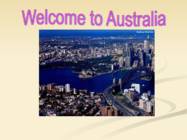
two largest cities. It is an entirely purpose-built, planned city. Canberra is the seat of the government of Australia. Economy Australia is an outstanding producer of primary products. The country doesn’t import almost any foods. Australia produces food itself. Australia is a major exporter of wheat, meat, dairy products and of course wool. The country produces more than 25 percent of the world’s yearly output of wool. Australia is also very rich in minerals. Coal, bauxite, gold, iron ore, diamonds, natural gas, nickel can be found in Australia. Western Australia has become the most important region of mineral production Mining is an important branch of Australia’s industry too. The famous mining area is Broken Hill in New South Wales. It‘s one of the largest producers of lead, zinc copper and uranium. Australia is also rich in precious and semi precious stones. Black opals, pink diamonds are thought to be very valuable.
PACIFIC OCEAN EQUATOR --+- - - - -j-- - - - -+- - - - -+- --,r.-- -F Oil, Natural Gas, and Coal Major oil fields · Other oil fields c::::::> Natural gas fields D Coal deposits EQUATOR :.11 Bauxite Chrom ium Copp er B Diamonds &-, Gol d M Iron @ Lead Manganese &ill. Nickel Platin um !SJll Silver
Australia is the world's largest producer and exporter of wool and leading producer and exporter of beef, sugar and wheat. Fruits like apples and pears are grown in all the states. South Australia also produces large quantities of grapes that are used for making wine. Sheep and cattle are raised in all the states and wheat is grown in all areas of Australia that have medium rainfall and moderate temperature. Natural resources Natural resources include: bauxite, coal, iron ore, copper, tin, gold, silver, uranium, nickel, tungsten, mineral sands, lead, zinc, diamonds, natural gas, petroleum. 13 . The Biggest Cities Sydney is the most populous city in Australia with a metropolitan area population of over 4.2 million people (2006). Sydney is the state capital of New South Wales and is located on the country's southeast coast
new newspapers. Aluminum cans can be used to make new aluminum cans. Glass jars can be used to make new glass jars. Recycling often saves energy and natural resources through conservation. It almost always takes less energy to make a product from recycled materials than it does to make it from new materials. Using recycled aluminum scrap to make new aluminum cans, for example, uses 95 percent less energy than making aluminum cans from bauxite ore, the raw material used to make aluminum. Natural resources are riches provided courtesy of Mother Nature. Natural resources include land, plants, minerals, and water. By using materials more than once, we conserve natural resources. In the case of paper, recycling saves trees and water. Making a ton of paper from recycled stock saves up to 17 trees and uses 50 percent less water. ELECTRICITY Electricity is the flow of electrical power or charge. It is a secondary energy source which
 annaabi.ee