in the courtincluding humiliating themselves. The danger of ambition is also figured here; jumping badly can lead to death. Having Gulliver stand with his legs apart so that the Lilliputian armies can walk through is also a ridiculous idea. It is a comment on the pomp and circumstance of English armies. To Swift it seems that armies are often more concerned with looking impressive than with being impressive. This scene might also be an allusion to the Colossus of Rhodes, described in Julius Caesar by Shakespeare as a largerthanlife figure that men could walk through the legs of. The war between the English and the French is parodied in the conflict between the Lilliputians and the Blefuscudians. Their conflict over which end of the egg to break reflects the centuriesold conflict over how to practice religionas Protestants or Catholics. While the wars over religion certainly were
Protagonist - the leading character or one of the major characters in a play, film, novel, etc. Theme - an idea that recurs in or pervades a work of art or literature. 2 Motif - a dominant or recurring idea in an artistic work. Symbol - a thing that represents or stands for something else, especially a material object representing something abstract. Allusion - an expression designed to call something to mind without mentioning it explicitly; an indirect or passing reference. Simile - a figure of speech involving the comparison of one thing with another thing of a different kind, used to make a description more emphatic or vivid (e.g. as brave as a lion ). Metaphor - a figure of speech in which a word or phrase is applied to an object or action to which it is not literally applicable.
simple (based on a single phrase, sentence, string; window & heart") name objects ("one's image) sustained (developed). semantically classified: better half" = wife) 2. ALLUSION 2. METONYMY metaphorical ("soft smile") 2. PUN 2. SIMILE reference to sth. known to reader;
Native vocabulary: INDO-EUROPEAN- mother, foot, heart, father, sea, night etc GERMANIC- friend, bidge, ship, life, heaven OLD-ENGLISH- bad, bird, woman, lady and gospel LATIN- cheap, pepper, street, mile, butter, cheese, wine, inch, ounce, pound, kitchen, plum, cup, dish, mint, leitchester, clorcester, colonia, lincoln, fossbrok, mass, monk, nunn, bishop, abbot, minster, apostle, pope, altar, hymn, democratic, juvenile, sophisticated, aboration, enthusiasm, permissions, imaginary, allusion, anacroism, dexterity, nucleous, formula, vertegra, corpuscle, atomic, carnivorous, incubate, molacule, i.e- that is, viz- videlicet, etc- et cetera, e.f- confer Latin adjectives for english nouns- nose-nasal, mouth-oral, sun-solar, moon-lunas, son-filial, daughter- filial, mother- maternal, father- paternal. GREEK- abbot, angel, apostle, bishop, school, cilinder, cycle, dialoge, cardiac, phonetic, gymansium, biathlon, pentathlon, decathlon, olympic, diagnoses, prognoses, analyses,
borrowed, chair infuenced stool and it is now a taburet). Borrowings have influenced the English language a lot but native elements should not be disregarded or overlooked. Latin borrowings cheap, pepper, street, mile, butter, cheese, wine, inch, ounce, pound, kitchen, plum, cup, dish, mint, Leicester, Clocester, colonia, lincoln, fossbrok, mass, monk, nun, bishop, abbot, minster, apostle, pope, altar, hymn, democratic, juvenile, sophisticated, abortion, enthusiasm, permissions, imaginary, allusion, anachronism, dexterity, nucleus, formula, vertebra, corpuscle, atomic, carnivorous, incubate, molecule, i.e- that is, viz- videlicet, etc- et cetera, c.f- confer Latin adjectives for english nouns- nose-nasal, mouth-oral, sun-solar, Greek borrowings abbot, angel, apostle, bishop, school, cilinder, cycle, dialogue, cardiac, phonetic, gymnasium, biathlon, pentathlon, decathlon, olympic, diagnosis, prognosis, analysis, technology, epic, drama, poem, tragedy, comedy, theatre, epilogue, prologue,
depend on a context. It is conditioned by the existence of corresponding neutral words and becomes clear only in comparison with them. Style colouring words lend their colouring to the whole utterance. It is sometimes sufficient to have 2-3 words in a paragraph to make the latter either poetic or solemn etc depending on the nature of those 2-3 words. Common literary vocabulary Are not confined to any sphere of usage. Here mainly belong borrowed words. E.g. Yearly-annual, hint-allusion, to see-to behold, talk-converse, true-authentic. The man fell-the individual was precipitated, hard study made him sleepy-indefatigable pursuit of knowledge endowed somnolence in him. Sometimes lit words are used for the sake of humour. Especially when they describe very trivial actions. Special literary vocabulary Terms belong to scientific discourse. They are indispensible for the development of science. E.g. malaria
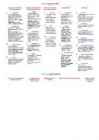
The styl. of speech Periphrasis Jargon Denotation Simile Cant Connotation Euphemism Vulgarisms Inherent Personification Professional w. Adherent Bathos Dialectal w. Phonestheme Allusion Rhythm Expressive means Quotation Foot Stylistic devices Epigram Metre: Phonostylistics PU, deformed PU Iambus Phonetic. expr. means Synonymic repetition Trochee Prosody Lexical repetition Anapaest Orchestration Syntactic SD Dactyl
colonia - Lincoln vicus ‘village’ - Greenwich, Harwich fossa ‘ditch’ - Fossbrook religious (6-7th centuries) mass, monk, nun, bishop, abbot, minster, apostle, pope, altar, hymn, angel, devil literary (renaissance) democratic, juvenile, sophisticated, aberration, enthusiasm, pernicious, imaginary, allusion, anachronism, dexterity scientific (17th-18th nucleus, formula, vertebra, corpuscle, atomic,carnivorous, incubate, aqueous, centuries) molecule The plurals of nucleus, verterbra, corpus, etc. Latin abbreviations in English i.e. = id est that is to say viz = namely etc = et cetera Latin adjectives for English nouns nose – nasal sun – solar son – filial mother – maternal
tradition, he despises Quentin and his ideas, just as Quentin is dead physically, Jason is dead spiritually. His life is also futile and the only character with the author sympathizes is Dilsey- he is the old, black, servant, who has stayed with the family and he is the most moral character in the book. Stands moral principles against which the Comptons are judged. He is the only character who manages to maintain some sort of balance between the real and the ideal. This is allusion to shakespeare's macbeth. ,,Snopes"- trilogy, ,,The hamlet", ,,Town", ,,The Mansion". Old man Snopes, who sold stolen horses to both sides during the civil war. The Snopes are dishonest, ruthless, cunning. Flem Snopes, in whom Faulkner saw the worst characteristics of white familys in the south. He embodies the worst possible features. Flem gains control over important plot of land. He gains control over the plot of land byt victimizing the Varners by marries their daughter. By
Colonia – colony : Lincoln Vicus – village : Greenwich, Harwich Fossa – ditch : Fossbrook Religious (6.-7.century) o Mass, monk, nun, bishop, abbot, minster, apostle, pope, altar, hymn, angel, devil Literary (renaissance) o Democratic, juvenile, sophisticated, aberration, enthusiasm, pernicious, imaginary, allusion, anachronism, dexterity Scientific (17.-18. century) o Nucleus, formula, vertebra, corpuscle, atomic, carnivorous, incubate, aqueous, molecule Latin abbreviations o i.e – id est – that is to say Latin adjectives for english nouns o Nasal, oral, solar, paternal, maternal, lithic, lunar, filial Actual inflected Latin verbs used as nouns o Audio, audit, caveat, video.
g. Joyce’s Ulysses), music (e.g. Richard Aldington Death of a Hero, Woolf’s The Waves). Almost no new topics, just new ways of treating old topics. Things happen in the mind at the same time as other daily things. Stream of consciousness – constant flow of thoughts. Allusiveness (allusion – a figure of speech that either directly or indirectly makes a reference to other people, places, events, literary work, myths, works of art, etc.). Written for the elite, difficult to read. First author to incorporate modernist ideas Joseph Conrad but not a true modernist.
The later are: · Words belonging to different stylistic groups--colloquial and literary words together (I aint discussing it with my parent) · Using colloquial words when speaking about famous people (That Shakespeare chap) · Mentioning a down-to-earth object side by side with something lofty (they were kissing passionately. The pigs were grunting loudly) Bathos adds humor and irony. Allusion is a reference to something presumably known to the reader--to literature, history, mythology, facts of everyday life, etc. Usually, no indication of source is given. Normally they create festive, solemn implications, but many also result humour if used inappropriately. Often allusions are lost in a text, they are not supplied with the quotation marks. (Mary's lamb--nursery rhyme, Commander Statue--Don Juan) Quotation is a phrase or passage from a literary source often marked by inverted commas
The usual function is irony or humour. - The author may mention elevated things side by side with down-to-earth objects. - Words belonging to different stylistic layers brought together are also bathos (colloquial + formal vocabulary). - Applying colloquial words to distinguished people (e.g. "That Shakespeare chap most likely had written countless books of poetry."). 2. Allusion a reference to something known to the reader, frequently to the literature, history, facts of everyday life. Usually no source indicated. Allusions create new associations in a new context, because they call forth compression. Usually they create festive overtones, also humor (when used "inappropriately") (e.g. "Death may be knocking at the door like the Commandor's statue.") 3. Quotation is a phrase, passage from a literary source marked by inverted commas
repeated, especially when a certain desirable event, my dear Eliza (glancing at her sister and Bingley) shall take place. What congratulations will then flow in! I appeal to Mr. Darcy:-- but let me not interrupt you, sir. You will not thank me for detaining you from the bewitching converse of that young lady, whose bright eyes are also upbraiding me." The latter part of this address was scarcely heard by Darcy; but Sir William's allusion to his friend seemed to strike him forcibly, and his eyes were directed with a very serious expression towards Bingley and Jane, who were dancing together. Recovering himself, however, shortly, he turned to his partner, and said, "Sir William's interruption has made me forget what we were talking of." "I do not think we were speaking at all. Sir William could not have interrupted two people in the room who had less to say for themselves. We have tried two or three subjects
and gave him his daughter and half his kingdom. This is the only mention of writing in the Iliad. Homer's language is not precise enough to tell exactly what the markings on the tablets were. They were probably nothing more than ordinary letters—actually substitution of symbols for letters seems too sophisticated for the era of the Trojan War. But the mystery that Homer throws around the tablets does suggest that some rudimentary form of concealment was used, perhaps some such allusion as "Treat this man as well as you did Glaucus," naming someone whom the king had had assassinated. The whole tone of the reference makes it fairly certain that here, in the first great literary work of European culture, appear that culture's first f aint glimmerings of secrecy in communication. A few centuries later, those glimmerings had become definite beams of light. Several stories in the Histories of Herodotus deal specifically with methods of steganography (not cryptography)
The letter of the claim that almost every sentence contains figurative ele- ments is widely conceded, because everyone grants that among the literal expressions are many "dead" metaphors; that is, phrases that evolved from what were originally novel metaphors but have turned into idioms or clichés and now mean literally what they used to mean metaphorically. We speak of a river's "mouth," but no one in the present century thinks of this as a metaphorical allusion to human or animal mouths. Likewise "inclined to [do such-and-such]," "rich dessert," "dead microphone," and, for that matter, "dead metaphor." Perhaps "level" as in "higher/lower level" is now literal too. "Level" in "carpenter's level," meaning the tool, is certainly dead; there is no other term for that tool, and in a dictionary it would be listed as a separate meaning of the word. However, as has been emphasized by Lakoff and Johnson (1980), the
 annaabi.ee