Autoportree Mis on autoportree? ◎Portreežanri alaliik, kus kunstnik kujutab iseennast ◎Iseseisvaks žanriks sai 15.-16. sajandil Lääne-Euroopas ◎Albrecht Dürer ◎http://www.spiegel.de/fotostrec ke/photo-gallery-of-research- shedding-new-light-on- albrecht-duerer-fotostrecke- Liigid ◎“Peidetud” autoportree ◎Grupiportree ◎Üksikisiku autoportree Peidetud autoportree ◎ Kunstnik kujutab ennast rahva seas Adoration of the Magi Sandro Botticelli Las Meninas Diego Grupiportree ◎ Kunstnik kujutab end grupi või perekonna keskel Autoportree Saskiaga Rembrandt Neli filosoofi Rubens Üksikisiku autoportree ◎ Kunstnik kujutab end üksi maalil Albrect Düreri autoportree Bryan Charnley http://bryanlewissaunders.org/drugs/ autoportree Kasutatud materjalid http://en.wikipedia
what was going on. Once the elders discussed with him what had happened, he waited for the others to come of age. At the time of the change Sam was in love and dating Leah Clearwater. All that changed when Leah's cousin Emily visited. When Sam saw Emily it was love at first site, soul mates. Sam has to live with letting down Leah and see the anger and hurt in her eyes. At first Emily hated Sam for it but eventually the love and adoration Sam showed her was over powering. Bella asks Jacob if he has found his soul mate and he says that only Jared and Sam have. Bella feels relieved by this. The conversation turns to Jacob and what he was thinking the other day to make Edward so uncomfortable. Jacob admits to thinking about the night Sam found her in the woods and what she looked like the first time she came to see him. Edward was pained by the memories. Bella was angry with Jacob for being so mean and decides to leave
Graafika Õpetaja José Luzán Liikumine Romantism Tuntuimad teosed - Alasti 'Maja' / Rõivastatud 'Maja' - Kolmas Mai 1808 Self-Portrait in the Workshop - 'Mustad maalid' The Adoration of the Name of The Lord 1772 1786 Summer / The Harvest 276 x 641 cm 1788 The Meadow of San Isidro on his Feast Day 44 x 94 cm 1789 Witches Sabbath 44 x 31 cm 1793 Procession of Flagellants 46 x 73 cm 1795 The Duchess of Alba and Her Duenna 30.5 x 25 cm 1797-1798 Witches in the Air 43.5 x 31.5 cm 'Kapriisid' Los Caprichos 1799 The Chinchillas 21 x 15 cm 1799
Castango poolt 1451-1453. Kogu kirik hävitati 18 sajandil. 1445-1447 maalis Domenico oma teise säilinud ja signeeritud töö: altarimaali Santa Lucia dei Magnoli kirikusse. Keskmine paneel, neitsi ja laps koos nelja pühakuga on üks silmapaistvamaid 15 sajandil Firenzes maalituid töid. Viis paneeli sellest altarimaalist on nüüd erinevate galeriide vahel laiali pillutatud ja asuvad Cambridge, Berliini ja Washingtoni muuseumides. Teos ”Maiesteedi kummardamine” (Adoration of the Magi; Staatliche muuseum Berliin) on määratlemata dateeringuga. Sellel maalil on kombineeritud erksaid värve realismiga ja taustale on maalitud laiuv maastik. 1447. aastal ja alustas Domenico tööd Santa Maria kirikus Loreto’s. Ka seal tegi ta koostööd Piero della Francesca’ga. See töö jäi lõpetamata katkupuhangu tõttu, mis sealkandis puhkes ja Domenico naases Firenze’sse. Ka Santa Maria kirikusse maalitud töid ei ole säilinud.
Ladi puhtatõulisus pärines sajandite generatsioonidest oli vähem inimlik ja rohkem mitte huvitatud . 20 expr indispensable- hädavajalik, asendamatu devoted-pühendunud, andunud throughbred-puhtatõuline benign-heasüdamlik, lahke mournful-kurvad ruff-kaelus cautiously-ettevaatlikult pygmy- kääbus shapeless-kujutu,ebakorrapärane adoration-jumaldamine shameful-häbiväärne snatching-näppama,ära tõmbama choisest-mahlaseim hectoring-karjuv,kärkiv dignified-väärikas drowse-tukastus vagaries-narrus, tembutus temper-temperament wondrous-imestusväärne doubtless-kahtlemata
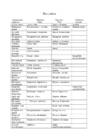
kontrollitud Guarded- kaitstud Guard- valvur Guard- valvama Assisted- abistatud Assistant- abiline Assist- abistama Advised Advisor- nõuandja Advise- nõu andma Actress- näitleja Act- näitlema Instuctor- juhendaja Instruct- juhendama Cook- küpsetaja Cook- küpsetama Adoration Adore Influence influence Realisation- avastus Realise- avastama Pirate- piraat Piracy- piraatlus
herself into the role of a dutiful wife. Leon grows tired of waiting and, believing that he can never possess Emma, departs to study law in Paris. His departure makes Emma miserable. Soon, at an agricultural fair, a wealthy neighbor named Rodolphe, who is attracted by Emma's beauty, declares his love to her. He seduces her, and they begin having a passionate affair. Emma is often indiscreet, and the townspeople all gossip about her. Charles, however, suspects nothing. His adoration for his wife and his stupidity combine to blind him to her indiscretions. His professional reputation, meanwhile, suffers a severe blow when he and Homais attempt an experimental surgical technique to treat a club-footed man named Hippolyte and end up having to call in another doctor to amputate the leg. Disgusted with her husband's incompetence, Emma throws herself even more passionately into her affair with Rodolphe
The Annunciation (c. 1479) Madonna of the Sea (1469-1470) Portrait of Esmeralda Brandini (1470-1475) Madonna and Child with an Angel (1470) The Return of Judith to Bethulia (1470- 1472) St. Sebastian (1474) The Birth of Christ, (1476-1477) St. Sixtus II (1481) The Birth of Venus (1484-1486) Cestello Annunciation (1489-1490) Portrait of Dante (c. 1495) The Story of Virginia (1496-1504) The Adoration of the Child (c. 1500) LOOMING: ,,Kevad" ehk ,,Primavera" (1478) Vasakult paremale: Mercury, kolm graatsiat, Venus, Flora, Kronos, Zephyrus. ,,Venuse sünd" (1486) ,,La Primavera" Kasutatud kirjandus: · http://www.paideyg.ee/kunstiajalugu/kunstilugu/renessanss/botticelli/index.html · http://www.paideyg.ee/kunstiajalugu/kunstilugu/renessanss/botticelli/tekst.htm · http://portfoolio.varstukk.edu.ee/Renessanss/html/Botticelli/sisu.html · http://en.wikipedia
Botticelli oli esimene kunstnik kuni renessansi ajani, kes maalis end oma kunstiteosele. Botticelli maalid: ,,La Primavera (Kevad)" ,,Venuse sünd" ,,Korahi karistus" ,,Kristuse taganutmine" ,,Noor mees" (hea näide Botticelli inimeste kujutamisest portreedel) ,,Kiidetud olgu Madonna" (üks näide mitmest Alessandro madonnadest) Maal, kuhu Botticelli end maalis (ta on paremas nurgas, vaatab vaataja poole, oranzis rüüs) Inglise keeles "Adoration of the Magi" Botticelli ,,Kristuse sünni müsteerium" Kasutatud kirjandus: 1. ,,Suuri kunstnikke" Robert Cumming 2. ,,Kunstiajalugu" David Piper 3. ,,Sandro ja Simonetta" Richard Burns 4. ,,Kunst" Robert Cumming 5. Pildid (Botticelli maalid) on Internetist tõmmatud, otsingumootor Google abiga. (www.google.com)
It is the National Gallery. It has been in this building since 1838 which was built as the National Gallery to house the collection of Old Masters Paintings (38 paintings) offered to the nation by an English Private collector, Sir George Beamount. Today the picture galleries of the National Gallery of Art exhibit works of all the Euro-pean schools of painting, which existed between the 13th and 19th centuries. The most famous works among them are `Venus and Cupid' by Diego Velazquez, `Adoration of the Shepherds' by Nicolas Poussin, `A Woman Bathing' by Harmensz van Rijn Rembrandt, `Lord Heathfield' by Joshua Reynolds, `Mrs Siddons' by Thomas Gainsborough and many others. In 1897 the Tate Gallery was opened to house the more modern British paintings. Most of the National Gallery collections of British paintings were transferred to the Tate, and only a small collection of a few masterpieces is now exhib-ited at Trafalgar Square. Thus, the Tate Gallery
Fourth level Fifth level Venus at the Forge of Vulcan 1641 Oil on canvas, 150 x 116,8 cm Musée SaintDenis, Reims Click to edit Master text styles Second level Third level Fourth level Fifth level Adoration of the Shepherds c. 1644 Oil on canvas, 107 x 131 cm Musée du Louvre, Paris Georges de La Tour Click to edit Master text styles Georges de La Second level Third level Tour Fourth level Fifth level Woman Catching Fleas 1630s Oil on canvas Musée Historique, Nancy
He and queen living incarnations of ideals. Visual style of his reign more classical than James’s. Thomas Carew „Coelum Britannicum”. King’s policy of peace (peace in every courtly celebration). Benefits to the isle by the union of divine couple. Henrietta Maria Love and Beauty and Charles – Heroic Virtue, together a great force. Masques centre of court life. Stuart divinity + now queen as a Platonic love goddess. Maria – from French court amnners and highly artificial language of adoration – fashion. Idealised love wiped away all stains. Through their harmony, Charles could make his heavenly ascent and bring great benefits to their obedient subjects. Very costy. Closed court, believed in masques. 3. 17th century „metaphysical” poetry (Donne, Quarles, Herbert, Crashaw, Vaughan, Marvell) Religious poetry, books of emblems (allegorical pictures, verses explaining their moral), unconventional or
this point in the book to admit it. The tapestries of biblical adultery, which are found in Arthur's room are hypocritical. These are supposed to help him atone for his sins by making him feel guilty, but he feels no better. Arthur goes and preaches every week on how bad sin is, and how he is the worst sinner of them all. These partial confessions just make him more of a hypocrite. Dimmesdale knows how the parishioners will interpret these confessions, he is not blind to their looks of adoration. Dimmesdale enjoys being viewed as a saint, when he knows he is a truly a sinner. The years of torture the minister receives, are brought on by his own doing. If his supposed commitment to the community had stopped him from admitting his sin, he would have not been tortured. His love of the community is very similar to Hester Prynne's love of Pearl. Dimmesdale only loves his
secondary education in the native language of Estonians. In Estonian literature critical realism came to the fore, exemplified in the works of Eduard Vilde, many of which have a strong social background; Külmale maale (To the Frozen North, 1896), for example, depicted the poverty and decline in village life. At the same time the mature works of the poet Juhan Liiv (1864-1912) had a great impact reflecting both the sorrow he felt about the problems of Estonian society and the adoration he had for his country. In the visual arts realism was adopting modern trends. Many artists took their subject matter from rural life. Kristjan Raud (1865-1943) became the first whose charcoal drawings and paintings reflected national symbolic backgrounds. As the opportunities for artists to work in Estonia improved, Kristjan Raud and Ants Laikmaa 1 Its manifesto called for reforms from the tsarist regime and for limited autonomy for Estonia.
But the gloom of Lydia's prospect was shortly cleared away; for she received an invitation from Mrs. Forster, the wife of the colonel of the regiment, to accompany her to Brighton. This invaluable friend was a very young woman, and very lately married. A resemblance in good humour and good spirits had recommended her and Lydia to each other, and out of their three months' acquaintance they had been intimate two. The rapture of Lydia on this occasion, her adoration of Mrs. Forster, the delight of Mrs. Bennet, and the mortification of Kitty, are scarcely to be described. Wholly inattentive to her sister's feelings, Lydia flew about the house in restless ecstasy, calling for everyone's congratulations, and laughing and talking with more violence than ever; whilst the luckless Kitty continued in the parlour repined at her fate in terms as unreasonable as her accent was peevish. "I cannot see why Mrs
 annaabi.ee