2. flood (n) overflowing of water 3. hurricane (n) violent storm 4. cliff (n) a high steep face of a mountain 5. ozone layer (n) part of the atmosphere that limits the sun's incoming radiation levels 6. stream (n) small river 7. volcano (n) a mountain 8. in danger of extinction on the verge of dying out 9. earthquake (n) series of vibrations induced in the earth's crust 10. drought (n) a period of dry weather 11. wilderness (n) an area uninhabited by people 12. scenery (n) the general appearance of a place/landscape 13. peak (n) the pointed top of a mountain 14. summit (n) highest point of a mountain 15. existence (n) presence, being, state of existing 16. implication (n) assumption 17. drizzle (n) light rain 18. humid (adj) damp, moist 19. scattered showers (n) spread/distributed rain 20. heavy rain - 21. severe storm violent storm 22. frost (n) hoarfrost, frozen dew 23
Canada is the second largest country in the world. Only Russia has a greater land area. Canada is situated in North America. Canada is a federation of 10 provinces and 2 territories. The population Canada is slightly larger than the United States, but has only about a tenth as many people. About 28 million of people live in Canada. About 80% of the population live within 320 km of the southern border. Much of the rest of Canada is uninhabited or thinly populated because of severe natural conditions. Canada's people are varied. About 57% of all Canadians have some English ancestry and about 32% have some French ancestry. Native people American Indians and Eskimos make up about 2% of the country's population. 77% of Canada's people live in cites or towns. The Capital of Canada Ottawa is the capital of Canada. One third of its people are French- speaking
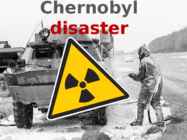
the plant and those people evaluating and dealing with the consequences of the accident and operating the undamaged reactors. The Soviet (and later on, Russian) government evacuated about 115,000 people from the most heavily contaminated areas in 1986, and another 220,000 people in subsequent years. The Exclusion Zone • An area originally extending 30 kilometers (19 mi) in all directions from the plant is officially called the "zone of alienation". It is largely uninhabited, except for about 300 residents who have refused to leave. The area has largely reverted to forest, and has been overrun by wildlife because of a lack of competition with humans for space • Even today, radiation levels are so high that the workers responsible for rebuilding the sarcophagus are only allowed to work five hours a day for one month before taking 15 days of rest. Ukrainian officials estimate the area will not be safe for human life
In the meantime happened to him many adventures where he was taken prisoner, but he escaped and met a Portuguese ship at sea by the captain helped him. Finally, he escaped it to Brazil. Where he bought a small piece of land and planted sugar and did very well. There was a need for staff recruitment, they were asked Robinson to go to Africa to buy slaves. On this trip a great storm destroyed the ship's Robinson Crusoe. He was the only one who survived. Waves alone, it disrupted the uninhabited island. There, he first had to maintain peace and to think clearly, to start. Crusoe bought the wrack everything what he need and what wasn't spoilt. They also had on the ship a dog and two cats. He had carried the cats to shore on the raft, and the dog had jumped out of the ship and swum to the shore whit him. At first Crusoe built the tent for himself but found that as a few days living here, that the tent was an unsuitable place. He built entrance to a cave
Industry Furs, farms, forests, and fisheries make up much of Canada's wealth. But the Country is also rich in minerals. Canada has copper, lead, silver, gold and other minerals. Thousands of Canadians earn their living as fishermen. The farms of eastern Canada are rather small. Potatoes are an important crop. Population About 27 million people live in Canada. About 80% of them live within 300 kilometres of Canada's southern border. Much of the rest of Canada is uninhabited or thinly populated because the country has rugged terrain and a severe climate. Canada's people are varied. About 38% of all Canadian's are of British descent and 32% are of French descent. About 15% of Canada's people speak both English and French, the two official languages. There are also people of German, Italian, and descent. Eskimos and American Indians together make up about 2% of the population. Over three-quarters of Canada's people live in cities or towns. Provinces/territories
the conservation of the Galapagos Islands ecosystems. The Charles Darwin Foundation exists to provide knowledge and support to ensure the conservation of the environment and biodiversity of the Galapagos Archipelago through scientific research and complementary actions. The Galapagos Islands remain well preserved as a natural environment in large part due National Park Rules. It is prohibited to transport any live material to the islands, or from island to island, not to take any food to the uninhabited islands, not to feed or touch the animals. It can be dangerous and in the long run would destroy the animals' social structure and breeding habits. The organisms that are in isolation from the human diaspora can evolve in unique ways. World opinion clearly states that Galapagos is of inestimable value to the world's culture and that its environment must be spared destruction.
nearby, assuming she would be accused of the murder. The monster concludes its story with a demand that Frankenstein create for it a female companion like itself. It argues that as a living thing, it has a right to happiness and that Victor, as its creator, has a duty to obey it, with the chilling words, "You are my creator, but I am your master. Obey!" It promises that if Victor grants its request, it and its mate will vanish into the wilderness of South America uninhabited by man, never to reappear. Fearing for his family, Victor reluctantly agrees and travels to England to do his work. He is accompanied by Clerval, but they separate in Scotland. Through their travels, Victor suspects that the monster is following him. Working on a second being on the Orkney Islands, he is plagued by premonitions of what his work might wreak, particularly as creating a mate for the creature might lead to the breeding of an entire race of monsters that could plague mankind
were administered jointly by the same taifa. Moreover, the tribes who lived in Ibiza and Denia during the period 10601085 were Moorish tribes named Bno-Alaglab & Bano- Mujahed. Geography Ibiza is a part of a group of the western Balearic archipelago called the Pitiusas or "Pine Islands" composed of itself and Formentera. The Balearic island chain includes over fifty islands, many of them uninhabited. Climate The climate of Ibiza is Mediterranean and has milder winters but slightly cooler summers than Majorca. The winters are generally mild with temperatures around 15°C (60°F) during the day and 8°C (46°F) at night. The hottest time of the year is July and August with temperatures reaching 30°C (90 °F) most afternoons. The lowest recorded temperature in Ibiza is -5°C (20°F), the highest is 37 °C (100 °F).
The arrival of democracy in the late 1970s led to the Statute of Autonomy of the Balearic Islands. Today the island is part of the Balearic Autonomous Community, along with Majorca, Minorca and Formentera. Geography Ibiza is a part of a group of the western Balearic archip ela g o called the Pitiusa s or "Pine Islands " co m p o s e d of itself and Form e nt era. The Balearic island chain includ e s over fifty island s, many of them uninhabited. Climate The climate of Ibiza is Mediterran e a n and has milder winters but slightly cooler su m m e r s than Majorca . The winters are gen er ally mild with temp er atur e s around 15 °C (60 °F) during the day and 8 °C (46 °F) at night. The hottest time of the year is July and August with temp er ature s reac hing 30 °C (90 °F) mo st afterno on s
Landscape. Estonia's landscape is quite even. The last Ice Age made a big impact on the current relief and also the sea that covered the country once. The southern and central part of Estonia is hillier than the northern and western part. The northern and western parts are quite low. 50% of Estonia is covered with forests and 30% is covered with wetlands. Estonian landscape features numerous meteorite craters. The Endla Nature Reserve in Central Estonia is an uninhabited wetland covered in a variety of vegetation and fauna. It covers seven ancient bogs, zix slow- flowing rivers, five shallow lakes and over 30 springs. Pärnumaa means sun, sean and holidays. Pärnu is the summer capital of Estonia. It is rich in sandy beaches, forests, bogs and marshes. It is in the South-West of Estonia. Its area is about 32 square kilometres. About 45000 people live in Pärnu, 80% of them are Estonians. Pärnu is the 5th biggest city in Estonia. It's an important
CANADA Geography Canada is the world's second largest country in total area after Russia , since it covers nearly 10 million square kilometres, but is one of the most sparsely populated, with only about 34 million inhabitants. The majority of them live within 300 kilometres of Canada's southern border. Much of the rest of Canada is uninhabited or thinly populated, because the country has a rugged terrain and severe climate. Canada extends across the continent of North America, from Newfoundland on the Atlantic coast to British Columbia on the Pacific coast and northward into the Arctic Ocean. Canada shares land borders with the United States to the south and north-west. Canada is a land of great variety. Towering mountains, crystal-clear lakes, and lush, green forests make Canada's far west a beautiful region
Agricolan invasion, identified 18 tribes in Scotland in his Geography, but many of the names are obscure and the geography becomes less reliable in the north and west, suggesting early Roman knowledge of these area was confined to observations from the sea. Geography of Scotland ! The geography of Scotland is highly varied, from rural lowlands to barren uplands, and from large cities to uninhabited islands. Located in northwest Europe, Scotland comprises the northern one third of the island of Great Britain and over 790 surrounding islands and archipelagoes. Scotland's only land border is with England, which runs for 96 kilometres (60 mi) in a northeasterly direction from the Solway Firth in the west to the North Sea on the east coast. Separated by the North Channel, the island of Ireland lies 30 kilometres (20 mi) from the southwest tip of the Scottish mainland. Norway is located
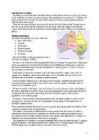
It is surrounded by the Indian Ocean and the Pacific Ocean; the Gulf of Carpentaria, the Coral Sea, the Tasman Sea, the Australian Bight, the Timor Sea and Shark Bay. The Great Barrier Reef is one of the natural wonders of the modern world. It is located off the northeast coast of Australia. It's the largest coral reef on earth, extending for 2000 kilometres along the coast of Queensland. It consists of more than 600 islands. Most of the islands are uninhabited, but some have been developed as tourists resorts. Scientists estimate that the Reef is more than 30 millions years old and it had it beginning in a tiny animal known as polyp. There are more than 300 varieties of coral, which is a ultimate dream of every shell- collector. There are undersea observations, glass-bottomed boats and water scopes for undersea viewing, as well as skin-diving equipment. The Great Barrier Reef is and ideal place for a sunny holiday. The relief:
Because it lies in the Northeast part of Australia, its climate is mainly tropical. South Australia is famous as it is the region of fruit farming, vineyards and olive groves. Only the southern coast is fertile, most of the state is arid. Its capital is Adelaide, which is known for the Adelaide circuit. Western Australia is the biggest state in Australia. It is rich in deserts, as the central part of the state is practically a desert in whole and nearly uninhabited. On the other hand, the desert is important for its resources and mining. Western Australian capital is Perth with a population of 1.5 million people. Tasmania is the second most densely populated state. Its capital is Hobart, which is a fine Georgian city. Tasmania became the most popular settling region for Europeans due to favorable climate to them. There is also the Northern Territory, but it has a special status being under the authority of the central government of the Commonwealth.
3 Relief Australia is a flat and old continent. Its average height is 274 m above sea level. Its relief is pretty simple – plains cover the greater part of it. Basically one third of its area is covered by deserts and plains. Biggest deserts and plains are: the Great Sandy Desert, the Gibson Desert, the Great Victoria Desert and the Nullarbor Plain. They are also called as the Western Australian Shield. The Nullarbor Plain is an uninhabited limestone plateau. It is characterized by amazing cave and tunnel systems, which contain valuable information about ancient Australia. The east is the mountainous part of the country. There is The Great Dividing Range. It runs along the Pacific coast and finds it end in Tasmania. The mountains are old and worn down. The highest mountains on the Australian mainland are in an area known as the Australian Alps. They are a small part of the Great Dividing Range. The Highest Peak on the mainland
Eastern Orth od ox ~ Judaism Islam D Local relig ions Japanese religions ($h· Chinese reli . mtctsm . Buddh ism) D Uninhabited glons (Buddhism, Tdoism . Co nt ocianism) . Historical Spread of Religions --e Budd hrsm --e Chnstraruty - Islam A Judaism (Jew ish d iaspo ra) Prese nt-da y b oundanes
 annaabi.ee