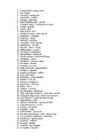
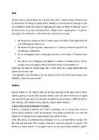
51. viipekeel sign language 52. üle kandma transmit 53. saavutama- achieve 54. surma haigus deadly diseas 55. puudus drawback 56. mõjutama affect 57. heli vänked sound vibrations 58. laiaõlgne broad-shouldered 59. kiilaspäine bald-headed 60. keskealine middle-aged 61. eakas elderly 62. kräsus juuksed frizzy hair 63. kortsus nägu wrinkled face 64. kaarjas kulmud arched eyebrows 65. pahane annoyed 66. raevunud enraged 67. pühalik solemn 68. kannatlik bear with 69. üleannetu mischief 70. küttea arved fuel bills 71. keskkütte central-heating 72. endasse tõmbunud with drawn 73. ridaelamu terraced house 74. ehitama nullist from scatch 75. ilmeks expressive 76. kitsas ruumi kohta cramped 77. seedehäire indigestion 78. elektriktoolil hukkamine electrocution 79. ühepäeva elamu detached house 80. käänuline curvy 81. pikendus extension 82. meeldima kellelegi appeal to 83
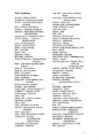
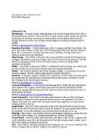
Guess what! Tead mis/mida! shield kilp(ns), varjama, kaitset handsomely kenakesti, pakkuma (ts) tähelepanelikult sideburn(s) põskhabe have an early night vara magama siren wailing sireeni huilgamine minema slyly salakavalalt highly-paid kõrgelt tasustatud snub (nose) nösu(nina) hug kallistama solemn tõsine, pühalik (have) in store varuks (olema) sound transmitter helisaatja inaudible kuuldamatu sparkle särama, sätendama increase suurenemine, juurdekasv spectator pealtvaataja influence mõjutama, mõju avaldama speech problem kõnehäire injury vigastus spiky ogaline, okkaline iron rod raudvarras splash loksuma (merelainte kohta)
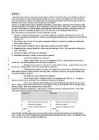
places, or things. Both made the poem easier to memorize. Aristotle described six characteristics: "fable, action, characters, sentiments, diction, and meter." Since then, critics have used these criteria to describe two kinds of epics: Serious epic Comic epic · fable and action are grave and solemn · fable and action are light and ridiculous · characterrs are the highest · characters are inferior · sentiments and diction preserve the · sentiments and diction preserve the sublime ludicrous · verse · verse
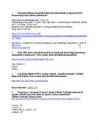
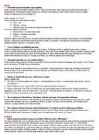
10. Mitmeks raamatuks/osaks on jagatud missa riitusi ja tseremooniaid käsitlev Caeremoniale Episcoporum? Sellele leidsin erinevad vastused. 8 osa Wikipedia järgi: 1. Episcopal liturgy in general 2. Mass 3. Liturgy of the Hours and Celebrations of the Word of God 4. Celebrations of the Mysteries of the Lord in the course of the year 5. Sacraments 6. Sacramentals 7. Noteworthy dates in the life of a bishop 8. Liturgical celebrations connected with solemn acts of episcopal governance http://en.wikipedia.org/wiki/C%C3%A6remoniale_Episcoporum Kui aga otsisin siit http://www.newadvent.org/cathen/ Siis oli kirjas, et see koosneb kolmest raamatust ning iga sisu oli põhjalikult lahti kirjutatud (http://www.newadvent.org/cathen/03133a.htm). Ilmselt see newadvent on usaldusväärsem. 11. Milliste nimede all on märgitud trükikohana Tartu 16.-18. sajandi trükistes?
It has melodious and emphatic patterns. (Forgive what seemed my sin in me--Tennyson) Normally it does not appear alone: it is accompanied by other means of sound orchestration. There have also been attempts to relate vowel sounds to the meaning they convey. · The sound [I] is said to produce the impression of lightness, airiness, brightness. · The length of vowels is also relevant--long vowels tend to sound more peaceful and solemn than short ones. Rhyme--is a special kind of regular sound repetition occurring at the end of poetic lines or at other, symmetrically placed stretches of a poem. Rhyming words are often situated at a regular distance from each other. Rhyme is the most obvious regular sound pattern in poetry that helps to structure ideas by linking lines together through similarities in the sounds of correlated words. Rhyming words have either similar or identical sound combinations.
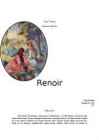
ilmselt seda alles suvel. Renoir and impressionism A revolution was beginning in French painting. A number of young painters began to rebel against the traditions of Western painting and went directly to nature for their inspiration and into the actual society of which they were a part. As a result, their works revealed a look of freshness that in many ways departed from the look of Old Master painting. The new art displayed bright light and color instead of the solemn browns and blacks of previous painting. These qualities, among others, signaled the beginning of impressionist art. In 1869 Renoir and Monet worked together at La Grenouillère, a bathing spot on the river Seine. Both artists became interested in painting light and water. According to Phoebe Pool (1967), this was a key moment in the development of impressionism, for it "was there that Renoir and Monet
motel- motorists plus hotel)It operates in colloquial engl. It is concidered a minor word building type. Yet new words appear today as well and it is quite productive. Blends began to appear in the 14th century. Nowadays blends are popular in newspapers and advertisments. 14. Words from the historical point of view. Archaic words become archaic because there appears a new name for the object. Archaic words are used mainly in poetry to make the text more elevated and solemn. Lexical archaisms are first separate words(nt, behold, to see; stud, house; perchance, maybe). Grammatical archaisms are outdated gr endings(nt, thou knowest- you know). Althouhs arch words are not used widely, they may be used for the sake of humour or irony. Historisms are words that stand for objects that have dissapeared(nt, 3
Main belongs to poetic vocabulary and its synonym ocean is neutral. Capital C in Chinese is colloquial and Chinese is neutral. Stylistic colouring doesn't depend on a context. It is conditioned by the existence of corresponding neutral words and becomes clear only in comparison with them. Style colouring words lend their colouring to the whole utterance. It is sometimes sufficient to have 2-3 words in a paragraph to make the latter either poetic or solemn etc depending on the nature of those 2-3 words. Common literary vocabulary Are not confined to any sphere of usage. Here mainly belong borrowed words. E.g. Yearly-annual, hint-allusion, to see-to behold, talk-converse, true-authentic. The man fell-the individual was precipitated, hard study made him sleepy-indefatigable pursuit of knowledge endowed somnolence in him. Sometimes lit words are used for the sake of humour. Especially when they describe very trivial actions.
Silver bells What a world of merriment their melody foretells! (Poe) Some scholars have attempted to relate vowel sounds to the meaning they convey. The sound / I / , either alone or in dipthtongs, is said to produce the impression of lightness, airiness, brightness. The fields breathe sweet, the daisises kiss our feet, Young lovers meet, old wives a-sunning sit ... (T.Nashe) The length of vowels is also relevant: long vowels tend to sound more peaceful or more solemn than short ones, which tend to give an impression of quick movement, agitation or triviality. The predominance of long vowels and diphtongs is said to render the sense of slow pace or slowness, heaviness. This assessment of vowel sounds could be backed up by the following fragment: Sweet day, so cool, so calm, so bright! The bridal of the earth and sky; The dew shall weep thy fall tonight; For thou must die. (G.Herbert) In the following lines, S.T
Kropp holds the child and the other patients play cards and chat loudly with their backs to the couple while the couple makes love in Lewandowski's bed. The plan is carried off without a problem. Lewandowski's wife shares the food that she brought for her husband with the other patients. Paul heals well. The hospital begins using paper bandages because the cloth ones have become scarce. Kropp's leg heals, but he is more solemn and less talkative than he used to be. Paul thinks that Kropp would have killed himself if he were not in a room with other patients. Paul receives leave to go home and finish healing. When his time at home is done, parting from his mother is even harder than the last time. She is weaker than before. Summary The German army continues to weaken, but the war rages on. Paul and his comrades cease to count the weeks they have spent fighting. Paul compares war to a deadly disease like the flu,
And let thine eye look like a friend on Denmark. Do not for ever with thy vailed lids Seek for thy noble father in the dust: Thou know'st 'tis common; all that lives must die, Passing through nature to eternity. HAMLET Ay, madam, it is common. QUEEN GERTRUDE If it be, Why seems it so particular with thee? 16 HAMLET Seems, madam! nay it is; I know not 'seems.' 'Tis not alone my inky cloak, good mother, Nor customary suits of solemn black, Nor windy suspiration of forced breath, No, nor the fruitful river in the eye, Nor the dejected 'havior of the visage, Together with all forms, moods, shapes of grief, That can denote me truly: these indeed seem, For they are actions that a man might play: But I have that within which passeth show; These but the trappings and the suits of woe. KING CLAUDIUS 'Tis sweet and commendable in your nature, Hamlet, To give these mourning duties to your father:
Normally, assonance does not appear alone: it is accompanied by other means of sound orchestration, i.e. alliteration, rhyme , etc. There have been attempts to relate vowel sounds to the meaning they convey. The sound [I], for example, either alone or in diphthongs, is said to produce the impression of lightness, airiness, and brightness. The length of vowels is also relevant. "... Long vowels tend to sound more peaceful or more solemn than short ones, which tend to give an impression of quick movement, agitation or triviality" (M. Boulton). The predominance of long vowels and diphthongs is said to render the sense of slow pace or slowness, heaviness. RHYME (book, page 30-36.) - Rhyme (OE rim - "number") is a special kind of regular sound repetition occurring at the end of poetic lines or at other, symmetrically placed stretches of a poem
monarchy, and the ground he builds on, is this, that no man is born free. In this last age a generation of men has sprung up amongst us, that would flatter princes with an opinion, that they have a divine right to absolute power, let the laws by which they are constituted, and are to govern, and the conditions under which they enter upon their authority, be what they will, and their engagements to observe them never so well ratified by solemn oaths and promises. To make way for this doctrine, they have denied mankind a right to natural freedom; whereby they have not only, as much as in them lies, exposed all subjects to the utmost misery of tyranny and oppression, but have also unsettled the titles, and shaken the thrones of princes: (for they too, by these mens system, except only one, are all born slaves, and by divine right are
But Elizabeth was not formed for ill-humour; and though every prospect of her own was destroyed for the evening, it could not dwell long on her spirits; and having told all her griefs to Charlotte Lucas, whom she had not seen for a week, she was soon able to make a voluntary transition to the oddities of her cousin, and to point him out to her particular notice. The first two dances, however, brought a return of distress; they were dances of mortification. Mr. Collins, awkward and solemn, apologising instead of attending, and often moving wrong without being aware of it, gave her all the shame and misery which a disagreeable partner for a couple of dances can give. The moment of her release from him was ecstasy. She danced next with an officer, and had the refreshment of talking of Wickham, and of hearing that he was universally liked. When those dances were over, she returned to Charlotte Lucas, and was in conversation with her, when she found herself suddenly
" I let it go. I had a more pressing question. "Is it later yet?" I asked significantly. He frowned. "I supposed it is later." I kept my expression polite as I waited. He stopped the car. I looked up, surprised -- of course we were already at Charlie's house, parked behind the truck. It was easier to ride with him if I only looked when it was over. When I looked back at him, he was staring at me, measuring with his eyes. "And you still want to know why you can't see me hunt?" He seemed solemn, but I thought I saw a trace of humor deep in his eyes. "Well," I clarified, "I was mostly wondering about your reaction." "Did I frighten you?" Yes, there was definitely humor there. "No," I lied. He didn't buy it. "I apologize for scaring you," he persisted with a slight smile, but then all evidence of teasing disappeared. "It was just the very thought of you being there... while we hunted." His jaw tightened. "That would be bad?" He spoke from between clenched teeth. "Extremely." "Because..
In the themes and rhythms, some connections with the symphonism of Rääts can be detected. Avo Hirvesoo (b. 1935) has said, annotating the composer’s record: 1 First performed by ERSO, 16 Nov. 1968, conducted by Neeme Järvi. Koha’s output does not tend towards extremes and is little touched by modern trends. As in his previous mature compositions he has retained national expression in themes and colouring. The emotional concentrations are gripping, often creating solemn temperament and thus awakening noble emotions in the listener. The composer himself says that he tries to get support first from the character of Estonians. The national colouring is derived mostly from the treatment of idiom, worked out by the composer. Outlining the creative portrait of the composer, musicologist Helga Tõnson states: In the course of time, a hero’s image has been taking shape in Jaan Koha’s music. This hero is
had used with Mary. These, and Mary's letters, served as thoroughly incriminatory evidence in the Star Chamber proceedings that convicted her of high treason. Mary received the announcement that Elizabeth had signed her death warrant with majestic tranquillity, and at eight on the morning of February 8, 1587, after eloquently reiterating her innocence and praying aloud for her church, for Elizabeth, for her son, and for all her enemies, mounted the platform with solemn dignity, knelt, and received the axeman's three strokes with the courage that had marked every other action of her life. Thus did Mary, Queen of Scots, exit this transient life and enter the more enduring one of legend, as her motto had prophesied: "In my end is my beginning." There seems little doubt that she would have died before her time, the politics of the day being what they were. But there seems equally little doubt that cryptology hastened her unnatural end. 5
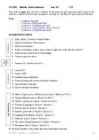
Readthe extractagain,thenchoose a sceneto drawfor the competition AnswerKey i : - : a dt h e b i o g r a p hayn da n s w etrh e q u e s t i o n s congregated:gathered shielded:protected solemn:serious brighter:smarter - - :::sredAnswer Key lad:boy tiptop:first-rate .'e novelis abouta groupof childrenwho livein the mischievous:
Readthe extractagain,thenchoose a sceneto drawfor the competition AnswerKey i : - : a dt h e b i o g r a p hayn da n s w etrh e q u e s t i o n s congregated:gathered shielded:protected solemn:serious brighter:smarter - - :::sredAnswer Key lad:boy tiptop:first-rate .'e novelis abouta groupof childrenwho livein the mischievous:
Readthe extractagain,thenchoose a sceneto drawfor the competition AnswerKey i : - : a dt h e b i o g r a p hayn da n s w etrh e q u e s t i o n s congregated:gathered shielded:protected solemn:serious brighter:smarter - - :::sredAnswer Key lad:boy tiptop:first-rate .'e novelis abouta groupof childrenwho livein the mischievous:
Readthe extractagain,thenchoose a sceneto drawfor the competition AnswerKey i : - : a dt h e b i o g r a p hayn da n s w etrh e q u e s t i o n s congregated:gathered shielded:protected solemn:serious brighter:smarter - - :::sredAnswer Key lad:boy tiptop:first-rate .'e novelis abouta groupof childrenwho livein the mischievous:
 annaabi.ee