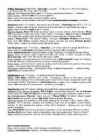
prose: religious writing philosophical writing; instability of government political writing empiricism and scientific method Enlightenment (late 17th century) a cultural movement of intellectuals Writers: John Milton ("Paradise Lost", poems; "Areopagitica", defense of free speech; personal freedom and knowledge of self, contemporary urgent issues of both religious and political nature; high time during Civil War; "Eikonoklaste"); John Dryden (heroic couplet as new standard in poetry, satiric verses; influenced many 18th century writers; "Absalom & Achitophel") Augustan Age (early 18th century) admired and emulated the original Augustan Age Aftermath of the Glorious Revolution: Bill of Rights (constitutional monarchy), Act of Toleration (except Catholics); Treaty of Union (now Great Britain); growing empire, influenced situations in NA Age of Enlightenment: Descartes: "cogito ergo sum"; Thomas Hobbes "Leviathan" (liberal thought);
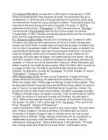
When he was thritteen he had to take over most of the work in farm, because his father was crowing old. He often suffered from illnesses because of the hard work and little food. He started to write poetry when he was 15. When his father died, he had to support his family. He was bad farmer so they had to live very poorly. His early death was due to the fact that all his life he had lived in poverty. His poems touch the heart of every readers. He wrote about feelings of ordinary people. Also satiric epigrams and humorous poems. He is the one of the most popular sond writers in English literature. The date of his birthday is always celebrated by Scotsmen as a national holiday. His works: "Ayrshire dialect", "Auld Land Syne", "My Heart's in te Highlands". Herbert George Wells(1866-1946): he was born at Bromley, Kent. He graduated London University with first-class honours. He studied science. Wells was greatly interested in the social and scientific problems of his day.
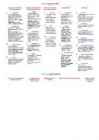
5. TAUTOLOGY the author views an event happening.) - redundancy in words. 5. APOKOINU (grammatical using 5. ANTICLIMAX CONSTRUCTION double subject or - creates comic, satiric effect arranging sent-e so - is blend of 2 clauses into 1 predicate in a sent-e. that the aroused expectations are disappointed. omitting the connecting w-d Lexical saying the same thing by rephrasing ("who"/"that") it.)
the wars of the post-Revolutionary and Napoleonic eras. 1813 The Giaour; The Bride of Abydos 1814 The Corsair; Lara 1815 Hebrew melodies 1816 Parisina; The Prisoner of Chillon; The Dream; Prometheus; Darkness 1817 Manfred-a ghost story; The Lament of Tasso 1818 Beppo 1819 Mazeppa; The Prophecy of Dante 1820 Marino Faliero 1821 Sardanapalus; The Two Foscari; Cain 1819-1824 Don Juan a long, digressive satiric poem, based on the legend of Don Juan, which Byron reverses, portraying Juan as someone who is easily seduced by women. Characteristics of Byron's poetry: Strength and masculinity Unflowery and colloquial language Strong feelings Little use of imagery P.B.Shelley major works: 1813 Queen Mab; A Philosophical Poem; With Notes was the first large poetic work a foundation to his theory of revolution brought along by nature and the virtuousness of humans.
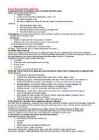
CLIMAX CLIMAX means the arrangement of the words and phrases in such a way that their meaning becomes stronger in each case and reaches the peak of intensity in the end. NT: It was a mistake, a blunder, a lunacy. (creates gradation) NT: He wanted to weep, to vomit, to die. There is also a logical climax the way the author sees the things happened. The function of climax is to show the significance of things as the author sees them. ANTICLIMAX ANTICLIMAX means a comic, satiric effect by arranging sentences in such a way that the aroused expectations are disappointed. (paradoxes are often based on anticlimax). NT: Women have a wonderful instinct of things. They can discover everything except the obvious. NT: I know two things about the horses. And on of them is rather coarse. SUSPENSE SUSPENSE means holding the reader in a tense anticipation. This is achieved by special construction of the
· Mimetic engagements of traditionally narrated novel vs anti-narrative method · Coheret narrative suspense interest vs play of authorial language Postmodernism vs modernism · Modernism: enjoyable artistic embodiment, formal sophistication, art for the elite · Postmodernism interpretataive implications, play, not elitist-do not favour humour 14. Anthony Burgess. A Clockwork Orange as a satiric dystopia. The philosophy of free choice. Burgess's linguistic experiments. Anthony Burgess ,,a clockwork orange".Plot: futuristic super-state: authoritan government, manipulates citizens, passive complacency. By way of opposition: a group of teenagers: taking drugs, involved in violence, robbery, rape, prison, further violence Satiric dystopia: dystopia, negative utopia. UTOPIA-nowhere(t. More). Ideal society. Dystopia- bad, ill place
g. "It was a mistake, a blunder, lunacy."). The function of climax is to show the significance of things as the author sees them. a) quantitative climax is based on words whose choice is logical (e.g. "An hour, a day, a week, a month, a year passed."). Numerals appear here. b) qualitative climax reflects the individual way the author views an event happening, etc. (e.g. "He wanted to weep, to vomit, to die."). 5. Anticlimax creates a comic, satiric effect by arranging sentence so that the aroused expectations are disappointed. Paradoxes are often based on anticlimax. 6. Suspense is a specific structure of the longer sentence that keeps the reader in tense participation, because the important part of information comes last. Less important descriptive parts are introduced in the beginning. Information is withheld and only later we have a subject and a predicate, or they are separated and predicate comes last. 7
work of the late 18th century. Satirist Antiokh Dmitrievich Kantemir, 17081744, was one of the earliest Russian writers not only to praise the ideals of Peter I's reforms but the ideals of the growing Enlightenment movement in Europe. Kantemir's works regularly expressed his admiration for Peter, most notably in his epic dedicated to the emperor entitled Petrida. More often, however, Kantemir indirectly praised Peter's influence through his satiric criticism of Russia's "superficiality and obscurantism," which he saw as manifestations of the backwardness Peter attempted to correct through his reforms. Kantemir honored this tradition of reform not only through his support for Peter, but by initiating a decade-long debate on the proper syllabic versification using the Russian language. Vasily Kirillovich Trediakovsky, a poet, playwright, essayist, translator and contemporary to
significance of things as the author sees them. a) quantitative climax is based on words whose choice is logical (e.g. "An hour, a day, a week, a month, a year passed."). Numerals appear here. b) qualitative climax reflects the individual way the author views an event happening, etc. (e.g. "He wanted to weep, to vomit, to die."). 5. Anticlimax creates a comic, satiric effect by arranging sentence in such a way that the aroused expectations are disappointed. Paradoxes are often based on anticlimax (e.g. O. Wilde "Women have a wonderful instinct about things. They can discover everything except the obvious."; "In the drinking well / which the Plummer built her, / aunt Elisa fell- / we must buy a filter.") 6. Suspense a specific structure of the longer sentence that keeps the reader in tense
Characters appear in their real complexity of temperament and motive; they are in explicable relation to nature, to each other, to their social class, to their own past. Class is important; the novel has traditionally served the interests and aspirations of an insurgent middle class. Events will usually be plausible. Realistic novels avoid the sensational, dramatic elements of naturalistic novels and romances. Diction is natural vernacular, not heightened or poetic; tone may be comic, satiric, or matteroffact. Objectivity in presentation becomes increasingly important: overt authorial comments or intrusions diminish as the century progresses. Interior or psychological realism a variant form. In literature, regionalism or local color refers to fiction or poetry that focuses on specific features including characters, dialects, customs, history, and landscape of a particular region
 annaabi.ee