I think that knowledge in natural sciences can have less value to us when compared to human sciences even though it is, in most cases, produced with difficulty. There were many scientists that carried out experiments to study plant life. It was in the 1600s when the first reasonable hypothesis was made by Jan Van Helmont (although only partially correct), and it was only later in 1930s that Cornelis Van Niel was able to propose the general equation for photosynthesis.3 It has taken hundreds of years for scientists to make sense of photosynthesis, but we don’t really value this information and it isn’t of much importance to us, the ordinary people. An argument for this would be the importance of understanding photosynthesis will help us grow a healthier crop for our population or efficiently. However, plants have been growing on earth for millions of years without the need of understanding the process of photosynthesis
1. What is a plant? Plant is a living organism. It is made up of different parts, each of whitch has specialized function. 2. Name the parts of a shoot system. The shoot system above the ground consists of the stem, the leaves, flowers and fruit. 3. What are the main functions of a shoot system? Main functions of a shoot system are: * Stem- to support the plant, to transport water, minerals and sugar * Leaves- to make food by photosynthesis, to absorb water from air * Flower- to contain reproductive organs, the reproductive function *Fruit- to enclode the seeds, to protect seeds 4. What are the main functions of a root system? Main functions of a root system are to take in, absorb water and minerals, to hold the plant firmly in the soil. 5. What happens in the process of photosynthesis? For the process of the photosynthesis is sunlight necessary. Water from the soil and
Kuidas toituvad taimed öösel? 1. Fotosüntees Fotosüntees - see on tegelikult taimede toitumine. Fotosünteesil toodab taim toitaineid - süsivesikuid, valke ja rasvu. Paljud valmistatud toitained töödeldakse taimes ümber ka varuaineteks - tärkliseks jt. ühenditeks. Kõigis neis toitainetes sisaldub salvestunud kujul päikeseenergiast saadud energia. Toitained sisaldavad keemilist energiat. Interaktiivne fotoünteesiprotsess: http://micro.magnet.fsu.edu/primer/java/photosynthesis/index.html 2. Hingamine Hingamine on taime-, looma- ja seenerakkudes toimuv protsess, mille eesmärgiks on rakkude ja kogu organismi varustamine energiaga. Protsess toimub rakuosistes, mida nimetatakse mitokondriteks. Hingamisprotsessi lähteaineteks on glükoos ja hapnik (O 2) ning lõpp-produktideks süsihappegaas (CO2) ja vesi (H2O). Selle käigus salvestatud energiat saab kasutada teistes elutegevusprotsessides. Kuid nii nagu loomadeski on ka taimedel olemas hingamine
summers. Some animals have grown thick fur that turns white in the winter. Others find a place to hibernate during the winter months. Many plants have dark red leaves that allow the plant to absorb more heat from the sun in the cold tundra climate. All of the plants are adapted to sweeping winds and disturbances of the soil. Many plants grow in a low, tight clump - this growth habit helps protect them from the cold and snow. They can carry out photosynthesis at low temperatures and low light intensities. The growing season is short and most plants reproduce by budding and division rather than sexually by flowering. There are no deep root systems in the vegetation of the tundra; however, there are a wide variety of plants that are able to resist the cold climate. The fauna is also diverse. Animals such as mammals and birds also have additional insulation from fat. Many animals hibernate during the winter because food is not abundant
Report Individual Sugars, Soluble, and Insoluble Dietary Fiber Contents of 70 High Consumption Foods. Introduction Glucose is a simple sugar and an important carbohydrate in biology. Glucose is one of the main products of photosynthesis and it also starts cellular respiration. But do you know how many saccharide our food contains? Main body At the beginning different products were analyzed such as baked products, cereal grains and pasta, fruits, legumes and vegetables were purchased for analysis. This kind of method is named sampling. One of the important methods of analysis is sample preparation. Non-edible parts of fruits and vegetables, such as stem, core, seeds, and skin, were removed before further sample preparation
The 5th layer: mosses and lichens that grow on tree trunks. Lianas such as wild grape, poison ivy, and Virginia creeper climb the trees to flower and fruit high in the forest canopy. Plant adaptations: The plants have adapted so that they can survive in this biome. The leaves of deciduous trees are broad and quite light. This gives the leaves a bigger surface to capture sunlight to help produce food for the plant. This is called photosynthesis. When the weather gets cold, broad leaves are not good for the plant, as they lose too much moisture and get damaged. So the trees cut off the water supply to the leaves and seal off the leaf stems where they join onto the tree trunks. The leaves are not able to produce the chlorophyll that makes them green. The leaves become yellow, red or gold before they dry up and fall off the trees. Animals: A wide variety of mammals, birds, insects, and reptiles can be found in the deciduous forest biome
funktsioneerimisele. Käesoleva töö eesmärgiks on anda ülevaade fotosünteesi pimedusstaadiumis toimuvatest keemilistest reaktsioonidest, mis võimaldavad organismidel keemiliste ühendite energiaks muundatud päikeseenergiat kasutada süsiniku sidumiseks ning orgaaniliste ainete sünteesiks. Lihtsustamise eesmärgil on töös lähemalt kirjeldatud vaid C3 tüüpi fotosünteesi. Töö põhineb David W. Lawleri raamatul „Photosynthesis” (Oxford: BIOS, 2001). 1. ELEKTRONTRANSPORT FOTOSÜNTEESIS Valgustsükli reaktsioonides toimub valgusenergia muundamine keemiliseks energiaks. Valgusenergia mõjul toimub fotosünteesi aktiivtsentri klorofülli-molekulide ergastamine, selle tulemusena vabaneb elektron, mis transporditakse primaarsete aktseptoriteni, et produtseerida tugevalt redutseeritud vaheühendeid. Saadud vaheühendeid kasutatakse fotosünteesi pimedusstaadiumi reaktsioonides süsihappegaasi taandamiseks.
A standards more valuable/AW (coppice) small diameter wood/fencing/hurdles/garden furniture/charcoal/firewood/matches; (coppice) continuous, source of timber/income; recreational use/nature reserve; A ref to tourism max 2 [5] 20. release of carbon dioxide; from fungal respiration; available for photosynthesis/carbon fixation; extracellular digestion; named enzyme(s); release of, inorganic substance/minerals/named mineral; R nutrients, nitrogen A nitrogenous compound uptake through, roots/root hairs; named use of mineral in plants; ref. to humus; ref. to beneficial role of humus in soil; e.g. increase water retention, improve soil structure, stabilize soil max 4
The overwhelming number of known species of bacteria, both aerobic and anaerobic, are heterotrophic. Many heterotrophic bacteria utilize sugar, alcohol, and organic acids. However, there are specialized heterotrophic bacteria capable also of decomposing cellulose, lignin, chitin, keratin, hydrocarbons, phenol, and other substances. Heterotrophic bacteria take an active part in the natural recycling of substances. Autrotrophic bacteria Autotrophic bacteria make their own food, either by photosynthesis (which uses sunlight, carbon dioxide and water to make food) or by chemosynthesis (which uses carbon dioxide, water and chemicals like ammonia to make food - these bacteria are called nitrogen fixers and include the bacteria found living in legume roots and in ocean vents). Fungi - is a member of a large group of eukaryotic organisms that includes microorganisms such as yeasts and molds (British English: moulds), as well as the more familiar mushrooms.
Hiljem, olgu siis taim ise või taimi toiduks kasutavad loomad, lõhustavad need molekulid selleks, et saada elutegevuseks vajalikku energiat. Fotosüntees Fotosüntees on protsess, mille käigus valgusenergia muundatakse keemiliseks energiaks. Nimetatakse ka päikeseenergia fikseerimiseks. sisend väljund Fotosüntees 6 CO2+6H2O+PE (klorofüll) C6H12O6+6O2 suhkur Photosynthesis process by which carbohydrates are synthesized from carbon dioxide and water using light as an energy source. . Fotosüntees Fotosünteesi kiirus sõltub mitmetest teguritest: CO2 ja H2O kättesaadavus, valguse intensiivsus, temperatuur. Kui näiteks muld on kuiv ja taim ei saa piisavalt vett, siis fotosüntees seiskub. Mida tugevam valgus, seda kiirem fotosüntees. Kõige sobivam temperatuur on 20°-35°C. Kui
Sunlight is the primary input of energy into the planet's ecosystems. Light is composed of electromagnetic energyof different wavelengths. Radiant energy from the sun generates heat, provides photons of light measured as active energy in the chemical reactions of life, and also acts as a catalyst for genetic mutation.[2][86][157] Plants, algae, and some bacteria absorb light and assimilate the energy throughphotosynthesis. Organisms capable of assimilating energy by photosynthesis or through inorganic fixation of H2S are autotrophs. Autotrophs--responsible for primary production--assimilate light energy that becomes metabolically stored as potential energy in the form of biochemical enthalpicbonds.[2][86][157] 47. Kuidas muutub energia kogus ja energia kvaliteet, kui energia liigub toiduahela madalamatelt astmetelt kõrgemale? Energia kvaliteet muutub kõremaks ja energia kogus väheneb. Ecologists collect data on
also be responsible for 60% of indirect deforestation as rangelands will be moved to Amazon region due to the competition for land in other areas (Lapola et al.,2009). 4. Other sustainability concerns 4.1. Greenhouse gas (GHG) balance One of the advantages for adopting biofuels is the offsetting of carbon in the production process. Biofuels are carbon neutral when their combustion doesn't release any more carbon dioxide into the atmosphere, than was sequestered by the plant through photosynthesis (Rajagopal, Zilberman, 2007). Nevertheless, there are many uncertainties around the biofuels' carbon neutrality. In the production process, biofuel require significant amounts of energy for tillage, fertilizers, pesticides, irrigation and for harvesting. Nitrogen oxide from fertilisers are known to be particularly potent greenhouse gases with 300 times more potential than CO 2 and it has a harmful effect on the stratospheric ozone (Schaerlmann, Laurence, 2008). Also,
reservoir have been used, they are injected back into the earth. · Geothermal features in national parks, such as geysers and fumaroles in Yellowstone National Park, are protected by law, to prevent the land from being disturbed. BIOMASS 46 Biomass is organic material made from plants and animals. Biomass contains stored energy from the sun. Plants absorb the sun's energy in a process called photosynthesis. The chemical energy in plants gets passed on to animals and people that eat them. Biomass is a renewable energy source because we can always grow more trees and crops, and waste will always exist. Some examples of biomass fuels are wood, crops, manure, and some garbage. When burned, the chemical energy in biomass is released as heat. If you have a fireplace, the wood you burn in it is a biomass fuel. Wood waste or garbage can be burned to
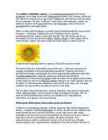
III. Growth Habit: Sunflower is an annual, erect, broadleaf plant with a strong taproot and prolific lateral spread of surface roots. Stems are usually round early in the season, angular and woody later in the season, and normally unbranched. Sunflower leaves are phototropic and will follow the sun's rays with a lag of 120 behind the sun's azimuth. This property has been shown to increase light interception and possibly photosynthesis. The sunflower head is not a single flower (as the name implies) but is made up of 1,000 to 2,000 individual flowers joined at a common receptacle. The flowers around the circumference are ligulate ray flowers without stamens or pistils; the remaining flowers are perfect flowers (with stamens and pistils). Anthesis (pollen shedding) begins at the periphery and proceeds to the center of the head. Since many sunflower varieties have a
phrase. 1. Underestimated tax revenues caused the severe budget crunches that plagued local governments during the early 1970s. (A) depleted (B) finite (C) disappointing (D) miscalculated 2. Casey Stengel was undeniably one of the most successful coaches in the history of baseball. (A) absolutely (B) unexpectedly (C) conceivably (D) likely 3. The power of the sun is trapped by the leaves of plants and used to produce food by a process called photosynthesis. (A) perceived (B) reflected (C) retained (D) converted 4. Some people find tranquility when they are far away from the hustle and bustle of city life. (A) peacefulness (B) amusement (C) fulfillment (D) security 5. All Cnidarians have the potential to affect human physiology owing to the toxic nature of their nematocysts. (A) curative (B) debilitating (C) poisonous (D) aggravating LESSON 29 acknowledge acquire assimilate assortment caliber
 annaabi.ee