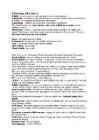
Phonology. Mid-term 2. Syllable - is a phonological unit consisting of one or more phonemes. In phonetics a syllable is a unit which consists of a centre, that has little or no obstruction to airflow; it is comparatively louder than other sounds. In phonology syllables are the possible combinations of phonemes. The syllable consists of - onset, nucleus, coda. (every syllable has a nucleus: vowel, syllabic l, or m, n). Rhyme/rime nucleus + coda; the nucleus and the coda constitute a sub-syllabic unit rhyme. Words rhyme, when their nucleus and coda are identical. (E.g 'cr-o-wn', 'd-o-wn'). The hierarchical structure of the syllable: Onset the beginning of the syllable Nucleus/peak the open part of a syllable, generally a vowel. Coda a consonant sound which ends the syllable.
independent groups of listeners. Conclusion: Taken together, the results provide a more comprehensive picture of the acoustic and perceptual characteristics of GLB speech styles than has been provided by previous research. Moreover, the results of Experiment 3 suggest that listeners' percepts of GLB speech styles may be related to their perception of other speech characteristics. Judgments of self-identified gay and heterosexual male speakers: Which phonemes are most salient in determining sexual orientation? Authors: Erik C. Tracy, Sierra A. Bainter, Nicholas P. Satariano 2015 Goal: "While numerous studies have demonstrated that a male speaker's sexual orientation can be identified from relatively long passages of speech, few studies have evaluated whether listeners can determine sexual orientation when presented with word-length stimuli." Also, if listeners form their
Phonology the description of the systems and patterns of speech sounds in a language. It studies: the abstract or mental aspect of the sounds in a language the actual physical articulation of speech sounds The phoneme. Phoneme is a meaning distinguishing sound in a language; it functions contrastively/ the smallest contrastive unit in the sound system of a language. When there is a contrast in identical environment we must be dealing with separate phonemes - when we replace one sound with another, we get another word with another meaning, therefore that sound must be a phoneme. There are small shades of sounds that don't distinguish meaning phones. The different phones that are the realisations of the same phoneme are called allophones. Allophones - are the actual pronunciations of phonemes in different environments. Complementary distribution phonetic units that never occur in the same
hee-hee, ho-ho, hee-hee," and paying attention to where the vibration is felt most strongly in the oral cavity. The phoneme spelled o in ho is a back vowel, and the phoneme spelled ee in hee is a front vowel. To properly learn which is which, IPA provides: https://www.youtube.com/watch?v=PsfQESpi-Ec Furman University. Phonology: Vowels. Available at http://facweb.furman.edu/~wrogers/phonemes/phono/phvowel.htm, accessed January 19, 2016. Foley, Dan. 2008. IPA back, front and mid vowels. Available at https://www.youtube.com/watch? v=PsfQESpi-Ec, accessed January 19, 2016. University of Manitoba. 2014. Describing English Vowels. Available at http://home.cc.umanitoba.ca/~krussll/phonetics/articulation/describing-vowels.html, accessed January 19, 2016. Michigan State University. 2003. Phonetics: the physical part of speech, again. Available
We can get students to imitate the way these moods are articulated. The key to successful pronunciation teaching is to have our students to listen and notice how English is spoken either on audio or video or from teachers themselves. The more aware they are the chance that their own intelligibility levels will rise. The phonemic alphabet: to use or not? Many students have problems of sound and spelling correspondence, so for them it is useful to introduce different phonemes and different symbols. Another thing is dictionaries usually give the pronunciation of the words in phonemic symbols. When both teacher and students know the symbols it is easier to explain what mistake has occurred and why it has happened; we can use the symbols for pronunciation tasks and games. Students should only recognise the different symbols not to produce them. When to teach pronunciation · Whole lessons: It can make sense to work on connected speech concentrating
milelegi osutada. ------------------------------------------------------------ Kõige sarnasem suulises ja kirjalikus kõnes on esimene etapp: planeerimine. Hilisematel etappidel erinevused suurenevad. 4) Keeles esinevate sõnade hulk on piiratud - miks siiski väidetakse, et keel on loov? 5) Millistest lingvistilistest ühikutest koosneb lause "Keelel on reeglid" ja mis need on? Lingvistilised ühikud: · Foneemid (phonemes) on eristatavad heli kategooriad konkreetses keeles · Morfeemid (morphemes) on kindlad foneemide järgnevused, väiksemad keeleühikud, mis kannavad mingit tähendust · Sõnad koosnevad morfeemidest · Fraas on sõnade organiseeritud grupeering, kõneüksus, mis moodustab väikseima intonatsioonilise terviku · Lause koosneb fraasidest 6) Millised on keele omadused? Analüüsige, milliseid keele omadusi ei ole järgmisel lausel: "Venilased kodraselt volpusse kulmasid". Omadused:
Kirjalikus kõnes asendavad seda kirjavahemärgid, lisaks kasutatakse fraase, mis viitavad järgnevale (aga, seevastu, sarnaselt). Saab kasutada ka käsi, keha keelt , näoilmeid, midagi rõhutada, millelegi osutada. 4) Keeles esinevate sõnade hulk on piiratud - miks siiski väidetakse, et keel on loov? Keel annab võimaluse teksti luua. 5) Millistest lingvistilistest ühikutest koosneb lause "Keelel on reeglid" ja mis need on? Foneemid (phonemes) on eristatavad heli kategooriad konkreetses keeles. Morfeemid (morphemes) on kindlad foneemide järgnevused, väiksemad keele ühikud, mis kannavad mingit tähendust. Sõnad koosnevad morfeemidest. Fraas on sõnade organiseeritud grupeering, kõne üksus, mis moodustab väikseima intonatsioonilise terviku. Lause koosneb fraasidest. 6) Millised on keele omadused? Analüüsige, milliseid keele omadusi ei ole järgmisel lausel: "Venilased kodraselt volpusse kulmasid"
· phonological · Old-English diphthongs become Middle English monophthongs, e.g. on heofonum - > in hevene; · new diphthongs emerge in the Middle English period, e.g. dæg -> dai, day; · Initial [h] before consonants disappears in the Middle English period, e.g. hræven - > raven; · [f, v] and [s, z] , which were allophones in the Old-English period, become phonemes; · unstressed vowels in the inflectional endings become [@] .1.1 · morphological · the complete Old-English inflectional system is simplified in Middle English; · loss of the strong inflexion of adjectives; · loss of grammatical gender; · emergence of the unified definite article `the.' · syntactical · replacement of the case functions by a fixed word order and prepositions. · lexical
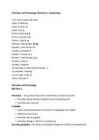
häälepaelad, ning sealt edasi nina ja suuõõnde · Erinevaid häälikuid tekitatakse huulte ja keele liigutamise abil, mille tulemusena muutub hääle tekitamiseks vajaliku ruumi kuju ja suurus Nt lihatükk hambavahel- hambad selleks, et saaks rääkida, mitte liha rebimiseks. Sellised millised on helid ei olene häälepaeltest vaid on huulte ja keelte liigutamisest tulenev Keele struktuur. Lingvistilised ühikud ja nende hierarhia · Foneemid (phonemes) on eristatavad heli kategooriad konkreetses keeles. Väikseim ühik, mille poolest keelekatted võivad üksteisest erineda. Neid on erinevatel keeltes erinev arv. Väikseim keel on 12 märki ja suurim 85 foneemi. Eesti keele oma foneemid on eesti keele omatähed mitte võõrtähed. Kõneorganite muutmisel muutuvad helid, sellepärast saadetakse logopeedi juurde. Neid foneeme, mida meie keeles pole, on meil raske omandada ning see teeb sellest arusaamise raskeks. Me
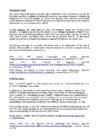
For example: An Estonian word palk has two possible pronunciation ways. L can be palatalised or not. Phoneme is a smallest unit in language which distinguishes meaning. With other phonemes it can form morphemes and words. For example: The difference between words in English call and fall is a result of the exchange of the phoneme c and f. Morphology - The study of word formations and the internal structure of words.
the Slavic languages. It is also the largest native language in Europe, with 144 million native speakers in Russia, Ukraine and Belarus. Russian is the eighth most spoken language in the world by number of native speakers and the seventh by total number of speakers. The language is one of the six official languages of the United Nations. Russian is also the second most widespread language on the Internet after English. Russian distinguishes between consonant phonemes with palatal secondary articulation and those without, the so-called soft and hard sounds. Almost every consonant has a hard or a soft counterpart, and the distinction is a prominent feature of the language. Another important aspect is the reduction of unstressed vowels. Stress, which is unpredictable, is not normally indicated orthographically. though an optional acute accent ( , znak udareniya) may be used to mark stress, such as to distinguish between homographic words, for example
- Teooria kohaselt peaks sõna tajumine olema äärmiselt efektiivne, tegelikkuses see nii ei ole 1990 Marslen-Wilson arendas teooria täiendatud variandi mille kohaselt pole ei-jaa jaotuvust et sõna kas kuulub kohorti või mitte. Kohordi sõnad on erineva aktivatsiooni tasemetega TRACE-mudel – kohorditeooria edasiarendus, tugineb võrgustikmudelite ideedele - Tasandite vahel on aktivatsioon võimendatud, tasandite sees on aktivatsioon pidurdatud (words, phonemes, features) - Töötlus toimub kolmes tasandil - Ühendused on mõlemasuunalised: sõnad-foneemid; foneemid-omadused (features) Teksti lugemine - Igal juhul kipume loetavast tekstist tekitama heli kuidas see kõnes kostaks Lugemise uurimise meetodid - Silmaliigutuste uurimine - Kõva häälega lugemise lindistamine - Kiire järjestikune visuaalne esitamine - Teksti esitamine nii et katseisik seda kontrollib – ise määrab millal järgmine osa
O !(B' PTS@"' !(.)' UE"*=S'$=*' $./"!' 0"+*2"' (#)' !$.,,' #*' +**)Q9' ';<"B' %(#S$' %*//1#.%($"' (0*1$' %*//1#.%($.*#9' ';<"B' 0*$<'>#*=' $<"' !"/(#$.%' 21,"!' 01$'*#,B' E($12(#('>#*=!'$<"' !B#$(%$.%'21,"!9''T#'V<(A$"2'77&' ="' =.,,').!6 %1!!' $<"' $=*').!$.#%$' (2"(!' *+' $<"' 02(.#' 2"!A*#!.0,"&' 2"!A"%$.@",B&' +*2' $<"' O !"/(#$.%'(#)'!B#$(%$.%'(!A"%$!'*+',(#-1(-"9 UNIT RULES R phonemes (letters) vocabulary P morphemes (words) grammar sentences logic discourses !"#$%&'()*'''' +"&%,%-+"-,.'/0%$-0$%&'1!'.,2#$,#& 3""")"456"789:;<=67">?@5:4?"A
 annaabi.ee