Weather in England Britain is an island country and the surrounding sea gives England a varied climate. The main influence on climate is close proximity to the Atlantic Ocean, that's why the climate of England is classified as oceanic climate , with warm summers, cool winters and much rain throughout the year. As Britain have such a variable climate changing from day to day, it is difficult to know what weather will be on next day. In general there are warm summers and cool winters. Summers are cooler than those on the continent, but the winters are colder. Eastern parts are drier, cooler and less windy. Northern areas are generally cooler, wetter and have a smaller temperature range than southern areas
Moreover, there was a balcony instead of a terrace in my room. In addition, the staff of the hotel neglected their duties. I had to ask three times for new bed linen and when I asked for a wake-up call at 6 o'clock, I was woken up at 9 o'clock. When I complained about it, a receptionist treated me very rudely. Secondly, the choice of food served at the hotel restaurant was very limited. There were hardly any traditional Spanish dishes, although your travel agent said that holidays at Oceanic Hotel is a perfect opportunity to try delicious Spanish cuisine. I am also extremely disappointed with the coach tour that you advertised in your leaflet. The tour was organized, however, no guide was provided. I expect a full refund of my holidays and an apology for your not fulfilling the promises given by your tourist office. I hope you will consider my complaints as soon as possible. I am looking forward to hearing from you. Yours faithfully xxx
CULTURE OF NEW ZEALAND GEOGRAPHY Island country in the Pacific Ocean Two main islands: Northern and Southern. 600 smaller islands The capital is Wellington, was built in 1839 and named after the first mayor Highly mountainous with lots of rivers and lakes 14,000 earthquakes a year, many floods and tsunamis CLIMATE Reversed seasons compared to Europe Oceanic climate POPULATIO N SYMBOLS 4,836,520 People Bird Kiwi 74.0% European Plant Silver fern 14.9% Mori Flower - Kowhai 11.8% Asian 7.4% Pacific peoples 1.2% Middle Eastern/Latin Americans/African 1.7% Other GOVERNME NT Constitutional monarchy with a parliamentary democracy Elizabeth II is the Queen of New Zealand and the head of state Currency is New Zealand Dollar NZD LANGUAGES New Zealand English Te Reo Maori
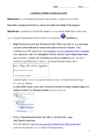
............................................................................................................................................... Küsimus 4: Millised muud geoloogilised nähtused siin esinevad? Kas ka Rio Grande rifti puhul oli kõiki neid nähtusi näha? ..................................................................................................................................................................... Ookeani keskahelik Järgmiseks kliki Mid-Oceanic Ridge nimetusel. Küsimus 5: Mis tüüpi laamade äärealaga siin tegu on? ..................................................................................................................................................................... Küsimus 6: Milliseid kontinentaalsest riftist erinevaid silmapaistvaid omadusi märkad siin? ............................................................................................................................................................
It lies to the northwest of Continental Europe and is surrounded by hundreds of islands. To the east of Ireland, separated by the Irish Sea, is the island of Great Britain. Politically, the Republic of Ireland (also known simply as Ireland) covers five sixths of the island, with Northern Ireland, part of the United Kingdom, covering the remainder in the northeast. Climate Overall, Ireland has a mild, but changeable, Oceanic climate with few extremes. The warmest recorded air temperature was 33.3 °C at Kilkenny Castle, County Kilkenny on 26 June 1887, where as the lowest recorded temperature was 19.1 °C at Markree Castle, County Sligo on 16 January 1881. Inland areas are warmer in summer, and colder in winter there are usually around 40 days of below freezing temperatures (0 °C) at inland weather stations, but only 10 days at coastal stations. Ireland is
threatened (ohustatud) by the industrialized fisheries. WHAT CAN WE DO TO HELP? Safe catch limits A constantly reassessed, scientifically determined, limit on the total number of fish caught and landed by a fishery. Controls on bycatch The use of techniques or management rules to prevent the unintentional killing and disposal of fish, crustaceans (koorikloomad) and other oceanic life not part of the target catch or landed. WHAT CAN WE DO TO HELP? Protection of pristine and important habitats (elupaigad) The key parts in ecosystems need full protection from destructive fisheries Monitoring (seire) and enforcement (kehtestamine) A monitoring system to make sure fishermen do not land more than they are allowed to, do not fish in closed
Island. The South island remained rather peaceful until gold was found there and thousand of people hurried there to look for gold. Since World War , New Zealand has moved towards its own unique national identity and place in the world. New Zealand was the first sovereign state to give votes to women. Weather and climate: New Zealand is in the Southern Hemisphere, which of course means mid summer is at Christmas time while mid winter is June/July. The climate is oceanic temperate. The seasonal variations in New Zealand weather are smaller than continental North America or mainland Europe. North Island has a warm mild climate, almost sub-tropical in the extreme north. Auckland average summer temperature (January) is about 21C and winter is 11C. Annual rainfall in North Island is around 125-150cm, the west receiving slightly more rain than the east. South island is colder. Energy and natural resources:
ja morfoloogias. Hiljem toimus silikaatide murenemine, karbonaatide sadestumine ja orgaanilise süsiniku mattumine ning sellega kaasnev keskkonna taastumine. PETM-i sündmusel on potentsiaali olla analogiks tänapäeva globaalse soojenemisele, kuigi mudeldamine on raskendatud kahe sündmuste mõne erinevuse ja andmete puuduse tõttu. 8 7. Kasutatud kirjandus Dickens, G. R., O'Neil, D., Rea, D. K. & Owen, R. M. 1995 Dissociation of oceanic methane hydrate as a cause of the carbon isotope excursion at the end of the Paleocene. Paleoceanography 10, 965971. Haywood, A.M., Ridgwell, A., lunt, D.J. 2011. Are there pre-Quaternary geological analogues for a future greenhouse warming? Phil Trans R Soc A, March 13, 2011, v. 369, p. 933-956. Koch, P.L.; Zachos, J.C.; Gingerich, P.D. (1992). "Correlation between isotope records in marine and continental carbon reservoirs near the Palaeocene/Eocene boundary". Nature 358: 319322.
nii et võivad hävitada isegi laevu ja lennukeid . Infraheli on sagedus mis on madalam , kui 16 tsüklit sekundis . Moskas antud intervjuus, mis avalikustati ka National Enqurer ajakirjas (15 november 1977) märkis Azhazha , et tema arvates tekib infraheli Saatana Kolmnurgas veetemperatuuri muutustest ja võimsa merealuse jõe voolamisest ookeani hoovustega vastupises suunas . USA Wave Propaganic Propagation Laboratory of the U .S. National Oceanic and Atmospheric Administration (NOAA) teadlased kinnitavad , et infraheli lained võivad koonduda tormiks ja et heli võib kanduda edasi tuhandeid miile . NOAA okeanoloog kinnitas, et Saatana Kolmnurgas toimuvad Golfi hoovuse tõttu väga äkilised temperatuuri kõikumised ja vee temperatuuri erinevused võivad põhjustada muutusi infraheli intensiivuses, seda kas siis tugevdades või vähendades. Infrasoonne helilaine võib liikuda tuhandeid miile ja tabada oma ohvrit vaikses vees
To assist in its international expansion, Burger King has established several subsidiaries to develop strategic partnerships and alliances to expand into new territories; in Europe, Burger King's subsidiary Burger King Europe GmbH is responsible for the licensing and development of BK franchises in the that market, Africa and Western Asia. In Asia, the BK AsiaPac, PTE. Ltd. business unit handles franchising for East Asia, the Asian subcontinent and all Oceanic territories except Australia. Over the ten year period starting in 2008, Burger King sees 80% of its market share to be driven by foreign expansion, particularly in the Asia-Pacific and Indian subcontinent regional markets. While the TPG-lead group has continued BK's international expansion by announcing plans to open new franchise locations in Eastern Europe, Africa and the Middle East, and Brazil, the company plans to focus on the three largest markets, India, China and Japan
kaldega ala. Ulatus tavaliselt väike 20-100 km. Mandrinõlva alumiseks piiriks loetakse kohta, kus kalle on vähenenud 1:40-le; enamjaolt sügavusel 1400-3200 m. Edasi eristatakse veel mandrijalamit (väike kalle, suhteliselt sügav, kuid mandriline maakoor) ja üleminekuala mandrilise ja ookeanilise maakoore vahel.3)Ookeanisäng (abyssal plain). Maailmamere sügav osa, hõlmab üle 2/3 ookeanide pindalalst. Enamjaolt lauge, kuid võib esineda mäestikke ja sügavaid orge (süvikuid, oceanic trench) Soolsuseks S nimetatakse lahustunud mineraalsoolade massi merevee massiühiku kohta, mida klassikaliselt väljendatakse promillides ().Tänapäeval on üle mindud praktilisele soolsuse skaalale (PSU), kus instrumentaalselt mõõdetud elektrijuhtivuse, temperatuuri ja rõhu abil määratakse merevee soolsus empiirilise algoritmi abil. Soolsuse praktilise skaala korral kehtib 35 35 PSU. Ookeani pinna soojusbilanss. Summaarse soojusvoo Q läbi ühikulise ookeanipinna võib esitada
Rising to 1,344 metres (4,406 ft) above sea level, Scotland's highest point is the summit of Ben Nevis, in Lochaber, while Scotland's longest river, the River Tay, flows for a distance of 190 km (120 miles). Geology and geomorphology The whole of Scotland was covered by ice sheets during the Pleistocene ice ages and the landscape is much affected by glaciation. From a geological perspective the country has three main sub-divisions. The The climate of Scotland is temperate and oceanic, and tends to be very changeable. It is warmed by the Gulf Stream from the Atlantic, and as such has much milder winters (but cooler, wetter summers) than areas on similar latitudes, for example Copenhagen, Moscow, or the Kamchatka Peninsula on the opposite side of Eurasia. However, temperatures are generally lower than in the rest of the UK, with the coldest ever UK temperature of -27.2 °C (-16.96 °F) recorded at Braemar in the Grampian Mountains, on 11 February 1895.
Source: https://www.youtube.com/watch?v=EsRzTl6Q24E Summary of wave energy Wave energy converters can be realized as floating devices (offshore) or fixid devices (coast region). There are already over thousand patents of different types of energy convertig devices. over More than one-hundred projects are under observation all over the world. Benefits Wave power can be predicted one or two days in advance. This is because satellites are able to measure oceanic waves, which will encounter the WECs later. Therefore less spinning reserve is needed, which often supports more variable renewable sources. The environmental impacts of WECs are mostly perceived as insignificant. However developers should select the locations for devices carefully and im- portant stakeholders should be inquired. Challanges Waves behave in a very irregular way. In order to approximate the power out- put of a WEC the significant wave height and energy period must be known, as
When the formaldehyde concentration was increased to 2.88 mg/m³ (2.4 ppm), a 1 h exposure caused a decrease in tube length. Conclusion The substance is a candidate for further work. No information is available about releases into surface water from production and processing sites. Due to the low PNECaqua of 5.8 g/l a risk to the aquatic environment cannot be excluded. HUMAN EXPOSURE Outdoor Air concentrations of formaldehyde near the ground in coastal, mountain or oceanic areas in different parts of the world were in good agreement and ranged from 0.05 to 14.7 g/m³ (0.00004075-0.12ppm) (WHO IPCS, 1989). Measurements conducted in Germany and considered to be representative for the air in the rural areas of Central Europe ranged from 0.1 to 4.5 g/m³, with a mean value of about 1.5 g/m³. Measurements in a highly industrialised area with also heavy traffic conducted in Germany (1979 1984) gave annual mean values of 7 12 g/m³ (WHO IPCS, 1989)
12, 1992 Flores Island, Indonesia 7.5 Jan. 17, 1995 Kobe,Japan 6.9 Aug. 17, 1999 Istanbul, Turkey 7.4 -- Oceanic Crust . . Jan.26,2001 Ahmadabad, India 7.7 Lithosphere Source: National Earthquake Information Center, U.S.G.S
NLQ Near Letter Quality NLSFUNC National Language Support Function NLV National Language Version [IBM] NMI Non-Maskable Interrupt NMM NetWare Management Map [NetWare] NMOS Negative Channel Metal-Oxide Semiconductor NMP Network Management Protocol [AT&T] NMS Network Management System [Novell] NN Network Node + No News [Internet] NNI Network to Network Interface NNM Network Node Manager NNTP Network News Transfer Protocol [Internet] NOAA National Oceanic Atmospheric Administration NOC Network Operations Center .NOM Individual with Personal Site (Domain Name) [Internet] NOP No Operation NOPAC Network OPAC NOR Not Or NOS Network Operating System NPA Network Printer Alliance + Numbering Plan Area NPI Network Printer Interface NPL Nonprocedural Language NPN Negative Positive Negative (bipolar transistor) NPS Novell Productivity Specialist [Novell] NPT Non-Programmable Terminal NPTN National Public Telecomputing Network
Moresby, a town on the southeastern tip of New Guinea only 400 miles from Australia. The other pivoted on Midway, a tiny atoll in the middle of the Pacific that stood as a sentinel to Hawaii. This second plan had two parts. The first part aimed at the atoll's capture. Its two coral islets—the larger barely two miles long—possessed no intrinsic worth but great strategic value, for whoever held them controlled the central Pacific and hence the approaches to either end of the oceanic basin. The second and more important part of the plan sought to lure out the remainder of the American fleet and destroy it. Admiral Isoroku Yamamoto, Commander in Chief of Japan's Combined Fleet, appreciated America's industrial might and realized that Japan had to win quickly—before America could bring it to bear. He also knew that the United States could not let Midway go by default, as it had Wake and Guam. When the Pacific Fleet, enfeebled by the losses at Pearl Harbor,
 annaabi.ee