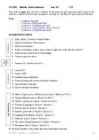
generosity 1 Russian 2 Oral Essential Vocabulary Week 3 ,f duplicity , f greed animosity, spite , f laziness , f meanness , f nervousness , f indecision , f passivity pessimism , f prudence, mercantilism , f weakness egoism 2
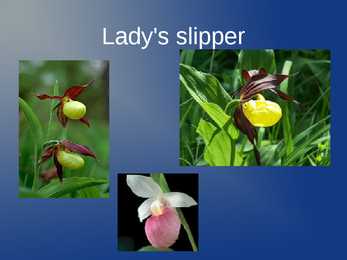
This herb has a spicy and bittersweet flavor along with a disagreeable smell. Lady's slipper succeeds well on damp soils rich in humus content and in any open or shady place. The importance of lady's slipper Medicine The Cypripedium species has been used in native remedies for dermatitis, tooth aches, anxiety, headaches, as an antispasmodic, stimulant and sedative, depression, epilepsy, headache, hysteria muscle spasms, "nervous depression" by stomach disorders, nervousness and sharp- stabbing pains. However the preferred species for use are C.caceolus and C.acaule, used as topical applications or tea. Protection Lady's slipper (orchid), with the largest flowers of all European orchid species, is placed under protection by law everywhere. Pink Lady's Slipper is endangered in some areas because they take a long time to grow, and because people collect them. Also, since Pink Lady's Slippers cannot grow without the Rhizoctonia
Its effects are short-lived and it 33 tends not to negatively affect concentration or higher brain functions. However, continued 34 exposure to caffeine leads to developing a tolerance to it. Tolerance causes the body to become 35 sensitized to adenosine, so withdrawal causes blood pressure to drop, which can result in a 36 headache and other symptoms. Too much caffeine can result in caffeine intoxication, which is 37 characterized by nervousness, excitement, increased urination, insomnia, flushed face, cold 38 hands/feet, intestinal complaints, and sometimes hallucinations. Some people experience the 39 symptoms of caffeine intoxication after ingesting as little as 250 mg per day. The lethal ingested 40 dose, for an adult person, is estimated to be 13-19 grams. While generally considered safe for 41 people, caffeine can be very toxic to household pets, such as dogs, horses, or parrots. Caffeine
I think that maybe seven to eight hours. But in home they must correct students' tests or make preparations for next days. I don't like a job like this. I need more free time. 3. Do the results of school exams show the students' true abilities? I think that exams are very important. Everybody must do the language exam. I think that schools exams show the students' true abilities. Exams show that how educated we are. But sometimes some people can't make out with stress and nervousness. But it's still necessary. 4. If you could change something in the education system in Estonia, what would you do? I like sleep long. And because of this I would start the school later. Maybe 10 o'clock. I think that the schooldays are too long. Students have not enough free time. Even at home they must study. Because of that I would reduce lessons. Other things I wouldn't change. 5. If you could point out one positive feature of Estonian school, what would it be?
" Like most of us, Edison was probably disappointed because our voices sound different on a recording and we usually don't like the result. The reason is that our voices sound better inside our heads than they do when played back on recording machines. The two important lessons here are (1) Your voice probably doesn't sound as bad as you think it does, and (2) if you are troubled by the sound of your voice, there are simple ways to improve its quality. Nervousness is usually the reason why are voices are so affected in public speaking. There are three simple ways to relax and thus upgrade your voice: · Slow Down. As with driving a car, control is easier at slower speeds. · Release the Upper Body. "Take a breath, rotate your shoulders, relax your neck," Rush says. All these actions will create more relaxed vocal chords and make your voice sound deeper and more pleasant.
Douglass was inspired by Garrison, later stating, "no face and form ever impressed me with such sentiments (the hatred of slavery) as did those of William Lloyd Garrison." Garrison was likewise impressed with Douglass, and mentioned him in the 'Liberator'. Several days later, Douglass gave his first speech at the Massachusetts Anti-Slavery Society's annual convention in Nantucket. Twenty-three years old at the time, Douglass later said that his legs were shaking. He conquered his nervousness and gave an eloquent speech about his rough life as a slave. In 1843, Douglass participated in the American Anti-Slavery Society's Hundred Conventions project, a six month tour of meeting halls throughout the east and middle west of the United States. He participated in the Seneca Falls Convention, the birthplace of the American feminist movement, and was a signatory of its Declaration of Sentiments. Douglass later became the publisher of a series of newspapers: North Star, Frederick
sentences that are not exclamatory in form. In such cases it expresses the specific, mostly ironic attitude or indignation. E.g. a truth, a faith, a generation of men goes and is forgotten, and it doesn't matter! Sentences that are interrogative in structure mat end with exclamation m to express strong surprise of distrust. E.g. a, does she think of me so often! The dash and dots (suspension marks) create emotional pauses to mark indecision, uncertainty, nervousness. E.g. Well, he is a..he is a kind of acquaintance. In dialogue the dash and dots are used to render the speech realistically. To show that speakers don't listen one another. Quotation mark serve to single out either the speech of characters or their thoughts that remain unuttered. Words or phrases may be used with quot marks to imply that they belong to other characters and the author himself feels ironic about them
Most prominent punctuation are the dash, exclamation mark and question mark. Their frequent use makes the text very emotional. The exclamation mark is often used in sentences that are not exclamatory in form. In such cases, it expresses a specific, mostly ironic attitude or indignation. Sentences that are interrogative in structure may end in ! to express strong surprise or distrust. The dash and suspension marks create emotional pauses to signal indecision, uncertainty, embarrassment, nervousness. They are used in break in the narrative--aposiopesis. In the dialogue, the dash and suspension marks render the speech realistically, showing that people do not listen to one another, interrupt, leave sentences unfinished. These punctuation marks may mark a long pause before an important word, to draw attention to it. They may be combined with the "time fillers" (aa.., well, so) (And then she saw a--- ghost) The full stop may have different functions.
They suggest high emotionality (e.g. "Winter! So cold! White snow!). 1. The exclamation mark is often used with sentences that are not exclamatory in form. In these cases it shows mostly ironic attitude or indignation. Sentences that are interrogative in structure may have the exclamation mark to express strong surprise or distrust. 2. The dash and dots create emotional pauses to suggest indecision, uncertainty, embarrassment, nervousness device is aposiopesis. In the dialogue dash and dots are used to render the speech realistically. These 2 punctuation marks indicate a longer pause before an important word to draw attention to it (the shortest pause goes with the comma - one beat; dash, dots, full stop 2 beats; end of the paragraph 3 beats). 3. The stylistic function of the full stop may be different: over-stopping and under-stopping. In the over-stopping the full stop
enrich v. to make rich, to make something of n. enrichment greater value adj. enriching Syn. enhance The fine arts enrich our lives. The discovery of oil was an enrichment for the country. intensify v. to make stronger in feeling or quality n. intensity Syn. heighten adj. intense adj. intensive adv. intensely adv. intensively The importance of the test will sometimes intensify the nervousness of the students. The chess match was played with great intensity. intolerable adj. difficult or painful to experience, not n. intolerance able to accept different ways of thought adv. intolerably or behavior adv. intolerantly adj. intolerant Syn. unbearable Any opposition to the rules is intolerable. His boss was intolerant of his tardiness. observe v. to see and watch carefully, to examine
form. In these cases it shows mostly ironic attitude or indignation (e.g. "A truth, a faith, a generation of men goes and is forgotten, and it does not matter!"). Sentences that are interrogative in structure may have the exclamation mark to express strong surprise or distrust (e.g. "Does she think of me so often!"). 2. The dash and dots create emotional pauses to suggest indecision, uncertainty, embarrassment, nervousness device is aposiopesis. In the dialogue dash and dots are used to render the speech realistically. These two punctuation marks indicate a longer pause before an important word to draw attention to it (the shortest pause goes with the comma - one beat; dash, dots, full stop two beats; end of the paragraph three beats) (e.g. "You come after dark, it is so embarrassing."; "And then she saw a ghost."). 3
enough. The second movement (Fl solo) sounds calm and epic. 1 First performance: 25 Dec. 1959. ERSO conducted by Roman Matsov. The following two movements contain neither outstanding thematic materials nor the character of fixed subjects. A row of single contemplating motifs appears in the fourth movement. An example: Example 87. The Finale includes one theme with a core consisting of only one bar. The general feeling is one of lamentation and nervousness. A sequence of chords stands for the second theme and is repeated in recapitulation: Example 88. The constructive thinking has obtained a sharp expressiveness: the rhythmic- motivic ”block” in the Allegro movements excludes coherent symphonic development. In principle one cannot have anything against constructions, as they can be met everywhere in music but the question always arises: which creative thought has been expressed through them
Whatever is attained through cleverness is short-lived and always turns out to be eventually self- defeating. Cleverness divides; intelligence unites. THE BACKGROUND UNHAPPINESS The ego creates separation, and separation creates suffering. The ego is therefore clearly pathological. Apart from the obvious ones such as anger, hatred, and so on, there are other more subtle forms of negativity that are so common they are usually not recognized as sch, for example, impatience, irritation, nervousness, and being “fed up.” They constitute the background unhappiness that is many people's predominant inner state. You need to be extremely alert and absolutely present to be able to detect them. Whenever you do, it is a moment of awakening, of disidentification from the mind. Here is one of the most common negative states that is easily overlooked, precisely because it is so common, so normal. You may be familiar with it. Do you often experience a feeling of discontent that could
 annaabi.ee