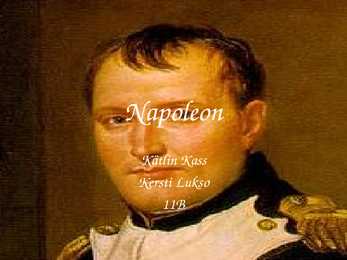
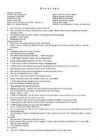
Kersti Lukso 11B Napoleone di Buonaparte · 1 5 Aug us t 1 7 6 9 5 Ma y 1 8 2 1 · Fre nc h m ilita ry a nd p o litic a l le a d e r · Em p e ro r o f th e Fre nc h · King o f Ita ly · Mediator of the Swiss Confederation · Protector of the Confederation of the Rhine Early career · commissioned a second lieutenant in La Fere artillery · a complex threeway struggle was playing out between royalists, revolutionaries, and Corsican nationalists · conflict with Pasquale Paoli · appointed artillery commander of the French forces besieging Toulon Early Career · imprisoned in the Chateau d'Antibes in August 1794, but was released within two weeks · engaged to Desiree Clary Coronation as Emperor · the arrest of Duke of Enghien · crowned himself Emperor in1804 · was crowned King of Italy · declared the Papal States War of the Third Coalition · Royal Navy
He was married to Sophie, the Duchess of Hohenberg. In the southern portion of Austria-Hungary was a region called Bosnia. Many of the Bosnians wanted to have their own country and not be under the rule of Austria-Hungary. The country of Serbia, just south of the Austria-Hungary border also wanted the freedom of the Bosnians. Serbia was an ally with the powerful Russian Empire and Austria-Hungary was allied with Germany. When Archduke Ferdinand announced his trip to Sarajevo, Bosnian nationalists saw their opportunity to strike at the Austrian Empire. With help from the neighboring country of Serbia, assassins were recruited and trained to kill the Archduke as he traveled through the streets of Sarajevo. These assassins were members of a terrorist group called the Black Hand. On June 28, 1914 Franz Ferdinand and his wife were in the third car of a motorcade traveling through Sarajevo to the Town Hall. The Black Hand had several assassins positioned along the route
were buried in Poets' Corner, part of the South Transept of Westminster Abbey, where many distinguished literary people are buried or commemorated. Despite changes in racial attitudes and literary standards for poetry, Kipling's poetry continues to be popular with those who see it as "vigorous and adept" rather than "jingling". In modern-day India, whence he drew much of his material, his reputation remains controversial, especially amongst modern Hindu nationalists and some post-colonial critics. In November 2007, it was announced that his birthplace in the campus of the J J School of Art in Mumbai will be turned into a museum celebrating the author and his works. Kipling's stories for adults also remain in print and have garnered high praise from writers as different as Poul Anderson, Jorge Luis Borges, and George Orwell. Nonetheless, Kipling is most highly regarded for his children's books. His
language and religion. Arab nationalism was always a threat for the French and Brits, but since the Arabs had been separated for such a long time nobody thought that it would happen but in just some years many Arab colonies started to fight against and try to get rid of their British and French masters. The first Arab League was put together and thanks to the Second World War the Brits and French were weaker and gave the nationalists an advantage. So the nationalist oraganised riots and with the help of US and USSR (which were against colonial power) they managed to free some of the countries under the French and British power. b)The Front de la Liberation Nationale aka FLN was a merger of other smaller groups and the Organisation Secrete, to obtain independence for Algeria from France. It grew into an army and declared a war copying the tactics that the French used during German occupation. The FLN was
· In the 16th c. many Scots joined the Presbyterian church · James VI was the King of both countries, the crowns were united · In 1745, Bonnie Prince Charlie tried to seize the throne · The end of dreams of freedom for Scots · Major changes in the late 18th and 19th c. · Highland Clearances farmers were deprived of their land, filled with sheep instead · Fast development of coal mining, steel production and shipbuilding · Bridges, railways, canals · In 1950 the Nationalists stole the Stone of Scone from Westminster Abbey and took it back to Scotland · Important part of British Coronation since 13th c. · In 1979 the British Government decided to allow Scotland to establish a separate assembly · Surprisingly they didn't got the support of 40% of people in a referendum that was needed · In 1999 Scotland voted for its own separate parliament · The first Parliament in almost 300 years
õigusteadlase J. A. Pokrovski (1868-1920) ilmekat ütlust, et antud õigus on “üle elanud teda loonud rahva ja kaks korda vallutanud maailma.“. Kasutatud kirjandus Anners, E. (1995). Euroopa õiguse ajalugu . Luts, M. (2003). Retseptsioonid. Rooma õiguse retseptsiooni mitmekihilisus. Juridica, 570- 575. Mereste, U. (2000). Riigikogu Toimetised. Kasutamise kuupäev: 8. mai 2015. a., allikas Riigikogu: www.riigikogu.ee Smits, J. M. (2012). What do Nationalists Maximise? A Public Choice Perspective on the (Non-) Europeanization of Private Law. Zimmermann, R. (2011). Roman Law and the Harmonization of Private Law in Europe.
When was it? 6. What was the union of European commercial towns Kalled in the middle ages? 7. When did Tallinn join the union? 8. What was the oldest preserved written book in Estonian? 9. What year does it date from? 10. When was Tartu University founded? 11. When did the periood of wars begin in Estonia? 12. Which countries ruled Estonia over the years? 13. Who ended the period of wars in Estonia? 14. When did the Estonian nationalists declare independence from Russia for the first time? 15. When did Soviet Army occupy Estonia? 16. What happene to thousands of Estonians? 17. When did Estonia become part of the Soviet Union? 18. What happene during the ,,Singing Revolution"? 19. What was the ,,Baltic chain"? 20. When was independence declared for the second time? 21. When did the currenecy reform take place? 22. When did Estonians elect their first president and parlament again? 23
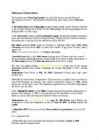
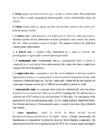
[40] According to the principles of civic nationalism, the nation is not based on common ethnic ancestry, but is a political entity whose core identity is not ethnicity. Its people to continue living together.[40] Civic nationalism is a kind of non-xenophobic nationalism that is claimed to be compatible with liberal values of freedom, tolerance, equality, and individual rights.[41][42][43] Ernest Renan[44] and John Stuart Mill[45] are often thought to be early liberal nationalists. Liberal nationalists often defend the value of national identity by saying that individuals need a national identity in order to lead meaningful, autonomous lives,[46][47] and that liberal democratic polities need national identity in order to function properly.[48][49] 48. Ethnic minorities- ethnic minority – a national or racial group living in a country or area which contains a larger group of people of a different race or nationality • Ethnic identity in Britain is about minorities.
genocide, conspiracy, treason, etc. are being hurled at one another. The various domestic and external conspiracy theories, particularly those originating in the former KGB circles, can be viewed as a fruit of extreme subjectivism and fantasy. The Russian memoir literature does not feature any consensus on the extinction of the empire. 154 All the advocates of the preservation of the Soviet Union, including Gorbachev, blame the collapse on the local elites, separatists, nationalists, and party nomenklatura, citing the desire to get a bite of the public property rather than the nation’s desire for freedom as the leading motive. Those who idealise the empire mostly discard any actual analysis of the national issue, instead eulogising the unprecedented burgeoning of nations under the Soviet regime and socialism as such. These memoirs demonstrate that the liberation movements of the Baltic peoples
Community in 1952. The country joined the North Atlantic Treaty Organization in 1949, the European Defense Community Treaty in 1952, and the London-Paris accords in 1955, thus becoming a full-fledged member of the Western European multinational defense establishment. The late 1940s and early 1950s were also a time of rising prices, generally unfavourable trade balances, and governments dominated by the Labor Party. (3) Meanwhile, the Netherlands lost a war against Indonesian nationalists in the East Indies, and in 1949 the Netherlands formally transferred sovereignty in the East Indies (excluding Netherlands New Guinea) to the Indonesian government. Netherlands New Guinea remained under Dutch rule until 1962. Also, in 1954 Suriname and the Netherlands Antilles became equal members of the Kingdom of the Netherlands. (3) 2.13 Recent Developments The Roman Catholic People's Party came to power in 1959 and retained pluralities in the lower
large number of Protestants came to Ireland, settling down mostly in the northern part of the island. Conflicts between the Protestant settlers and the Irish Catholics arose. The Act of Union in 1801 made England and Ireland one country with one parliament in London. During the 19th century, more and more people in Ireland wanted to regain its independence. In 1916 a group of Irish Nationalists, with their leader Patrick Pearse, declared Ireland a free country. This was followed by a battle in which Pearse was killed. In 1918, his men joined a group called Sinn Féin, which became the IRA – the Irish Republican Army. In 1919 and 1920 there were many conflicts between the two sides. In 1921 the northern and southern part separated, the latter became the Irish Free State. In 1949 the southern part declared itself the Republic of Ireland. 37
consumers. US could sell energy to Europeans for cheap? There's an ocean. Trade or human rights. Gates open at end of 80s, many reasons, not just J Movement. Antisemtism in Ukraine today? Information, not facts. Chaos. Chabad rabbi, not accepted by R Js. In Put's pocket; flattering. Neo-Nats in Uk? Chmelnicki, Bandera on currency. Only non-good choices for Js in Uk. Not many Js there anymore. Many young former SU Israelis have returned to former SU, mostly R and Uk. R and Uk nationalists; transnationalism. Migration tied to economy. Back to Babi Yar memorials. 61, poem published. Literaturnaya Gazeta, very popular among educated. Says there is anti-Semitism in SU, Uk collaborators. Pogrom in Malakhovka, Dagestan, 59. Poem declared that WWII J suffering was unique. Mentions Anna Frank (censored), SU version of Anna Frank happened here too. Govt reacts harshly in newspapers, until end of 62? Shastakovich's symphony. Couldn't react harshly to Shastakovich, famous
the young Estonian intellectuals, a writer, a practising physician, and a member of foreign societies (the Finnish Literary Society and the Hungarian Academy of Sciences). Dr. Karl August Hermann (1851-1909) was a philologist, the most prominent figure in the music life during the National Awakening, and the publisher of the first Estonian music journal Laulu ja Mängu Leht (Newspaper of Song and Play).1 The early Estonian nationalists fought for civil rights, the democratisation of society, raising the educational and cultural level, and against privileges and rank. Dr. Jakob Hurt (1839-1907), pastor, theologian, folklorist and philologist, became the ideological leader of the nation and was the first president of Eesti Kirjameeste Selts (Society of Estonian Men of Letters). He outlined a wide national cultural programme to deal with the substantial cultural and educational challenges that deeply engrossed
 annaabi.ee