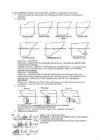
Fifth level Fifth level About FWT Same energy producing concept as any other WT Professor William E. Heronemus, 1972 First offshore bottom-fixed WT as oflate 20s First FWT Hywind in Norway, late 2009 ( cost 55 mil euros) Fukushima coast, Japan Technology and advantages Instead of bottom-fixed phycical foundation, floating platforms are attached to the seabed with mooring lines. Three main types of floating wind platforms Ballast stabilized Tension Leg Platforms Buoyancy Stabilized (Hywind) BUOYANCY STABILIZED Technology and advantages Access to previously inaccessible waters. Commissioned and assembled at the quayside. Foundations not necessary 1. Sea life disturbance minimized 2. Reduced geotechnical requirements Also 3. Considerably less noise and visual pollution 4
Port authorities; Private capital; Ship owners. Tasks of HCC, Harbour coordination centre: Safety in the port; Control on incoming and outcoming vessels; Information centre. Consists of: Planning en coordination; Central traffic management; Dangerous goods. Service providers in the port: Government: Customs; Port police. Inderpendent companies: Pilotage; Communication company; Tugboats; Mooring; Port community system. The main tasks of the port police are: Maintaining law and order; Boarder control; Providing help on around port. Business when ship in port: Bunkering of fuel; Intake of drinking water; Ship chandler; Laudry firm; Maintainance and repair company; Doctor/hospital/farmacy; Lashing material supplier; Expertise bureaus; Port state control.
Each winch has a centre barrel suitable for a load of two tons at about 100 ft./minute and a capacity of 50 fathoms of 2 in. circ. steel wire rope. Each is fitted with warping end, screw hand brake and dog clutch. A 30 hp electric hydraulic pump can operate one winch at full power or two winches at half power simultaneously. There is a changeover valve to enable the pump unit to serve the windlass, which is also of A/S Hydraulik Brattvaag manufacture. Mooring Bollards (traallaudade pollarid) The Jacinta has two mooring bollards (or Bitts) on her Trawl Deck. A bollard is a pair of heavy vertical cylinders, that are used for making fast lines that have been led through fairleads. The upper end of the bollards are fitted with a steel plate that forms a lip that keeps lines from accidentally slipping off. As bollards are expected to take heavy loads, extra frames are worked into their foundations to distribute the strain.
Kui see manööver ei anna positiivset tulemust ja tekib oht vajuda ahtriga vastu kaid, tuleb ankruketti järele anda ja lasta vööril minna kaile nii lähedale, et oleks võimalik anda vööri spring. Kiiresti kinnitada vööri spring ja ankrukett ning anda väike käik edasi ja keerata rool paremasse pardasse. Vindi pöördeid reguleerida nii, et kõigepealt puutuks õrnalt kaid skuloi ja seejärel ülejäänud korpus. Käsud sildumisel. 1. Olge valmis sildumiseks! Stand by for mooring! ! 2. Andke viskeliin! Give the heaving line! ! 3. Andke vööri põikots! Give the forward breast line! ! 4. Andke vöörisping! Give the forward spring! ! 5. Andke ahtri ots! Give the stern line (rope)! ! 6. Andke ahtri põikots! Give the aft breast line! ! 7. Andke ahtri spring! Give the aft spring! 8. Andke vööri (ahtri) otsale lõtk! Slack away the head (stern) line! () ! 9
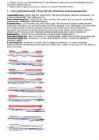
Nende abil haalatakse kinnitusotste abil laev kai äärde, misjärel otsad pingutatakse ja kantakse masinatelt üle pollaritele või jäävad nad automaatsete vintside trumlitele Tihti kasutatakse haalamiseks vööris ankrupeli koppa. Ja ahtris haalamiskepslit. Tänapäeval on laevadel ka automaatsed haalamisvintsid, mis peale otste pingile tõmbamist hoiavad neid automaatselt määratud pinge all, andes pinge suurenedes otsa järele ja võttes seda pinge vähenedes sisse. Sildumisots, mooring rope (mooring fast või rope, ) kasutatakse: tehiskiust (polüamiid, polüester, polüpropüleen, nailon) või terasotsi. (Mõlemasse otsa peab olema tehtud aas. Terastrosse hoitakse harilikult trossipoolidel või automatiseeritud haalamisvintside töötrumlitel Punutud polüpropüleenist otsad taimsetest tugevamad, ei mädane, ohutumad, ujuvad. Ei karda päikest, keemilisi aineid, hõõrdumine klüüsides kulutab ja tekitab staatilist elektrit. Elastsed, venivad ja
äärde, misjärel otsad pingutatakse ja kantakse masinatelt üle pollaritele või jäävad nad automaatsete vintside trumlitele Tihti kasutatakse haalamiseks vööris ankrupeli koppa. Ja ahtris haalamiskepslit. Tänapäeval on laevadel ka automaatsed haalamisvintsid, mis peale otste pingile tõmbamist hoiavad neid automaatselt määratud pinge all, andes pinge suurenedes otsa järele ja võttes seda pinge vähenedes sisse. KEPSEL Sildumisots, mooring rope (mooring fast või rope, ) kasutatakse: tehiskiust (polüamiid, polüester, polüpropüleen, nailon) või terasotsi. (Mõlemasse otsa peab olema tehtud aas. Terastrosse hoitakse harilikult trossipoolidel või automatiseeritud haalamisvintside töötrumlitel Punutud polüpropüleenist otsad taimsetest tugevamad, ei mädane, ohutumad, ujuvad. Ei karda päikest, keemilisi aineid, hõõrdumine klüüsides kulutab ja tekitab staatilist elektrit. Elastsed, venivad ja katkemisel
’ Thomas (English, 29), who since being interviewed has settled on a remote Cambodian beach bungalow resort he purchased, depicted his own un-tethering from the UK: I’ve opted out of the society I grew up in. I’ve got nothing to go back to anywhere in the world. I’ve got one bag of stuff in my friend’s house in Melbourne and my rucksack in my hut. The purpose of this trip is to find somewhere to live like this permanently. Thomas’s mooring was an exception amongst the participants and begs the question of how long his exit from lifestyle travel will last. Indeed, the hypermobility of lifestyle travel became so internally entrenched in this study’s participants that staying in a fixed and singly bounded notion of home was a rarely attained ideal. Germann Molz (2008) explores the idea of ‘home-on-the-move’, in which the closest travellers come to finding a sense of home is
 annaabi.ee