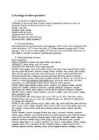
A word typically has not one meaning but several. Fading- an old sense of a word fades away- dies Radiation- a new sense of words are created. Extention of meaning- widened meanings. Generalization Specialization of menaing- means narrowing the meaning. Denotative shift is movement in sideways, a combination of extention and specialization. Nt gossip--godfather and idle talk. Pejoration (worsening of meaning) deterioration Amelioration- improvement of meaning. 14) Metaphor and Metonymy Metaphoe- based upone a perception of similarity. Mouse- computer mouse and quiet as a mouse. Dead metaphore- flowerbed Conduit metaphor-ideas and meanings are objects. Conceptual metaphore- the essence is understaning and experience one kind of thing in terms of the other. Orientational metaphor- happy is up, sad is down. Metonymy- is a word that is not called by its own name but by the name it is assosiated with. Nt hollywood- we know it as a filmindustry but acutally it is a palce name.
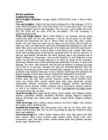
some unexpressed semantic head (e.g. a person, a plant, an animal...), and their meaning often cannot be transparently guessed from its constituent parts. White-collar. Meaning change A word typically has not one meaning but several. Fading- an old sense of a word fades away- dies; Radiation- a new sense of words are created. Denotative shift is movement in sideways, a combination of extension and specialization. e.g. gossip-- godfather and idle talk. Metaphor and metonymy Metaphor- based upon a perception of similarity. Mouse- computer mouse and quiet as a mouse. Metonymy- is a word that is not called by its own name but by the name it is associated with Hollywood. Meaning restriction and extension. Specialization of meaning- means narrowing the meaning, extended - widened meanings. Generalization. Meaning degradation and elevation Pejoration (worsening of meaning) deterioration. Amelioration- improvement of meaning. Monosemy Word only has one meaning.
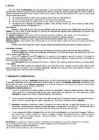
Another case of transposition is zoonymic metaphor. Names of animals, birds, fantastic beings when applied to people become emotionally coloured and often offensive: donkey, duck, mule, snake, wolf, angel, devil, etc. Negative colouring is made stronger by constant epithets and emphatic constructions (e.g. "You filthy swine", "You lazy dog"). Adjectives when used as nouns become colloquial (e.g. "come on, lovely (noun)"). When abstract nouns begin to stand for people they become emotional (metonymy) (e.g. "The little eccentricity." an eccentric child). Possessive case the suffix apostrophe "`s" may be added to a phrase or sentence and the result is humor or colloquial touch. The ending of the plural may be added to the sentence with the same effect. Abstract nouns when used with the plural become very expressive. ARTICLES: the article with a proper name ads a colloquial touch (e.g. "He was engaged to a Mrs. Haggard."). Indefinite article:
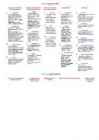
simple (based on a single phrase, sentence, string; window & heart") name objects ("one's image) sustained (developed). semantically classified: better half" = wife) 2. ALLUSION 2. METONYMY metaphorical ("soft smile") 2. PUN 2. SIMILE reference to sth. known to reader;
Frame r. Climax Monometer Lexical SD Anticlimax Dimeter Metaphor: Suspense Trimeter Trite Rhetorical q. Pentameter Genuine Exclamation Hexameter Sustained Graphical Means, SD Heptameter Metonymy Under / overstopping Octometer Synecdoche Indented line Antonomasia Graphon Phrasing Irony Common Lit. Voc. Syntagm Epithet: Special Lit. Voc. Monotonous rhythm Syntactic Terms Jerky rhythm
narrative more elevated. On the other hand, they may suggest colloquial speech. These forms are preserved in dialect (thou knowest, he knoweth, I didst) Numerals: · Usually numerals are not expressive, yet, when used in exaggeration (hyperbole) they may become expressive. (I was away for 768 years) · When numerals are used independently standing for a person then we speak of metonymy (she's a beautiful 16) 5. Expressiveness on the level of word-building Words may become expressive due to their morphological structure. · -ish+ adjective stem may give an emotionally neutral effect (brownish--a small quantity of brown) · -ish may form "tactful" words that are formed as nonce words if the speaker does not want to sound too categorical (dullish lecture, lateish) · Together with noun stems ish forms adjectives with negative, contemptuous
persoon who talks fowl talk, a godfather or godmother, a sponsor, or a familiar acquaintance or friend. 1) extension>> godparents in baptism > bosom friends (disappearance of religious restriction) 2) narrowing>> the new sense cannot be applied to godparents with which you are not on friendly terms terms (the missing link is a ‘friendly tie’ = connotative extension becomes a central part of the new sense; sponsorship in baptism implies a friendly tie) 33. Metaphor and metonymy Metaphor…transference based on a perception of similarity between the source and the resulting sense. The use of a word or phrase usually designating a concept of one domain or semantic field (the source domain) used to designate an aspect of another domain). Metaphors are usually stablished on the basis of perceived similarity between the two concepts. Metaphorical extension Viros can be a disease, but also can be a computer program From concrete to abstract Style coming from stylus
Collide, once used mainly of pairs of trains and ships in motion, has expanded its scope, merely as a result of technological change, so as to refer to motor vehicles and aircraft. With this momentum it has been able to achieve generalization not only to the encounter of almost any objects whose paths might cross (e.g. pedestrians, sub-atomic particles, etc.) but also to the meeting of a moving object with a static one (e.g. a car colliding with a tree). 32. Metaphor and metonymy Metaphor is a figure of speech in which a word or phrase is applied to an object or action to which it is not literally applicable. Metaphors are based on resemblance. Dead metaphors are metaphors which are no longer figurative (flower-bed, blind corner) Machinery War To tighten the screws on the economy To invade weaker markets
of sounds(spoonerism) c)history of the lg helps to understand ahanges in the meanings of words (nt, legend ment a book where a life of saints was described) d)stylistics is the sign of expressive means of the language. The same idea may be expressed in different ways and so may aquire a new meaning.(nt, good-bye is neutral, ta-ta is colloquial, father- parent, daddy) In some words we may find transfer meanings (methapfor- the flowers nodded their heads), metonymy (nt, how many vendes, macaroni) 3. Extra-and intralinguistic connection of words. Extral are those between a word and reality (nt, farm firmus (latin) that ment hard.) The answer lies in historical condition. Word ,,firma" ment stable payment. Finally it ment ,,tenant`s dwelling (elamine). To sack means when workers were dismissed, theiy took their tools in a sack and left. Intral words are connected with each other. New facts in the lg cause some change in the meaning of some words
Reason the appearance of slang lies in the speakers desire to be original, witty and sometimes a protest against the standards. If such a word is used widely it seizes to be slang and becomes common or neutral word. E.g. skyscraper, taxi, piano, photo, pub. The history of slang is short. The word boose has been slang word even since it was coined at the 16 th century. Slang is formed by word building means (see lexicology) as well as figures of speech. E.g. upper-storey (head), bread (money). Metonymy is used shirtwoman. Hyperbole killing astonishing. Irony clear as mud. In slang a word is sometimes spelt backwards. Then it is calles backslang e.g. rum-mur, top o reeb pot o beer, yob-boy. There is also so called rhythmical slang. It comes from cockney e.g apples and pairs standing for stairs, trouble and strife wife. Slang is noted for the great number of synonyms. True for things discussed often. Being drunk all wet, pie eyed, screwed, polished, zig-zag
the style he used to use, to get in to a second part in which I will assess the way he presents and expresses his ideas. 1.CHAPTER I 1.1. LARKIN STUDIES POINTS OF VIEW: BIOGRAPHY AND POETRY In the collection of essays edited by Stephen Regan (Philip Larkin, 1997) we can find some underlying question as: are we discussing the poem or the poet? Or, in Larkin’s terms: are we more deceived or less deceived by the metonymy of the phrase “we are reading Larkin”? The main purpose of the volume may be discussing and assessing Larkin’s poetry, but there are at least as many references to his letters (mainly published in SL) and to his life as to the poems themselves. If we think that Larkin is known as a legend we shouldn’t be surprised about the importance his life takes as a part of his work. His work, balancing on the borderline
 annaabi.ee