How much does life weigh? The question can be understood differently. Some might take it word by word, others in some metaphorical way. Many are convinced that a human body has an immortal part - a soul. With knowing how few it actually weights, we can only assume what we have in these grams and whether it is anything worth at all. First of all, what do we claim to be a soul? It is our conscience with no form or location. It is the energy that is a part of the whole universe. In consideration of this, every human being has their own soul. This is what makes us all different and unique.
Vladimir Kush and his works: ,,Purse" ,,Departure Of The Winged Ship" Kristiina Ojamets 2011 Vladimir Kush A Russian surrealist painter and sculptor Prefers to define his art as metaphorical realism rather than surrealism He was born in Moscow in 1965 (age 46) Entered the Moscow Higher Art and Craft School at age 17, but a year later he was conscripted. After 6 years military training the unit commander thought he should better paint propagandistic posters. After military service graduated the Institute of Fine Arts In 1987 Kush began to take part in the Union of Artists exhibitions and in 1990 in Germany nearly all his displayed paintings were sold.
Compounding involves putting together two existing elements of the lexicon (normally "content" words rather than grammatical words and affixes) to create a new word, like matchbox. In both derivation and compounding there is a strong element of compositionality, meaning that the meaning of the new word is broadly predictable from the meaning of its component parts. Probably the main non-grammatical way in which languages get words for new things is by metaphorical extension of the meaning of some existing word. There are broad generalisations about metaphor cross-linguistically, and some people regard metaphor as a central feature of what makes language language (see e.g. Lakoff 1987). However, in any individual case metaphorical extensions are fairly unpredictable and often understandable only once you already know what they mean (e.g. the bonnet of a car). Sometime new words are formed by clipping, cutting off part of an existing word or phrase.
Kafka's Hunger Artist Kafka, in his masterpiece "The Hunger Artist," suggests that humans can never satisfy their desires. This is illustrated through the metaphorical hunger artist for whom nourishment is not being nourished at all. The viewing public's interest is derived from their desire to see the hunger artist cheating, but to view this would put an end to that desire. Finally, Kafka presents this idea while the artist is at the circus and describing when people wish to view the starved man. The hunger artist's nourishment is spiritual. The man only wishes to be honored by the public. As he
idioms We need to understand different types of idioms and they are categorized as either opaque or transparent. Idioms can be a single word, a phrase or clause, or they can be a complete sentence or expression. Many idioms are metaphorical. The most common type of idiom are polysemes. They are words -- often verbs -- and phrases with multiple, somewhat related meanings. An example is the verb "run;" to "run with a smart idea" or "run a computer program" are related to, but quite different from running a foot race. To analyze idioms Here I would like to make ANALYSIS of one expression: Sam, "get a move on"!
Kristel Sepp TIK IB 09.10.09 "You can never go home again" "Lord of the flies" The quote "You can never go home again" is related to "Lord of the flies" in both literal and metaphorical sense. Luckily most of the boys could go home in a literal sense but unfortunately some of them were dead by the time rescuers came to save them. When boys were left on the island alone the savages inside them started to appear and there were few quite good reasons for that. The experience on the island changed all of them and when they were finally rescued everyone went home as sort of different persons.
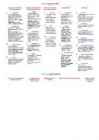
simple (based on a single phrase, sentence, string; window & heart") name objects ("one's image) sustained (developed). semantically classified: better half" = wife) 2. ALLUSION 2. METONYMY metaphorical ("soft smile") 2. PUN 2. SIMILE reference to sth. known to reader;
The way it was written and how he presented it played a huge role in its effectiveness. Martin Luther King used a wide variety of rhetorical and literary devices in his speech. Rhetorical devices are used to persuade and evoke emotions in the audience. The use of metaphors can already be seen in the following sentence: ‘’One hundred years later, the life of the Negro is still sadly crippled by the manacles of segregation and the chains of discrimination’’. The metaphorical use of the words ‘’chains’’ and ‘’manacles’’ in that statement help the audience to visualize the impact of discrimination and segregation. The black community being bound my the chains of discrimination prevented them from being able to rise up. Chains and manacles can also be seen as objects that bring back memories among African Americans that once experienced criminal injustice by the police due to institutional discrimination.
munication, incorporating all the phenomena we have surveyed in this chapter and the last. · Levinson (1983) is a good general book on pragmatics. Davis (1991) is an excellent anthology, and Horn and Ward (2004) is an outstanding reference work. Part IV The dark side 14 Metaphor Overview The phenomenon of metaphor is far more prevalent than is generally admit- ted by philosophers, and it raises two main questions: What is "metaphorical meaning"? And how do hearers grasp metaphorical meaning as readily as they do? Most theorists have thought that metaphor is somehow a matter of bringing out similarities between things or states of affairs. Donald Davidson argues that this "bringing out" is purely causal, and in no way linguistic; hearing the metaphor just somehow has the effect of making us see a similarity. The Naive Simile Theory goes to the opposite extreme, having it that metaphors simply abbreviate explicit literal comparisons. Both views are easily seen to
antagonist, protagonist, setting. Beast Epic humorous allegorical stories that contain a moral lesson, usually the main characters are animals. Originate in France and le Romain du renart Alliteration Two syllables alliterate when they begin with the same sound. Alliterative verse form of verse that uses alliteration as the principal structuring device to unify lines of poetry, as opposed to other devices such as rhyme Kenning a short metaphorical description of a thing used in a place of a thing's name. Protagonist hero, main character Antagonist - character opposing the protagonist, not always a villain. Good luck fucking your brains up!
position of another person. 1822 The triumph of Life an elegy, unfinished, published in 1824 after Shelley died. Characteristics of Shelley's poetry: Themes: beauty, the passions, nature, political liberty, creativity, and the sanctity of the imagination Idealism belief in the goodness of mankind Revolutionary ides about politics, marriage, women Atheism Philosophical relationships Metaphorical language Sensuous aestheticism John Keats was one of the principal poets of the English Romantic movement. During his short life, his work received constant critical attacks from periodicals of the day, but his posthumous influence on poets such as Alfred Tennyson has been immense. Elaborate word choice and sensual imagery characterize Keats's poetry; including a series of odes that were his masterpieces and which remain among the most popular poems in English literature.
to doe justly, to love mercy, to walk humbly with our God.” (Winthrop, 1996) ‘Shipwreck’ clearly represents failing the God and the consequences that accompany these kind of behavior. Doctrine for avoiding this relies on simple and plain teaching – follow, love and worship God. The central idea itself focuses in the end of the poem where Winthrop compares their new Massachusetts Bay colony to "a city upon a hill". This another metaphorical phrase is used to express the success of this revolutionary city which rises above, shining over everyone else. This “City upon a hill” after succeeding its power is referred as an example for the rest of the human kind. This phrase is also often used as reference to the American exceptionalism. Closing part of the sermon is very meaningful. Once again, Winthrop emphasizes on the importance of obeying God and threats that surround people if they don’t follow Him (“but if
g. "a brute of a boy", "a devil of a time"). b) Phrase epithets: adjective deriving from a phrase or sentence (contain hyphens) (e.g. "an I-could-not-care-less attitude"). c) Sentence epithets are expressed by one word sentence containing a noun and exclamation mark (e.g. "Fool!", "Pig!" etc.). d) String epithet involves several epithets used side by side (e.g. "A nice, mild, kind, pleasant gentleman"). Semantically epithets are classified into: metaphorical (based on metaphor: e.g. "soft smile") and transferred elements (the quality of one thing is transferred to its nearest neighbour (e.g. "He was tossing on the sleepless pillow." actually he was sleepless and not the pillow). 2. Oxymoron is a combination of 2 words (attributive and adverbial), the meaning of which clash (e.g.: living corpse, shout silently). If
Antonomasia Graphon Phrasing Irony Common Lit. Voc. Syntagm Epithet: Special Lit. Voc. Monotonous rhythm Syntactic Terms Jerky rhythm Phrase Barbarisms / Alternating rhythm Sentence foreign w. Rambling rhythm Metaphorical Archaic w. Grading rhythm Transferred Poetic diction Oxymoron Neologisms Functional styles / registers Hyperbole STYLE AND STYLISTICS FGI 1081 Stylistics (I. Ladusseva) 2 The term "style" is polysemantic (has many meanings): a Latin word "stilus" originally
returned to his wife, Abigail was fired. Now the Reverend Parris is hearing accusations and counter- accusations of misdeeds from all sides of the community in the wake of Abigail's charges, so he brings in Judge Danforth to determine who is guilty or innocent. However, given the moral climate of the time, it seems someone has to be found guilty of witchcraft, even though firm evidence of wrongdoing is becoming hard to come by. Metaphorical usage In modern terminology 'witch-hunt' has acquired usage referring to the act of seeking and persecuting any perceived enemy, particularly when the search is conducted using extreme measures and with little regard to actual guilt or innocence. It is used whether or not it is sanctioned by the government, or merely occurs within the "court of public opinion". The first such use reported by the Oxford English Dictionary dates to 1932. Another early
baptism implies a friendly tie) 33. Metaphor and metonymy Metaphor…transference based on a perception of similarity between the source and the resulting sense. The use of a word or phrase usually designating a concept of one domain or semantic field (the source domain) used to designate an aspect of another domain). Metaphors are usually stablished on the basis of perceived similarity between the two concepts. Metaphorical extension Viros can be a disease, but also can be a computer program From concrete to abstract Style coming from stylus. Manner of writing. From animal to human Mouse can be an animal, but also can be a person who is quiet and insignificant. Lion can be an animal, but also can be a strong and coragoeus animal, or who is fiercely cruel or tyrannical. Dead metaphors -- “Metaphors, once no longer recognized as figurative, become ‘dead’, as in flower- bed, blind corner
2) keelelised kategooriad sõltuvad kogemustest ja teadmistest protsesside kohta 3) ühe asja mõistmine, teise asja kaudu. Rõhutatakse subjektiivset momenti rohkem. · Eestis tegelenud: Ene Vainik, Ilona Tragel. George Lakoffi metafooriteooria · Keel on olemuselt metafoorne. kõik on metafoorne, mis pole otseselt seotud konkreetse suhtlussituatsiooniga, samas võib öelda, et need situatsioonid võivad muutuda metafooriks. · Literal-metaphorical eristuse ümbermõtestamine: ,,need mõisted, mida ei saa haarata mõistemetafoori (conceptual metaphor) tuleks kutsuda kirjalikuks". · Metafoor on ennekõike kontseptuaalne, konvetsionaalne ning osake tavalisest mütte- ja keelesüsteemist. ,,Lühidalt öeldes ei peotu metafoor keeles, vaid viisis, kuidas me üht valdkonda läbi teise kontseptualiseerime". · Ennekõike võetakse kriitiliselt vaatluse alla traditsiooniline figuratiivne-sõnaline
Compound epithets are compound adjectives (a cloud-shaped man) Syntactic epithet has a structure: A+NOUN/ADJECTIVE+A+NOUN (a devil of a time) Phrase epithets are hyphened words built out of a phrase or a whole sentence (an I- couldn't-care-less attitude) Sentence epithet is a one word sentence. Here a noun is used with an exclamation mark. (Fool! Thief! Idiot!) String epithet occurs in strings (a nice kind dear fellow) From the point of view of meaning epithets may me: · Metaphorical epithets are based on a metaphor--soft smile, whispering trees · Transferred epithet transfers the quality of one object to its nearest neighbour He was tossing his head on a sleepless pillow, She shrugged her indifferent shoulders) Oxymoron is a combination of 2 words with clashing meaning. (Living corpse, calm nervous laughter) In colloquial speech such phrases have become clichés (terribly sorry, awfully nice). Function: to stress contradictory nature of something.
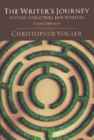
It's especially true when those bits of received wisdom lead to successful, popular entertainments. T h e Hero's Journey language is clearly becoming part of the storytelling common knowledge and its principles have been used consciously to create hugely popular films. But there is danger in this self-awareness. Overreliance on traditional language or the latest buzzwords can lead to thoughtless, cookie-cutter products. Lazy, superficial use of Hero's Journey terms, taking this metaphorical system too literally, or arbitrarily imposing its forms on every story can be stultifying. It should be used as a form, not a formula, a reference point and a source of inspiration, not a dictatorial mandate. xviii PREFACE CULTURAL IMPERIALISM Another of the clangers of standardized language and methods is that local differ
been exposed with versatility. The First Symphony belongs to absolute music and there is no need for any concrete programme. Extreme tempers that can be met in the works of the young are avoided here. By exposing the development of his thoughts Ilves presents himself as a refined dramatist of timbres. The work is densely connected to the inner world of the composer; there are troubled contemplations and stress, lonely monologues and unanswered questions. The epic Ilves is even metaphorical: in the recapitulation a panorama has been created. Thus he attains philosophic generalisations rising above everyday life, summarising all he has experienced without needing “modern” means of expression. The composer proves convincingly that these are not inevitably necessary for submerging into depths of thought. The Latvian critic Viya Mushke wrote after the performance in Riga (March 1967): ...the expansive wide breath is overwhelming
method," which scientists apply in attacking problems in the natural sciences. They are: analysis (such as counting the letters), hypothesis (x might be e), prediction (if x is e, then some plaintext possibilities should emerge), and verification (they do) or refutation (they don't, so x is probably not e), either case starting a new chain of reasoning. (This common ground of scientific method between cryptanalysis and other sciences validates such metaphorical statements as "He sought to decipher the history of the earth from layers of rock.") Within this general format, cryptanalysis operates in two ways, deductive and inductive. Deductive solutions are those based on frequency analysis; they are the general solution for any cipher system. Inductive solutions are those based on probable words or on lucky occurrences, such as two cryptograms with the same plaintext; they are special solutions.
 annaabi.ee