Caipirinha's are easy to make. All you need is a little cachaca, a lime or tow and some cane sugar (plain sugar will be fine as well). Make this drink in a lowball glass, or any other glass available. Cachaça Cachaça is a liquor made from fermented sugarcane. It is the most popular distilled alcoholic beverage in Brazil. It is also known as aguardente, pinga, caninha or other names. Cachaça is mostly produced in Brazil, where, according to 2007 figures, 1.5 billion liters (390 million gallons) are consumed annually, compared with 15 million liters (4.0 million gallons) outside the country. It is typically between 38% and 54% alcohol by volume. When it is homemade it can be as strong as the distiller wants. Up to six grams per liter of sugar may be added." The major difference between cachaça and rum is that rum is usually made from molasses, a by-product from refineries that boil the cane juice to extract as much sugar crystal as possible, while cachaça
How to live healthy Good health isn't just about healthy eating and exercise it also includes being positive, confident and a healthy lifestyle. If you want to live healthy, you should drink a lot of water. Water is needed to carry out our body functions, remove waste and carry nutrients and oxygen around our body. Men should drink about 3 liters water a day, for women it's about 2 liters. Also, you should have enough sleep. If you are tired you eat more. Sleep is a key to a healthy lifestyle, and can benefit your heart, weight and mind. People who do regular activity have a lower risk of heart disease, stroke, and cancer. Choose walking over transport for close distances and climb the stairs instead of taking the lift. When you enjoy the sports, you'll naturally want to do them. If you want to stay fit eat fruits and vegetables. Fruits and
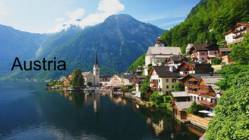
Austria Austria Mountainous landscapes.charming villages,and a passion for coffee and cake are just a handful of reasons why paying a visit to Austria is a must for those hoping to travel to europe one day. Winter sport The Alps surrounding Austria provide a skiers paradise .Many natives and tourists head the hills at least once a year to partake in a little gliding ,slipping ,and sliding Hotels are not very expensive there.Three nights will cost the 130 eurot. Airplane prices for austria Back and forth is a 90 eurot by person . The flight lasts 1 hour Austria by car From Häädemeeste 24hours 1700 km To drive there it takes around 100 liters gas.
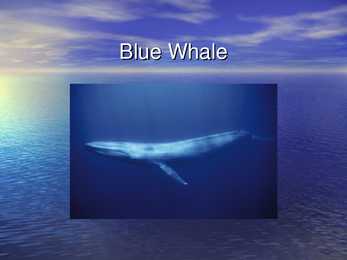
Blue Whale important · The largest mammal · The largest anilam that ever lived on Earth · About 30 meters long · Weight about 120 tons · Life span is about 3540 years multiplication · Little whale are born in warm waters · Baby whale drink about 200 liters milk in day · Female blue whale may be maturing 4th5th life years · Male blue whale may be maturing 8th10th life years general · Blue whale has blue gray skin with white sports · A blue whale female is larger than a blue whale male. · The blue whale can dive to 500 meters below the water · they can be submerged for up to 2 hours · Today, there is still some 10 000 blue whales, their number is growing slowly · The blue whale is the only natural enemy
How NASCAR Engines Work Kaspar Konist TA History The National Association for Stock Car Auto Racing (NASCAR) is a family- owned and -operated business venture that sanctions and governs multiple auto racing sports events. It was founded by Bill France, Sr. in 1947 48. Engine A NASCAR race car engine is called a V-8 engine. It has 8 pistons. By family-car standards the engine is huge, about 5.6 liters · POWER 750-800 horsepower · It only takes 20 minutes to burn a full tank of gas. The temperature inside a NASCAR V-8 engine can reach 2000 degrees Fahrenheit the pressure can reach 1500 psi, or more than 100 times the normal air pressure we feel around us every day. Some parts exposed to the worst of an engine's extreme heat use special metals to keep them from melting and fusing with another part of the engine. NASCAR rules 1)carburated V-8 with iron block
Catholicism and festivals, whose names Protestantism is the survive as Irish month most widely practised names, are Bealtaine religion in Ireland (May), Lúnasa (August) and Samhain (November) Interesting facts of Ireland · Ireland has won seven times the Eurovision Song Contest, more than any other country · The Irish consume in average 131.1 liters of beer per year · There are more mobile phones in Ireland than there are people · St. Patrick was not actually Irish, he was Roman Sightseeing The Ring of Kerry Bunratty Castle · The Ring of Kerry has · It is the most complete some of the Europe's and authentic medieval finest beaches that castle in Ireland provide all the facilities · Contains mainly 15th for a traditional seaside holiday
Beginning in the early 1990s, small-scale industries were encouraged, resulting in goods that are sold mostly in the local area at retail and wholesale stores. Examples of these locally produced products are beer, furniture, and noodles. Otherwise, agricultural products have been the main commodities for sale. Attitudes to alcohol Data from the Customs Department and from a local manufacturer show that the per capita consumption of pure alcohol among those 15 years and older in 1994 was 0.7 liters. This level is far below that of many other South Pacific nations reflecting, in part, the fact that some 90% of the Solomon Island's population live in rural villages where they have only limited involvement in the cash economy. It also reflects the concentration of liquor outlets in the capital, Honiara, and the main provincial centers. It is generally believed that the unlawful production of alcoholic beverages (home brew, toddy and kaleve) is not uncommon. Resources: 1. https://docs
Air pollution Every day, the average person inhales about 20,000 liters of air. Every time we breathe, we risk inhaling dangerous chemicals that have found their way into the air. Air pollution includes all contaminants found in the atmosphere. These dangerous substances can be either in the form of gases or particles. Air pollution can be found both outdoors and indoors. Pollutants can be trapped inside buildings, causing indoor pollution that lasts for a long time. The sources of air pollution are both natural and human-based. As one might expect, humans have
stem herniation, and death. Cases Of Extreme Hydration It is, thankfully, quite difficult to flummox a healthy pair of kidneys accidentally. It is a testament to the water-processing abilities of this organ that most cases of water poisoning are restricted to extreme instances of hazing and drinking contests. An instance of the latter occurred in 2007, when a 28-year-old woman consumed six liters of water over a three-hour period for a radio station's on-air drinking contest. "She said to one of our supervisors that she was on her way home and her head was hurting her real bad," one of the woman's co-workers would tell reporters. "She was crying and that was the last that anyone had heard from her." Athletes endurance athletes, especially are also recognized as being at risk of water poisoning. Results from a study published in
biogas. This is precisely the reason as to why thermal insulation is necessary to produce biogas when it is the winter season or at places where the temperatures are normally lower than the requisite level. The heating of digesters is also pretty important in this regard. The pH of the slurry has to be close to 7. This is pretty much possible provided that cow dung is employed in the form of a substrate. If favourable conditions may be provided then as much as sixty liters of biogas may be produce for one kilogram of cow dung. The digesters that are used for the purpose of production of biogas can be used in mesophilic conditions, which mean a temperature range of 20 to 25 degrees Celsius to 40 to 45 degrees Celsius. The digesters can also be run in thermophilic conditions, where the temperature range is from 50 to 55 degrees Celsius to 60 to 65 degrees Celsius. Both these conditions call for separate species of bacteria. It is thought that the
weight (Timilsina, 2011; Defra 2008). Nevertheless, wheat is produced in countries, where consumption of biofuels is projected to grow the most, such as the USA and Europe and that can affect the wheat cultivation for food in the future. 3.3. Sugarcane Sugarcane grows only in tropical areas and it is a very efficient and productive crop for biofuels. Brazil is the major sugarcane producer, where the production of ethanol from sugar cane started in the 1980s and has grown to 22.24 billion liters in 2007 (Zuurbier, 2008). Sugarcane is used as a feedstock for producing bioethanol and the residual leftover bagasse - is used in heat and power generation. That is one of the characteristic that gives sugarcane production an advantage over other fuels. But sugarcane is also the major source of sugar in the world; about 80% of today's sugar is made from sugarcane, cultivated in tropical and subtropical areas of the southern hemisphere.
Netting Braided Gear Tension (kg) 3150 2,890 8.3% Door Spread (m) 35.4 37.3 +5.4% Wing Spread (m) 14.66 14.77 +0.8% Headline Height (m) 5.88 6.04 +2.7 Swept Area (m3) 278,000 315,000 +13.3 Fuel Liters / Hour 53 53 0% Hake Catch / hr (kg) 350 500 +42.9% ULTRA CROSS ® Catch (kg) liter fuel 6.6 9.4 +42.9% Netting Tricolor Elite trawl has next advatanges: The gear tension was 8.3% less
w viscosity at wall temperature, Pa · s 11 2 Experimental description 2.1 Experimental apparatus The experiments were carried out in the experimental apparatus, whose schematic diagram is shown in Figure 2. Figure 2: Schematic diagram of the apparatus The water used to flow through the steel coil was held in a reservoir, with a capacity of approximately 25 liters. A centrifugal pump was used to circulate the water from the tank to the coil and then to the drain. The flow rate of the water was measured using a calibrated rotameter. The coil was located inside the hot water rectangular bath with dimensions of 45,5 X 21,1 cm with no baffles. The height of the coil was 6,2 cm, the diameter of helix was 17,4 cm, the length of the tube in spiral was 4,72 m, and the internal diameter of the tube was 7,3mm and external diameter 1,1cm
lar types of dairy products, mineral water, fruit, specific building material etc. (The detailed list of the goods subject to 12 % import tax is provided in the part 1 of Article 197 of the Tax Code). A 5% rate applies to pork, means of hygienic care and cosmetic items, clothes, plastic produce etc. (Tax Code, Article 197, Part 2) A special tariff is anticipated for import of alcoholic beverages. Import tax for 100 liters of an alcoholic beverage consists of the tariff rate (0.2 to 3 EURO) multiplied by the percentage of al- cohol in the beverage. (For example, in case of import of whisky if the volume of alcohol is 40%, the import tax on 100 liters will be 1.5 EURO x 40 i.e. 60 EURO) For specific types of beverages, the import tax rate is defined directly, thus it is fixed (for ex- ample, sparkling wine 1.5 EURO per liter) (Tax Code, Article 197, Part 3)
Skinning the Cat In one 24-hour period,4 I took more than a dozen bodyfat measurements using the easiest-to- find, as well as the most sophisticated, equipment available. Here are some of the results, from lowest to highest: 7%--3-point with SlimGuide calipers 7.19.4%--Accu-measure 9.5%--BodyMetrix ultrasound 11.3%--DEXA 13.3%--BodPod 14.715.4%--Omron hand-held bio-impedance (second value after drinking two liters of water in five minutes) 15.4616.51%--4-site SlimGuide calipers The range is 7% to 16.51%. So then, which of these bad boys is accurate? The truth is, none of them are accurate. Moreover, this doesn't matter. We just need to make sure that the method we choose is consistent. The following table shows the various techniques I considered, ordered from most to least error-prone.5 Provided by Luiz Da Silva, PhD
 annaabi.ee