Kuressaare Regional Training Centre Rasmus Saluäär Where is it? Curricula fields Design and handicraft Building and construction Information and communication technologies Motor vehicles Small craft and boat building Materials (plastic, wood, metal) Care of the elderly and of disabled adults Child care Hair and beauty services Food processing Hotel, restaurants and catering Travel, tourism and leisure Management and administration Entrance requirements identification Document document certifying an education 1 photo (size 3 x 4 cm)
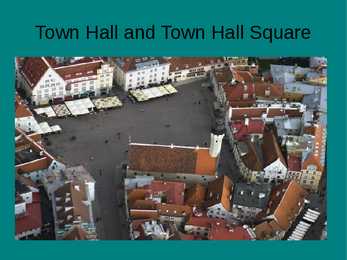
When something endangered the city, an alarm bell in the belfry was rung. The square Throughout the centuries, the Town Hall Square has been used as a market square and gathering place. The square in front of the Town Hall was used for trading even before the Town Hall was built. Celebrations as well as executions were carried out on the square. Today, the square is filled with outdoor cafés during the summer months; open-air concerts, handicraft and Middle-Age-themed markets are organized. In the winter, people are attracted to the Town Hall Square Christmas Market. There used to be a Vaekoda in the middle of the square but it got destroyed during the March bombing 1944. The ruins got demolished 1946.
the historic slum into a prestigious highclass neighborhood. The active community embodied by the Supilinn Society is committed to preserving the heritage. Tartu's large student population means that it has a comparatively thriving nightlife, with many bars, restaurants, and nightclubs. Annually, in the summer, Tartu hosts the Hansa Days Festival (Estonian: Hansapäevad) to celebrate the Hanseatic heritage under the motto "History lives" when the old town bustles with activity from handicraft markets and historic workshops to a jousting tournament.
13. viirutamine, viirutamistehnika-streaking 14. emailimine, emailivärviga katmine-enameling ? 15. graveerimine-engraving 16. papp-cardboard 17. elevandiluu-ivory 18. papüürus-papyrus 19. miniatuurkunst, miniatuurmaal-miniature painting 20. lõuend-canvas 21. õlivärvid-oil paints, oil colours 22. meremaal-seascape, marine painting ? 23. värvigamma, koloriit-colour, coulouring ? 24. (joonistamis)süsi-charcoal 25. käsitöö-handicraft 26. keraamika ja pottsepatöö-pottery 27. tikkimine, tikkimistöö-embroidery 28. linna(kujutav) maal- ? 29. akvarellid, vesivärvid-watercolours 30. guass-gouache 31. grafiit, grafiitpliiats-graphite, black lead ? 32. zanr, zanrimaal-genre ? 33. vaikelu, natüürmort-still-life 34. Romaani stiil-Romanesque 35. Gooti stiil-Gothic 36. graafika-graphic art, graphics 37. toomkirik, katedraal-cathedral 38
Information about past I got from trade literature: mainly books, but also from another research paper. To get information about modern people thoughts I carried out a survey on Internet, which got 127 answers from people aged 13-43. In addition, I interviewed one artist by e-mail. Also I used articles from newspapers and journals. The paper falls into two main chpaters. Both focus on comparing modern meanings to the old ones. First chapter talks about folk art and handicraft in general and is divided into two subchapters. First subchapter talks about the meaning of handicraft in past. Handicraft in past was very important for Estonians, because this was the only way to get clothes and tools. The main decoration for things were ornaments, which often had a certain meaning. The second subchapter talks about handicraft today. It came out that nowadays many young people do not deal with handicraft at all. Also using ornaments as decoration has fallen
● Jekateriina Church is one of the most beautiful apostolic baroque churches in Estonia ● Tallinna Gates, also called as Kuningavärav (King’s Gates) is a part of former medieval fortification system: once, this beautiful baroque gate used to mark the beginning of a postal road and now leads visitors to Pärnu beach district. ● Red Tower (Punane Torn) was the corner tower of Pärnu’s medieval defence wall. Serving as a “hot spot” for handicraft, the former court yard is a popular place for art fairs. In Pärnu there is plenty of sand, sun and water. And History is all around Pärnu. 3. About Pärnu Pärnu is a West-Estonian resort with well-established traditions that has held the title of ’s summer capital and heart-warming town for over ten years. Pärnu is also a former Hanseatic town and hosted the 30th International Hanseatic Days medieval festival in 2010. Population 1 1 1 1 1 1 1 1 2 2
Mountaineering-mägironimine Take up- alustama Photography-fotograafia Give up- loobuma Collecting works of art-kunsti kogumine Broke- murdma (rekordit) Breeding animals-loomade tõuaretus record-rekord Reading-lugemine Hols the record- hoiab rekordit Playing a musical instrument-muusikalise Goals/points- punktid inst, mängimine Scored- saavutanud Handicraft-käsitöö Won/lost- võitma/kaotama Exibition- näitus Beat-lööma/võitma Masterpiece-meistriteos Defeated- kaotanud/alistatud Portrait-portree Discus-kettaheide Abstract-abstranktne kunst Decathlon-kümnevõistlus Concert hall-kontsertimaja Draw- viik Etching-söövitama? Hurdle- tõke
culture Traditionally, Estonia has been seen as an area of rivalry between western and eastern Europe on many levels.The Estonian Academy of Arts (Estonian: Eesti Kunstiakadeemia, EKA) is providing higher education in art, design, architecture, media, art history and conservation while Viljandi Culture Academy of University of Tartu has an approach to popularize native culture through such curricula as native construction, native blacksmithing, native textile design, traditional handicraft and traditional music, but also jazz and church music. In 2010, there were 245 museums in Estonia whose combined collections contain more than 10 million objects.
· In July, the annual bikers reunion Jõgevatreff takes place this motorcycle and bikers event lasts for days and its culmination is a bike parade through the town. · The last Saturday in August completes the summer period with an annual garlic festival don't be intimidated by its name, there is plenty to see and do even if you are not a garlic enthusiast. Enjoy the fair and its concerts and buy local handicraft, home made gourmet food and hand made bread as souvenirs. · The festival year ends with the national poetry days, "Tähetund" (StarHour), dedicated to the Estonian poet, Betti Alver. Most Estonian actors say that Betti Alver poetry days were among their very first public performances. Põltsamaa Põltsamaa is the city of wine, bridges and roses. Põltsamaa Castle was started in 1272. In the course of centuries the fort suffered damage. In
He has his football training three times a week and he has been going there already 3 years. He collects football cards and his favourite player is ... . My brother has many posters and pictures of him. Skateboarding is one of his newest hobbies. He 'discovered' it last summer when we saw a boy doing tricks with his skateboard. So our parents gave him a skateboard for Christmas. He was really happy for that/ He was delighted. He doesn't like handicraft, which he thinks is boring. My friend loves to sunbathe, shopping and ice-skating. But above all she likes to shop, because then she can buy herself cool clothes and interesting and arty figures. She doesn't like football, because she isn't very sporty. In principle we all have hobbies, just that some people have one hobbie and some have completely different.
The square in front of Tallinn's Town Hall functioned as a marketplace for centuries, dating back to times even before the Town Hall itself was built. Through the years this served as a place of celebrations as well as executions. Today the square remains a cultural focal point for the city. In summer, it's filled with outdoor cafés and is home to countless openair concerts, handicraft fairs and medieval markets. In winter, an annual Christmas Market enchants the crowds on the square, as does the town's Christmas tree (a tradition whose roots stretch back to 1441), which stays up for a month or more. Town Hall Square has also become the traditional centre of the Old Town Days festival, a modern version of a medieval carnival. Traditions from the Middle Ages are kept alive here, including parades,
management and hotel service has a very important role. Construction and related fields like carpentry have also quite a number of students. My school is located on an island which has a strong seamanship traditions and small vessel building companies, Kuressaare Reginal Traingin Centre is the only vocational school in Estonia training boat builders. Other specialties are car repairing, business management, social work, information technology, handicraft and artistic design. My speciality is artistic design, which is 120 weeks of study, which makes the course 3 years long. Kuressaare Reginal Training Centre is one of only two schools in Estonia, where elementary school graduates can come to acquire the artistic development of the specialty. Through the course and students spare time, many cultural events, narrow circle of performances and exhibitions are done in the area by the students.
In 1481, ivan iia of runnian laid siege to the castle but could not take it. After the great northern war the russians revoked local autonomy until 1783, when in the course of the regency reforms of the empress catherine the great viljandi became a district town. This involved the re-establishment of town bylaws. The economic and political importance of viljandi started to increase. the population, after decreasing in population and wealth, started to rise again, as handicraft, trading, and cultural life were revived. The popular Estonian newspaper was founded in Viljandi in 1878. I like Viljandi. Sources Viljandi.-EE 10. Tallinn: Eesti Entsüklopeediakirjastus,1998, lk 420-422 http://www.viljandimaa.ee/turismiinfo/ http://www.viljandi.ee/ http://en.wikipedia.org/wiki/Viljandi http://www.7is7.com/otto/estonia/viljandi_castleruins.html
This kind of division is the source of the Setos' burning problems: the split-up congregations, location of properties and relatives on the other side of the state border. The Setos have preserved their original dialect, skills of cooking their traditional food, their beautiful and peculiar folk costumes. The most attractive decoration to go with the folk costume is the set of silver jewellery: numerous necklaces and a conic brooch worn by married women. The handicraft of Seto women is fine and colourful. Seto people are known for their original runic verse folk song - leelo. A Leelo choir consists of a chanter and the choir. The chanter is a good improviser. The verses recited by the chanter are repeated by the choir. One of the singers in the choir sings the kille - the highest pitch. The most outstanding chanters came to be called lauluimä (the mother of songs). The best chanters were able to recite 10 000 - 20 000 verses. The Seto folk dance is called
Klassi 2. lesanne: -sgitegemine ja toitlustamine chemistry-keemia math-matemaatika -tehniline joonistamine -sekreterit -kirjandus -geograafia -kehaline horticulture-aiandus pysics-fsika aesthetics- driving- book-keeping- English-inglise keel biology-bioloogia tractors- cattle breeding- knitting- welding-keevitamine bakery- construction- accountancy- computer studies-arvuti petus accountancy- computer studies- forestry-metsandusi Russian-venekeel music-muusika handicraft-ksit enterpreneurship-ettevtlus engineering- mechanisation-mehaniseerimine economics- busines and management- Estonian-Eesti keel history-ajalugu cars-autod plumbing- woodwork- sewing- carpentry-vaibandus german-saksakeel primary,elementary basic education is compulsory in estonia mandatory secondary vocational higher school final certifacate diploma library,restaurant,garage,workshop,canteen,hall,hostel,shool mainhouse,teacher's
which a available for children too. Watching TV can limit childrens imagination and also can effect their behavior in a negative way. On TV, there are also many movies, which present violence, but are not suitable and healthy to whatch for children, neither adults. TV is damaging a eyesight and I think that is the main reason that people should watch TV lower. In conclusion, I think that people should limit watching TV and spend their free time by reading, doing gardening, handicraft TELEVISIOON ON TÄNAPÄEVAL VÄGA POPULAARNE. KAS MAAILMAS ON KÕIGE SAGEDASEM TEABE SAAMINE. PEAAEGU KÕIGIL INIMESTEL ON JUURDEPÄÄS TELERILE. TELERI VAATAMISEKS ON PALJU NII EELISEID KUI KA PUUDUSI. ALATES ESIMESEST, ME TEAME, MIS TOIMUB ÜLE KOGU MAAILMA. ME TEAME ILMAENNUSTUST. ME NÄEME OLULISI SÜNDMUSI "ELUS", ERITI SPORDIÜRITUSI, NÄITEKS: JALGPALLIVÕISTLUSI, SUUSAHÜPPEID, TENNISEVÕISTLUSI JNE. TELEVISIOON ESITAB KA PALJU TEADUSLIKKE PROGRAMME JA LOODUSFILME
Mulgikapsad (stewed sauerkraut with barley groats), Estonian cheesecakes and kama (a roasted meal-mixture) have not lost their popularity. However, linen growers have now been replaced by cereal grains growers and many farms have specialised on raising sheep or horses. And as the song goes: "Mulgimaa it's a place where life is good. It's a land of vast woods, fertile fields and nature's charms, the home of prosperous Estonian farms..." Tourism and handicraft in Lõuna-Viljandimaa Lõuna- Viljandimaa captivates senses with its beautiful landscapes. Lõuna- Viljandimaa as we know it today stays in the heart of the historic Mulgimaa. Mulgimaa is the home of mountains, deep valleys and lakes, its natural axis is the beautiful old valley of Halliste. Southern Viljandimaa has been the homeplace of mulgi inhabitants who spoke their own dialect called mulgi language. The speakers of mulgi language can still be found in
In 1969, more than a hundred thousand participants gathered for the century anniversary of a national song festival and, in a spontaneous act of nonviolent resistance, sang this song. For fifty years, it was a musical statement of every Estonian's desire for freedom. http://www.blogto.com/events/3626 Pärnu Hanseatic Days 2008 June 27th 28th Pärnu prepares for the International Hanseatic Days of 2010 by holding handicraft fairs every summer. Traditionally, the Hanseatic Days are declared open by the Mayor who leads the colourful procession from the City Hall to the field of Vallikäär. Among the traders there shall be a stage in the site of the fair, where both singers and actors shall perform. A knights' tournament and several dance shows shall take place. http://www.visitparnu.com/index.php?id=789&L=1
about this topic. First hypothesis was that left-handed students have difficulties in classes because of left- handedess mainly in elementary and secondary school. Analysis of the questionnaire proved that in elementary school most of the children indeed have experienced some difficulties due to the left-handedness. However in the secondary school and high school there were about 19% of students who mentioned few problems. Vast majority were girls from secondary school who had problems with handicraft. Second hypothesis was that left- handedness doesn´t affect high school students. From all the twelfth grade respondents only one mentioned that sometimes it is uncomfortable to write because of the stance and space. Third hypothesis was that left-handed students take left-handedness as an advantage. Nearly half of the respondents admitted that they have felt an advantage over the right-handed students specially in sports. Also it was mentioned that some of them feel special in a good way.
Based on the practice of ecovillages and the ideas of outdoor learning, Reggio Emilia, waldorfpedagogics and the national curriculum a methodical material was created. The 4 principles of „Gaia Education”, the International ecovillage curriculum, were used as a base of the structure for the material. The material consisted of 4 parts: 1) Learning activities for teaching the subject community according to 4 aspects of Gaia Education (ecological, economic, social and worldview) 2) handicraft activities and testing possibilities of different elements 3) additional examples on how to support learning sustainability and community 4) examplatory plans of 2 study trips. In order to get feedback for the material from practicing teachers, an electronic survey II was carried out with 7 Estonian techers as an electronic structured interview. The survey was carried out in April 2012. The teachers assessed the material to be compatible with the national curriculum and the mentioned agegroup
nations of the West: from the middle of the thirteenth century Estonia, in essence, had the status of a colonial territory and Estonians had to live under the oppression of several foreign powers: Germany, Russia, Denmark, Poland and Sweden. Throughout this period the main channel of expression, national spirit, and the guardian of national identity was the indigenous Estonian folk art: runic poetry, songs, tales, tunes, dances, richly decorated handicraft, and folk customs. The ancient Estonian runic song stood quite apart from the European tradition: the core consisting of one-two phrases in small diapason (up to 5-6 tones), recitative performance, slow movements, a governing epic-lyrical mood with mostly stable rhythmic patterns, as a rule usually sung by women in one voice. In the second half of the 19th century Estonian folk song and folk poetry were displaying novel features. The end rhyme became dominant and
Viimati täiendatud 09.02.13 Maastikuarhitektuuri ajalugu 1 2010. a Morrisest inspireerituna tekkis teisigi kunstnike-käsitööliste kolooniaid, kes oma naiste-lastega asusid elama ja töötama mõnes maalilises Inglismaa külas. Hingasid värsket maa-õhku ja tundsid rõõmu looduse ilust. Need olid esimesed "rohelise liikumise" esindajad. Näiteks: Charles Robert Ashbees Guild and School of Handicraft, mis asutati 1888; 1902 koliti Chipping Champden'isse (The Cotswolds, 150 km Londonist loodes): 150 inimesest koosnev koloonia. Ashbee oli Morrise jünger. Metallitööd, mööbel, interjöörid, puunikerdused. "Simple Life". Ehitati ja restaureeriti maju. Ka aiakunstil oli Arts & Crafts liikumises suur osa, kuna see ühendas kõiki tähtsaid komponente: kunsti, loodust, käsitööd ja ajalugu. Morrisel oli oma kindel ettekujutus ideaalsest aiast, kuigi ta ise aiandusega palju ei tegelenud
 annaabi.ee