ICE AGE The earth is very old. During its long history there have been many changes in climate. Between one and two million years ago one of these changes took place the great Ice Age began. It grew colder in the Far North. More snow fell in the winter than could melt away in the summer. The snow grew deeper and deeper. It changed to solid ice. As more snow fell, the ice grew thicker. It began to move. Great sheets of moving ice, or glaciers, were formed. The edges of the sheets were pushed outward. At last the ice covered most of what is now Canada. And it spread southward into what is now the United States. The ice was probably a mile deep in places. It moved over hills and valleys, rivers and forests. It moved slowly perhaps only a foot a day. Millions of plants were buried by the ice. Many animals moved south. Among the animals able to stand
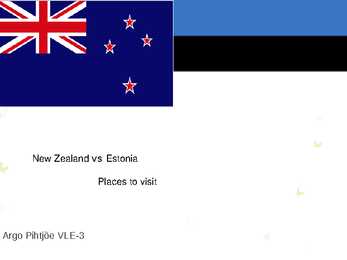
The park has an abundance of marine life, including marlin, whales, penguins and dolphins. Mt Cook National Park Mt Cook and surrounding area is an alpine park within the South Westland World Heritage area. Mt Cook, Mt Tasman and Mt Sefton. This glacier is New Zealand's longest and it has one of longest ski runs in the world. Top ten places to visit in New Zealand Westland National Park Famous for its two glaciers, Franz Josef and Fox glaciers. They are unique as they are the closest glaciers to the coastline of any in the world outside of the polar regions. Mountain range bigger in area than the European Alps. Tongariro National Park The park contains 3 active volcanos that are situated in a desert like landscape. Mt Ruapehu is the largest volcano and last erupted in 1995 and 1996. A conical volcano called Mt Ngauruhoe is located next to Ruapehu
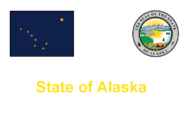
Pa c ific Yukon Oc e an British Columbia Facts about Alaska ● Juneau - the capital city ● 1,717,854 km2 - area ● 735,132 - population 20th century ● 38°- highest, -62° - lowest ● 112 different mammal and 492 bird species. ● 3 million lakes and over 3000 rivers. ● 100 000 glaciers Refrences ● http://en.wikipedia.org/wiki/Alaska ● http://www.adn.com/article/20140727/trail-monuments-m en-border-crews-cut-20-foot-swath-alaska-yukon-line ● http://alaskannature.com ● http://www.alaska.org Thanks for listening!
gases into the atmosphere. The average global temperature has increased by about 0.5 °C over the past century. Scientist expect it to increase up to an additional 3 °C over the next on 100 years. People who are living in cold places may have a chance to grow new crops if the climate gets warmer. At the same time in some parts of the world, people won't be able to grow the food they need. Global warming will make the sea level higher because it'll make the glaciers melt. When water expands in the ocean, it takes up more space and the level of the seas rise. If global warming gets worse, some kinds of plants and animals will become extinct. So as a result we have to slow down the global warming.
Greenland consists of an interior icecovered plateau surrounded by a mountainous, generally icefree rim. The interior ice cap is thickest near the centre of the island, where the maximum depth is estimated to be about 3,353 metres (11,000 feet). Underneath the ice cover are the ancient rocks of the Greenland Shield, which is geologically related to the Canadian Shield. Drainage is afforded mainly by the so called ice fjords, in which glaciers from the ice caps pass through valleys to the sea, where they form thousands of icebergs each year. The climate is extremely cold, although the south experiences a short summer. The mammals of Greenland are more American than European and include muskox, wolves, lemmings, and reindeer. The varieties of seal and whale, and most of the species of fish and seabird, are also American rather than European. Circumpolar animals, such as polar bears, arctic foxes, polar
Hello ladies and gentelmans Today I'm going to talk about how global warming will change the way we live in future. In fact durning the twentieth century global temperature went up by over 0,7 Celsius degree. It looks pretty small number but even slight Climate change leads to serious consequences. Firstly, global warming will cause that glaciers start to melt. And as a result, the water level will raise and cities and villages which are located near oceans and sees will be flooded. Secondly, if we don't stop global warming, we will bserve more examples of extreme weather such as heat waves, storm clouds, which may lead to floods, droughts and forest fires. Next conseqences of global warming is that oceans temperature will go up. It is likely that it will cause an increase in activity of hurricanes,
The poor living conditions of developing countries drive people to search food somewhere else. In addition to natural ways, humankind helps along to the process of desertification that eventually leads to global warming. The main reasons are the fast growth of the population and it's consequences too intensive animal raising and the arable lands that are made too fast for the nature to adjust. As I said before desertification eventually leads to global warming. Glaciers and permafrost have decreased dramatically on both side of hemisphere. In the future in the South-Europe the temperature in summers may rise so high that people will have to find temporary refuges in the mountains. I've thought about what should be done and I honestly don't know what to do to make the message clear to everybody, to people who actually have the power to make a difference. It comes to my mind that a difference can be made all together.
Republic of Chile is a country in South America occupying a long and narrow coastal strip wedged between the Andes mountains and the Pacific Ocean. Chile's unusual, ribbon-like shape -- 4,300 kilometres long and on average 175 kilometres wide -- has given it a hugely varied climate, ranging from the world's driest desert -- the Atacama -- in the north, through a Mediterranean climate in the centre, to a snow-prone Alpine climate in the south, with glaciers, fjords and lakes. The Pacific forms the country's entire western border, with a coastline that stretches over 6,435 kilometres. Chile expanded in the late 19th century, when it incorporated its northern and southern regions. Southern Chile is rich in forests and grazing lands and features a string of volcanoes and lakes. The southern coast is a labyrinth of fjords, inlets, canals, twisting peninsulas, and islands.
Spurr, west of Anchorage on the mainland. Geologists have identified Alaska as part of Wrangellia, a large region consisting of multiple states and Canadian provinces in the Pacific Northwest which is actively undergoing continent building. One of the world's largest tides occurs in Turnagain Arm, just south of Anchorage tidal differences can be more than 35 feet. Alaska has more than three million lakes. With over 100,000 Alaska has half of the world's glaciers. Alaska highest mountain is Mount Mckinley which is 6198 metres above the sea level. 4 Climate The climate of Western Alaska is determined in large part by the Bering Sea and the Gulf of Alaska. The temperature is somewhat moderate considering how far north the area is. The highest and lowest recorded temperatures in Alaska are both in the Interior. The highest is 37.8 °C. The lowest official Alaska temperature is -62.2 ° one degree above the
during low water, and Heinassaar is flooded in high water periods. The shores of Võrtsjarv are mostly low: swampy in the southern part, and sandy in the northern part; the eastern shore is higher. Despite its large surface area, the lake is shallow. The deepest place lies between the eastern shore and the island of Tondisaar along the submerged elongation of the riverbed of the Väike Emajõgi River. The lake depression is of preglacial origin but has somewhat been influenced by glaciers. On the eastern shore the Devonian sandstone bedrock is denuded along a stretch of several kilometres. This abrasion shore at Tamme is 3 - 8 m high and subjected to protection as a famous finding-place of fossil placoderm fishes. In the southern part the lake bottom is covered with a mud layer up to 5.5 m thick, which is gradually being replaced by sandy mud and sand in the direction of north; the mud is lying on the marl.
Fifth level Ottawa Capital 45°24N 75°40W / 45.4°N 75.667°W / 45 Largest city Toronto Capital, Largest City Since the end of the last glacial period, Canada has consisted of eight distinct forest regions, including extensive boreal forest on the Canadian Shield Canada has more lakes than any other country, containing much of the world's fresh water Geography There are also freshwater glaciers in the Canadian Rockies and the Coast Mountains Canada is geologically active, having many earthquakes and potentially active volcanoes, notably Mount Meager, Mount Garibaldi, Mount Cayley, and the Mount Edziza volcanic complex The volcanic eruption of the Tseax Cone in 1775 was among Canada's worst natural disasters, killing 2,000 Nisga'a people and destroying their village in the Nass River valley of northern British Columbia The eruption produced a 22
Ocean. It consists of two large islands, North Island and South Island, plus several smaller ones of which Stewart Island is the largest. North and South Islands are separated by the 32km wide Cook Strait. The total land area is 270,535 sq Km, about the size of Italy, the United Kingdom or the US state of Colorado. North Island is volcanically active with three active volcanoes. South Island has the high snow covered mountain peaks and glaciers of the Southern Alps, a range running almost 500Km along the Island. The longest river is the Waikato on North Island (425 Km), the largest inland stretch of water is Lake Taupo also on North Island (607 sq Km) and the highest point is Mount Cook on South Island (3754 m). Over 75% of New Zealand is above 200m. Land use is broken down to about: forested 30% - meadows and pastures 50% - agricultural and under permanent cultivation 15%
Reserves.. The biggest natural parks are Banff National Park, Gros Morne National Park of Canada, Wood Buffalo National Park of Canada and Prince Edward Island. I will tell you more about Banff National Park: Banff National Park is Canada's oldest national park, established in 1885 in the Rocky Mountains. The park, located 110-180 kilometres west of Calgary in the province of Alberta, encompasses 6,641 square kilometres of mountainous terrain, with numerous glaciers and ice fields, dense coniferous forest, and alpine landscapes. The Icefields Parkway extends from Lake Louise, connecting to Jasper National Park in the north. Provincial forests and Yoho National Park are neighbours to the west, while Kootenay National Park is located to the south and Kananaskis Country to the southeast. The main commercial centre of the park is the town of Banff, in the Bow River valley. Banff National Park is located on Alberta's western border with British Columbia
border with Canada, there are five big lakes, called ,,the Geat Lakes". Climate Pacific Ocean moderates west coast temperatures. Mild summers, cool winters, much rain on northwest coast. Warm and dry in summer, mild with some rain rest of the year on California coast. Inland Southwest mostly dry with warm summers and cold winters. Warm summers, cold winters, moderate precipitation on northeast and north-central but warmer. Alaska is extremely cold in winter and has spetacular glaciers. Hawaii is tropical. History Before Columbus came to the New World in 1492, the land were inhabited by Native Americans or Indians. After 1492, there was a struggle for land and domination in the New World. England defeated the Spanish navy in 1588. In 1607, it started its first successful colony in America, called ,,Virginia". That was where Captain John Smith met the beautiful Native american princess, Pocahontas. The colonies grew fast, they became the main colonies in the Americas
The neighbours of the United Kingdom are Iceland in the north-west, Norway in the east and France in the south. Britain also has many dependant territories which are scattered throughout the world and are the remains of the huge former British Empire. Today Britain assists them, but they may become independent whenever they wish. There have been some difficulties with some of the territories. Argentina has made claims to the Falkland Islands and Spain to Gibraltar. History When the glaciers retreated from Britain about 10,000 years ago, Stone-Age men started to inhabit the isles. The early Britons came across the land bridge which joined Britain to the continent. They were cave-dwellers at first. This way of life was replaced by the invaders from the Mediterranean lands. These men were the first farmers. In about 500 BC came the people whose homeland was near the Rhine River. These were the Celts. The Roman invasion began in 43AD. The Romans were highly organized conquerors.
midnight sun can be experienced for more days, the farther north one travels. At Finland's northernmost point, the sun does not set for 73 consecutive days during summer, and does not rise at all for 51 days during winter.(www.wikipedia.org) 3 Flora and fauna All terrestrial life in Finland was completely wiped out during the last ice age that ended some 10,000 years ago, following the retreat of the glaciers and the appearance of vegetation. Today, there are over 1,200 species of vascular plant, 800 bryophytes and 1,000 lichen species in Finland, with flora being richest in the southern parts of the country. Plant life, like most of the Finnish ecology, is well adapted to tolerate the contrasting seasons and extreme weather. Many plant species, such as the Scots Pine, spruce, birch spread throughout Finland from Norway and only reached the western coast less than three millennia ago
More disappointingly, the above- mentioned climatic changes, combined with heedless deforestation and noxious industrial emissions will not only affect animal life by changing important habitats but will also contribute to soil erosion and leaching. Thus, crop yields are expected to continue to drop in coming decades, resulting in widespread famine. Moreover, many regions will face dwindling water supplies as the result of shrinking glaciers and snowpack, evaporation, and the infiltration of salt water. Acute food and water shortages will presumably bring about manifold health problems. To summarise the situation, having no visible manifestation, global warming has been affecting the earth for quite a while now; the effects of climate change, while not immediate, are potentially catastrophic. I would describe global warming as `an environmental time bomb ticking away.' Dear Sir/Madam,
and concerts throughout the year. Tallinn has also been chosen to be Europe's capital of culture in 2011. The climate in Tallinn is characterized by a fairly cold winter, a cool spring with little precipitation, a moderately warm summer and a long and rainy autumn. Other larger cities: Tartu, Narva, Kohtla-Järve, and Pärnu. 14.History People have lived in Estonia since the Stone Age. Various tribes migrated to Estonia and settled in the country after the retreat of the continental glaciers about eleven thousand years ago. The settlement of Estonia is considered to be among the most permanent in the whole of Europe. Estonians resisted the assaults of Vikings, Danes, Swedes and Russians before the 13 th century. In 1346, the Danes, who possessed northern Estonia, sold the land to the Teutonic Knights of Germany, who already possessed Livonia (southern Estonia and northern Latvia). The Teutonic Knights reduced the Estonians to serfdom. The Estonian
bay is a rocky region called the Canadian Shield. Canada's largest geographical feature, it stretches east to Labrador, south to Kingston on Lake Ontario and northwest as far as the Arctic Ocean. The Shield is considered to be the nucleus of the North American continent and is made up of roots of ancient mountains. Its gneiss and granite rocks are 3.5 billion years old, three quarters the age of the Earth. Scraped by the advance and retreat of glaciers, the Shield has only a thin layer of soil that supports a boreal forest of spruce, fir, tamarack and pine. The region is a storehouse of minerals, including gold, silver, zinc, copper and uranium, and Canada's great mining towns are located there: Sudbury and Timmins in Ontario, Val d'Or in Quebec, and Flin Flon and Thompson in Manitoba. St. Lawrence Lowlands - The Great Lakes Southern Quebec and Ontario, the industrial heartland of Canada, contain Canada's two largest
phrase. 1. The Constitution of the United defines the fundamental rights of its citizens. (A) Essential (B) Selective (C) Enacted (D) Ample 2. Many organisms change their function from one season to another. (A) Diet (B) size (C) Role (D) Shape 3. Freshly cut wood must he completely dry before it can be used for construction. (A) Evenly (B) Haphazardly (C) Coarsely (D) Recently 4. Due to large deposits of debris left by glaciers, the midwestern plain of the United States is an extremely fertile area for farming. (A) Level (B) Rich (C) Spacious (D) Arid 5. When threatened, the opossum often feigns death. (A) Simulates (B) Withstands (C) Avoids (D) Confronts LESSON 15 durable favor gain generate halt handle harbor harmful insignificant mysterious perilous postpone promote reject substantial durable adj. something that lasts a long time n
 annaabi.ee