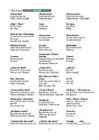
Cantemos todos juntos Let's sing together, con distinta voz with different voices, y un solo corazón and only one heart. ¡Viva España! Long live Spain! desde los verdes valles From the green valleys, al inmenso mar, to the immense sea, un himno de hermandad a hymn of brotherhood. Ama a la patria Love the Fatherland, pues sabe abrazar, which knows how to embrace, bajo su cielo azul, below its blue sky, pueblos en libertad people in freedom. Gloria a los hijos Glory to the sons que a la Historia dan who have given to history justice justicia y grandeza and greatness, democracia y paz. democracy and peace. KATALOONIA HÜMN
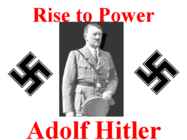
the idea of German nationalism. • Also received first taste of politics Military Service Adolf left Austria at the age of 24 to avoid mandatory military service that was required of all men. But he did sign up for military service at the start of WW I. He joined a Bavarian unit of the German Army. This is a picture of Hitler listening to an enlistment speech. World War I • Excited to fight for Germany. • Found a home fighting for the Fatherland. • Highest rank held was corporal. • Was a regimental messenger, not an easy job at all. Military Record • Was awarded the Iron Cross twice. (5 medals overall) • Highest military honor in German Army. • Single handedly captured 4 French soldiers. • Blinded by gas attack towards end of war. German Loss in WW I • Hitler was devastated when he heard the news of the German surrender. • He was appalled at the anti-war sentiment among the German civilians
gave people confidence and hope for staying alive while war. Last writer I am going to talk about is Lydia Koidula. She lived 1843-1886 and is probably the most important writer in Estonia's history. Her name in translation means Lydia of the Dawn and she is often being referred to as Koidulaulik Singer of the dawn. One of her most famous work is "Emajõe ööbik" (Nightingale of the Emajõgi) that was written in 1867. She wrote a lot about patriotism and loving our fatherland. She also started building a library which was a pretty big thing because it was time when it was weird for woman to do such thing. She had a really big role in Estonia becoming independent. She reminded us to stay strong no matter what. Her poems reminded us and remind us these days too, that we always have to love our fatherland. She didn't die in Estonia but her remains were brought to Estonia later. There are also many things made for Lydia's memory
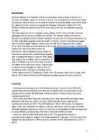
Inlanders appreciate our scenic contrasts on the peninsulas and there are also about 1,500 islands in Estonia. The biggest island is Saaremaa where you can admire the beauty of Kuressaare Castle and Kaali meteorite crater. The flag of Estonia is really simple but beautiful. There are only 3 colours blue, black and white. The national flower is the cornflower and the national stone is limestone. In Estonian coat of arms there are 3 lions. The national anthem is ,,My Fatherland, my Delight and Joy". The melody of our national anthem is the same that of the national anthem of Finland. Estonians hold up their traditions. My country is famous for its Song and Dance festivals which are held in every 4 years. At Christmas, every year we eat the same Christmas food the blood sausage and sauerkraut. The national food of Estonia is kama. It is finely milled flour mixture. In addition, Estonians have also invented Skype. The climate in Estonia is temperate
wage in Estonia is 913. Average net income is 717 euros. Unemployment rate in Estonia is 13.3 % National symbols of Estonia: Estonian flag represents the republic of Estonia. It is a blue-black-white 105x165cm rectangle. The current coat of arms of Estonia is a golden shield which includes three slim, blue lions in the middle, with oak branches along the side of the shield. The heraldic lions of the coat of arms are the most ancient of Estonia's symbols. ,,My Fatherland, My Happiness and Joy" was adopted as the national anthem of the Republic of Estonia in 1920, and again in 1990. The lyrics were written by Johann Voldemar Jannsen and are set to a melody composed in 1848 by Frederik (Friedrich) Pacius. In addition to the three main state symbols , Estonia has chosen her own national flower(Cornflower) and national bird(barn swallow). Estonia even has her own national stone(limestone) and national fish(Baltic herring), which seem to be a rarity among other
Estonia Tjorn Treu KP-31 Information · Area- 45,227 km2 · Population- 1,282,963(2011 july) · Location- Baltic Region of Northern Europe · Capital- Tallinn · Main cities- Tallinn,Pärnu,Tartu,Narva · Official Language- Estonia · Political structure- democraic republic National symbols Flag- Coat of arms- Anthem-"My Fatherland, My Happiness and Joy,, Plant-cornflower Bird-chimney swallow Stone-slate Tree- Oak History DATES Independence Day (Iseseisvuspäev) - February 24 May Day (kevadpüha) - May 1 National Flag Day (Eesti lipu päev) - June 4 Victory Day (võidupüha) - June 23 St. John's Day (Jaanipaev) - June 24 Day of Restoration of Independence (taasiseseisvumispäev) - August 20 history EVENTS Viljandi Folk Music Festival - July Ollesummer (Beer Summer) July
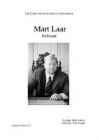
postkommunilikust poliitilisest ja majanduslikust madalseisust nong reformide kaudu muutnud Eesti üheks maailma dünaamiliseima majandusega riigiks. AVALDATUD KIRJANDUS Mart Laar on kirjutanud palju raamatuid nagu näiteks: Country Study Wan in the Woods: Estonia's struggle for survival. The Challenge of Europe Book about Jakub Hurt Second Estonia:Rebirth of Estonian Inbependece History of Estonia in Biographies:101 Important Estonians Protecting the Beauty og Fatherland Estonian war on Inbependece and Great Britain Back to the Future: 10 years of freedom in Central Europe Das estnische Wintschaftswunder Estonia: Little Country that Coluld Estonia's New Beginning Awakening Emajõgi Sinimäed Four short pieces on Estonian history Otto Tief's Government Neid raamatuid on tõlgitud paljudesse teistesse keeltesse Selle referadi kirjutamine andis mulle palju uusi teadmisi Mart Laari kohta. Ma
Lessons for the future Education seems to be in government's, media's and people's spotlight all the time. Times change and education, as one of the most important areas of our society, needs constant reforming. Nowadays, the main focus seems to be on subjects like maths, physics, chemistry etc. because of current IT-era demands more knowledge in those regions than in humanities. I agree that Estonia's government's steps towards making maths and physics our school- system's top priority is quite right, but I think that there can be a lot more done to improve our educational structure. I find that Estonian schools should pay more attention to teaching our children current state in our political landscape. Kids, who go to school, are our future and soon-to-be full- right voters in national elections. They will become old and independent enough to be a part of deciding process over their coun...
decorations and all of them were granted with free education until their graduation from university. A statue was erected to all of the pupils from the schools in Tallinn who fell in battle. The statue is situated in the schoolyard of Reaalkool and it is named "Reaali poiss" which can be translated into English as the Boy from Reaalkool. (point to the picture of the statue) On the statue are Horatio's words: "What joy, for fatherland to die!" Our school has the tradition of visiting this statue and also reading out loud all the names of the boys from our school, who deceased in the war, during the Independence Day assembly.
El acero aprestad y el bridón; lend your swords and bridle; y retiemble en sus centros la tierra and let the earth tremble at its center Al sonoro rugir del cañón. upon the roar of the cannon. Ciña ¡oh patria! tus sienes de oliva Your forehead shall be girded, oh fatherland, with olive De la Paz el arcángel divino, garlands Que en el cielo tu eterno destino by the divine archangel of peace, Por el dedo de Dios se escribió. For in heaven your eternal destiny Mas si osare un extraño enemigo has been written by the hand of God. Profanar con su planta tu suelo,
but allowed for a six-month transitional period before making the final decision. President Gorbachev was powerless to prevent Estonia to become independent. Rapid international recognition of Estonia as a sovereign state, followed by admission to the United Nations. In June 1992, Estonia got its own currency, the Kroon, and a new post-Soviet constitution. The constitution was first put to the test in September 1992. The legislative elections produced an inconclusive result. Isamaa (Fatherland Alliance) formed a coalition government with two other parties; party leader Mart Laar became premier. Laar is acknowledged as probably the most successful Politian in Estonia, taking much credit for guiding Estonia through major political and economic changes. 3 Culture The culture of Estonia incorporates indigenous heritage, as represented by the
tasakaalus, aga kogu populatsioon kokku pole. gene flow (geenivool) – alleelide liikumine ühest populatsioonist teise (nt õietolmu levik tuulega). ka suhteliselt väike arv „sisserännanuid“ võib viia populatsioonide geneetilise ühtlustumiseni, ka ilma selektsioonita. 3. Liigiteke, liikide säilumine liigitekke moodused biseksuaalsete liikide puhul: 1) allopatriline – geograafiliselt lahkuviimine [allos – other; patris - fatherland] a. ilmselt põhiline liigitekke moodus 2) parapatriline – külgnev [para – beside] a. tavaliselt eristatav hübriidne tsoon 3) sümpatriline – olemasoleva liigi populatsiooni sisene [sym – with] a. reproduktiivne isolatsioon tänu nt ajalisele barjäärile. või nt host shift –taimpatogeensete putukate peremeesliigi vahetumine
is why he went to Pompeii for an expedition, in order to best represent the classicism requirements. David painted carefully all the contours and forms of the human body, because he started to imitate Antique sculptures. Moreover, David and Classicism in general were not limited to only mimicking the external form of the Antique, but also the plot was often borrowed from the Antique literature or mythology. Best suited were the subjects that glorified bravery, loyalty, love for the fatherland and other virtues. Paintings were supposed to be instructive and fight against vices. (Leesi, 2003, p.115) As a matter of fact, the whole life of Jacques-Louis David was somehow connected to political change and therefore David was left with no other choice than to be a part of the French Revolution. In 1780 David returned to Paris and a few years later he exhibited his masterpiece Oath of the Horatii in the Salon. The Salon was a place where all the great men
1929-1933. In Estonia it was paralleled by a political crisis. The struggle between several political parties for power led to frequent changes in government, and to instability. To avoid the possibility of Vabadussõjalaste Liit (Estonian Independence War Veterans’ League) seizing power, the Head of State Konstantin Päts enacted a state of national emergency in March 1934. The parliament was dissolved, all political parties disbanded, and to replace them Isamaaliit (Fatherland League) was founded. It was a relatively mild authoritarian regime, yet it cannot be considered a total dictatorship. 1 The “official nationalism” with its corporative nature was criticised by intellectuals. The Estonian Writers’ Association, however, supported the steps taken by the government. Social life stabilized and the economic situation improved. Eesti Raamatu Aasta (Year of the Estonian Book) in 1935 was a great national
 annaabi.ee