Leidsid 33 sarnast õppematerjali, mis on seotud failiga "Estonia". Need materjalid aitavad sul teemat sügavamalt mõista.
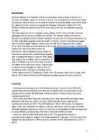
land, forest, europe, baltic, north, river, tall, west, country, these, species, lakes, peipsi, christmas, holiday, northern, finland, russia, other, often, cover, forests, protected, such, rich, than, there, fish, rare, island, summer, prime, symbols, blue, republic, region, south, east, across, sweden, spring, autumn, winter, highest, fact, typesEstonia Topic Tallinn 2007 2 List of Contents page Facts and figures 3 Geography 3 Climate 3 Nature 4 History 5 Economy 6 Culture 6 Biggest towns 7 Language 8 3 Facts and figures The Republic of Estonia is a small country. Covering only 45, 228 sq km it is slightly bigger than Denmark, Belgium or Switzerland. Estonia's population is under 1.4 million. The official language is Estonian but since very many Russians live here Russian is also wide spread. The capital of Estonia is Tallinn. The currency used in Estonia is Eesti kroon. The Estonian national flag is blue-black-white. It was originally the flag of the Estonian Students' Society. The flag was first consecrated in Otepää Church in 1884. For a while,
Tallinn 2007 FACTFILE Area: 45 228 sq km Poplulation: under 1.4 million Capital: Tallinn Language: Estonian Currency: Eesti kroon (EEK) Main religion: Lutheran National holiday: 24 February (anniversary of the republic) National flower: Cornflower National bird: Barn Swallow National stone: Limestone LOCATION The Republic of Estonia is the northernmost and smallest of the three Baltic States. It is located on the eastern shores of the Baltic Sea in the north east of Europe. To the east the country borders Russia. Latvia is the countries neighbour to the south. From the west the coast of Estonia is washed by the Baltic Sea and from the north by the Gulf of Finland. The length of the coastline is approximately 3 800 km. The longest distance from east to west is 350 km, while north to south Estonia stretches 240 km. THE NAME The name EESTI was apparently derived from the word AISTI, the
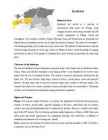
Estonia Where it is? Republic of Estonia is a state in the Baltic region of Northern Europe .It is bordered to the north by the Finland, to the west by the Baltic Sea, to the south by Latvia (343 km), and to the east by lake Peipus and Russia (338.6 km). Across the Baltic Sea lies Sweden in the west and Finland in the north. Towns Tallinn is the capital and the largest city of Estonia. It lies on the northern coast of Estonia, along the Gulf of Finland. There are 33 cities and several town-parish towns in the country. In total, there are 47 linna, with "linn" in English meaning both "cities" and "towns". More than 70% of the population lives in towns. History • Estonia was settled near the end of the last glacial era, beginning from around 8500 BC
Tallinn English College Topic Estonia Tallinn 2008 1. Introduction Estonia is a small country about the size of Switzerland, or New Hampshire and Massachussetts combined. Estonia is named after the people called "Ests" who lived in the region in the 1 st century AD. The Republic of Estonia is one of the three countries commonly known as the "Baltic States". The other Baltic States are Latvia and Lithuania. 2. Geographical position Estonia is situated in northeastern Europe. Estonia is bounded on the north by the Gulf of Finland, on the east by Russia, on the south by Latvia and on the west by the Baltic Sea. In the north it borders on Finland. The coastline of the Baltic Sea in Estonia is characterized by numerous gulfs and bays, the biggest of them being the Gulf of Finland, the Gulf of Riga and the Gulf of Pärnu. Bays include the
Estonia lies on the eastern shores of the Baltic Sea on the level northwestern part of the rising east European platform. Estonia is a flat country covering 46 226 square kilometers.Estonian's neighbours are Finland, Sweden, Latvia and Russia. Estonia is rich in islands. The two largest are Saaremaa and Hiiumaa . Saaremaa is famous for its big meteorite crater called Kaali and Hiiumaa is famous for its nature and plants. The countries highest point Big Egg hill ( Suur- Munamägi) reaches 318 meters above sea level. Estonia has many uplands too. The uplands are: Pandivere upland, Otepää upland, Vooremaa upland, Karula
Introduction Estonia, officially the Republic of Estonia (Estonian: Eesti or Eesti Vabariik) is a country in the Baltic region of Northern Europe. It is bordered to the north by Finland across the Gulf of Finland, to the west by Sweden across the Baltic Sea, to the south by Latvia (343 km), and to the east by the Russian Federation (338,6 km). The territory of Estonia covers 45,227 km² and is influenced by a temperate seasonal climate. The Estonians are a Finnic people closely related to the Finns, with the Estonian language sharing many similarities to Finnish. The modern name of Estonia is thought to originate from the Roman historian Tacitus, who in his book Germania (ca. AD 98) described a people called the Aestii
Project ESTONIA MAP OF ESTONIA Southern Viljandimaa The southern part of Viljandi county catches the eye with its sublime scenery. The area today lies in the very heart of the historical Mulgimaa the home of hills, deep valleys and lakes brought together by a beauty spot Halliste primeval valley. According to several folk tales, it is also in these valleys, woods and bogs that Old Nick found refuge.The great variety displayed in the nature is also reflected in the local cultural heritage. At the beginning of the 19th century growing linen spread and became the basis of the legendary wealth of Mulgi farms. The ancient barn-dwellings and decaying manor houses are the mute witnesses of those times. The riches and cultural heritage of Mulgimaa owe to the diligence and tenacity of the local people. Village handicraftsmen
Estonia. Estonia, officially the Republic of Estonia is a country in Northern Europe. It is the smallest of the three Baltic countries. Estonia has land borders with Latvia (339 km) to the south and Russia (229 km) to the east. It is separated from Finland in the north by the narrow Gulf of Finland and from Sweden in the west by the Baltic Sea. Estonia has been a member of the European Union since May 1, 2004 and of the NATO since March 29, 2004. The area of Estonia is about 45000 square kilometres and the population is about 1.4 million people. The capital of Estonia is Tallinn and the official language is Estonian. The currency is Eesti kroon. The main religion is Lutheran. Anniversary of the republic is celebrated on February 20. The national flower is cornflower, national
Estonia is a small country in Northern Europe with an area of about 45 000 sq km. The country's climate is determined by the proximity of the Atlantic Ocean. The summer temperatures are a little lower than the average of that latitude, but the winters are considerably warmer. As a part of the East-European Plain, the country has a rather flat surface. The highest and most topographically variagated region in Estonia is in the south-eastern part of the country. The Sakala Upland plains offer contrast to the hills of Ottepää, Karula and Haanja. At 318 metres, Suur Munamägi ('Great Egg Hill') is not only the highest point in Estonia, but of all the Baltic countries. The country has 3974 km of coastline, while the land border, in comparison, is only a mere 633 km. The coast varies from limestone cliff in the north to sandy beaches in the west. Most of Estonia's many islands belong to the West Estonian archipelago. The largest islands
Estonia is located in the Northern Europe and is a state in the Baltic region It is bordered to the north by the Gulf of Finland, to the west by the Baltic Sea, to the south by Latvia, and to the east by Lake Peipus(Peipsi) and the Russian Federation.Estonia also has a number of islands: Saaremaa and Hiiumaa, which are the most known are also the two biggest ones.The territory of Estonia covers 45,227 km2. There is 3,794 kilometers of coastline marked by numerous bays, straits, and inlets. The Republic of Estonia is divided into fifteen counties: Hiiumaa, Saaremaa, Läänemaa, Harjumaa, Lääne-Virumaa, Ida-Virumaa, Tartumaa,
.....................9 12. References....................................................................................................10 Introduction I chose finland because there are friendly people and beautiful nature. Finland is bigger than Estonia. There lives over 5 milj. people. Finland capital is Helsingi and there lives about 2 milj. people. Highest top is 1328m. Finland is bordersed with Sweden to the west, Russia to the east and Norway to the north. It is the eight largest city in Europe. Most Finns speak Finnish. The second language is Swedish. Finland is rated the sixth most peaceful country in the World. In Finland there are more than 60000 lakes. Capital: Helsinki Area: 338145km2 Population: 5200000 Language: Finnish, Swedish Currency: Euro (EUR)
Estonia Estonia is a small country in Northern Europe with an area of about 45 000 sq km. As a part of the East-European Plain, the country has a rather flat surface. The highest and most diverse region in Estonia is in the south-eastern part of the country. At 318 metres, Suur Munamägi is not only the highest point in Estonia, but of all the Baltic countries. There are about 1500 islands in Estonia, the biggest of which being Saaremaa and Hiiumaa. Sixty-four species of mammals have been recorded in Estonia, three of them have been introduced: the racoon dog, the American mink and the muskrat. A couple of species have been re-introduced The European beaver, who was hunted to extinction by the end of the 19th century. A vital population of them now exists in Estonia once again. Another re- introduced species is the red deer.
Estonia Estonia lies in the North-Europe and it is the member of European Union. In the north, Estonia is washed by the Gulf of Finland, in the west by the Balic Sea, in the south there is Latvia and in the east there lies Russian Federation. The territory of Estonia is 45,227 km 2 and it is divided into 15 counties. The capital and also the largest city in Estonia is Tallinn. The population is not large only 1.3 million people. The official language is Estonian. Although we have only few speakers in word terms, we are proud of our language which is considered to be one of the world's most beautiful ones
Estonia Estonia, officially the Republic of Estonia, is a state in the Baltic region of Northern Europe. It is bordered to the north by the Gulf of Finland, to the west by the Baltic Sea, to the south by Latvia, and to the east by Lake Peipus and Russia. Across the Baltic Sea lies Sweden in the west and Finland in the north. The territory of Estonia covers 45,227 km 2, and is influenced by a humid continental climate. The Estonians are a Finnic people, and the official language, Estonian, is a Finno-Ugric language closely related to Finnish, and distantly to Hungarian and to the Sami languages. The population of Estonia is 1.5 million. Of this number 62 per cent are Estonians. The geography of the land is surprisingly varied. Islands make up 9,2 per cent of Estonian’s total
Estonia Location Estonia officially the Republic of Estonia is a state in the Baltic region of Northern Europe. It is bordered to the north by the Gulf of Finland, to the west by the Baltic Sea, to the south by Latvia and to the east by the Lake Peipsi and the Russian Federation. Across the Baltic Sea lies Sweden in the west and Finland in the north. Size and population The territory of Estonia covers 45,227 km2 Estonian population is 1.34 million Largest cities of Estonia 1. Tallinn (Estonian capital city) 2. Tartu 3. Narva 4. Kohtla-Järve Tallinn Tartu Narva Kohtla-Järve Largest islands of Estonia There are 1521 islands. 1. Saaremaa 2. Hiiumaa 3. Muhu 4. Vormsi Hiiumaa Saaremaa Vormsi Muhu Longest river of Estonia 1. Võhandu 2. Pärnu 3. Põltsamaa
curative sea-mud and holidaymakers are its characteristic features. Pärnu as a summer resort dates back to the 19th century. The first bathing institution started operations in Pärnu in 1838. Pärnu also offers great year-round opportunities for organizing meetings and conferences in addition to relaxation and treatments for restoring one's health. Tori is known for the Estonian Tori Horse, bred at a local stud farm founded in 1856. Tori Hell is a sandstone cave on the Pärnu River. Kurgja is the location of the Farm Museum of Carl Robert Jakobson, a leader of the national movement at the end of the 19th century. The Nigula Nature Reserve preserves the peat-bog ecosystem within its territory of 2771 hectares. Häädemeeste is one of the most important yacht-building centers in Estonia and also famous for its mineral water. The Island of Kihnu is the biggest island in the Gulf of Riga. There are some peculiarities in local dialect, dressing, folk songs and wedding customs
Estonia Anna-Kaisa Adamson Estonia, officially the Republic of Estonia, is a state in the Baltic region of Northern Europe. It is bordered to the north by the Gulf of Finland, to the west by the Baltic Sea, to the south by Latvia, and to the east by the Lake Peipsi and the Russian Federation. The territory of Estonia covers 45,227 km2. The capital, Tallinn, has around 400000 inhabitants.Tallinn's ability to blend medieval architecture with Scandinavian modernity with all the comforts you'd expect from a modern, competitive and innovative capital. Estonian language, does not belong to the Indo-European group. It belongs to the
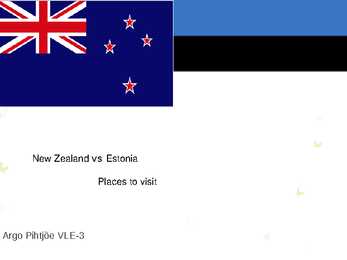
Zealands premier tourist destinations. The home of bungee jumping and jet boating. Queenstown is also one of the southern hemispheres premier skiing destinations Rotorua Famous for its volcanic activity. Every reserve has spectacular examples of geysers, boiling pools, hot springs, boiling mud, volcanic terraces, and craters. Mt Tarawera nearby volcano offers spectacular scenery including superb views inside the rim of the volcano Best area in the country to experience and learn about Maori Culture. Top ten places to visit in New Zealand Bay of Islands Bay of Islands is the finest maritime park in New Zealand. There are about 150 islands. The park has an abundance of marine life, including marlin, whales, penguins and dolphins. Mt Cook National Park Mt Cook and surrounding area is an alpine park within the South Westland World Heritage area. Mt Cook, Mt Tasman and Mt Sefton.
ESTONIA ·Republic of Estonia is a country in Norhern Europe. Our president is Toomas Hendrik Ilves ·Territory of Estonia is 45,227 ( square kilometer) km² ·Population is 1.4 million. Estonia is one of the least-populous members of the European Union. ·The capital and largest city is Tallinn wich is in North-Estonia ·We are special because we have own language estonian ·Estonia is bordered to the north by the Gulf on Finland, to the west by the Baltic Sea, to the south by Latvia and to the east by Russian Federation ·Estonia is divided into 15 counties (maakond) ·In Estonia are 33 cities and several town-parish towns in the country. More than 70% of the population lives in towns. ·Estonia has summer capital it's Pärnu, autum capital it's Türi, winter capital it's Otepää ·The Estonia Theatre is an opera house and concert hall in Tallinn . It was built on 1913
Topic Estonia, Tallinn The Republic of Estonia is the northernmost of the three Baltic States on the eastern shore of the Baltic Sea. To the east Estonia borders on Russia and Lake Peipsi and on the south on Latvia. The area of Estonia is 45 100km2, its coastline is 774km long. The geography of the land is surprisingly varied. Islands make up 9,2 per cent of Estonian's total territory, the largest islands are Saaremaa, Hiiumaa and Vormsi. The highest point is Suur Munamägi, which is 317m high. Estonia has a surprisingly mild climate for an area so far north. Sea winds keep the weather from becoming very cold or hot. The population of Estonia is 1.5 million. Of this number 62 per cent are Estonians. Estonians speak the Estonian language, which is closely related to Finnish.
Tartu Tartu is the second largest city of Estonia. In contrast to Estonia's political and financial capital Tallinn, Tartu is often considered the intellectual and cultural hub, especially since it is home to Estonia's oldest and most renowned university. Situated 186 km southeast of Tallinn, the city is the centre of southern Estonia. The Emajõgi river, which connects the two largest lakes of Estonia, crosses Tartu. The city is served by Tartu Airport. Tartu is also the seat of the Estonian University of Life Sciences, the Baltic Defence College, Estonian Aviation Academy , and the Estonian Ministry of Education and Research. Other notable institutions include the Supreme Court of Estonia (re-established in Tartu in autumn 1993), the Estonian Historical Archives and Estonian national theatre Vanemuine.
Estonian geography The territory of Estonia covers 45,227 km2. Estonia is situated in the Baltic Region of Northern Europe. It is bordered to the north by the Gulf of Finland, to the west by the Baltic Sea. Its neighbor countries are to the south Latvia, to the east Russia, to the north and over the Gulf of Finland, Finland and to the west and over the Baltic Sea, Sweden. Most of the lowland areas are in the middle of Estonia. Average elevation reaches only 50 meters and the country's highest point is the Suur Munamägi in the southeast at 318 meters. There is 3,794 kilometers of coastline marked by numerous bays, straits, and inlets. The number of islands and islets is estimated at some 1,500. Two of them are large enough to constitute separate counties: Saaremaa and Hiiumaa. A small, recent cluster of meteorite
Topic Australia Introduction Many people know Australia as the land down under because it is the only continent except for Antarctica that is all on the southern hemisphere. Its name means ,,Southland". The official name of the country is the Commonwealth of Australia. It's capital is Canberra. Australia is the sixth largest country in the world but the smallest continent. Australia has 6 states and 2 territories (New South Wales, Victoria, Tasmania, Queensland, Western Australia , South Australia, The Australian Capital Territory and the Northern Territory). The Australian people are culturally the same as the Anglo Americans. There also live aborigines. Aborigines are the ancestors of the people. Like the US and Canada, Australia was an English speaking colony of Great Britain. Today
Estonian cities Tallinn is the capital and largest city of Estonia. It occupies an area of 159.2 square kilometers with a population of 413,000. It is situated on the northern coast of the country, on the banks of the Gulf of Finland, 80 km south of Helsinki, east of Stockholm and west of Saint Petersburg. Tallinn was founded in the 12th century and has been under the rule of Denmark, Sweden, and Germany as well as Russia, and all left their mark on the city's architecture. It is one of the best preserved medieval towns in northern Europe, and makes a beautiful impression from the sea, with its ancient city walls, church spires, and red-tile roofed homes. Tallinn has previously been named as Kolõvan, Lindanise and Reval.
Holidays, Festivals, Cultural events TALLINN - If you're looking for entertainment in Estonia this summer, you are really spoiled for choice. Festivals and events dedicated to the consumption of beer are a lot of fun, but if you want to get the true feel of the country, you need something a little more ethnic. Like a town fair. Just as July becomes August, the seaside town of Haapsalu will host a grand spectacle of rural Estonian entertainment. The White Lady Days is a summer celebration filled with amusement for all the family. Held in and around the remains of the Teutonic-knights-era castles, the fair combines enchanting medieval legends with modern countryside charm to create a comprehensive experience of Estonia beyond the big cities.
Estonia officially the Republic of Estonia, is a country in the Baltic region of Northern Europe. It is bordered to the north by the Gulf of Finland, to the west by the Baltic Sea, to the south by Latvia and to the east by Russia. Across the Baltic Sea lies Sweden in the west and Finland in the north. The territory of Estonia covers 45,227 km2, and is influenced by a humid continental climate. Estonia is a democratic parliamentary republic divided into fifteen counties, with its capital and largest city beingTallinn. With a population of 1.3 million, it is one of the least-populous member states of the European Union. The Estonians are a Finnic people, and the official language, Estonian, is a Finno-Ugric language closely related to Finnish
About Estonia Estonia, officially the Republic of Estonia is a country in Northern Europe. Estonia has land borders to the south with Latvia and to the east with Russia. It is separated from Finland in the north by the Gulf of Finland and from Sweden in the west by the Baltic Sea. Average elevation reaches only 50 meters and the country's highest peak is the Suur Munamägi in the southeast at 318 meters.Estonia boasts over 1,400 lakes. Most are very small, with the largest, Lake Peipus, (Peipsi in Estonian) being 3555 km². There are many rivers in the country. The largest are the Võhandu (162 km), Pärnu (144 km), and Põltsamaa (135 km). Estonia also boasts numerous bogs, and 3794 kilometers of coastline marked by numerous bays, straits, and inlets.
The Republic of Estonia Estonia lies on the shores of the Baltic Sea. Its nearest neighbours are Finland, Sweden, Latvia and Russia. The total are of Estonia is 45,215 square kilometres. Estonia is one of the most sparsely populated countries in Europe. It has population neraly 1.4 million. There are lot of bays and peninsulas along the coast of Estonia.It has about 1,200 islands, the largest of which are Saaremaa and Hiiumaa. Nort-estonia is relatively flat and low-lying. There is a nice coastline here. Sout- estonia is hilly, but there are no high mountains in Estonia. The highest point is Suur-Munamägi, is only 318 meters above sea level. The largest industrial urban areas are in East-Estonia and there are
The Republic of Estonia Estonia officially the Republic of Estonia is a country in the Baltic region of Northern Europe. It is bordered to the north by Finland across the Gulf of Finland, to the west by Sweden across the Baltic Sea, to the south by Latvia and to the east by the Russian Federation. The territory of Estonia covers 45,227 km² and is influenced by a temperate seasonal climate. Estonia is a democratic parliamentary republic and is divided into fifteen counties. The capital and largest city is Tallinn. With a population of only 1.4 million, it is one of the least- populous members of the European Union. Estonia was a member of the League of Nations
Topic Australia Tallinn English College 2006 Australia 1 . Introduction The name Australia is derived from the Latin Australis, meaning of the south. In land area, Australia is the sixth largest nation, its territory is 7,686,850 sq km and its population reaches today over 20,5 million people. It is the only nation to govern an entire continent and its outlying islands. Australia's capital is Canberra, the only city with its own territory. It was built in the early 1900s just to be the capital. The official language is English and the official name of Australia is the Commonwealth of Australia.
GEOGRAPHY Estonia lies of the eastern coast of the Baltic sea. Total area of Estonia is approximately 45000 square kilometer and the population is about 1.5 million . Estonia is one of the most sparsely populated country in Europe. With 35 people per square kilometer. Nearly 1/3 of the nation live in the capital Tallinn. Along the coast of Estonia lies many bays and peninsulas. Lots of islands lie off the west- and north coast. The largest of them are Saaremaa and Hiiumaa. Geographically Estonia can be divided into 4 parts: North-, South-, West-, and East-Estonia. North-Estonia is relatively flat. Here is a nice coastline with coves, capes and a high coast. South-Estonia is more hillier, but there aren't any mountains or mountain ranges. The highest peak in Estonia is Suur Munamägi and its 318m above sealine. The largest industrial areas are situated in East-Estonia. There are beautiful
Tallinn English College English Sergo Vainumäe 9A TALLINN Report Supervisor: Inge Välja Tallinn 2006 Order of contents: 1.Introduction 2.Toompea 3.Lower Town 4.Kadriorg and Pirita 5.Museums 1. Introduction Tallinn, the capital of Estonia, lies on the Baltic Sea. It is on almost the same latitude east St. Petersburg in Russia, Stockholm in Sweden and Stavanger in Norway, and covers 158 sq km. Tallinn was first marked on a map of the world by the Arab geographer al-Idrisi in 1154, its name then being Kolyvan (probably derived from the name Kalev). In the 13th-century Chronicle of Henricus de Lettis the town was called Lyndanise. Later came Reval (presumably after the old county
Australia Australia is the only country in the world that covers an entire continent, yet also the smallest and the driest of all the continents. It's almost the same size as continental USA, being the sixth largest country in the world. It's also the oldest some of the rocks are more than 3,000 million years old. Australia is often called `Down Under', because it lies in the Southern Hemisphere. As a result, its seasons are the opposite of ours. Australia, Tasmania and a number of smaller islands form the Commonwealth of Australia. Because of the country's great size, the climate in Australia ranges from tropical regions of
 annaabi.ee