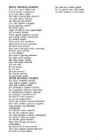
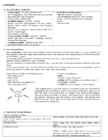
PREFIX- MEANING- EXAMPLE Ize- make into- sterilize, satirize A, in, on, of, up, to- ablaze, atop Ly- in a specific way- softly, kindly Circum- around- circumference Ity- state, condition, civility, acidity In- in, into, within- inhabit Post- after, following, later- postscript Sub- under, below- submerge Ab- from, off, away- absent Con- with, together- congregate In- not, opposing- insincere Pre- before- prefix Super- over, above, extra- superabundant Ad- to, toward- advance Contra- against, opposing- contradict Inter- among, between- international Pro- foward- proceed Trans- across, over- transfusion
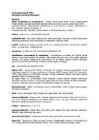
pidzinkeelest, sest kreoolkeel on saanud naturaalseks keeleks ja seda õpitakse esimese keelena, sellel on väljaarenenud grammatika; esimese keelena omandamine on üks loomuliku keele olulisemaid tunnuseid ladina tähestik tähestik, mida kasutatakse ladina keele kirjutamiseks, kutsutakse ka rooma tähestikuks, arenes välja kreeka tähestikust ja on tänapäeval levinuim tähestikusüsteem läänemeresoome keeleliit (Circum-Baltic linguistic area) läänemeresoome keeled on liivi (30, Läti), eesti (1 000 000, Eesti), vadja (50, Venemaa), soome (5 000 000, Soome), isuri/ingeri (300, Venemaa), karjala (40 000, Soome, Venemaa), aunuse (30 000, Venemaa), lüüdi (5000, Venemaa), vepsa (6000, Venemaa) metatees häälikumuutus, mis muudab foneemide järjekorda sõnas; nt sõnad bird ja horse olid varem bryd ja hros, seega metatees muutis need selleks, mis need tänapäeval on; three > third, thirteen;
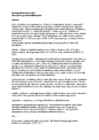
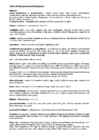
See annab inglise keelele võimaluse kasutada üht sõna väga mitmes kontekstis, üks sõna võib olla mitu sõnaliiki korraga. Nt sõna right võib olla omadussõna right hand, nimisõna it is my right to do sth, määrsõna right behind me, tegusõna right a wrong või hüüdsõna right! kreoolistumine –kreoolistumine on pidžinkeele muutumine kreoolkeeleks. kreoolkeel – kreoolkeel on pidžinkeel mida inimesed räägivad emakeelena. ladina tähestik läänemeresoome keeleliit (Circum-Baltic linguistic area) – Keeleliidu põhimõte on see, et keeled ei ole sarnased vaid selle pärast, et neil on ühine põlvnevus vaid selle pärast et neid räägitakse geograafiliselt üksteise lähedal. See tähendab et nt läti ja eesti keeles on sarnaseid morfoloogilisi, süntaktilsi ja sõnavaralisi keele elemente mis sest et üks on indoeuroopa ja teine uurali keel. metatees- üksuste ümbertõstmine sõnas. Seda juhtub tihti l või r liikumisega sõnas seega ld.k
pidžinkeelest, sest kreoolkeel on saanud naturaalseks keeleks ja seda õpitakse esimese keelena, sellel on väljaarenenud grammatika; esimese keelena omandamine on üks loomuliku keele olulisemaid tunnuseid ladina tähestik – tähestik, mida kasutatakse ladina keele kirjutamiseks, kutsutakse ka rooma tähestikuks, arenes välja kreeka tähestikust ja on tänapäeval levinuim tähestikusüsteem läänemeresoome keeleliit (Circum-Baltic linguistic area) – läänemeresoome keeled on liivi (30, Läti), eesti (1 000 000, Eesti), vadja (50, Venemaa), soome (5 000 000, Soome), isuri/ingeri (300, Venemaa), karjala (40 000, Soome, Venemaa), aunuse (30 000, Venemaa), lüüdi (5000, Venemaa), vepsa (6000, Venemaa) metatees – häälikumuutus, mis muudab foneemide järjekorda sõnas; nt sõnad bird ja horse olid varem bryd ja hros, seega metatees muutis need selleks, mis need tänapäeval on; three > third, thirteen;
affix inspoonful, and an adjective- forming affix in peaceful and cheerful.” 19. Prefixes A letter or group of letters attached to the beginning of a word that partly indicates its meaning. Common prefixes include anti- (against), co- (with), mis- (wrong, bad), and trans- (across). Prefixation (the process of adding a prefix to a word) is a common way of forming new words in English. Examples: anti-, auto-, circum-, co-, ex-, trans-, inter-, dis-. 20. Suffixes A letter or group of letters added to the end of a word or root (i.e., a base form), serving to form a new word or functioning as an inflectional ending. A derivational suffix (such as the addition of -ly to an adjective to form an adverb) indicates what type of word it is. An inflectional suffix (such as the addition of -s to a noun to form a plural) tells something about the word's grammatical behavior. -able, -al, -ness, -ist, -dom 21
(ümber)ringi; ligikaudu, umbes, lööma; tapma paiku; praep. c. acc. ümber, juures caelestis, e taeva-, taevalik; jumalik; circiter adv. (ümber)ringi, igast küljest; suurepärane, tore; subst. caelestis, is m (hrl. ligikaudu, umbes; praep. c. acc. lähedal; pl. caelests, ium) taevalik olend, jumalus paiku, ajal caelum, n taevas circum adv. (ümber)ringi, igast küljest; calamits, tis f õnnetus, häda; ebaõnn lähedal, mõlemalt poolt; praep. c. acc. campus, m väli, lagendik; väljak ümber, juures capi, cp, captum, ere võtma, haarama; circumd, ded, datum, dare ümbritsema saama; vallutama; vangistama circumveni, vn, ventum, re ümbritsema, caput, pitis n pea; ülaosa, tipp; juht, pealik; sisse piirama; kitsikusse ajama, vaevama
Et eestlaste kohta käivatest paavsti ja teiste isikute kirjadest paremini aru saada, vaatleme üht endise aja paavsti kirja a. 1199 (U. B. 12), kus paavst Innocentius III kutsub ristisõjale Liivimaale Saksi ja Vestfaalia usklikke. Ta seletab, et osa liivlasi on Meinhard ristiusku pööranud, kuid inimsoo vaenlane oli kade nende pöördumise pärast ia kutsus nende vastu esile ümberkaudu asuvate paganate tagakiusamise (persecutionem paganorum circum adiacentium) kes püüavad vastristituid ja ristiusu nime sellelt maalt hävitada. Ristisõdijaid ongi tarvis, et vastristitud usust jälle ei taganeks ega jääks kaitseta paganate pealekippumiste vastu (a paganorum incursibus). Ristisõdijad astugu Jumala nimel võimsasti võitlusse, kuni Liivi kiriku ümber asuvad paganad (pagani, circa Livoniensem Eccle-siam constituti) ristiusulistega rahulepingud teevad ja tehtud rahulepinguid ka peavad.
Descriptions. P. F. Strawson pointed out that it is at odds with our usual linguistic habits: though a sentence having "the present King of France" as its subject presupposes that there is at least one King of France, it is not false for lack of a King; rather, it cannot be used to make a proper statement at all, and so it has no truth-value. And Russell's theory ignores the fact that most descriptions are context-bound, and denote uniquely only within a circum- scribed local setting ("Bring me the book on the table"). Strawson argues more generally that Russell treats sentences and their logical properties in too abstract and disembodied a fashion, forgetting how they are actually used by flesh-and-blood people in concrete conversational practice. Keith Donnellan notes that, even if Russell is right about some uses of descriptions, he has ignored a common sort of case in which a description is
of any kind. This is when they come out. As Terrance wrote, “Cir- cumstances do not make the man; they only reveal him to himself.” (And to others!) By using the Law of Reversibility, you can develop within your- self the values, beliefs, and qualities you most admire by acting as if you already had them, whenever they are called for by the circum- stances of your life. To develop courage, force yourself to act coura- geously, even when you are afraid. To develop integrity, speak and act with complete honesty, even if you feel like shading the truth or cutting corners. Soon your beliefs will mirror your acts, and your acts will mirror your beliefs. ■ THE LAW OF EXPECTATIONS The Law of Expectations says that whatever you expect, with confidence,
Make a flash card for each of the prefixes. On this card write the prefix and a word containing the prefix. Write the meaning of the prefix and a synonym for the example word on the back of the card. As you practice with the cards, first identify the Prefix Meaning Example ante before anterior anti against, not in favor anticipate auto self autonomous hi two bisect circum circle, around circumvent co with, together coherent col with, together collect corn with, together complex con with, together condense de down, reverse decline dis no, not disregard e out, from emit ex out, from export im no, not improper in not inactive
He'd arranged things so that compared to $10,000, a couple hundred bucks seemed like a pittance. That was an expensive laugh. It cost his airline an extra $300 per volunteer. Author's note: Any ideas on how the desk agent could have used the contrast principle to his ad· vantage rather than his detriment? Perhaps he could have started with a $5 joke offer and then revealed the true (and now much more attractive-sounding) Sloo amount. Under those circum- stances, I'm pretty sure he would have secured his laugh and his volunteers. _ Chapter 1 WEAPONS OF INFLUENCE to the already determined much larger price. As veteran car buyers can attest, many a budget-sized final price figure has ballooned out of proportion from the addition of all those seemingly little options. While the customers stand, signed contract in hand, wondering what happened and finding no one to blame but themselves, the
ment was that of the S.S. Paraguay from 1974). In Australia in 1986, 24% of respon- Buenos Aries to Havre in 1877. Due to a dents in a survey of retail and consumer collision, the ship took seven months to handling of beef considered that freezing complete her journey; however, the 5,500 “definitely affected quality” and a further mutton carcasses were still reported to be 13% felt it would “under certain circum- in “in tip-top condition” when the ship stances” (Walker and Mitchell 1986). Today arrived at Havre. A second voyage was some retailers and media still pedal this per- planned but never happened, and to quote a ception. For example, one online store in the Dr. Bergés (Critchell and Raymond 1912), United States quotes that “When you are “As has often happened in the history of buying steaks online, you want to get a good
 annaabi.ee