 50 punkti
Autor soovib selle materjali allalaadimise eest saada 50 punkti.
50 punkti
Autor soovib selle materjali allalaadimise eest saada 50 punkti.
 ~ 13 lehte
Lehekülgede arv dokumendis
~ 13 lehte
Lehekülgede arv dokumendis
 2011-11-01
Kuupäev, millal dokument üles laeti
2011-11-01
Kuupäev, millal dokument üles laeti
 10 laadimist
Kokku alla laetud
10 laadimist
Kokku alla laetud
 0 arvamust
Teiste kasutajate poolt lisatud kommentaarid
0 arvamust
Teiste kasutajate poolt lisatud kommentaarid
 Alina Semjonova
Õppematerjali autor
Alina Semjonova
Õppematerjali autor
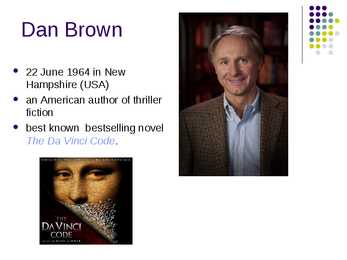
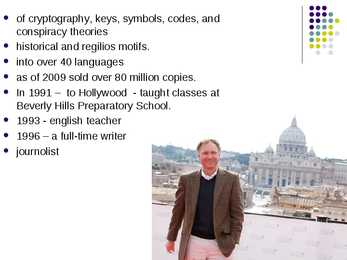
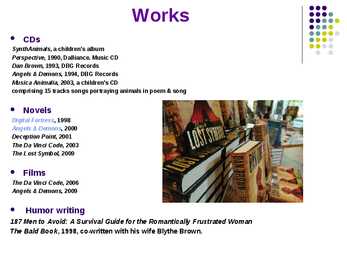
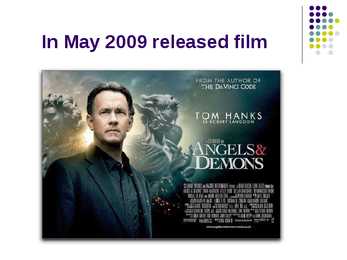
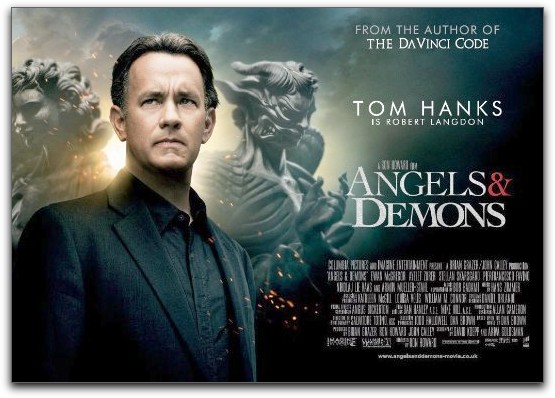
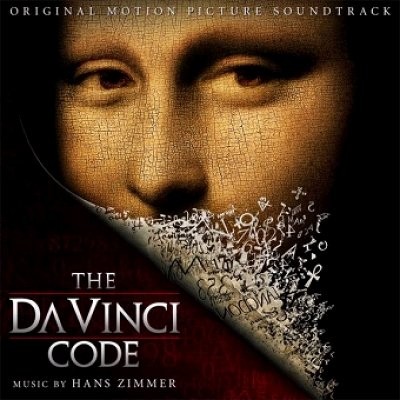
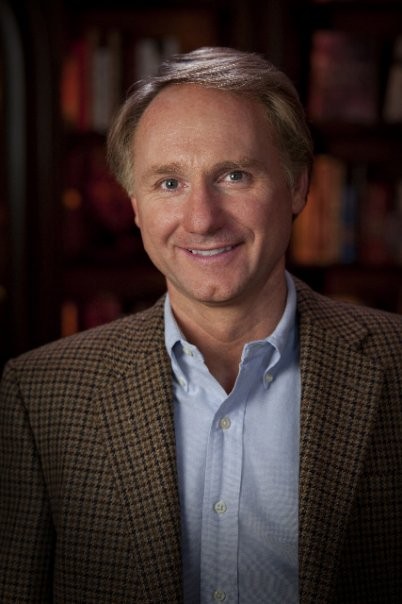
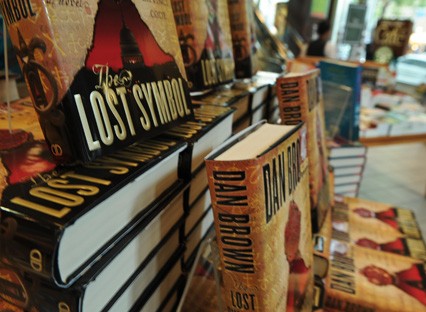
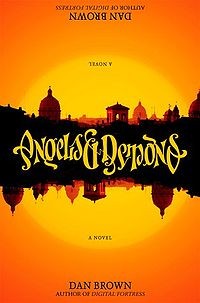
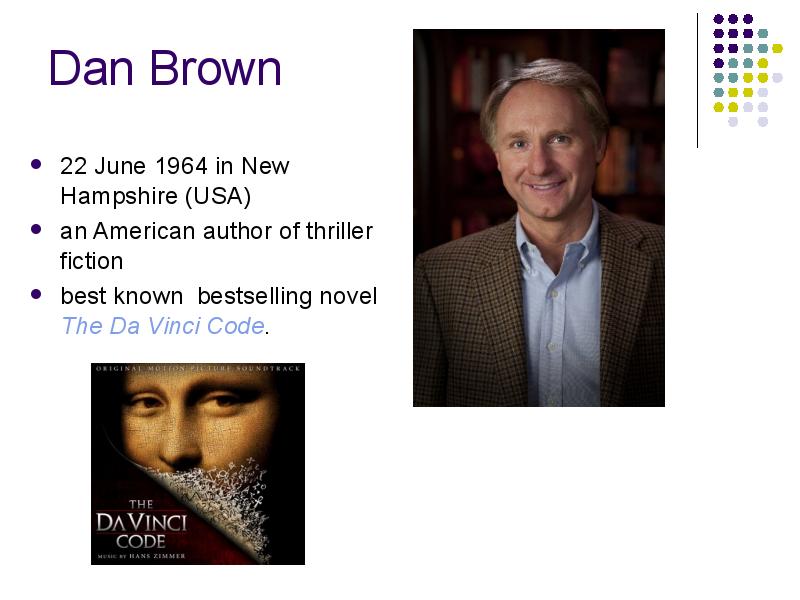
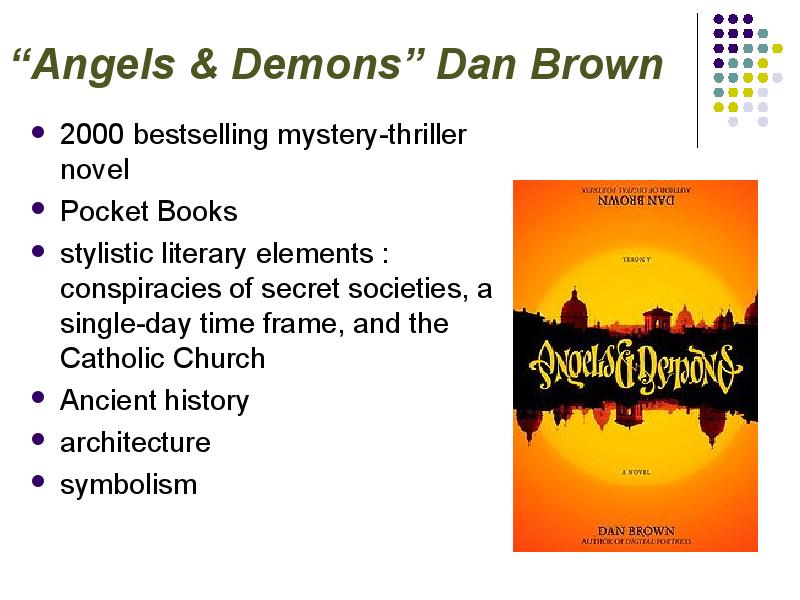
His dad was a teacher of mathematics Both parents good musicians Sang in church choir Brown was raised an Episcopalian Stuidied in Phillips Exeter Academy After graduating went to Amherst College Collage He was an sporty person(squash) Sang in the Amherst Glee Club Brown spent on year abroad in Sevilla, Spain Music career After graduating he made a children's cassette SynthAnimals. In 1991 moved to Hollywood to become a pianist In 1994, Brown released a CD ,, Angles & Deamons" Writing career In 1993 Brown was inspired by the novel The Doomsday Conspiracy to write thrillers In 1996, Brown quit teaching to become a full-time writer First book published in 1998 (,,Digital Fortress") Books Digital Fortress, 1998 Angels & Demons, 2000 Deception Point, 2001 The Da Vinci Code, 2003 The Lost Symbol, 2009 Style Short chapters Historic plot
Ameerika Kirjandus 30.01.13 Naturalism · France, Emile Zola · Put down his theory in 1879: Le Roman Experimental, attempt to explain the development of human society throuch biological laws · Outlook is deterministic, pessimistic, fatalistic (fate or biology) · Man as an animal-clever than other beasts, still explainable within the framework · Man is not a free agent, is govern by something · Unable to determine his own faith · Hereditary · Naturalists tried to apply in fiction the processes of natural sciences · Writers task is to record facts, systems of behaviour, living conditions, never revealing any natural unbiased (completely natural) · Point of view: amoral-outside the category of morality, neither good or bad · Naturalist find it absurd to blame the wicked. These criminals are doing what nature, environment, their unconscious tells them to do. Naturalists do not judge their characters, they sim
Russian philology The meaning of the word "philology" is "love for word". This is love that unites teachers and researchers of modern and Classical languages and literature, interpreters and diplomats, journalists and publishers, writers and poets. Russian philologis are highly demanded in various spheres of scholarly research and education, in the mass media, in civil service at the Ministry of Foreign Affairs, in archives, libraries, museums, in travel agencies, as well as Russian and international companies. Curriculum within in philological faculty includes courses of Russian and European languages and literature, courses of Linguistics and Theory of Literature for students to familiarize themselves with various schools and trends of Russian and foreign philology. The core curriculum also includes a number of Liberal Arts courses (Philosophy, History, Psychology, Pedagogy), as well as courses of basic mathematics and computer studies, and optional courses of science and the
English literature is one of the oldest literatures in Europe; dates back to the 6th century AD. Oral literature, i.e. not written down, spread from person to person. In 449 AD Anglo-‐Saxon tribes invaded England – beginning of the Anglo-‐Saxon period in English literature. The first form of literature was folklore, carried by scops and gleemen, who sang in alliterative verse (a kind of simple poetry). Prose developed much later. The first form of recorded English literature was the epic Beowulf, which was produced sometime near the end of the 7th and beginning ?
themes of piety was George Herbert. His poetry is considered to be the monument to “beauty of holiness”, that practice of the liturgy with good order and ritual which was the essence of the king’s religious policy and the object of loathing by his Puritan opponents. Herbert gives praise to the things that the Puritans wished to do away with. For example, he emphasizes the importance of ritual, the mystery of the sacraments offering praise to the angels and so forth. Although the churches had fallen into disrepair by the 1620s, the state of the church as a holy place was resumed eventually by the movement which put importance on this aspect of “beauty of holiness”. Eventually, even a beautification and restoration programme was launched in which painting and sculpture returned as aids to the liturgy. (Coursebook, pp. 45-47) 7. 17th century philosophical writings (Burton, Browne, Hobbes)
colonial times, does not mean its lessons are not applicable to the world we live in.The first character, Hester Prynne, is guilty of adultery and of hypocrisy. She "loves" Dimmesdale yet she says nothing while for seven years Dimmesdale is slowly tortured. This love she felt that was so strong, that it made her break sacred vows must have disappeared. Why else would she condemn her supposed love to the hands of her vengeful husband. Dimmesdale is continually tortured by his inner demons of guilt that gnaw at his soul, and Chillingworth makes sure these demons never go away. Hester allows this to happen. Physically and mentally the minister begins to weaken, slowly he becomes emaciated, and he punishes himself constantly. Only when Hester knows that if Chillingworth is aloud to continue, that Dimmesdale will surely go insane if she does not reveal her secret. Why did Hester wait so long
Some of the things you will learn in THE CODEBREAKERS • How secret Japanese messages were decoded in Washington hours before Pearl Harbor. • How German codebreakers helped usher in the Russian Revolution. • How John F. Kennedy escaped capture in the Pacific because the Japanese failed to solve a simple cipher. • How codebreaking determined a presidential election, convicted an underworld syndicate head, won the battle of Midway, led to cruel Allied defeats in North Africa, and broke up a vast Nazi spy ring. • How one American became the world's most famous codebreaker, and another became the world's greatest. • How codes and codebreakers operate today within the secret agencies of the U.S. and Russia. • And incredibly much more. "For many evenings of gripping reading, no better choice can be made than this book." —Christian Science Monitor THE Codebreakers
Stonehenge One of the best known ancient wonders of the world, 5000 years old Megalith monument, built by western mediterraneans during 3000-1600 BC Circular structure, large standing stones, aligned with rising sun at teh solstice Attlers and bones were sued to dig pits that hold the stones The Celts in Britain and their legacy 700-200 BC celts invade Britain Gaels or Goehls(Ireland and Scotland),Cymri(Wales) and Brythons(gave name to Brittany) Fierce fighters,superb horsemen.Most of them farmers, lived in thatched houses Good at art, craftmanship, used iron Divided into tribes, ruled by kings, only in face of danger would they choose a single leader Legacy- hill-forts, farms, churches, field system, woodland, pasture, weapons, iron objects, langugae, culture Caesar in Britain The great Roman Emperor Firts came 55 BC to gather information, celts were doing agriculturally well,so romans wanted
 annaabi.ee










Kõik kommentaarid