Humid continental climate is the dominant in Russia. Record low temperature is -71,2. Record high temperature is 43,2. Interesting facts Russian Federation spans trough 9 time zones, (UTC+3 to +12a). Largest city`s are Moscow, Saint Peterburg and Novosibirsk. The 2014 Winter Olympics were held in Sochi in the south of Russia. In 1957 the first Earth-orbiting artificial satellite, Sputnik 1. CELEBRITIES Leo Tolstoy Vladimir Lenin Yuri Gagarin Dmitry Mendeleev Alexei Rykov Leo Tolstoy Vladimir Lenin
Ta 12. c C: ____________ _______, 2009 H (28 (9 ) 1828, , -- 7 (20) 1910, , ) -- . , , , - -- . , . . « », XX , . 28 (9 ) 1828 , -- . -- (1823--1860), (1826--1904) (1827--1856). 1830 (1830--1912). , . , «» , 10--12 , . , . . ( « »). 1837 , , , , , . . , . . -. 1840 , - , -- . . . , «». , , , ; . « , -- , -- , , , , : rien ne forme un jeune homme comme une liaison avec une femme comme il faut» («»). -- - , -- . , comme il faut. : , , , , . . , «» «» , . , , «» -- , , , , -- , , . , « , » («»...
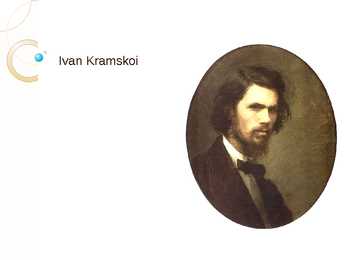
Kramskoi maalis hulgaliselt tuntud inimesi, teiste seas Lev Tolstoid (1873), Ivan Shishkinit (1873), Pavel Tretjakovi (1876) ja Mihhail Saltõkov-Stsedrini (1879). Kogu tema loomingu paremik, sealhulgas kõik nimetatud maalid, asuvad praegu Tretjakovi galeriis. Ta maalis peamiselt õlimaale Kunstnik suri 49- aastaselt doktor Rauchfussi portreed maalides. Korraga kummardus ta ette ja kukkus. Doktor püüdis osutada talle esmaabi, kuid oli juba hilja. Kristus kõrbes, 1872 Leo Tolstoy, 1873 Portree tundmatust naisest, 1883 Merineitsid, 1871 Maria Feodorovna, 1880 Ivan Shishkini, 1873 . Vanamees karguga, 1872 Fyodor Dostoyevsky, 1881 Ivan Shishkin, 1880 Alexander III, 1886 . Tänan kuulamast!
Literature: An Examination of Gulliver's Travels" (1946) · "Politics and the English Language" (1946) · "Second Thoughts on James Burnham" (1946) · "Decline of the English Murder" (1946) · "Some Thoughts on the Common Toad" (1946) · "A Good Word for the Vicar of Bray" (1946) · "In Defence of P. G. Wodehouse" (1946) · "Why I Write" (1946) · "The Prevention of Literature" (1946) · "Such, Such Were the Joys" (1946) · "Lear, Tolstoy and the Fool" (1947) · "Reflections on Gandhi" (1949) · "Bookshop Memories" (1936) · "The Moon Under Water" (1946) Poeemid · "Romance" (1925) · "A Little Poem" (1936) ,, 1984" ,,1984" peategelane on Winston Smith. See raamat räägibki tema raskest elust, kus ta käib tööl Tõeministeeriumis ja kus Partei jälgib igat ta sammu ja igat mõtet. Halba mõtet nimetati mõtteroimaks
Ka Tammsaare teosest ``Tõde ja Õigus`` võib välja lugeda erinevaid värve. Seal on väga hästi kirjeldatud aastaaegade vaheldumist ning seda kaunist loodust, mis oli sel ajal. Teiseks lemmikteoseks võin ma nimetada Stephanie Meyeri ``Videvikusaaga``. Selles raamatus ei ole midagi reaalset, peale looduse. Kuid minu jaoks on see kunstiteos, mida võib lugeda lugematuid kordi. Ka paljud teised maailmakuulsad kirjanikud nagu Shakespeare, Tolstoy, Wilde, Hugo ja Twain on loonud palju kunstiteoseid. Nende looming on täiesti aegumatu, ning nad elavad oma raamatutes edasi. Võib öelda, et nad on nad on pannud neisse teostesse oma hinge. Tantsimene on üks lõõgastavamaid tegevusi, millega me saame väljendada oma tundeid ja tõekspidamisi. Tantsuliikidest võin ma nimetada flamenco, kõhutants, bailatiino, aeroobika, moderntants ja ballett. Oma kogemustest võin ma öelda, et tantsimine on väga kunstiline ajaviide,
of the 17th century; afterward the influence reversed, leading to corruption of liturgical texts. The political reforms of Peter the Great ( , Pyótr Velíkiy) were accompanied by a reform of the alphabet, and achieved their goal of secularization and Westernization. Blocks of specialized vocabulary were adopted from the languages of Western Europe. By 1800, a significant portion of the gentry spoke French daily, and German sometimes. Many Russian novels of the 19th century, e.g. Leo Tolstoy's ( ) War and Peace, contain entire paragraphs and even pages in French with no translation given, with an assumption that educated readers would not need one. The modern literary language is usually considered to date from the time of Alexander Pushkin ( ) in the first third of the 19th century. Pushkin revolutionized Russian literature by rejecting archaic grammar and vocabulary (so-called -- "high style") in favor of grammar and vocabulary found in the spoken language of the time.
husband, Dolly and Stiva, but also forecasts the issues that will arise throughout the rest of the book, all of them having to do with personal relationships and family structures: especially those of Stiva and Dolly, Anna and Karenin, and Anna and Count Vronsky. Stiva's habits are described in detail. To avoid arguing with Dolly about an affair he had with another woman, Stiva tries to distract himself by plunging into his work. He reads a liberal newspaper and comes off as a bit of a rogue (Tolstoy himself was a conservative). Stiva follows the liberal tradition, which denounces religion and marriage as cheap institutions. When a widow drops by to ask Stiva's help with a petition she's submitting to the government, Stiva helps her--not because he actually cares about the woman or her cause, but because he wants her to think well of him. We find out about Stiva's history: he was lazy in school but nevertheless used his connections to achieve a distinguished government career
The other great passion of his formative years was nature, the Russiancountryside. As a port, Taganrog was surrounded on all sides by the landscapes of the Steppe and Chekhov's earliest stories reveal how intensely aware he was of his bond with the Don Steppe. Chekhov had always claimed that medicine was his wife and literature his mistress. Chekhov had lived for much of his career as a writer under the shadow of the great literary colossus of the age, Lev Tolstoy. The Seagull [Chaika] suffered one of the most disastrous first nights of any of Chekhov's plays when it opened in St Petersburg, in 1896, as a benefit night for a comic actress who had a huge, rowdy, popular following. Chekhov ran out of the theatre after the second act and roamed the streets, swearing never to write for the stage again. Exactly two years later, the fledgling Moscow Arts Theatre, under the guidance of Stanislavsky and Nemerovich-Danchenko,
"Kauge" sõda Balkanil teise Liibanoni algus? 6. Rahva Hääl 8. detsember 1993, lk. 3. 26. Rõigas, Anneli. Bosnia valitsus kaalub ÜRO kaitsest loobumist. Eesti Sõnumid 14. juuli 1995, lk. 1. 27. Rõigas, Anneli. Bosnias on alles vaid mustad stsenaariumid. Eesti Sõnumid 15. juuli 1995, lk. 5. 28. Samm Bosnia sõja lõpetamise suunas; Eile kirjutati alla leping horvaadi-moslemi liitriigi loomise kohta Bosnias. Postimees 19. märts 1994, lk. 6. 29. Tolstoy, Leo; Andri Ivo, Dolecek, Kajko. Three stories about Bosnia: 1908, 1946, 1992. Belgrade, 1995. 30. Tsernogooria pooldab liitu Serbiaga. Postimees 3. märts 1992, lk. 6. 31. Välisuudised. Postimees 28, 29 apr. 1992, lk. 5. 32. Välisuudised. Rahva Hääl 29. nov; 7, 18, 19, 20, 21, 24 dets 1991, lk. 1. 33. Västrik, Riho. Kõige tähtsam on peatada vägivald. Postimees 23. november 1995, lk. 9. 34. Ülevaade Vance'i-Oweni Bosnia rahuplaanist. Rahva Hääl 9. veebruar 1993, lk
Raleigh 145 Xiaoxi Zheng 90 Hillsborough St. Raleigh 146 Xiaolin Tu 1243 W. Morgan St. Raleigh 147 Magda Sremski 544 Wayne St. Raleigh 148 Hugh Jodey 531 Bloodsworth St. Raleigh 149 Sasha Bright 4 St. Mary's St. Raleigh 150 Brigit Sigrudsdatter 55 Cameron Ct. Cary 151 Vladimir Tolstoy 19 E. West St. Raleigh 152 Leo Nabokov 532 E. Edenton St. Raleigh 153 Carson Woolf 3541 Glenwood Ave. Unit C Raleigh 154 Virginia McCullers 98 Sassafras Way Raleigh 155 Graham Dosty 43 Oberlin Rd. Raleigh 156 Fyodor Greene 54 Pine St. Raleigh 157 Haruki Ido 63 Oak Ave. Raleigh
the face of hostile elements, historical change, and natural decay; at the same time he advocated abandoning waste and illusion in order to discover life's true essential needs. He was a lifelong abolitionist, delivering lectures that attacked the Fugitive Slave Law while praising the writings of Wendell Phillips and defending abolitionist John Brown. Thoreau's philosophy of civil disobedience later influenced the political thoughts and actions of such notable figures as Leo Tolstoy, Mohandas Gandhi, and Martin Luther King, Jr. Thoreau is sometimes cited as an anarchist, and though Civil Disobedience seems to call for improving rather than abolishing government--"I ask for, not at once no government, but at once a better government"--the direction of this improvement points toward anarchism: "'That government is best which governs not at all'; and when men are prepared for it, that will be the kind of government which they will have
the music and in the presentation of the singers are unpleasant for me. Quite strange indeed but just this has compelled me to compose opera.1 Kangro follows what may be referred to as the Twentieth century opera style, the spiritual atmosphere is close to Expressionism. We can perceive visionary shadows of Pierrot Lunaire, Wozzeck, Katerina Izmailova… The central work is Ohver (Sacrifice, after a story by Alexei Nikolaevich Tolstoy, staged in the Estonia Theatre in 1981), showing the strenuous atmosphere, distress, shallowness, rudeness, open amorality together with the stupid pretentiousness of diverse personages in the new Russian communist society. The composer was firmly rooted in popular music, be it an Estonian village tune or something from the pop charts. He wanted to be accepted by everyman. Kangro’s individuality points to a certain incongruity between his endeavours to create extensive
 annaabi.ee