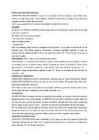
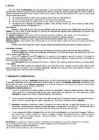
POLYSYNDETON POLYSYNDETON means intentional repetition of a conjunction in close succession in order to slow down the utterance (becomes monotonous). The two conjunctions are normally "and" which suggest energetic activity or the conjunction "or" stresses equal importance any numerated things listed. NT: And the coachman, and the horses rattled and jangled and whipped and cursed and swore and tumbled on together.NT: ? TAUTOLOGY TAUTOLOGY is such a construction that makes information redundant and this is objectionable in literary speech. GRAMMATICAL TAUTOLOGY means that in one sentence a double subject or a double predicate or both are used. NT: My brother, he slept 40 days, without waking up. 2 3
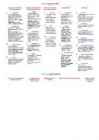
("She was so conjunctions. Function to render main clause). (Quantitative based on words whose choice is happy!"). energetic activity, show the logical. Qualitative reflects individual way succession. 5. TAUTOLOGY the author views an event happening.) - redundancy in words. 5. APOKOINU (grammatical using 5. ANTICLIMAX CONSTRUCTION double subject or - creates comic, satiric effect arranging sent-e so
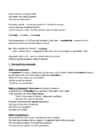
Function is to stress. (The street, so soft and sunny, the street) Anadiplosis--catch repetition--repeating the same w or a phrase at the end of a sentence or at the beginning of the next one. (Such was her life--life without hope.) Anaphora--repeating aw or a phrase at the beginning of several clauses, sentences or paragraphs in succession (Heroes come and go. Heroes eat and drink. Heroes kiss women and enjoy life) Epiphora--repetition at the end of clauses, sentences, paragraphs. Tautology--it is produced by us not thinking. It is redundancy in words which is objectionable in literary speech. · Grammatical tautology--having double subject, predicate or both (Mary, she slept all time) Creates a colloquial touch. · Lexical tautology--exactly the same idea is repeated by using different words (he is leaving now. I mean, he is going.) It characterizes the character negatively.
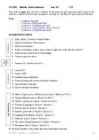
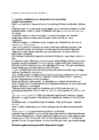
Pyrrhic Alliteration Asyndeton Rhythmic invers. Assonance Apokoinu Run-on line Rhyme: Gap-sentence link Stanza: Full Framing Heroic couplet Incomplete Anadiplosis Ballad stanza Vowel Tautology Spenserian stanza Consonant Polysyndeton Ottava rima Compound Inversion Sonnet: Eye-rhyme Detachment Italian Internal Antithesis Shakespearean Head r. Chiasmus Blank verse Couplet r
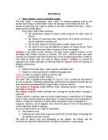
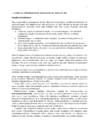
"). 3. Anaphora repetition of a word or phrase at the beginning of several clauses or sentences in succession (e.g. "Supposing she does come, supposing the darkness lift, supposing"). Anaphora involves notional parts of speech - usually nouns, adjectives, or verbs are repeated. 4. Epiphora repetition of a word or phrase at the end (e.g. "She is mad, unhappy and mad, cheerful and mad."). 5. Tautology redundancy in words which is objectional in literary speech. There is: a) grammatical tautology - using the double subject, predicate in a sentence (e.g. "Miss Webster, she slept forty days before waking up." (double subject). Occurs in dialogues. The one who uses it shows carelessness (part of colloquial speech). b) lexical tautology saying the same by rephrasing it. It also serves to characterize the person negatively (e.g. "He is leaving now.
T T T T T Excercise Construct the truth Table of Compound Proposition: P does not imply Q ¬ (P → Q) ¬ (P → Q) F F T F F F T T T T F F F T T T Tautologies and Contradictions When a proposition is always true, it is called a Tautology. Example: P ↔ P P ↔ P F T F T T T When a proposition is always false, it is called a Contradiction. Example: P ↔ ¬ P P ↔ ¬ P F F T F T F F T Using Truth-tables to evaluate Arguments To evaluate the validity of an argument with a truth table, we proceed as follows: 1
samas tähenduses. Nt väide „Eesel on eesel” on paratamatult tõene. Väide jääb tõeseks isegi siis, kui selle ütleja peab eesli all silmas hoopis midagi muud, nt koera või linnapead. Lause „Eesel ei ole eesel” on alati väär (formaalselt A on mitte-A), kusjuures ka sel juhul peab A olema kasutatud samas tähenduses. D4.1.3. Väide (lause) on loogiliselt tõene ehk samaselt tõene (logically true) ehk tautoloogia (tautology), kui pole loogiliselt võimalik, et see väide oleks väär. Väide on loogiliselt väär ehk samaselt väär (logically false) ehk kontradiktsioon (contradiction), kui pole võimalik, et sama väide on tõene. Ülejäänud väited on sattumuslikud ehk kontingentsed (contingent). Tõe vastavusteooria järgi on kontingentne lause tõene siis, kui selle sisu vastab tegelikkusele. Vastasel juhul on lause väär. Tõesuse või vääruse kindlakstegemine jääb väljapoole loogikat,
samas tähenduses. Nt väide ,,Eesel on eesel" on paratamatult tõene. Väide jääb tõeseks isegi siis, kui selle ütleja peab eesli all silmas hoopis midagi muud, nt koera või linnapead. Lause ,,Eesel ei ole eesel" on alati väär (formaalselt A on mitte-A), kusjuures ka sel juhul peab A olema kasutatud samas tähenduses. D4.1.3. Väide (lause) on loogiliselt tõene ehk samaselt tõene (logically true) ehk tautoloogia (tautology), kui pole loogiliselt võimalik, et see väide oleks väär. Väide on loogiliselt väär ehk samaselt väär (logically false) ehk kontradiktsioon (contradiction), kui pole võimalik, et sama väide on tõene. Ülejäänud väited on sattumuslikud ehk kontingentsed (contingent). Tõe vastavusteooria järgi on kontingentne lause tõene siis, kui selle sisu vastab tegelikkusele. Vastasel juhul on lause väär. Tõesuse või vääruse kindlakstegemine jääb väljapoole loogikat,
 annaabi.ee