Leidsid 10 sarnast õppematerjali, mis on seotud failiga "Social problems in England". Need materjalid aitavad sul teemat sügavamalt mõista.
poverty, crime, alcohol, employment, social, england, racism, unemployment, recession, riots, drugs, economic, income, lack, around, immigrants, locals, false, different, cultures, ethnic, groups, related, petty, crimes, money, meeting, needs, benefits, worldwide, negative, effect, country, development, decrease, housing, services, residence, several1) 1.Racism 2. Crime 3. Unemployment 4. Alcohol/Drug abuse 5. Economic recession 6. Poverty 7. Riots 2) Racism is a common problem in many countries and in Englad it is present because there are many immigrants from all over the world. As it is a widespread social problem it's also one of the worst ones, because the hatred directed to different races or even nationalities makes the foreign people feel bad and also to hate the locals. This brings up many conflicts like the bombings in 2005 (when 4 islamic suicide bombers killed thmeselves and 52 civilians), but usually the conflicts are smaller, like brawls between different ethnic groups or mockery and insults. 3)In 1999 was the biggest racism related crime in the last 3 decades, when a
· Refleced the development of science · Period of intense urbanisation, the city is in the center of the novel, often · New characters were businessmen, salesman, immigants, poor farmers · These characters were in new settings, skyscrapers, departments store, apartment building, ghetto, stockyard (cattle, cows were slaughtered), commercial trust · Their world is not one of culture or high moral standards · For these new writers controlling new american social experience · Naturalists offered a view that questioned the belief that now was a conscious and national being and happiness could in moral behaviour · Naturalists show man as a small figure in deterministic system which ignores him · Man is a huge machine · Lot of these novels end in tragedy · For 20 years naturalism remained dominant method. The beginning of the 1910 (modernism starts )
6 percent of annual exports--clearly an unsustainable level for Ukraine. In late 2011, Ukraine's official reserves were some $30 billion. Paying back its debt--barring a further accelerated depletion of foreign exchange reserves--would be close to impossible without fresh foreign finance, preferably in the form of disbursements from the IMF. A two-year IMF stand-by arrangement, put in place in 2008, provided exceptional access to financing that was crucial in helping Ukraine through the Great Recession. In particular, it helped to prevent a banking crisis. In many respects, however, Ukraine reneged on its commitments, and the program went off-track very soon, as a 2011 IMF evaluation concludes. This holds for fiscal, exchange rate, and monetary policies, but in particular for the energy sector. In 2008, Ukraine committed itself to phasing out all gas subsidies in three years, but little was done on that front. For some specific industries, gas prices were actually decreased in 2009
We are not men enough to accept responsibility for our actions. Africans blame either the British, French or little Portuguese/Spanish for their problems. Africans in America blame the Caucasians for all their problems, or any other ethic group they have allowed to take over their neighbours, a frequently recurring phenomena. Africans blame the International Monetary Fund, the World Bank, the Group of 7, the former colonial masters for the abject poverty in our respective countries. We blame the wars ravaging several African sectors on the interference of our former colonial masters on “our internal affairs.” Ha! – some kind of independence! In the 32 years I have been in America, I have never had a discussion with any of my brothers or sisters without it resorting to the African (Black)/Caucasian (white) relationship. When we decide to buy a
own. The UNCRC laid the foundation for the potential re-evaluation of our traditional understanding of childhood and the perception of children as primarily objects of the adult world. Since, then the UNCRC has attracted significant scholarly interest from various disciplines and as such a high degree of research has been published in this area already. The increasing sociological interest in children in particular that has provided a new perspective around the idea of children as competent social actors has provoked a great controversy and confusion as it challenges the image of the incompetent child which is overwhelmingly prevalent in the Western society. The purpose of this dissertation is to critically explore this hotly debated tension between these two conflicting salient features that have often prevented the recognition of children as active citizens, entitled to respect and participation. With a
you should buy this new edition of Influence: o More neuroscience evidence of how the influence process works is inte- Science and Practice, gra ted throughout. For instance, brain imaging research is presented, showing here are 5 good reasons! how the "Expensive = Good" heuristic o Updated coverage of social influence leads people to perceive more costly effects in popular culture, such as the items as better than (identical) less contagion of obesity among the young costly ones. and the contagion of violence in such tragedies as the Virginia Tech and North- o Enhanced coverage of "how to say no." New evidence is presented to
PRAISE FOR The 4-Hour Workweek "This is a whole new ball game. Highly recommended." --Dr. Stewart D. Friedman, adviser to Jack Welch and former director of the Work/Life Integration Program at the Wharton School, University of Pennsylvania "It's about time this book was written. It is a long-overdue manifesto for the mobile lifestyle, and Tim Ferriss is the ideal ambassador. This will be huge." --Jack Can eld, cocreator of Chicken Soup for the Soul®, 100+ million copies sold "Stunning and amazing. From mini-retirements to outsourcing your life, it's all here. Whether you're a wage slave or a Fortune 500 CEO, this book will change your life!" --Phil Town, New York Times bestselling author of Rule #1 "The 4-Hour Workweek is a new way of solving a very old problem: just how can we work to live and prevent our lives from being all about work? A world of in nite options awaits those who would read this book an
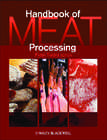
csic.es Institute of Further and Higher Education(GIFHE), HSI Building, Origin Way, Europarc, Grimsby, North East Geoffrey R. Nute Lincolnshire, DN37 9TZ UK. University of Bristol, School of Clinical E-mail: [email protected] Veterinary Science, Division of Farm Animal Science, Bristol BS40 5DU, Avon, England. Joseph P. Kerry E-mail: [email protected] Department of Food and Nutritional Sciences, University College Cork, Ireland. George-John E. Nychas E-mail: [email protected] Laboratory of Food Microbiology & Biotechnology, Department of Food Edward Kołakowski Science & Technology, Agricultural
It could be, if naively interpreted, blindly copied, or unquestioningly adopted. But it can also be a useful tool for the storyteller in any culture, if adapted thoughtfully to reflect the unique, inimitable qualities of the local geography, climate, and people. I found that artists in Australia were acutely conscious o f cultural imperial ism, perhaps because that country's people have had to struggle to create their own society. T h e y have forged something distinct from England, independent of America and Asia, influenced by all o f them but uniquely Australian, and humming with the mysterious energy of the land and the Aboriginal people. T h e y pointed out to me hidden cultural assumptions in my understanding of the Hero's Journey. W h i l e it is universal and timeless, and its workings can be found in every culture on earth, a West ern or American reading of it may carry subde biases. One instance is the Hollywood
Some of the things you will learn in THE CODEBREAKERS • How secret Japanese messages were decoded in Washington hours before Pearl Harbor. • How German codebreakers helped usher in the Russian Revolution. • How John F. Kennedy escaped capture in the Pacific because the Japanese failed to solve a simple cipher. • How codebreaking determined a presidential election, convicted an underworld syndicate head, won the battle of Midway, led to cruel Allied defeats in North Africa, and broke up a vast Nazi spy ring. • How one American became the world's most famous codebreaker, and another became the world's greatest. • How codes and codebreakers operate today within the secret agencies of the U.S. and Russia. • And incredibly much more. "For many evenings of gripping reading, no better choice can be made than this book." —Christian Science Monitor THE Codebreakers
 annaabi.ee