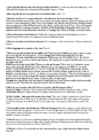
The statue of Zeus at Olympia Zeus wa considered to be the father of the gods and mortals.He was lord of the sky, the rain god and the cloud gatherer, who wielded a terrible thunderbolt. In ancient times The Olympic Games were arranged in honour of Zeus.The athletes travelled from distant lands to compete in the games.The Olympics were started in 776 B.C. and held at a shrine to Zeus on the western coast of Greece in Peloponnesus.The games were held every four years, helpedto unify Greek city-states. A sacred truce was declared during the games, and wars were stopped.Safe passage were given to all traveling to the site, called Olympia, for the season of the games. The site consisted of a stadium and a sacred grove, or Altis, where temples were located.The shrine to Zeus was simple in the early years but as time went by a new
Westminster Abbey Facts The Collegiate Church of St Peter at Westminster Owned directly by the royal family Dedicated to St Peter Located next to the Houses of Parliament UNESCO World Heritage Site History 616, a shrine was founded 10451050, Edward the Confessor Consecrated on December 28, 1065 Romaneque style, to house Benetictine munks Rebuilt 12451517 in Gothic style by Henry III History 2 Henry VII Lady Chapel in 1503 Dissolution of the Monasteries in 1534 Attacked by Puritans in 1640s Oliver Cromwell's funeral in 1658 Western towers were built between 1722 and 1745 Coronations The coronations of King Harold and William the Conqueror in 1066
Participants osalejad Shrine pühamu Joint holding kaasvaldus Habitual harilik Hence seepärast Restoration taastamine Parcel maatükk Assessment uurimine Constitute moodustama Scarcely napilt Salient väljapaistev Agriculture põllumajandus Artificial kunstlik Reforesting taasmetsastamine Seedling võrse Coniferous okas- Timber puit Utilizing kasutades Subsidized riigitoetust saav Afforestation metsastamine Subsidy toetus Affiliated tütar- Prevailing ülekaalus Deteriorate halveneb Labour tööjõud Confront vastu seisma Monetary rahaline Accompanying kaasasolev Silviculture metsakasvatus Revenue tulu Incentive stiimul Entrust usaldama Steep järsk Labour-intensive tööjõumahukas Decline langus Virgin forest põlismets Secondary forest taastunud mets Overstate ülehindama Subsequently järgnevalt Tendency kalduvus Incremental kasvav Pulpwood pabripuit Stumpage puidu langetamise hind Rapidly kiiresti Resemble sarnanema Consistent järjepidev...
2. The Italian period "Troilus and Criseyde" 3. The English Period "The Canterbury Tales" Chaucer's works are written in Middle English of London in The 1300s. "The Canterbury Tales": · He planned to write 120 tales but managed only 20. · They travel one April from an inn in a London fifty miles to the cathedral city of Canterbury to visit the shrine of Saint Thomas Becket. · The pilgrims can be divided into three groups: the feudal group, the church group and the city group. · It has been thought that Chaucer went on a pilgrimage himself. · The tales are connected by links that relate what happened among the pilgrims travelling together. · The Ellesmere manuscript of Chaucer's Canterbury Tales is an early 15th century manuscript of the Canterbury Tales.
festivals but have undergone dramatic changes as they mixed with local customs. Some are so different that they do not even remotely resemble the original festival despite sharing the same name and date. There are also various local festivals (e.g. Tobata Gion) that are mostly unknown outside a given prefecture. It is commonly said that you will always find a festival somewhere in Japan. Matsuri is the Japanese word for a festival or holiday. In Japan, festivals are usually sponsored by a local shrine or temple, though they can be secular. There is no specific matsuri days for all of Japan; dates vary from area to area, and even within a specific area, but festival days do tend to cluster around traditional holidays such as Setsubun or Obon. Almost every locale has at least one matsuri in late summer/early autumn, usually related to the rice harvest. Notable matsuri often feature processions which may include elaborate floats. Preparation for
Essay based on ,,The General Prologue" by G. Chaucer Geoffrey Chaucer wrote The Canterbury tales at the end of the 14th century. It is a collection of stories where a group of pilgrims have a storytelling contest. All of them are on their way from Southwark to visit the shrine of a holy martyr who had brought health to them when they were ill. Chaucer joined the twenty nine of them in a tavern and started to talk to them. They quickly became friends and then there were thirty. All of the stories and very different characters create a body to the story, which depicts the picture of the English society at that time. Chaucer depicts the knight as a typical hero. In my opinion he is making fun of him because he
Edward III later sent him on diplomatic missions to France, Genoa and Florence. His travels exposed him to the work of authors such as Dante, Boccaccio and Froissart. 16.Cantebury Tales - what is it about? Canterbury Tales is a collection of 24 stories The tales (mostly written in verse, although some are in prose) are presented as part of a story-telling contest by a group of pilgrims as they travel together on a journey from London to Canterbury in order to visit the shrine of Saint Thomas Becket at Canterbury Cathedral. The prize for this contest is a free meal at the Tabard Inn at Southwark on their return.
literature and in particular with the works of Dante, Petrarch and Boccaccio. The French period (up to 1370). early works were based mostly on French models. The Italian period (up to c. 1387). Was influenced by Italian literature, especially Dante and Bocaccio. The English period. Wrote Canterbury tales. CANTERBURY TALES This unfinished poem of about 17,000 lines was written mostly after 1387. The poem introduces a group of pilgrims who are journeying from London to the shrine of Thomas à Becket at Canterbury. Chaucer originally planned that the work should contain 120 tales, four for each pilgrim, but at the time of his death he had only written twenty-four and some of them were not complete. The Prologue. The pilgrims are described in the General Prologue; together, they represent a wide cross-section of fourteenth-cent. English life, although the nobility and the poor are missing as they would not have taken part in this type of group pilgrimage
Bänd tegi siis kiiruga Los Angeleses salvestusi. Hiljem anti need välja plaadil "The '69 Los Angeles Sessions". Fela oma bändiga, mille nimi oli nüüd Africa '70 või Afrika 70 , pöördus Nigeeriasse tagasi. Nüüd rajas ta oma valdustes Kalakuta Vabariigiks nimetatud kommuuni, mille ta kuulutas Nigeeria riigist sõltumatuks. Seal elas ta koos oma bändiga ja sellega seotud isikutega ning salvestas muusikat. Hotelli Empire Hotel rajas ta ööklubi Afro-Spot (hiljem Afrika Shrine), kus ta regulaarselt esines. Fela Kuti kritiseeris oma laulusõnades üha rohkem Aafrika ühiskonnasüsteeme, mida kolonialiseerimine oli deformeerinud, ja mõistis hukka Nigeeria sõjaväelise diktatuuri. Tema laulutekstid olid võimudele pinnuks silmas, seda enam, et ta oli Nigeerias armastatud ning oli rahvusvaheliselt, eriti Aafrikas, kuulsaks saanud. Ta otsustas laulda Nigeeria pidzinis, et tema laulusõnadest saadaks aru kõikjal Aafrikas.
[9] With the decline of Phoenicia after the Assyrian invasions, Ibiza came under the control of Carthage, also a former Phoenician colony. The island produced dye, salt, fish sauce (garum), and wool. A shrine with offerings to the goddess Tanit was established in the cave at Es Culleram, and the rest of the Balearic Islands entered Eivissa's commercial orbit after 400 BC. Ibiza was a major trading post along the Mediterranean routes. Ibiza began establishing its own trading stations along the nearby Balearic island of Majorca such as Na Guardis, from which large quantities of renowned Balearic slingers were hired as mercenaries who fought for Carthage.
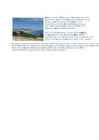
since grown to now cover 12.5 acres and 145 galleries · Westminster Abbey is a Gothic monastery church in London that is the traditional place of coronation and burial for English monarchs. Located next to the Houses of Parliament in the heart of London. With its oldest parts dating to the year 1050, the Abbey contains some of the most glorious medieval architecture in London. According to tradition, a shrine was first founded here in 616. The historic Abbey was built by Edward the Confessor between 1045-1050 and was consecrated on December 28, 1065. · Westminster Cathedral in London is the mother church of the Catholic community in England and Wales and the Metropolitan Church and Cathedral of the Archbishop of Westminster. It is dedicated to the "Most Precious Blood of Jesus Christ". The site on which the cathedral stands originally belonged to the Benedictine
The Church wanted the kings of Europe to accept its authority over both spiritual & earthy affairs. Conflict between Henry & Church. He chose his trusted adviser, Thomas Becket, to become archbishop in 1162, but he began to defend the Church. Henry saw him as a traitor, lost his temper. He is said to have exclaimed ,,Will no one rid me of this turbulent priest?" 4 knights killed Becket on the altar steps. The murder shocked. The Pope made Becket a saint. Canterbury became a shrine. Henry himself made a pilgrimage to Canterbury, walked barefoot through the town and was flogged by bishops at his request. In the end Henry quarrelled with his beautiful & powerful wife, his sons took Eleanor's side. In 1189 Henry died a broken man, disappointed & defeated by his sons and the French king. He was followed by his rebellious son, Richard. Although he spent little time in England (6 months of his 10-year reign), he was one of England's most popular kings
kuulsaks tegi, on hea metafoor tema tantsustiilile. Kuidas ta seda teeb? Tehnilises mõttes on ta suurepärane illusionist, tõeline miim. Tema võime hoida üht jalga sirgena, kui ta libiseb, sellal kui teine jalg on kõverdatud ja tundub astuvat, nõuab täpset ajastamist." Pepsi ja "We Are the World" (19841985) Jackson koos Knott's Berry Farmi maskoti Snoopyga aprillis 1984 27. jaanuaril 1984 oli Michael koos teiste ansambli The Jacksons liikmetega Los Angeleses Shrine Auditoriumis Pepsi Cola reklaami võtetel, mida juhtisid reklaamiagentuuri BBDO loominguline juht Phil Dusenberry ning Pepsi Cola ülemaailmne loominguline juht Alan Pottasch. Jacksonil, kes esines saalitäie võtetele kutsutud fännide ees, läksid pürotehnikute apsaka tõttu juuksed põlema. Ta sai peanahale teise astme põletushaavu. Peanahaarmide varjamiseks lasi Jackson teha kosmeetilist ravi ja varsti pärast seda tehti talle kolmas ninalõikus. Täielikult aga Jacksoni peanahk
1464-67 Oil on wood, 185 x 294 cm Sint-Pieterskerk, Leuven Click to edit Master text styles Second level Third level Fourth level Fifth level Click to edit Master text styles Second level Third level Fourth level Fifth level St Ursula Shrine 1489 Gilded and painted wood, 87 x 33 x 91 cm Memlingmuseum, Sint-Janshospitaal, Bruges Rokokoo Click to edit Master text styles Second level ÉtienneMaurice Third level Fourth level Fifth level Falconet Peeter Suure ratsamonument 177677 Pronks Senati väljak, Peterburi
He tries to show off with his skating skills, and Kitty for a minute regains her fondness for Levin. Still, she believes she's in love with Vronsky, a man of social status. Kitty's own mother favors Vronsky as a match. Even though Princess Shcherbatsky invites Levin to her home, she does so with an air of coolness, and Levin grows uneasy, thinking his love for Kitty will be left unfulfilled. "The place where [Kitty] stood seemed to him a holy shrine, unapproachable, and there was one moment when he was almost retreating, so overwhelmed was he with terror. He had to make an effort to master himself, and to remind himself that people of all sorts were moving about her, and that he too might come there to skate. He walked down, for a long while avoiding looking at her as at the sun, but seeing her, as one does the sun, without looking." Levin and Stiva dine together at a fancy French restaurant, and are once again contrasted. Stiva is of
Kore/Persephone s return was celebrated at festivals called the Lesser Eleus- inia in February, marking the return of spring. Every five years, the Greater Eleusinia, the greatest festival in the Greek calen dar, was held in September. Some of the carvings from the pediment of the Parthe non depict these jubilant ceremonies, when the young horsemen of Athens would fetch the sacred objects from the temple of Demeter and march them to a special shrine, the Eleusinion, at the base of the Acropolis. T h e story of Demeter and Kore was acted out in secret ceremonies of great emotional impact for a select group of initiates, using all the effects of lighting, music, dance, ritual, and staging to bring about the desired catharsis. Nowadays we may use the term catharsis more broadly to mean any kind of emotional release or breakthrough. Catharsis was adopted by the psychological
 annaabi.ee