Gilead Marilynne Robinson Setting: America, Iowa in 1956 and earlier Main character: John Ames The Plot: Gilead is a story about fathers and sons. The main character John Ames is a preacher in his mid seventies. His heart is failing him and he wants to guarantee that his son grows up well and gets his advice. He has always written down all his sermons and saved them in boxes. He is very keen on writing. John starts writing a letter to his six year-old son. A letter which his son would get to read as a grown-up. It is just like John would write down his biography. John puts down words of advice and wisdom for his son and tells him about the life of a minister and a preacher
Clothing of 18th century in England 1750 The middle of the century marked what is perhaps the highest point of rococo style. The stiffness of the earlier years had been abandoned, and the extravagances of the seventies and the neo-classical negligence of the nineties were alike unthought of. The most typical characteristics of the century were at their most charming stage. The wig was neat and becoming. The three-cornered hat was of medium size - it had been ridiculously large in Marlborough's time, and became ridiculously small in 1790; coats and waistcoats were both dignified and graceful, the cut was good and the embroidery elegant. There was a tasteful moderation in the use of lace.
1. The wrong number was dialed (by the The child dialed the wrong number. child). 2. The sweater was crocheted very My grandmother very carefully carefully (by my grandmother). crocheted the sweater. 3. The tornado struck Cherry Creek last Cherry Creek was struck by a tornado spring. last year. 4. The wind blew the leaves across the The leaves were blown across the yard yard. (by the wind). 5. In the seventies, platform shoes were In the seventies, many fashionable worn by many fashionable young men young men and women wore platform and women). shoes. Subjunctive mood Indicative expresses fact Imperative expresses command Subjunctive expresses conditions contrary to fact or expresses urgency/demand: If I were you, I would drive home on Sunday. I insist that he drive home on Sunday. Should/Would, Used to/Supposed to, can/could, and will/would.
The Estonian Open-Air Museum at Rocca al Mare is actually the Estonian Village Museum (established in 1957). The museum is divided into sections that show typical village architecture (old farmhouses and outbuildings) of certain areas. Districts The City of Tallinn is divided into City Districts. Tallinn consists of 8 different districts. Haabersti. The heart of the district is the residential area consisting of the big panel houses of Väike-Õismäe, which were mostly established in the seventies. The territory of Haabersti is 18,6 km². Kesklinn. It consists of the historical Old City and the surrounding suburbs with wooden buildings erected in the end of the last and the beginning of the present century. The territory of Kesklinn is 28,0 km². Kristiine. The main part of the buildings in this district consists of 2-storeyed apartment houses built in the twenties and the thirties and modest single family houses built in the fifties. The territory of Kristiine is 9,4 km². Lasnamäe
'beast'-a myth to keep bos in fear and obedience. Simon: what i mean is ..maybe it's only us. Innate human evil exists! Beast-not an external force. But a compotent of human nature. 12. The 1960s as a new era in science, technology, politics, and society. Victories and losses. New spirit and aesthetic. Liberation world-wide. New Consciousness: mass culture, counter-culture, cult of personality. `The swinging Sixties' and `the sagging Seventies'. Art. Carl Andre equivalent VIII 1966. Exhibited at Tate gallery, London. Public anger: what's the point, is it art or just a pile of bricks, why is it displayed in a museum? Point-to fill the vacuum of interest. Art-made such by the institution of the museum. Postmodernism: not what is depicted/published/displayed/interpreted but why it is interpreted. Politics. J F Kennedy-elected president 1960, assassinated 1963, the youngest president, Irish catholic
XIII. THE DRAMATIC PHILOSOPHICAL OUTPUT OF HELMUT ROSENVALD. XIV. THE ELEMENTS OF JAZZ, FOLK MUSIC AND DODECAPHONY IN THE SYMPHONISM OF ANTI MARGUSTE. XV. HEIMAR ILVES AND HIS MUSIC – DEEP IN THOUGHT AND FEELING. XVI. THE POST-WAR SYMPHONIES OF EDUARD TUBIN. DEEPENING ACCENT ON PSYCHOLOGIC-DRAMATIC EXPRESSION. XVII. THE SECOND HALF OF THE SIXTIES. THE NATIONAL AND INTERNATIONAL IN THE ESTONIAN SYMPHONIC MUSIC. JAAN KOHA. ESTER MÄGI. KULDAR SINK. XVIII. THE SEVENTIES. THE NINTH SYMPHONY OF EDUARD TUBIN. THE CREATIVE EVOLUTION OF ARVO PÄRT. XIX. THE SEVENTIES. STYLISTIC DIVERSIFICATION. THE MATURE STYLES OF HEINO JÜRISALU, ANTI MARGUSTE AND EINO TAMBERG. XX. ALO PÕLDMÄE: FULLNESS OF COLOURS AND MULTITUDE OF DETAILS. XXI. MATI KUULBERG: SPECTACLE, BRILLIANCE, LIGHTNESS. XXII. RAIMO KANGRO: ROCK, POP AND NEO-CLASSICISM. XXIII. LEPO SUMERA: DEEP NATIONAL SPIRIT, EVOCATIVE AND PHILOSOPHICAL THINKING. XXIV
and landscape of a particular region. American Literary Regionalism has been the subject of scholarship for the past several decades and has been a central site for scholarly debate on a variety of methodologies including Feminism and New Historicism. This subfield of American literary studies has been traditionally located in the latenineteenth century. Local Colorism or Regionalism as first appeared in the late 1860s and early seventies in America. Hamlin Garland defined local colorism as having "such quality of texture and background that it could not have been written in any other place or by anyone else than a native." The ultimate aim of the local colorists is, as Garland indicates, to create the illusion of an indigenous little world with qualities that tell it apart from the world outside. Local colorists concerned themselves with presenting and interpreting the local character of their regions
2 do A 4 shortly, let C 6 remorse 2 Aristotle, Syd Field 2 1 terminate 6 wind up Challenge! Students' own answers 3 1 left 8 finally 2 ceased 7 concluded 2 coming 9 seventies 3 culminated 8 closes 10E Complex sentences 3 Being 10 better page 88 4 complete 9 finalised 4 shortage 11 successful 5 wrapped up 5 doesn't 12 following 1 1 The Wieliczka salt mines, which
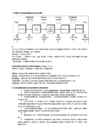
In 67(I think?) the overall plan for ARPAnet was published, the first packet-switched computer network and the ancestor of today’s Internet. By 72 ARPAnet had grown from four to fifteen nodes and the first host-to-host protocol was completed. Since the latter was created, it was possible to begin developing applications. 1972-80 The initial ARPAnet was a solitary, closed network. To communicate with a host one had to be physically connected to another ARPAnet IMP. In the mid-seventies, other packet switching networks were created - ALOHAnet, DARPA, Telenet etc. The number of networks was growing, but they still weren’t connected. Internetting is the fancy-pansy term used to describe forming a network of networks. These principles were embodied in TCP (differs greatly from the one used nowadays). The early versions of TCP combined a reliable, sequenced data delivery (still part of TCP now) and forwarding functions (now performed by IP)
That is what they are here to teach. The surrendered state of consciousness opens up the vertical dimension in your life, the dimension of depth. Something will then come forth from that dimension into this world, something of infinite value that otherwise would have remained unmanifested. Some people who surrendered to severe limitation become healers or spiritual teachers. Others work selflessly to lessen human suffering or bring some creative gift into this world. In the late seventies, I would have lunch every day with one or two friends in the cafeteria of the graduate center at Cambridge University, where I was studying. A man in a wheelchair would sometimes sit at a nearby table, usually accompanied by three or four people. One day, when I was sitting at a table directly opposite me, I could not help but look at him more closely, and I was shocked by what I saw. He seemed almost totally paralyzed. His body was emaciated, his head permanently slumped forward.
centimeter from the center of the lane. He drove one-handed, holding my hand on the seat. Sometimes he gazed into the setting sun, sometimes he glanced at me -- my face, my hair blowing out the open window, our hands twined together. He had turned the radio to an oldies station, and he sang along with a song I'd never heard. He knew every line. "You like fifties music?" I asked. "Music in the fifties was good. Much better than the sixties, or the seventies, ugh!" He shuddered. "The eighties were bearable." "Are you ever going to tell me how old you are?" I asked, tentative, not wanting to upset his buoyant humor. "Does it matter much?" His smile, to my relief, remained unclouded. "No, but I still wonder..." I grimaced. "There's nothing like an unsolved mystery to keep you up at night." "I wonder if it will upset you," he reflected to himself. He gazed into the sun; the minutes passed. "Try me," I finally said.
 annaabi.ee