Savanna A savanna is a grassland ecosystem with scattered trees or shrubs. In savannas trees are small or widely spaced so that the canopy does not close. It is often believed that savannas are characterized by widely spaced, scattered trees, however in many savanna communities tree densities are higher and trees are more regularly spaced than in forest communities. The open canopy allows sufficient light to reach the ground to support an unbroken herbaceous layer consisting primarily of C4 grasses. Savannas are also characterised by seasonal water availability, with the majority of rainfall being confined to one season of the year. Savannas can be associated
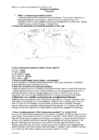
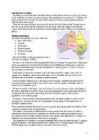
Natural Zones and Flora. There are five distinguishable natural zones in Australia. In the very east there are wet forests (1.) that occupy the space between the Great Dividing Range and the eastern coast. Westward from the Great Dividing Range the wet forests give place to beautiful grasslands with some trees . These grasslands are called the savannas (2.). Farther west the trees disappear and the bushlands (3.) begin. The real desert (4.) occupies the centre of the Western Plateau. In the very southwest there are thin forests of evergreen trees (5.). Most of Australian trees are kinds of eucalyptus trees (or gum trees to Australians) and acacia ( wattle to Australians). Eucalyptus trees are found everywhere in Australia. There are many kinds of them and they greatly differ in size. One kind, the
Natural zones: Although most of Australia is barren and arid or covered with deserts, there are five distinguishable natural zones in Australia. The winds from the oceans bring rains to the western and eastern coast of Australia. So, the rainforests occupy the space between the Great Dividing Range and the eastern coast and also the northern coast. In the west they give place to beautiful grasslands with some trees called the savannas. Further west the trees disappear and the savannas are replaced by the bush lands. The real desert occupies the centre of the Western Plateau and in the very south- west there are thin forests of evergreen trees. Most of the Austrian trees are various kinds of eucalyptus and acacia. Some eucalyptuses are small bushes in the semi deserts, some are the main trees in the savannas, but the biggest eucalyptuses grow as tall as hundred metres. Eucalyptuses give the people timber
sign of poor health. This plant is very easy to grow, and it will spread under favorable conditions. This wildflower will adapt to lawns, especially if they are not mowed too often during the spring or cut too low. HABITAT & RANGE The native Common Blue Violet occurs in every county in Illinois and it is very common (see Distribution Map). Natural habitats include moist to mesic black soil prairies, open woodlands, woodland edges, savannas, and wooded slopes along rivers or lakes. Indeveloped areas, it can be found in lawns, city parks, moist waste areas, and along hedges or buildings. Sometimes the Common Blue Violet is grown in flower gardens. Varieties of blue violets PHOTOGRAPHIC LOCATION The photographs were taken at the webmaster's wildflower garden in Urbana, Illinois, Crystal Lake Park of the same city, and at the edge of an agricultural field outside of the same city in Champaign County, Illinois.
5 to 49°. Hot and Dry Deserts usually have very little rainfall and concentrated rainfall in short periods between long rainless periods. Most Hot and Dry Deserts don't have very many plants. The only animals they have that can survive have the ability to burrow under ground. They only come out in the night when it is a little cooler. SavannaA savanna is a rolling grassland scattered with shrubs and isolated trees, which can be found between a tropical rainforest and desert biome. Savannas are also known as tropical grasslands. Savannas have warm temperature year round. There are two very different seasons in a savanna; a very long dry season(winter) and a very wet season. In the dry season only an average of about 4 inches of rain falls. In the summer there is lots of rain. The savanna has a large range of highly specialized plants and animals. RainforestThe tropical rain forest is a forest of tall trees in a region of year-round warmth
Most of the lakes also have water only after the rains. Lake Eyre, the biggest, is one of the many salt lakes in Central Australia. Australia has much underground water. The Great Artesian Basin under the Central Lowlands makes cattle-breeding possible there. The network of artesian wells provides cattle with water. Natural zones. The wet forests occupy the narrow coastal region in the east. In the west they give place to grasslands with some trees called savannas. Farther west the trees disappear and the savannas give place to the bushlands. The real desert occupies the centre of the Western Plateau. In the very south-west there are thin forests of evergreen trees. Most of the Australian trees are various kinds of eucalyptus (gum tree) and acacia (wattle). Some eucalyptuses are small bushes in the semideserts, some are the main trees in the savannas but the biggest grow as tall as 100 metres and form forests in the east
3. How is temperate grassland called in these regions? Eurasia - steppe Hungary - puzda North America - prarie South America - pampa South Africa - veldt 4. What is forest steppe (forest steppe – metsastepp)? A forest steppe is a temperate-climate ecotone and habitat type composed of grassland interspersed with areas of woodland or forest. 5. Describe the climate of temperate grassland. Temperate grasslands have a temperate continental climate, which is cooler than savannas. Temperate grasslands have warm, humid summers with an average temperature of 18° C and cool, dry winters with an average temperature of 10° C. Most of the rain falls as convection rain in the summer and sometimes frost and snow may occur in the winter. 6. What is the role of wildfires in the temperate grassland plants’ lifecycle? Wildfires play a very important role. They allow the grasslands to be open and free of trees and shrubs
Most of the lakes alsi have water after it rains only. Lake Eyre, the biggest, is one of the many salt lakes in Central Australia. Australia has much underground water. The Great Artesian Basin under the central Lowlands makes cattlebreeding possible thee. The network of artesian wells provides cattle with water. Natural zones The wet forests also called the rainforests occupy the narrow coastal region in the east. In the west they give place to grasslands with some trees called savannas. Farther west the trees disappear and the savannas give place to the bushlands. The real desert occupies the centre of the Western Plateau. In the very southwest there are thin forests of evergreen trees. Plants A rich variety of plant can be found in the natural landscapes of Australia. A lot of species can be found in wet tropical forests in the north and in temperate rainforests in the south. The biggest family of the native plants is the myrties. They include
The Coral Sea is the warmest that is why many corals live in the seas. The skeletons of these tiny organisms have formed a great belt of coral- called the Great Barrier Reef. Its is 2000 km long and 2-150 km wide. There are five distinguishable natural zones in Australia. In the very east there are wet forests that occupy the space between the Great Dividing Range and the eastern coast. The wet forests give place to beautiful grasslands with some trees called the savannas. Farther west the trees disappear and the bushlands begin. The real desert occupies the centre of the Western Plateau. In the very southwest there are thin forests of evergreen trees. Most of Australian trees are kinds of eucalyptus (or gum tree to Australians) and acacia (wattle of Australians). Eucalyptuses give the people timber and eucalyptus oil. Of 600 kinds of acacias the golden wattle, the national flower of Australia, is the best known.
an island but rather small for a continent. Australia is 1,800 miles from the mainland of Asia and almost half way round the world from Europe. More than 6,000 miles of ocean separate in from the America. Australia is the only continent except for Antarctica that lies all south of the equator. The natural zones of Australia are very various. There are deserts, semi deserts, grasslands, savannas, bushlands and rainforests. The wet forests occupy the narrow region in the east. Most of the animals, birds and insects live in that region, because there is enough food. The savannas which are grasslands with some trees are mostly in the west. Farther west are the bushlands. The real deserts occupy the centre of the Western Plateau. In the very south west there are thin forests of evergreens trees.
longest river is the Murray-Darling, which is 2700 km long. Most of the lakes are also full after rain. The biggest, Lake Eyre, is a salt lake in Central Australia and it occupies an area of 9000km². Nature Australia is the second driest continent in the world and 70% of the country is arid or semi- arid. More that one-third of the mainland is occupied by desert. The rain is distributed unevenly around the continent. The driest area is Lake Eyre, but the tropical northeast is the wettest. Savannas have also obsessed a big chunk of land and are located in the northern and eastern parts of Australia. The seasons are the opposite of the ones in Estonia. If we have summer, then in Australia it is winter and vice versa. The highest temperature ever measured in Australia is +53ºC and the lowest is -23ºC. Most of the animals that live in Australia are marsupials or pouched mammals and there are more than 150 different species of them. They are special because the babies of these animals
 annaabi.ee