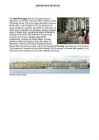
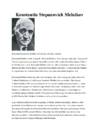
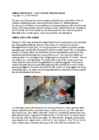
One of the largest and oldest museums of the world, it was founded in 1764 by Catherine the Great and open to the public since 1852. Its collections, of which only a small part is on permanent display, comprise nearly 3 million items, including the largest collection of paintings in the world. The collections occupy a large complex of six historic buildings along Palace Embankment, including the Winter Palace, a former residence of Russian emperors. Apart from them, the Menshikov. Museum of Porcelain, Storage Facility at Staraya Derevnya and the eastern wing of the Generel Staff Building also make part of the museum. The museum has several exhibition centers abroad. The Hermitage is a federal state property. Since 1990, the director of the museum has been Mikhail Piotrovsky. Hermitage museum complex
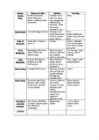
raise turkeys, sheep and cattle West Birmingham, Hereford, There are many fruit farming, sheep Midlands Warick, Worcester, different industries farming, market Warwickshire like ceramics farming industry, porcelain, East Lincoln, Nottingham, Heavy industry, Fruit, veggies, milk Midlands Bedford, Ely, and leather, bricks, related products. Northampton. electricity, shoes, instruments. North West Liverpool, Manchester, Spinning, weaving, cheece power production, include clothing,
Hakkas levima 1990. aastate algusaegadel. Tuntuimad artistid Netsky Logistics Rameses B Maduk Smooth B-Complex Keeno Pendulum Feint Indivision Noisia Grafix Näidislood Netsky – Porcelain https://www.youtube.com/watch?v=gCkKc2LuCuM Maduk – Got Me Thinking https://www.youtube.com/watch?v=XhohLI1Rupc Pendulum – The Island https://www.youtube.com/watch?v=jGow4nmYkkA Kasutatud allikad https://en.wikipedia.org/wiki/History_of_drum_and_bass https://en.wikipedia.org/wiki/Drum_and_bass#Influences https:// www.youtube.com/watch?v=gCkKc2LuCuM&list=PLd8VGZOTweWmFGIbQMnFAjV xuy33lAIBG&index=26 https://www
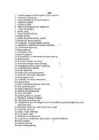
55. vari- shadow 56. juugendstiil- modern style, art nouveau 57. joonis- graph, draught 58. värvivarjund, värvitoon, värving- HUE 59. sepis- jorging 60. krohv-plaster 61. kriit-chalk 62. kujutav kunst(graafika, maalikunst, skulptuur)- figurative art 63. kujutis- image 64. lakk- varnish 65. molbert- easel 66. näitus-exhibition 67. kunstigalerii-art gallery 68. palett(värvide hoidmise ja segamise alus)- palette 69. pintsel- (paint)brush 70. pintslitõmme- (brush) stroke 71. portselan-porcelain 72. põhivärvid- primary colours 73. pärgament-vellum, parchment 74. renessanss- Renaissance 75. rokokoo- Rococo 76. ilmalik, ilmlik kunst-secular art 77. sakraal(kirikllik)kunst- sacred art 78. tempera 8 maalimistehnika vesivärvidega, millele on lisatud liimi, munakollast või muid aineid, ka selles tehnikas maal- tempera 79. toon(värvivarjund)-shade, tone 80. käsikirja algustöhti ornamentidega või kullaga kaunistama- to illuminate(valgusreklaam- illuminated sign)
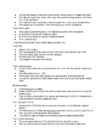
The Great Guild house The impressive building of the Great Guild is in late Gothic style During centuries the building, has been used for merchants feasts and receptions, rented out for marriages and also used for court sittings and theatre performances. It has also been rebuilt many times The Great Guild Hall is the home of the Estonian History Museum, which houses a number of treasures, including porcelain, ethnography, antiques and art objects. St.Olaf church It is believed to have been built in the 12th century Its dedication relates to King Olaf II of Norway In origin, St Olaf's was part of the united western tradition of Christianity From the time of the Reformation church has been part of the Lutherian tradition St Olaf's became a Baptist church in 1950 From 1944 until 1991, the Soviet KGB used Oleviste's spire as a radio tower and surveillance point
(Rusakovi tööliste hoone makett ja hoone) 1920ndate lõpuks oli Moskva täis Melnikovi tööliste hooneid, nagu Burevestnik, Frunze, Kauchuk ja Svoboda, samuti ka mõned auto ja bussi garaazid. Iga projekt oli küll ainulaadne, kuid ikkagi omasid hooned sarnaseid kalduvusi ümar plaani, akna detailide tunnusjoonte ja üle paisatud kujundite osas. (Bakhmetevsky Bus Garage, 1926) (Burevestnik Factory Club, 1929) (Novo-Ryazanskii Bus Garage, 1929) (Kauchuk Factory Club, 1929) (Porcelain Factory Club, 1930) (Garage Intourist, 1934) (Gosplan Garage, 1936) (Office of New Sukharev Market, 1924) Vene arhitekt ja maalikunstnik Konstantin Melnikov pälvis kuulsuse alles hiljuti, ligi 40 aastat peale oma surma. Arhitekti kuulsust varjutas 20ndal sajandil Nõukogude Liidu Arhitektuuri asutus, kuna Melnikov keeldus allumast Stalinismi klassikalistele arhitektuuri reeglitele. Tulemuseks oli see, et
authentic objects, documents, works of art, blueprints and pictures, thus illustrating the historic layers of the palace and entertaining the visitors with the air of the past centuries. Collection The collection contains over more than 900 Western European and Russian paintings from 16th to 20th centuries, about 3,500 prints, over 3,000 sculptures and gems, and about 1,600 decorative arts objects (historic furniture, porcelain, glass etc.). The foreign art collection of the Art Museum of Estonia was founded already in the first years of the museum. In subsequent years, new works have come to the museum mostly as purchases or donations. The works in the exhibition of the museum are arranged according to the various schools of different countries. About 100 paintings attributed to the 16th-18th century masters from the Netherlands school form the most valuable part of the collection
the park. Kadriorg as a district The swan pond - KUMU - Kumu (Estonian: Kumu Kunstimuuseum) is an art museum in Tallinn, Estonia. The museum is the largest one in the Baltics and one of the largest art museums in Northern Europe. constructed 2003 - 2006, museum of the year 2008. Mikkel - The Mikkel Museum (Estonian: Mikkeli muuseum) is a branch of the Art Museum of Estonia, located in Kadriorg park in Tallinn. It displays a collection of mainly Western art and ceramics, and Chinese porcelain, donated by art collector Johannes Mikkel in 1994. Russalka - The Russalka Memorial is a bronze monument sculpted by Amandus Adamson, erected on 7 September 1902 in Kadriorg, Tallinn, to mark the ninth anniversary of the sinking of the Russian warship Rusalka, or "Mermaid", which sank en route to Finland in 1893. Angel holding an orthodox cross.
divisions of architrave, frieze and cornice for the picturesque, the curious, and the whimsical, expressed in plastic materials like carved wood and above all stucco (as in the work of the Wessobrunner School). Walls, ceiling, furniture, and works of metal and porcelain present a unified ensemble. The Rococo palette is softer and paler than the rich primary colors and dark tonalities favored in Baroque tastes. A few anti-architectural hints rapidly evolved into full-blown Rococo at the end of the 1720s and began to affect interiors and decorative arts throughout Europe. The richest forms of German Rococo are in Catholic Germany (illustration, above). Rococo plasterwork by immigrant Italian-Swiss artists like Bagutti and Artari is a feature of
...... Weights and measurements 1 How wide is it? It's 30 centimetres ..... It's 30 cm in width. 2 How long is it? It's 10cm ........... It's 10 cm in length. 3 How high is it? It's 20cm ............ It's 20cm in height. 4 How deep is it? It's 15cm .......... It's 15cm in depth. 5 How heavy is it? It weighs 50kg. It's 50kg in weight. Materials plastic glass fibre glass wood paper tin rubber gold brass concrete cardboard aluminium porcelain canvas cotton silk metal Write down the product information Price: ....................................................................... Delivery time: ........................................................ Size (footprint): ..................................................... Length: .................................................................. Width: .................................................................... Colour: ........................................................
of Cats) written and illustrated by Jean Bungartz, published in Berlin in 1896 (There is no published English translation of this book, this gives the gist of the text) The Chinese or Hanging-Ear cat is most interesting, because it provides proof that by continual disuse of an organ, the organ atrophies. So with the Chinese cat the hearing and/or the ears have deteriorated. Michel says the Chinese, not only admire the cat in porcelain, but also value it for culinary reasons. The cats are regarded as special titbits and enjoyed particularly with chains (noodles?), with rice". This cat is bred particularly for the purpose of meat production, and is a preferred Chinese titbit; this is not unusual if one considers that the Chinese consume much the sight of which turns the stomachs of Europeans. The poor creature is locked up in small bamboo cages and much like a kind of geese fattened with plentiful portions
Once I got around the cafeteria, building three was easy to spot. A large black "3" was painted on a white square on the east corner. I felt my breathing gradually creeping toward hyperventilation as I approached the door. I tried holding my breath as I followed two unisex raincoats through the door. The classroom was small. The people in front of me stopped just inside the door to hang up their coats on a long row of hooks. I copied them. They were two girls, one a porcelain-colored blonde, the other also pale, with light brown hair. At least my skin wouldn't be a standout here. I took the slip up to the teacher, a tall, balding man whose desk had a nameplate identifying him as Mr. Mason. He gawked at me when he saw my name -- not an encouraging response -- and of course I flushed tomato red. But at least he sent me to an empty desk at the back without introducing me to the class. It was harder for my new classmates to stare at me in the back, but somehow, they
 annaabi.ee