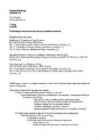
evasive Ex2. Full, official, grudging, unanimous, prior, Ex3. Need for, implications of, responsible for, widespread plan of, result of, course of Ex3. Seal, roar, sign, nod ACTIVITY Ex4. For, in, without, on Ex1. Organises,involved in, do, avoid, support, AREA monitor Ex1. Knows, touring, covers, policing, avoid, Ex2.worthwhile activities, pleasurable activities, developing, destroyed outdoor activities, strenuous activity, frenetic Ex2. Into, over, off, in, in, to, from, outside activity Ex3. Deprived, surrounding, immediate, remote, Ex3. Leisure, political, extra- curricular, criminal, built-up, restricted, disaster, rural economic Ex4. Special, reception, no-smoking, play, picnic, Ex4
proves himself to Fache in the end. Simon Edwards - The executive services officer of Biggin Hill Airport south of London. Edwards is accustomed to fulfilling the every desire of the very rich, as the airport serves the private business community. Bezu Fache - The captain of the French Judicial Police. Nicknamed "the Bull," Fache is strong, strong-willed, and religious. He has great faith in the use of technology in his work, which sometimes leads him down the wrong road. Fache's policing methods are a bit unorthodox, but he is good at heart. The name Fache is very similar to fâché, which is French for "angry." Jonas Faukman - Langdon's editor. He is a classic New York publishing type. Faukman is eager to make money, but he is also a cultured and classy man. Pamela Gettum - The religious librarian at Kings College. A kindly soul, Gettum is willing to help Sophie and Langdon in their search. Claude Grouard - A security warden at the Louvre
Projekti käigus parendatakse avaliku teenuse kättesaadavust ja riikliku abi osutamist 88 vaesemas linnaosas ja 841 haldusüksuses üle Suurbritannia. Projekt fokuseerib elanikkonnale parema hariduse, tervise, majutuse tagamisele ja läbi selle kuritegevuse vähendamisele. Erilist tähelepanu pööratakse igasugusele asotsiaalsele käitumisele, mida tõkestatakse juba algjuure tasandil. Piirkonnas patrullivad ringi spetsiaalsed Neighborhood Policing Team`id, kes sekkuvad õigusrikkumistesse kohe. Meeskonnad on läbinud esmase väljaõppe politsei poolt ja kannavad tänaval nähtavat 5 vormiriietust. Õigusrikkumiste ennetamine toimub käsi käes politseiga ja on väga produktiivne, aidates kaasa turvalisema ja puhtama kogukonna tekkele ja läbi selle parema elukvaliteedi tagamisele kõikides haldusüksustes üle Suurbritannia. Sellised meeskonnad,
6.Comparative criminal law Comparative criminal law is a subfield of the study of Criminal Justice that compares justice systems worldwide. Such study can take a descriptive, historical, or political approach. It studies the similarities and differences in structure, goals, punishment and emphasis on rights as well as the history and political stature of different systems.It is common to broadly categorize the functions of a criminal justice system into policing, adjudication (i.e.: courts), and corrections, although other categorization schemes exist. Comparativists study the four different types of societies, their methods of enforcement and their different types of punishment such as capital punishment, and imprisonment. Within these societies they study different types of legal tradition and analyze the issues they solve and create. They use their information in order to learn effective ways of enforcing
scale immigration from Commonwealth countries and beyond have transformed London into one of the most racially and culturally diverse cities in Europe. 3. Government The administration of London takes place in two tiers a city-wide, strategic tier and a local tier. City-wide administration is coordinated by the Greater London Authority, while local administration is carried out by 33 smaller authorities. The GLA is responsible for strategic planning, policing, the fire service and most aspects of transport and economic development. It consists of two elected parts the Mayor of London and the London Assembly, who can accept or reject the Mayor's decisions and his budget proposals each year. The 33 local authorities are the 32 London boroughs and the City of London. They are responsible for local services not overseen by the GLA, such as local planning, schools, social services, local roads and refuse collection.
When society deems informal relationships and sanctions insufficient to create and maintain a desired social order, there may result more formalized systems of social control imposed by a government, or more broadly, by a State. With the institutional and legal machinery at their disposal, agents of the State can compel individuals to conform to behavioural codes and punish those that do not. Various mechanisms are employed to regulate behaviour, including rules codified into laws, policing people to ensure they comply with those laws, and other policies and practices designed to prevent crime. In addition are remedies and sanctions, and collectively these constitute a criminal justice system. Not all breaches of the law, however, are considered crimes, for example, breaches of contract and other civil law offences. The label of "crime" and the accompanying social stigma are normally reserved for those activities that are
- Struktureeritud instrumendid on paremad kui statistilised. - Struktureeritud erialane hinnang on parem kui formaalne tunnuste loetelu. Praegune juhtiv suund teadusuuringutes - keskendumine retsidiivsusriski alandamise võimaluste otsimisele. Kohtupsühholoogia SOPH.00.178 Tiina Kompus [email protected] 7. loeng 12.12.08. Kognitiivne psühholoogia juriidilises kontekstis Lugemiseks: 1. William G. Iacono Effective Policing: Understanding How Polygraph Tests Work and Are Used Criminal Justice and Behavior 2008, 35 kirjandus_7_1 2. Psychology and Law: Bridging the Gap. Edited by D.Canter and R.Zukauskiene 2008, Ashgate: 3.ptk.: Lie detectors and the law: the use of the polygraph in Europe, Ewout H. Meijer and Peter J. van Koppen kirjandus_7_2 Selle kohta, kas menetlusosaline räägib õigust või annab teadvalt valeütlusi, ei saa anda eksperdiarvamust kohtuekspertiisi mõttes
Tallinna Raamatutrükikoda. Ellinger, A. Bostrom, R. (1999). Managerial coaching behaviours in learning organizations. The Journal of Management Development. 18, 752 771. Miller, P. (2003). Workplace learning by action learning: a practical example. Journal of Workplace Learning. 1, 14 -23. Virovere, A. (koostaja) 2004. Tallinn. Organisatsiooni käsiraamat. Eesti Juhtimiskvaliteedi Keskus. Winstanley, D., Stuart-Smith, K. (1996) Policing performance: the ethics of perfoemance management, Personnel Review, Vol.25, No 6, pp.66-84.
policeman and what can we learn from their experience. The purpose was also to carry out a survey among police officers and assistant policemen, for assessment of the necessity of mutual collaboration and communication. Information gathered during the analyses of internal security researches and the survey, could be concluded that the role of volunteers in ensuring internal security is very important. Alone, 2015 was attended by assistant police policing total of 87,362 hours, compared to the previous year, it was a tenth higher. By studying people's confidence in the internal security organizations voluntarily adopt revealed that over 70% of people trusted assistant policemen. Assistant police officers voluntary contributions and assistance to the police on a daily basis increases the sense of security of the Estonian people, and from that will benefit the country as a whole as well as the local community.
the Commander in Chief, 7th Fleet, which was attached to MacArthur's South West Pacific Area command. FRUPAC'S growth mirrored that of all American crypt-analytic agencies. This expansion compelled OP-20-o to reorganize as early as February, 1942. The workload had become too heavy for one man (Safford). The outfit was split up into sections for its three major cryptologic functions : (1) the development, production, and distribution of naval cryptosystems, headed by Safford; (2) policing of American naval communications to correct and prevent security violations; (3) cryptanalysis, headed by Commander John Redman. In September the development function was separated from the production. Safford retained control of the development work until the end of the war, devising such new devices as call-sign cipher machines, adapters for British and other cryptographic devices, and off-line equipment for automatic operation. About June, the
 annaabi.ee