Kadi Mõttus Tartu 2011 Book what I use: Israel, Barbara ,,Antique garden ornament: two centuries of american taste" 256 pages LR tehnikakirjanduse Barbara osak. 21p Israel 712.2 ISR Fountain pros: · Most compelling of garden ornaments · Make viewer think how it works · Beauty · Musical sound · The play of light Compelling mõjuv The idea comes from... ... crops irrigation! Ornamental fountains variations: · Freestanding tazza-form · Shallow · Bowl Shallow - madal Ornamental fountains variations: · The wall-mounted · Semiattached water ensemble · Fountain figure Another ornamental fountain variation: · The grotto Thomas Jefferson (1743 1826) · Plan for a naturalistic grotto at Monticello · Jefferson's design is uncommon · Most of his ambitious plans were never realized Innovation:
Organic Future: The Case of Organic Farming by Adrian Myer Words: 1. Horticulture (aiandus)- the cultivation of a garden, orchard, or nursery; the cultivation offlowers, fruits, vegetables, or ornamental plants. 2. Caveat (hoiatus)- a warning or caution; admonition 3. Husbandry (põllundus)- the cultivation and production of edible crops or of animals for food; agriculture; farming. 4. Yield (tootma)- to give forth or produce by a natural process or in return for cultivation 5. Intuitive (vaistlik)- perceived by, resulting from, or involving intuition 6. Cognition (tunnetus)- the act or process of knowing; perception 7
humble tagasihoidlik, alandlik inhabitants elanikud insulated soojuskindlaks tehtud landing trepimade larder sahver leafy lehine, leherikas leisurely aeglaselt ja rahulikult light fittings valgustuse sisseseade lighting effects valgusefektid locks of hair juuksekiharad loft pööning, lakapealne maintenance bills hoolduskulud maisonette korrusekorter, korter läbi mitme korruse mansion mõisamaja, häärber manuscript käsikiri massive hiigelsuur mud muda ornamental ilu- , loodud ainult iluks ownership kuuluvus patio siseõu penthouse katusekorter pioneers teerajajad porch katusega ukseesine potted plants toataimed renovate uuendama reservoir hoidla rustic talupoeglik, tahumatu savings säästud semi-detached paarismaja shed kuur shelter varjualune significantly märgatavalt skyscraper pilvelõhkuja slope nõlv; kallak solar energy päikeseenergia solid tahke, massiivne steep järsk (katus) terraced house ridaelamu
Art nouveau Beginning There was a reaction against the cluttered designs and compositions of Victorian-era decorative art, --------> the second was the current vogue for Japanese art, particularly wood-block prints, that swept up many European artists in the 1880s and 90s, including the likes of Gustav Klimt, Emile Gallé, and James Abbott McNeill Whistler. Art Nouveau, ornamental style of art that flourished between about 1890 and 1920 throughout Europe and the United States. Art Nouveau was aimed at modernizing design Artists drew inspiration from both organic and geometric forms, evolving elegant designs that united flowing, natural forms resembling the stems and blossoms of plants Art Nouveau is characterized by its use of a long, sinuous, organic line and was employed most often in architecture, interior design, jewelry and glass design,
that of Denmark and of England. The three blue leopard-like creatures on a gold background were first used in 1219 as part of the coat-of-arms of the city of Tallinn and, later in history, of the Estonian province. In 1925, what is called the three lion coat-of-arms finally became the national coat-of-arms. National flower The campaign to choose a national flower for Estonia was organized by The Estonian Wildlife Protection Society in 1967-1968 where the ornamental Blue Cornflower was the favourite because of its popularity and decorative appearance, because of this Blue Cornflower was selected as the National Flower of Estonia. National bird The barn swallow, the national bird, is a characteristic guest of Estonian homes. Its call can be heard from practically every eave or barn rafter in the country. If the bird finds a suitable opening, under the ridge of a roof or a broken window, it will build its cup-shaped nest; it will even
· They need acid soil · They like to be high and dry Hydrangeas · Popular landscape plant · Abundant blooms · Easy care Pilt 7 Hydrangeas · Their blossoms can change color Pilt 8 · Alkaline will change the blue blooms to pink and acidity soil reverse · Fertilizing Pilt 9 Excellent cut flower To festive and special To vase moments Pilt 10 Pilt 11 Flowering shrubs and ornamental trees · You can make some very interesting plant then you use training, grafting and tying · You can training for example hydrangeas, varieties of Pilt 12 Butterfly Garden · Specifically for butterflies · Easy to create · Can not be isolated from other plants · Butterflys like enticing plants Azaleas Rhododendrons Lilacs Weigela Butterfly Milkweed (Asclepias tuberosa) · In garden should be
looduslikesse vetesse lahti lasta. Tingitud sellest, et mõnede kalaliikide paljunemise võimalused on inimese tegevuse tõttu hävinud • Haudemaja (hatchery) - spetsiaalselt veeorganismide paljundamiseks sisustatud rajatiste kompleks. Oluliseima osa sellest moodustavad haudeaparaadid koos nende veevarustus/puhastus süsteemiga. • Sugukari (broodstock) - suguküpsed veeorganismid, keda kasvatatakse paljundamiseks e nendelt järglaste saamise eesmärgil. • Ilukalad (ornamental fish) - tiikides ja basseinides ilu pärast peetavad kalad, kelle välimus on selektsiooni teel omapäraseks muudetud - nad on värvilised või on nende kehakuju moonutatud, näit. kuldkala, kuldsäinas, “koi” karpkala jt. VESIVILJELUS VESIVILJELUS VESIVILJELUS MAAILMAS An alligator farm or crocodile farm is an establishment for breeding and raising of crocodilians in order to produce meat, leather, and other goods. KREVETI- JA VÄHIKASVATUS LIMUSTE KASVATAMINE
Tingitud sellest, et mõnede kalaliikide paljunemise võimalused on inimese tegevuse tõttu hävinud · Haudemaja (hatchery) - spetsiaalselt veeorganismide paljundamiseks sisustatud rajatiste kompleks. Oluliseima osa sellest moodustavad haudeaparaadid koos nende veevarustus/puhastus süsteemiga. · Sugukari (broodstock) - suguküpsed veeorganismid, keda kasvatatakse paljundamiseks e nendelt järglaste saamise eesmärgil. · Ilukalad (ornamental fish) - tiikides ja basseinides ilu pärast peetavad kalad, kelle välimus on selektsiooni teel omapäraseks muudetud - nad on värvilised või on nende kehakuju moonutatud, näit. kuldkala, kuldsäinas, "koi" karpkala jt. Eestis püütakse tänu vesiviljelusele: Vikerforelli, kaubavähki, karpkala, jõevähki. Vesiviljelus Hiinas: Kalakasvatusega tehti algust Hiinas. Umbes 475 aastat eKr kirjutas hiinlane Fan Lei käsikirja, milles tutvustas tiigikalakasvatuse põhitõdesid
Light effects- Locks of hair-a small piece of hair from someone's head Loft- a space under the roof of a building, often used for storing things Maintenance bills- Maisonette- a flat with two levels in a building Mansion- a large house, especially a beautiful one Manuscript- a writer's original pages of a book, article, or document before it is published Massive- very large or heavy Mud- very soft wet earth ornamental - designed to be used as decoration Ownership- legal possession of something, usually something big and valuable Patio- a flat area covered with stone, brick etc at the back of a house, where people can sit outside Penthouse- an expensive flat at the top of a tall building in a fashionable area of a city Pioneers- one of the first people to do something important that is later continued and developed by other people
The musical was first staged at Sydmonton, at the home of A.L Webber. The main actors were Sarah Brightman and Michael Crawford. There have been 65 000 performances and over 80 million people have seen it. There was a film made in 2004. The play consists of 2 acts. The main characters are The Phantom and Christine, then Raoul, Carlotta, Madame Giry. It has won over 50 awards. The opera house has 17 floors, is above an underground lake, was built in 1861-1875 in a neo-baroque style, golden ornamental decorations, statues, columns and bronze busts of composers Siret: "Prince Albert" Born in 1819 in Germany. He had unhappy childhood (parents divorced when he was little), mother left them, met Victoria at age 17, they were introduced by Uncle Leopold, they fell in love. They got married and got 9 children, 40 grandchildren. At first he was unpopular, after he made many great changes he became popular. He was the president of the Royal Society of Arts for 18 years
362.Natural landscaping loomulik, naturaalne haljastus 363.Neglect- hoolimatus 364.Nobility- aadlus 365.Novice gardener- algaja aednik 366.Nurseryman puukoolipidaja 367.Nutrients- toitained O 368.Oak- tamm 369.Observation uuring 370.Occupant- aiaomanik 371.Ongoing maintenance- jätkuv hooldus 372.Open air space- avalik ruum 373.open discussion avalik diskussioon 374.Orchard- viljapuuaed 375.Organizing- kujundatakse 376.Ornamental birdbaths- ilustus-, ehis-, linnubasseinid 377.Outskirt- äärelinn 378.Overestimate üle hindama 379.Overflow ületäitumine 380.Overgrown vegetation- umbekasvanud taimed 381.Overlapping- kattuv P 382.Pace- kiirus, sammupikkus 383.Pagoda- idamaade tempel, pagoda 384.Parent rock lähtekivim 385.Park- park 386.Path- rada 387.Pathway- jalgrada 388.Patio-siseõu 389.Paved surfaces sillutatud pinnad 390.Pavement sillutis, kõnnitee 391
If the weather is good, people often dress up or wear kimono. Other "firsts" that are marked as special events include shigoto- hajime (, the first work of the new year), keiko-hajime (, the first practice of the new year), hatsugama (the first tea ceremony of the new year), and the hatsu-uri (the first shopping sale of the new year). DOLL FESTIVAL Date: March 3 The Japanese Doll Festival or Girls' Day, is held on March 3.[1] Platforms covered with a red carpet are used to display a set of ornamental dolls representing the Emperor, Empress, attendants, and musicians in traditional court dress of the Heian period. Origin and customs The custom of displaying dolls began during the Heian period. Formerly, people believed the dolls possessed the power to contain bad spirits. Hinamatsuri traces its origins to an ancient Japanese custom called hina-nagashi (?, lit. "doll floating"), in which straw hina dolls are
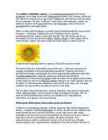
the olive product. During the 18th Century, the use of sunflower oil became very popular in Europe, particularly with members of the Russian Orthodox Church because sunflower oil was one of the few oils that was not prohibited during Lent. The cake remaining after the seeds have been processed for oil is used as a livestock feed. Some recently developed cultivars have drooping heads. These cultivars are less attractive to gardeners growing the flowers as ornamental plants, but appeal to farmers, because they reduce bird damage and losses from some plant diseases. There are also new breeds of sunflowers which are transgenic, so that they are resistant to some diseases.[citation needed] Sunflowers also produce latex and are the subject of experiments to improve their suitability as an alternative crop for producing hypoallergenic rubber. Additionally, the stem of a dead sunflower can dry out open wounds.[citation needed]
Naturally, as the victim eventually discovers, the "guard" is no more a guard than the "examiner" is an ex- aminer. What they are is a pair of bunco artists who have recognized the capacity of carefully counterfeited uniforms to click us into mesmerized compliance with "authority." Trappings Aside from its function in uniforms, clothing can symbolize a more generalized type of authority when it serves an ornamental purpose. Finely styled and expen- sive clothes carry an aura of status and position, as do similar trappings such as jew- elry and cars. The last of these status symbols is particularly interesting in the United States where "the American love affair with the automobile" gives it unusual significance. According to the findings of a study done in the San Francisco Bay area, own- ers of prestige autos receive a special kind of deference from others. The experi-
 annaabi.ee