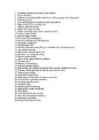
6. Hape-acid(H2SO4 is a strong acid) 7. Uudsus, uudisesse-novelty 8. Põlgus,solvumine-contempt 9. Kõõlus-sinew(The sinew conects muscle to bone) 10. Kannatus,mure-distress 11. Habeme tüügas-stubble 12. Elavus,joovastus-exhilaration 13. Katuseta istekohad publikule-bleachers 14. Kaastunne-compassion 15. Ventima(aega)-stall 16. Kildukas purunema-shatter(The glass shattered into a thousend pieces) 17. Läbi imbuma-pervade 18. Juhmistama, oimetuks lööma-stun 19. Mässama, vastu hakkama-mutiny 20. Nõutuks tegema-baffle 21. Tagasi võtma, tagasi tõmbuma-withdraw 22. Vinguma-whine 23. Minema viskama-dump 24. Kummuli minema-capsize 25. Alla neelama, üle ujutama-engulf(The flames rapidly engulfed the house) 26. Viskama, heitma-pitch(She pitched the stone into the river) 27. Välja tõrjuma-displace 28. Reetma,ära andma-betray 29. Kallutama-cock(He cocked his head on one side) 30. Kohtama,kokku põrkama-encounter 31. Puutumtu,vigastama-intact 32. Ettevaatlik-wary 33
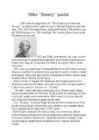
Mäss ´´Bounty`` pardal Selle raamatu algpealkiri on ´´The mutiny on board hms Bounty`` ja selle kirjutas inglasest kapten William Bligh kes elas aas- tatel 1754-1817.See raamat ilmus Inglismaal aastal 1790 ja Eestis aas- tal 2000.Raamatus on 239 lehekülge. See raamat põhineb tema enda läbielatud sündmustel. William Bligh (peategelane) oli kogu oma elu seotud merega. Kuueteistkümneaastaselt elas ta Briti sõjalaevastikus madruseelu ning oli 22-aastane, kui temast sai kapten James Cooki tüürimees.
Her subsequent withdrawal from public life made her unpopular, but during the late 1870s and 1880s she gradually returned to public view and, with increasingly pro-imperial sentiment, she was restored to favour with the British public. After the Indian Mutiny in 1857, the government of India was transferred from the East India Company to the Crown. In 1877, Victoria became empress of India. Her empire also included Canada, Australia, New Zealand, and large parts of Africa. During this period, Britain was largely uninvolved in European affairs, apart from the Crimean War from 1853 - 1856.[1] In 1887 Victoria's golden jubilee (fifty years in power) was celebrated, and ten years later, her diamond jubilee (sixty years in power) was
likely to have been there since the initial invasion. However, the Roman army was flexible, with units being used and moved whenever necessary, so this is not certain. Only the Legio IX Hispana is likely to have stayed there, as it is attested to being in residence at Eburacum (York) in AD 71 and on a building inscription there dated AD 108, before its eventual destruction fighting in the East, likely during the Bar Kochba Revolt. The invasion was delayed by a mutiny of the troops, who were eventually persuaded by an imperial freedman to overcome their fear of crossing the Ocean and campaigning beyond the limits of the known world. They sailed in three divisions, and probably landed at Richborough in Kent, although some suggest that at least part of the invasion force landed on the south coast, in the Fishbourne area of West Sussex. The Romans defeated the Catuvellauni and their allies in two battles: the first, assuming a
discover the Northwest Passage, discoverer of Davis Strait in 1587. Henry Hudson was an English sea explorer and navigator in the early 17th century. For his third expedition in 1609, Hudson was eventually hired by the dutch to seek a Northeast Passage, but ended up exploring the northeastern coast of America, eventually sailing into the mouth of a wide river near today's New York City - now named the Hudson River. His fourth expedition in 1610 was filled with trouble mutiny and fights within the crew - but he managed to explore the area of Hudson Bay and James Bay. Mutineers cast Hudson and his son and seven others adrift in a small boat and were never seen again. The Hudson's Bay Company is a Canadian retail business group. A fur trading business for much of its existence, today Hudson's Bay Company owns and operates retail stores throughout Canada and the United States.
private. Victoria never fully recovered from Albert's death in 1861 and she remained in mourning for the rest of her life. Her subsequent withdrawal from public life made her unpopular, but during the late 1870s and 1880s she gradually returned to public view and, with increasingly 6 pro-imperial sentiment, she was restored to favour with the British public. After the Indian Mutiny in 1857, the government of India was transferred from the East India Company to the Crown. In 1877, Victoria became empress of India. Her empire also included Canada, Australia, New Zealand, and large parts of Africa. During this period, Britain was largely uninvolved in European affairs, apart from the Crimean War from 1853 - 1856. Victoria's Golden Jubilee in 1887 and her Diamond Jubilee in 1897 were celebrated with great enthusiasm
new colony, administered by Rhodes company The southern Rohodesia became a self- governing colony and Northern Rhodesia became a protectorate The Boer Wars 1880-1881, 1899- 1902 1880-1881, Transvaal rebelled against the British government, after which Britain recognised Transvaal´s independence 1899-1902 British gold miners were denied political rights in Transvaal. Finally piece in 1902 after many battles The Indian Mutiny 1857-1858 Also known as Sepoy rebellion Was the revolt of the Indian soldiers in the British army in Bengal It developed into a wide-spread uprising Soldiers were angered by the issuing of cartridges coated in beef and pork fat- taboo to Hindu and Muslims Soon the civil population was involved in the rising, teh rebels besieged Lucknow, and conquered Cawnpore and Delhi, British reconquest 1858 Reforms: rule went to British Crown First Indian War of Independence
British attempt to annex the Transvaal, and re-established an independent republic. The Second Boer War was a lengthy war which ended with the conversion of the Boer republics into British colonies, with a promise of limited self-government. The Second Boer War was a major turning point in British history, since the war led to a change in approach to foreign policy from Britain who now set about looking for more allies. *The Indian Mutiny 1857-1858 Revoly of the Indian soldiers in the British army in Bengal. It developed into a wide-spread uprising against British rule in India. The Indian soldiers recented British annexion of Oudh. Fighting quickly spread and the civil population were involved in the rising. Various reforms resulted, the most important being the transfer of rule from the east India Company to the British crown. *The British Raj in India refers to the British rule in the Indian subcontinent. The region
 annaabi.ee