määrata, millest neil oli vajaka erinevad aminohapped ja vitamiinid Oletades, et ühe aminohappe sünteesiks on vajalik mitut eri reaktsiooni eri ensüümidega, määrasid nad sünteesi rajad Näit. Metioniini rada Metioniini auksotroofide kasv min.söötmel OAcetyl Mutantne tüvi Min.sööde Homoserine Cystathionine Homocysteine Methionine + + + + + metsik + + + + met5 + + + met3 + + met2 + met8
Melting and boiling point: Tm=-92°C,Tb=-19°C Autoignition temperature: 300 °C Henry's law constant at 25°C H: 0,034 Pa*m3/mol TOXICOKINETICS The toxicokinetics of formaldehyde after inhalation, oral, or dermal exposure has been reported in several species by many investigators. The toxicokinetics in all of the animals studied is similar across species lines. Formaldehyde is an essential metabolic intermediate in all cells. It is produced during the normal metabolism of serine, glycine, methionine, and choline and also by the demethylation of N-, S-, and O-methyl compounds. After oxidation of formaldehyde to formate, the carbon atom is further oxidized to carbon dioxide (CO2) or incorporated into purines, thymidine, and amino acids via tetrahydrofolatedependent one-carbon biosynthetic pathways. Exogenous formaldehyde appears to be readily absorbed from the respiratory and gastrointestinal tracts, but poorly absorbed following dermal application
To achieve this, the terminal 5' phosphate requires removal, which is done with the aid of aphosphatase enzyme. The enzyme guanosyl transferase then catalyses the reaction, which produces the diphosphate 5' end. The diphosphate 5' prime end then attacks the gamma phosphorus atom of a GTP molecule in order to add the guanine residue in a 5'5' triphosphate link. The enzyme (guanine- N7-)-methyltransferase ("cap MTase") transfers a methyl group from S-adenosyl methionine to the guanine ring.[3] This type of cap, with just the (m7G) in position is called a cap 0 structure. The ribose of the adjacent nucleotidemay also be methylated to give a cap 1. Methylation of nucleotides downstream of the RNA molecule produce cap 2, cap 3 structures and so on. In these cases the methyl groups are added to the 2' OH groups of the ribose sugar. The cap protects the 5' end of the primary
To achieve this, the terminal 5' phosphate requires removal, which is done with the aid of aphosphatase enzyme. The enzyme guanosyl transferase then catalyses the reaction, which produces the diphosphate 5' end. The diphosphate 5' prime end then attacks the gamma phosphorus atom of a GTP molecule in order to add the guanine residue in a 5'5' triphosphate link. The enzyme (guanine- N7-)-methyltransferase ("cap MTase") transfers a methyl group from S-adenosyl methionine to the guanine ring.[3] This type of cap, with just the (m7G) in position is called a cap 0 structure. The ribose of the adjacent nucleotidemay also be methylated to give a cap 1. Methylation of nucleotides downstream of the RNA molecule produce cap 2, cap 3 structures and so on. In these cases the methyl groups are added to the 2' OH groups of the ribose sugar. The cap protects the 5' end of the primary
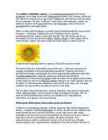
It has expanded the application of sunflower oils for frying purposes, tends to enhance shelf life of snacks, and could be used as an ingredient of infant formulas requiring stability. B. Meal: Non-dehulled or partly dehulled sunflower meal has been substituted successfully for soybean meal in isonitrogenous (equal protein) diets for ruminant animals, as well as for swine and poultry feeding. Sunflower meal is higher in fiber, has a lower energy value and is lower in lysine but higher in methionine than soybean meal. Protein percentage of sunflower meal ranges from 28% for non-dehulled seeds to 42% for completely dehulled seeds. The color of the meal ranges from grey to black, depending upon extraction processes and degree of dehulling. C. Industrial Applications: The price of sunflower oil usually prohibits its widespread use in industry, but there are several applications that have been explored. It has been used in certain paints, varnishes
2-Pentyl furan Metallic, green, earthy, beany 2-methyl-3-[methylthio]furan Meaty, sweet, sulfurous 4-hydroxy-5-methyl-3(2H)-furanone (HMF) Meaty Pyrazines Nutty, cracker-like, roasted Amino acids: glycine, alanine, lysine, cysteine, methionine, Sweet glutamine, succinic Organic acids: lactic, inosinic, ortho-phosphoric, and pyrrolidone Sweet carboxylic Amino acids: aspartic acid, histidine, asparagines Sour Organic acids: succinic, lactic, inosinic, ortho-phosphoric, Sour pyrrolidone carboxylic Hypoxanthine, anserine, carnosine Bitter Amino acids: arginine, leucine, tryptophan Bitter
Consider the antioxidants we've identi ed thus far in garden-variety thyme, as listed by Michael Pollan in a New York Times Magazine article: 4-Terpineol, alanine, anethole, apigenin, ascorbic acid, beta carotene, ca eic acid, camphene, carvacrol, chlorogenic acid, chrysoeriol, eriodictyol, eugenol, ferulic acid, gallic acid, gamma-terpinene isochlorogenic acid, isoeugenol, isothymonin, kaempferol, labiatic acid, lauric acid, linalyl acetate, luteolin, methionine, myrcene, myristic acid, naringenin, acid, lauric acid, linalyl acetate, luteolin, methionine, myrcene, myristic acid, naringenin, oleanolic acid, p-coumoric acid, p-hydroxy-benzoic acid, palmitic acid, rosmarinic acid, selenium, tannin, thymol, tryptophan, ursolic acid, vanillic acid. And that's just thyme. So we must have it all gured out, right? My vote: not a chance. Pollan o ered the list to make the same point:
 annaabi.ee