Properties of boifuels and peat In the boiler plants of Baltic Sea countries a wide range of various woodbased fuels are burned. To some extent also straw and other biomass based fuels are used. All these fuels are considered as renewables and according to the international agreement the CO2 emitted by the combustion of these fuels is not listed as a greenhouse gas. Wood, in particular the shell of wood cells, consists mainly from cellulose, lignin and hemicellulose. Due to the high carbon and hydrogen content, the lignin has higher calorific value than cellulose and hemicellulose. In smaller quantities the wood contains also tar, resins and phenols that can cause fouling of heat transfer surfaces and stack interior with the deposits that are difficult to remove From the point of view of combustion technology and practical use of fuels the following properties of fuels are of most
nende pakkimine sekreedi põiekestesse ja lüsosoomidesse. Mitokondrite põhiülesanne on rakkude varustamine energiaga. Tsütoskelett on raku tugi- ja liikumissüsteem. Tsütoskelett koosneb niitjatest valkudest. Eristatakse fibrille, mikrofilamente ja mikrotuubuleid. Tsentrosoom koosneb kahest teineteise suhtes risti paikenvast silindrilisest tsentrioolist (kumbki tsentriool koosneb mikrotuubulitest). 3. Taimerakk Taimeraku kesta põhiline koostisaine on tselluloos, lignin, pektiin. Rakukestal on tugifunktsioon (tugikoe rakud), kaitsefunktsioon (tselluloos), transportfunktsioon (juhtukude) Taimerakul puudub vereringe, seda asendab neil juhtkude Eristatakse kolme rühma plastiide: · Kloroplaste- sisaldavad rohelist pigmenti klorofülli, oluline FS-sil, paiknevad lehtede rakkudes. Täidetud valgulise vesilahusega ehk stroomaga, stroomas on lamedad kotikesed ehk lamellid, lamellides on roheline värvaine ehk klorofüll
J., Shaver, R.D,. Welch, D. A. and. Combs, D. K. 1993. In situ DM,protein and fiber degradation of perennial forages. J. Dairy Sci 76, 26322643. Jung, H.G. and Engels, F.M. 2002. Alfalfa Stem Tissues: cell-wall deposition, composition and degradability. Crop Science, 42, 524534. Kärt, O., Karis, V., Ots, M. 2002. Mäletsejaliste proteiinitoitumine ja metaboliseeruval proteiinil põhinev söötade hindamise süsteem. Tartu, 40 lk Moore, K. J. and Jung, H-J. G. 2001. Lignin and fiber digestion. J. Range Manage 54, 420 430. Söötade keemilise koostise ja toiteväärtuse tabelid. Tartu, 2004. Tamm, U. 2005. Rohusööda toiteväärtuse hindamine. Rohusööda toiteväärtus, lk 69. 138
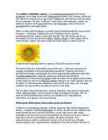
available. In one study, sunflower dry matter yields ranged from 2.0 to 3.0 ton/acre compared with 3.1 to 3.8 ton/acre for corn. Moisture content of sunflower at maturity is usually high (80 to 90%) and would require wilting before ensiling. Nutritional quality of sunflower silage is often higher than corn but lower than alfalfa hay (Table 1). Crude protein level of sunflower silage is similar to grass hay and higher than corn silage. Generally, crude protein of sunflower decreases and lignin percentage increases after the flowering stage. High plant populations increases fiber and lignin percentage. Seed size does not seem to affect yield or quality. Table 1: Nutritional quality of sunflower, immature corn, and mature corn silage, alfalfa hay (harvested in early bloom) and timothy bay (harvested in late vegetative stage).1 Silage Hay
source of energy and carbon. This characteristic distinguishes heterotrophic bacteria from chemoautotrophic (chemosynthesizing) and photoautotrophic (photosynthesizing) bacteria, which assimilate CO2 as a source of carbon. The overwhelming number of known species of bacteria, both aerobic and anaerobic, are heterotrophic. Many heterotrophic bacteria utilize sugar, alcohol, and organic acids. However, there are specialized heterotrophic bacteria capable also of decomposing cellulose, lignin, chitin, keratin, hydrocarbons, phenol, and other substances. Heterotrophic bacteria take an active part in the natural recycling of substances. Autrotrophic bacteria Autotrophic bacteria make their own food, either by photosynthesis (which uses sunlight, carbon dioxide and water to make food) or by chemosynthesis (which uses carbon dioxide, water and chemicals like ammonia to make food - these bacteria are
decade: that is bioethanol and biodiesel. Bioethanol is based on sugar, extracted from sugarcane and beet, or starch, which mainly comes from maize, wheat or cassava. Starch- based crops must be first converted into sugars in the saccarification process, which requires substantial volumes of enzymes to turn starch into sugars (Soetaert, W. 2008). The starchy products represent only a small percentage of the total plant mass. Other plants' building blocks like cellulose and lignin are currently not being used to make biofuels as there is not a commercial viable production method for making ethanol form cellulosic biomass (FAO, 2008). Biodiesel is based on the oil crops, such as rapeseed in Europe and soybean in the USA and Brazil. In tropical regions, biodiesel feedstock can also be sourced from palm, coconut and jatropha oils, but these are currently not major feedstock for biodiesel. Biodiesel is produced
J., Shaver, R.D,. Welch, D. A. and. Combs, D. K. 1993. In situ DM, protein and fiber degradation of perennial forages. J. Dairy Sci 76:2632-2643, Jung, H.G., Engels, F.M. 2002. Alfalfa Stem Tissues: cell-wall deposition, composition and degradability. Crop Science 42:524-534. Kärt, O., Karis, V., Ots, M. 2002. Mäletsejaliste proteiinitoitumine ja metaboliseeruval proteiinil põhinev söötade hindamise süsteem. Tartu, 40 lk. Moore, K. J. and Jung, H-J. G. 2001. Lignin and fiber digestion. J. Range Manage 54:420-430. Oll, Ü. 1994. Söötmisõpetus I. Tln., 302 lk. Tamm, U. 2005. Rohusööda toiteväärtuse hindamine. Rohusööda toiteväärtus, lk 6-9.Saku.
5 (some assimilated) food / energy, lost in respiration; 6 energy lost, as heat / in movement / in metabolism; 7 small proportion energy used for, growth / material, and is available to next trophic level; 3 max (ii) 1 plant material difficult to digest / animal material can be digested easily; 2 ref to, cellulose / lignin / wood; 3 no cellulase; 4 (animal) gives similar spectrum of amino acids (as consumer); 5 less of the producer available to the 1° consumer than 1° consumer available to the 2° consumer; 6 AVP; e.g. ref to gut bacteria ignore references to numbers of organisms eaten or size of organisms 2 max
Thus photo optical measurements can The smoke consists of gaseous products be used for the determination of smoke of thermal degradation and subsequent partial density, which reflects the contents of all oxidation of the wooden material and of the components. dispersed soot and compounds present in fluid or particle form. The temperature of thermal degradation in the wood constitu- Chemical Composition of Smoke ents—hemicelluloses, cellulose, and lignin— Introduction ranges from 180° to 300°C, 260° to 350°C, and 300° to 500°C, respectively. The tem- The chemical composition of smoke and perature in the glowing zone may even reach smoke condensates produced from various up to 900°C. kinds of wood was comprehensively reviewed The numerous components of the smoke over two decades ago (Tóth and Potthast
 annaabi.ee