Leidsid 12 sarnast õppematerjali, mis on seotud failiga "Inglise keele artiklid". Need materjalid aitavad sul teemat sügavamalt mõista.
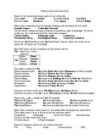
names, tain, west, south, north, ocean, cape, east, theatre, tate, street, bridge, airport, canal, square, station, island, mountain, hill, republic, stream, channel, erie, theatres, bank, plural, expressions, 19th, century, bridges, parks, shops, rivers, channels, fleet, oceans, danube, kennedy, trafalgar, baltic, pacific, buckingham, palace, beringNames with and without the Names fot the streets/roads/squares/parks etc are without the: Union street Fifth avenue Piccadilly Circus Hyde Park Blackrock road Broadway Times Square Waterloo Bridge Many names (especially names of important buildings and institutions) are two words: Kennedy Airport Cambridge University The first word is usually the name of a person (Kennedy) or a place (Cambridge). We do not usually use ,,the" with names like these. Some more examples: Victoria Station Edinburgh Castle London Zoo Westminister Abbey Buckhingham Palace Canterbury Cathedral But we say 'the White House' and 'the Royal Palace' because 'white' and 'royal' are not
the Definite Article. The Indefinite Article has two forms – a and an (a precedes words beginning with a consonant sound and an precedes words beginning with a vowel sound). It comes from the Old English word ãn, which meant one. The Definite Article is the. It comes from the Old English word ţis, which meant this. Thus, in most general terms, a and an cannot be used with countable nouns in the plural and with uncountable nouns. Countable nouns are names of the things you can count (one elephant, two elephants, three elephants, etc). Uncountable nouns are names of the things you cannot normally count (love, air, philosophy, etc). The can usually be used when we mean this. The Indefinite Article – a/an (= one!) can only be used with singular countable nouns. a child, a book, an elephant, an apple On the other hand, singular countable nouns cannot be used without any determiner. Determiners are both articles (a/an and the) and different
g. Apples are good for you. -in front of an uncountable noun when making general statements, e.g. Coffee keeps me awake. -in front of abstract nouns, e.g. Honesty is the best policy. -in front of meal times ,e.g. We have lunch at one. -in front of certain places like hospital, school, college, university , church, prison, home, work,bed when talking about the activity which normally takes place in that place or building, e.g. He Had an accident and was taken to hospital. -with the names of most towns, cities, streets, countries, islands, e.g. Milan, Italy, Jamaica -with lakes and invidual mountains, e.g. Lake Geneva, Mount Fuji -with names of streets and squares, e.g. Oxford Street, Times Square -with named building, airports, and institutions , e.g. Padua University, John F. Kennedy Airport, Coventry Cathedral DEFINITE ARTICLE (THE) 1. The definite article the is used when we are referring to something specific or already mentioned.It is used:
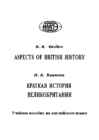
What kind of climate do you think Britain has? What is its surface like? What countries are situated on the islands? Which country are we going to study? Why? Location Land and climate affect life in every country. Britain is no exception. Britain is the largest island of the British Isles 1. It is just under 1,000 km long and just under 500 km across in its widest part. Britain is separated from the mainland of Europe by the North Sea on the east and the English Channel on the south – by only about 35 km of water at its closest point (the Strait of Dover 2). Most of the coastline is so broken by bays and inlets that no point on the island is more than 120 km from the sea. Climate and Surface Britain has a mild climate which is influenced by the Gulf Stream, an ocean current which flows past the British Isles and brings warm water from the Gulf of Mexico
Malestrom Major Rivers N am e Continent Out fl o w T o tal Lengt h (mi.) Nile Africa Mediterran ean Sea 4,1 60 Am azo n South Am erica Atlantic Oce an 4,000 Ch ang (Yangtze) Asia East China Sea 3,964 M ississippi-M iss o u ri N o rt h Am eri ca Gul f of Mexico 3,710 Major Deserts
Some of the things you will learn in THE CODEBREAKERS • How secret Japanese messages were decoded in Washington hours before Pearl Harbor. • How German codebreakers helped usher in the Russian Revolution. • How John F. Kennedy escaped capture in the Pacific because the Japanese failed to solve a simple cipher. • How codebreaking determined a presidential election, convicted an underworld syndicate head, won the battle of Midway, led to cruel Allied defeats in North Africa, and broke up a vast Nazi spy ring. • How one American became the world's most famous codebreaker, and another became the world's greatest. • How codes and codebreakers operate today within the secret agencies of the U.S. and Russia. • And incredibly much more. "For many evenings of gripping reading, no better choice can be made than this book." —Christian Science Monitor THE
Copyright 2002 - 2013 Sarah Hartwell Genetically speaking, there are four basic self (or solid) colours of cats: black, chocolate, cinnamon and red. All other self colours are modifications of these. Although covered here as a self colour, red is a form of tabby and it is impossible to completely eliminate the tabby markings. Why are there not five basic colours? White is counted as an absence of colour rather than a colour. Different countries, registries and breeds have different names for some of the same basic colours. Even where the same name is used, there may be different views on what is an acceptable or ideal version of that colour. Colours which appear identical to the human eye are caused by different genetic interactions. The same colours are called by different names in different breeds. Even in the same breed, the colour may have different names depending on which country the cat comes from and which registry it is registered with
Clearance Center, 222 Rosewood Drive, Danvers, MA 01923. For those organizations that have been granted a photocopy license by CCC, a separate system of payments has been arranged. The fee codes for users of the Transactional Reporting Service are ISBN-13: 978-0-8138-2182-5/2010. Designations used by companies to distinguish their products are often claimed as trademarks. All brand names and product names used in this book are trade names, service marks, trademarks or registered trademarks of their respective owners. The publisher is not associated with any product or vendor men- tioned in this book. This publication is designed to provide accurate and authoritative information in regard to the subject matter covered. It is sold on the understanding that the publisher is not engaged in rendering professional services. If professional advice or other expert assistance is required, the services
;P ulJbijlg lsBN 978-1-8432s-569-7 Illllll]ililil]t llll ||||rl 9 x781843x255697x Conlenls UNI T1 househol d & appl i ances; dw el l i ngs ln Searchof the Perfect My Home is my chores;colours& rooms;home H ome(mul ti pl choi e ce) Castle(pp. 5-19) safety TheCharmingPast:Blarney Castle- Du
;P ulJbijlg lsBN 978-1-8432s-569-7 Illllll]ililil]t llll ||||rl 9 x781843x255697x Conlenls UNI T1 househol d & appl i ances; dw el l i ngs ln Searchof the Perfect My Home is my chores;colours& rooms;home H ome(mul ti pl choi e ce) Castle(pp. 5-19) safety TheCharmingPast:Blarney Castle- Du
;P ulJbijlg lsBN 978-1-8432s-569-7 Illllll]ililil]t llll ||||rl 9 x781843x255697x Conlenls UNI T1 househol d & appl i ances; dw el l i ngs ln Searchof the Perfect My Home is my chores;colours& rooms;home H ome(mul ti pl choi e ce) Castle(pp. 5-19) safety TheCharmingPast:Blarney Castle- Du
;P ulJbijlg lsBN 978-1-8432s-569-7 Illllll]ililil]t llll ||||rl 9 x781843x255697x Conlenls UNI T1 househol d & appl i ances; dw el l i ngs ln Searchof the Perfect My Home is my chores;colours& rooms;home H ome(mul ti pl choi e ce) Castle(pp. 5-19) safety TheCharmingPast:Blarney Castle- Du
 annaabi.ee