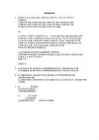
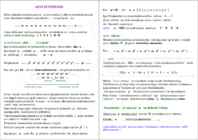
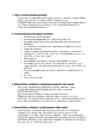
0,416*16=6,656; 0,656*16=10,496; 0,496*16=7,936; 0,936*16=14,976; 0,976*16=15,616; 0,616*16=9,856; 0,856*16=13,696; 0,696*16=11,136; 0,136*16=2,176; 2,176*16=2,816; 0,816*16=13,056 Hex is 7B.74BC6A7EF9DB22D c) 123,456/5=24,6912/5=4,93824/5=0,987648 0,987648*5=4,93824; 0,93824*5=4,6912; 0,6912*5=3,456; 0,456*5=2,28; 0,28*5=1,4; 0,4*5=2; 0*5=0 base-5 is d)BCD is 2. a) Unsigned 16-bit binary is 0000000001101011. Hexadecimal is 6B b) Unsigned 16-bit binary is 0000000010110101. Hexadecimal is B5 3. a) Signed two's complement 16-bit binary is 0000000001101011. Hexadecimal is 6B. b) Signed two's complement 16-bit binary is 1111111110110101. Hexadecimal is FFB5 4. a) 1111001 +1111111101000111 1111111111000000 b) 10111010 + 10101000 1111111101100010 16-bits is suitable. 1 5. += (9+D=16; A+4+1= F; 3+2=5) 6. Y=X shl 3 7
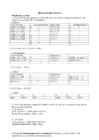
0,812 x2 = 1,624 1 30 / 2 = 15 0 0,624 x 2 = 1,248 1 15 / 2 = 7 1 0,248 x 2 = 0,496 0 7/2=3 1 0,496 x 2 = 0,992 1 3/2=1 1 0 1 1 0 0 So 123.45610 = 0111 1011.0111 01002 b) Hexadecimal Fractional part : Integral part : 0,456 x 16 = 7,296 7 123 / 16 = 7 0,6875 x 16 =B(11) 0,296 x 16 = 4,736 4 7 / 16 = 0 0,4375 x 16 = 7 So 123.45610 = 7B.7416 c) base-5 Fractional part: Integral part : 0,456 x 5 = 2.28 2 123 / 5 = 24 0,6 x 5 = 3 0
Mictrocontroller Week 03 Numbering systems 1. Convert the decimal number 123.456 to the following formats, taking whole numbers and fractions into account. Show calculations. a) binary b) hexadecimal c) base-5 d) BCD === 1. a) 0111 1011.0111 01002 b) 7B.7416 c) 443.2125 d) 0001 0010 0011.0100 0101 01102 === 2. Extend the following unsigned 8-bit binary numbers to their 16-bit equivalents and convert the result to hexadecimal. a) 011010112 b) 101101012 === 2. a) 006B b) 00B5 === 3. Extend the following signed two’s complement 8-bit binary numbers to their 16-bit equivalents and convert the result to hexadecimal. a) 011010112 b) 101101012 === 3. a) 006B b) FFB5 === Logic and arithmetic 4. Using two’s complement arithmetic, calculate the following (choose a suitable number of bits for the representation): a) 121 – 185 b) -70 – 88 == 4. Convert back to verify answer == 5
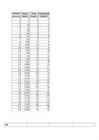
Decimal Binary Octal Hexadecimal Base-10 Base-2 Base-8 Base-16 0 0 0 0 1 1 1 1 2 10 2 2 3 11 3 3 4 100 4 4 5 101 5 5 6 110 6 6 7 111 7 7 8 1000 10 8 9 1001 11 9 10 1010 12 A 11 1011 13 B 12 1100 14 C 13 1101 15 D 14 1110 16 E 15 1111 17 F 16 10000 20 10 17 10001 21 11 18 10010 22 12 ...
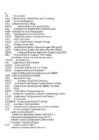
. . . . . . . . . . . . . . . 105 4-3-18 Unsigned Decimal Monitor . . . . . . . . . . . . . . . . . . . . . . . . . . . . . . . . . . . . . . . . . . 105 4-3-19 Three-word Data Modification . . . . . . . . . . . . . . . . . . . . . . . . . . . . . . . . . . . . . . . 106 4-3-20 Changing Timer, Counter SV . . . . . . . . . . . . . . . . . . . . . . . . . . . . . . . . . . . . . . . . 106 4-3-21 Hexadecimal, BCD Data Modification . . . . . . . . . . . . . . . . . . . . . . . . . . . . . . . . . 107 4-3-22 Binary Data Modification . . . . . . . . . . . . . . . . . . . . . . . . . . . . . . . . . . . . . . . . . . . 108 4-3-23 Signed Decimal Data Modification . . . . . . . . . . . . . . . . . . . . . . . . . . . . . . . . . . . . 109 4-3-24 Unsigned Decimal Data Modification . . . . . . . . . . . . . . . . . . . .
KUUETEISTKÜMNENDSÜSTEEM 16ndsüsteem on "suurim" praktiliselt kasutatav arvusüsteem. Võimalik on e koostada arvusüsteeme ka suurema alusega kui 16 , kuid selliseid suuremaid t hexadecimal (hex) i arvusüsteeme pole vaja. t Kuna 16ndsüsteemis on arvusüsteemi alus 16, siis peab seal olema ka 16 võimalikku v u järguväärtust ja sellest tulenevalt ka 16 numbrimärki nende esitamiseks.
BGP Border Gateway Protocol BGT Branch if Greater Than BHI Branch if Higher BHIS Branch if Higher or Same BHO Browser Helper Object [Spybot] BI Binary Input .BIB Bibliography (file name extension) BiDi Bi-Directional BIFET Bipolar Field Effect Transistor BIFF Binary Interchange File Format BIM Beginning of Information Marker .BIN Binary (file name extension) BINAC * Binary Automatic Computer BIND Berkeley Internet Name Domain BINHEX Binary Hexadecimal BIOS Basic Input/Output System BIS Business Information System BISDN Broadband Integrated Services Digital Network BIST Built-In Self-Test BiSYNC (See BSYNC) BIT Binary Digit BITNET Because It's Time Network BITNIC Bitnet Network Information Center BIU Bus Interface Unit BIW Business Intelligence Warehouse [SAP] BIX Byte Information Exchange (BBS) .BIZ Businesses (Domain Name) [Internet] .BK! Backup (file name extension) [WordPerfect]
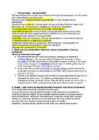
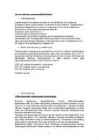
(July 22, 1962).[1] Note that the initial reporting of the cause of this bug was incorrect. · A bug in the code controlling the Therac-25 radiation therapy machine was directly responsible for at least five patient deaths in the 1980s when it administered excessive quantities of X-rays. · An error in the payment terminal code for Bank Of Queensland rendered many devices inoperable for up to a week. The problem was determined to be an incorrect hexadecimal number conversion routine. When the device was to tick over to 2010, it skipped 6 years to 2016, causing terminals to decline customer's cards as expired. 3. Nõuded - näide nõuete (kvaliteediatribuutide) süsteemist, kahe faktori kriteeriumid Toote nõuded spetsifitseerivad, milliseid funktsioone peab süsteem realiseerima (funktsionaalsed nõuded) ja kuidas neid funktsioone täidetakse (mittefunktsionaalsed nõuded). Protsessinõuded määravad arenduse kitsendused (näiteks,
Seejuures aga R4 sisu ei muudeta, seda lihtsalt kasutatakse arvutuste käigus. ● Siin ülesandes peaks siis kuuenda takti lõpuks salvestuma käsu 3 andmed puhvrisse B3. Käsk 3: Add R3,R4,#$20, kus protsent tähendab, et see arv 20 on kuueteistkümnendikkoodis ehk appi tuleb kallis google, kust võtad hexadecimal to decimal converteri ja saad et kuueteistkümnendikkoodis arv 20 on kümnendsüsteemis 32. ● R4 sisu on endiselt 1272, järelikult käsk 3: 1272+32=1304, mis salvestatakse puhvrisse B3 (ja registrisse R3). ● Vastus: Kuuenda takti lõpuks on puhvri B3 sisu 1304. d. Oletame, et programmi dünaamilises töövoos on 19% hargnemise käske.
electrically. Manchester encoding is used in all 10 Megabit per second Ethernets; for example, 10BASE2 Thin Ethernet, 10BASE5 Thick Ethernet, and 10BASE-T Twisted-Pair Ethernet. You may want to read the additional perspective on Manchester encoding. In the 100 Mbps Ethernet section of the Compendium there is a section describing the different Fast Ethernet encoding schemes. Here, we see an example of the signal transitions used to encode the hexadecimal value "0E", which converts to "00001110" in binary. Notice that there is a consistent transition in the middle of each bit-time. Sometimes this transition is from low-to-high and sometimes it's from high-to-low. This is the clock transition. The receiving adapter circuitry 'locks on' to this constant signal transition and, thereby, identifies the timing to determine the beginning and end of each bit. To represent a binary ONE, the first half of the bit-time is a low voltage; the
scale integration) components, such as 7400 series nand gates and D-flipflops. One PAL device would typically replace dozens of such 'discrete' logic packages, so the SSI business went into decline as the PAL business took off. PALs were used advantageously in many products, such as minicomputers, as documented in the best- selling book "The Soul of a New Machine." Early PALs were programmed using PALASM language files (converted by a compiler into JEDEC ASCII/hexadecimal files) and a special electronic programming system available from either the manufacturer or a third-party, such as DATAIO. Gang programmers were used when more than just a few parts were needed and for large volumes the manufacturer would fabricate a custom metal mask for manufacturing so electrical programming could be eliminated to reduce cost. PALASM was used to express boolean equations for the outputs pins in a text file
Frame Format - The data-link layer protocol encapsulates the data it receives from the network layer protocol by adding a header and footer to it, forming what is called a. Using the mail analogy given earlier, the header and footer are the equivalent of the envelope that you use to mail a letter. They contain the address of the system sending the packet and the address of its destination system. For LAN protocols like Ethernet and Token Ring, these addresses are 6-byte hexadecimal strings assigned to network interface adapters by their manufacturers. The addresses are referred to as hardware addresses or media access control (MAC) addresses, to distinguish them from addresses used at other layers of the OSI model. NOTE: Protocols operating at different layers of the OSI model have different names for the data structures they create by adding a header to the data they receive from the layer above. What the
Ehk seadmed, mis kiirgavad valgust. RGB värviruum on palju avaram kuid teised - näidates väga hästi punast, rohelist ja sinist tooni. Kui nüüd kõik värvid põhja keerata, saame valge värvuse. RGB puhul antakse igale värvile 8 bitti, mis suudab kirjeldada 256 värvi. Seega on 24 bitise RGB puhul võimalik edastada üle 16miljoni värvi (256x256x256). Mõned näited: Kasutame seda mudelit näiteks veebigraafika loomiseks, kus see kood tõlgitakse kuueteistkümnendkoodi (hexadecimal ehk hex). See kuvatakse kujul #RRGGBB. Näiteks kui kõik värvid ära võtta, tuleb kood kirjutada #000000 ja tulemuseks saame musta. Kui keerame värvid põhja ehk anname maksimum väärtused #ffffff, saame tulemuseks valge. CMYK Samas CMYK-seadmed (Cyan Magenta Yellow Key (blacK)) saavad oma värvuse põhivärvuste segunemisel, kus näeme värvi valguse peegelduse tulemusena. Seda värvimudelit kasutavad reeglina printerid
 annaabi.ee