Some of them surely spend a lot, have fun and tell us how good life is. Others invest their money wisely and never seem to spend a dime. That sort of people are usually older than the wasters. Living in a country with almost 10% of the people unemployed, we're jealous of both. Probably almost every day we catch ourselves on a thought, "I wish I was that rich, I wish I was the man on TV." No matter how hard we try though, we won't. It's nearly impossible to win a lottery and there frankly isn't any other ways of getting rich very quickly. But how many other people would know to tell us about if wealth brings happiness or not? All the other rich people have been rich for their whole lives, they don't have anything to compare. And poor people dreaming can tell even less because they've never had such money and they don't know what it takes to stay wealthy and not fall hard back to being poor. In the end, wealth does help you a lot. It makes your life so much easier so you can
Then I`ll speak about details and bring you some recommendations for these people who would like to try Bodybalance. I will end with benefits of this workout. My talk should take about 4-6 minutes. Please feel free to ask your questions in the end of presentation. At first I would like you to ask have you tried Bodybalance? Do you know WHAT Bodybalance workout? Bodybalance is the yoga-based class that will improve your mind, your body and your life. Some people call it new yoga. Frankly speaking it is not yoga. Bodybalance is a motivating BLEND OF YOGA WITH TAI CHI AND PILATES provided with music for a thoroughly refreshing, holistic workout. Breathing control is a part of all the exercises, and instructors will always provide options for those just getting started. You'll strengthen your entire body and leave the class feeling calm and centered. Bodybalance is ideal for anyone and everyone. Now I will try to explain how Bodybalance training is going.
A few things, good to know: 1. No short forms in a formal letter! (It is not allowed to use "It's", "I'm", "I've" etc. Instead of them, use "It is", "It has", "I am", "I have". 2. Linkers! (It is essential to use linkers, especially in the beginning of a paragraph, in the end of a letter etc.) Some examples of linkers: firstly, secondly, thirdly, lastly, in conclusion, in addition, (un)fortunately, on the other hand, on the one hand, furthermore, frankly, personally, to be honest, to be exact, in my opinion, I suppose, as a matter of fact, what really matters etc. Look at New Headway Upper-Intermediate pg 114. 3. At least 3-4 indirect questions. You should add some extra information about one of them. 4. Word order: In a question: küsisõna, abitegusõna, alus, öeldis. For example: "When(KS) will(ATS) the flat(A) be(Ö) available?" In an indirect question: küsisõna, alus, abitegusõna, öeldis.
similar to her mother's engagement ring. 20-year-old Diana became The Princess of Wales when she married Charles. She did not say that she would "obey" him; that traditional vow was left out at the couple's request, which caused some comment at the time. Diana wore a dress with an 8-metre train. The wedding was referred as a fairytale wedding. CHILDREN On 5 November 1981, Diana's first pregnancy was officially announced, and she frankly discussed her pregnancy with the press. On the 21 st of June in 1982, Diana gave birth to her first son and heir William. A second son, Henry, was born about two years after William on on the 15th of September in 1984. He became known as Harry. Diana was universally regarded as a devoted and demonstrative mother. PRINCE WILLIAM Prince William is second in the line of succession, behind his father, to the thrones of 16 independent states. He went to various schools around the United Kingdom
needed to why I so suddenly fell unexplainably, deeply in love with it. However, even then, I wasn't entirely blinded, or at least blinded enough not to notice the poor writing skills of the author, the blandness and lack of development of the characters and several cringeworthy scenes that I was able to forgive, at first. So I decided to reread it, with a more critical view, eventually coming to a conclusion, that frankly, ''Twilight'' is one incredibly shoddy piece of literature. Shoddy enough to be somewhat enjoyable, likeable, or socalled ''guilty pleasure'', but still, completely, utterly, supremely, exceedingly shoddy. So what do I think, why so many people love ''Twilight''? Since Meyer left one important detail the main character's personality unwritten and pretty much up for interpretation, absolutely anyone can imagine themselves into Bella's place
engagement ring. The 20-year-old became The Princess of Wales when she married Charles on 29 July 1981 at St Paul's Cathedral. It was watched by a global television audience of 750 million. At the altar Diana accidentally reversed the order of Charles's names, saying Philip Charles Arthur George instead. The ceremony began at 11:20 A.M. and Diana wore a dress valued at £9000 with 25 foot train. On 5 November 1981, Diana's first pregnancy was officially announced, and she frankly discussed her pregnancy with members of the press corps. In the private Lindo wing of St. Mary's Hospital, Paddington on 21 June 1982, Diana gave birth to her first son and heir, William. A second son, Harry, was born a little over two years after William on 15 September 1984. According to Diana, she and Prince Charles were closest during her pregnancy with "Harry". She was aware their second child was a boy, but did not share the knowledge with anyone else,
elements more intense or diminish the weight. For example: We haven’t yet finished. Would you kindly wait for me. Disjuncts – A disjunct frequently acts as a kind of evaluation of the rest of the sentence. Although it usually modifies the verb, we could say that it modifies the entire clause, too. For example: Frankly, I’m tired. Fortunately, no one complained. Conjuncts – Serve a connector function within the flow of the text, signalling a transition between ideas. For example: She has bought a big house, so she must have a lot of money. If they open all the windows, then I’m leaving. 7.4 Comparison of adverbs Only gradable adverbs have degrees of comparison
DORINE There, there, don't take your father seriously; He's fooling. ORGON But I tell you . . . DORINE No. No use. They won't believe you. ORGON If I let my anger . . . DORINE Well, then, we do believe you; and the worse For you it is. What! Can a grown-up man With that expanse of beard across his face Be mad enough to want . . .? ORGON You hark me: You've taken on yourself here in this house A sort of free familiarity That I don't like, I tell you frankly, girl. DORINE There, there, let's not get angry, sir, I beg you. But are you making game of everybody? Your daughter's not cut out for bigot's meat; And he has more important things to think of. Besides, what can you gain by such a match? How can a man of wealth, like you, go choose A wretched vagabond for son-in-law? ORGON You hold your tongue. And know, the less he has, The better cause have we to honour him. His poverty is honest poverty; It should exalt him more than worldly grandeur,
Poets spoke with the voice of celebrating the king and queen. King and court retreated into a self-perpetuating arcadia of their own. Civil War. Sense that past would never return. 1640s. Metaphysical poets were fond of imagery difficult to understand and complicated metaphors, Cavaliers preferred more straightforward expression. Valued elegance, were part of refined, courtly culture, but poetry often frankly erotic. Short lyric poem, favourite theme carpe diem. Very decent, like Charles’s court. Characteristic to Charles I’s court Carew: Sir John Suckling: The Constant Lover Richard Lovelace: celebrates the beauties of heroine, but against very different background. To Althea, from Prison: Song; The Grasshopper: To My Noble Friend, Mr Charles Cotton: Ode Waller: wrote of queen as the queen of love. Cowley: Robert Herrick: The Argument of His Book, Delight in Disorder 6
premodifier + headadverb + postmodifier very surprisingly indeed Functions of adverbs: modifier of an adjective remarkably accurate modifier of an adverb he did it somewhat prematurely clause element adverbial I quite forgot about it. Adverbs as an adverbial Adjuncts: Slowly they walked back home. He spoke to me about it briefly. Subjuncts: We haven't yet finished. Would you kindly wait for me. Disjuncts: Frankly, I'm tired. Fortunately, no one complained. Conjuncts: She has bought a big house, so she must have a lot of money. If they open all the windows, then I'm leaving. Modifier of adjectives a) amplifiers: awfully sorry, extremely dangerous, deeply concerned, too dull b) downtoners: a bit dull, fairly small, quite normal, hardly noticeable, rather late c) emphasizers: That's just impossible. You are certainly welcome. Modifier of adverbs pretty soon
Levin seems different when he is at home in the country--more at peace with himself and his decisions. Chapters 28-34 Anna decides she needs to leave Moscow and return to St. Petersburg, where her life is. Anna tells Dolly that she knows she ruined the gala for Kitty by flirting with Vronsky. Yet Anna contends the whole thing really wasn't her fault. Dolly makes an important note at this point: Anna denies blame in the same way Stiva does. This makes Anna, quite frankly, a liar. "'Yes,' Anna went on. 'Do you know why Kitty didn't come to dinner? She's jealous of me.... I've been the cause of that ball being a torture to her instead of a pleasure. But truly, truly it's not my fault, or only my fault a little bit,' she said, daintily drawling the words 'a little bit.'" Anna leaves, laden with shame and guilt. She knows she's running from Vronsky, but she also knows she doesn't want to return to her husband. This haunts her
To hear him so inclined. Good gentlemen, give him a further edge, And drive his purpose on to these delights. ROSENCRANTZ We shall, my lord. Exeunt ROSENCRANTZ and GUILDENSTERN KING CLAUDIUS Sweet Gertrude, leave us too; For we have closely sent for Hamlet hither, That he, as 'twere by accident, may here Affront Ophelia: 84 Her father and myself, lawful espials, Will so bestow ourselves that, seeing, unseen, We may of their encounter frankly judge, And gather by him, as he is behaved, If 't be the affliction of his love or no That thus he suffers for. QUEEN GERTRUDE I shall obey you. And for your part, Ophelia, I do wish That your good beauties be the happy cause Of Hamlet's wildness: so shall I hope your virtues Will bring him to his wonted way again, To both your honours. OPHELIA Madam, I wish it may. Exit QUEEN GERTRUDE LORD POLONIUS Ophelia, walk you here. Gracious, so please you, We will bestow ourselves. To OPHELIA
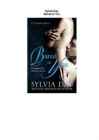
"Hey, Scott. It's Eva Tramell." "Hi, Eva. Would you like to speak to Mr. Cross? He's in a meeting at the moment, but I can buzz him." "No. No, don't bother him." "It's a standing order. He won't mind." It soothed me immensely to hear that. "I hate to throw this in your lap, but I have a request for you." "Anything you need. That's also a standing order." The amusement in his voice relaxed me further. "Magdalene Perez is down here on the twentieth floor. Frankly, the only thing she and I have in common is Gideon, and that's not a good thing. If she has something to say, it's your boss she should be talking to. Could you please have someone escort her up?" "Absolutely. I'll take care of it now." "Thanks, Scott. I appreciate you." "It's my pleasure, Eva." I hung up the phone and sagged back in my seat, feeling better already and proud of myself for not letting jealousy get the better of me
assurance; in the belief that such a relation must assist her endeavours to obtain that promise from her nephew which she had refused to give. But, unluckily for her ladyship, its effect had been exactly contrariwise. "It taught me to hope," said he, "as I had scarcely ever allowed myself to hope before. I knew enough of your disposition to be certain that, had you been absolutely, irrevocably decided against me, you would have acknowledged it to Lady Catherine, frankly and openly." Elizabeth coloured and laughed as she replied, "Yes, you know enough of my frankness to believe me capable of that. After abusing you so abominably to your face, I could have no scruple in abusing you to all your relations." "What did you say of me, that I did not deserve? For, though your accusations were ill- founded, formed on mistaken premises, my behaviour to you at the time had merited the severest reproof. It was unpardonable. I cannot think of it without abhorrence."
 annaabi.ee